
Janmashtami, the Hindu festival marking the birth of Lord Krishna, will be celebrated on Friday, September 4, 2026 across most of India. However, there are discrepancies regarding the Janmashtami date 2026, with some claiming it to be on Saturday, September 5, 2026. Why is there confusion regarding the Janmashtami 2026 date? The answer probably lies in the duration of the Janmashtami celebrations that will supposedly extend into the early hours of the next day.
Janmashtami 2026: Key Timings
- Janmashtami date 2026: Friday, September 4
- Ashtami Tithi begins: September 4, 2:25 AM
- Ashtami Tithi ends: September 5, 12:13 AM
- Rohini Nakshatra begins: September 4, 12:29 AM
- Rohini Nakshatra ends: September 4, 11:04 PM
- Nishita Puja: Around midnight between September 4 and 5
- Dahi Handi date: Saturday, September 5, in many places
Check with your local panchang or religious authority to confirm the Janmashtami date 2026 as it can differ from one city to another.
Janmashtami Celebrations: Significance & Rituals
Why Is Janmashtami Celebrated?
Janmashtami is celebrated to mark the birth of Krishna, the eighth avatar of Lord Vishnu as per Hindu mythology. He was born in a prison in Mathura to Devaki and Vasudeva at a time when Devaki’s brother King Kansa threatened to kill every child who could lead to his end, as per a divine vision.
Legends say that at midnight, the prison doors where Devaki and Vasudeva were held captive, opened on their own. Vasudeva carried the new-born Krishna in a small basket across the flooded Yamuna to Gokul. It is here that Krishna spent some of his infant years, later spending his boyhood and youth in Vrindavan.
How Is Janmashtami Celebrated?
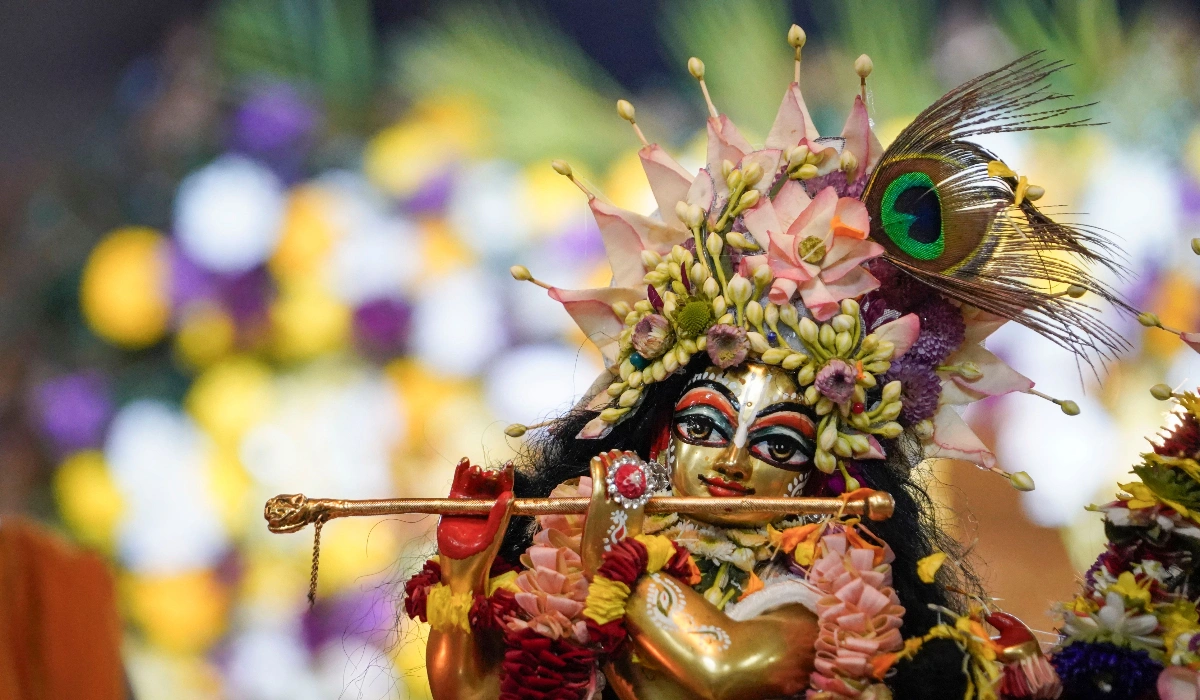
During Janmashtami, most families celebrating the festival worship the idol of Krishna in his infant form, signifying his birth. The main ritual involves cleaning and decorating the mandir space, placing the idol in a clean, large plate or vessel, and gently ‘bathing’ it in milk, panchamrit, ghee, honey, and water signifying purification. The idol is then patted dry with a cloth and decorated with new clothes and a crown. Other items associated with Krishna, such as his flute, peacock feather, and tulsi leaves are also carefully placed around the idol. The idol is usually placed on top of a small swing or jhula.
Then makkhan or butter is first offered, followed by different kinds of sweet and savory items called ‘bhog’. Families sing prayers and devotional songs to pay respects to Krishna and distribute the bhog as prasad to everyone present there.
When Is Janmashtami In Vrindavan And Mathura?
Vrindavan and Mathura are two of the most important places for Janmashtami celebrations – Vrindavan is where Krishna is believed to have spent his childhood in the care of his foster parents while Mathura is considered to be his birthplace.
There are temples located in Vrindavan and Mathura dedicated to Lord Krishna and Janmashtami celebrations are on a large scale here.
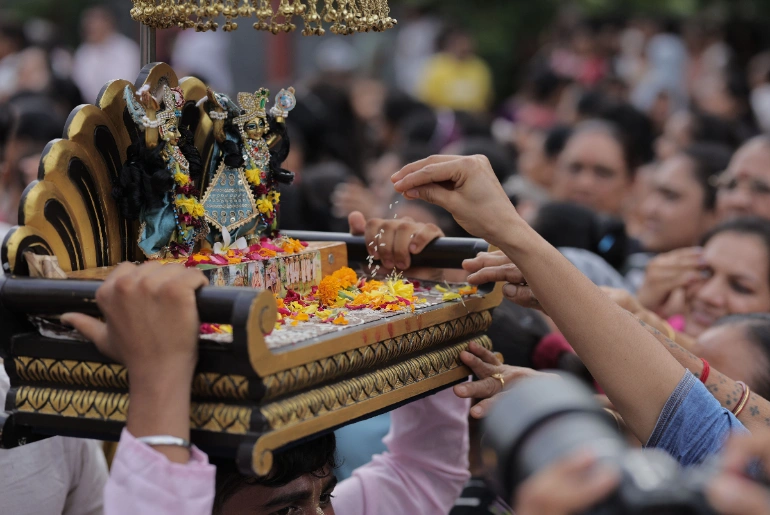
The Banke Bihari Temple in Vrindavan has officially listed Krishna Janmashtami on September 4, 2026. It also lists Nandotsav on September 5, 2026. The temple also notes that the special Mangala Aarti is performed on Janmashtami, making the occasion different from any ordinary day.
In Mathura, the celebrations begin with the Jhulan Utsav, during which a beautifully decorated swing is prepared for Lord Krishna’s idol. Temples across the city are adorned with lights and flowers and cultural performances are organized to pay respects to the deity.
If you’re planning to visit Mathura or Vrindavan during Janmashtami, it is recommended to plan your trip in advance as hotel and transportation can become pricier during the peak festival time.
Also Read: Where To Stay In Vrindavan: Area-Wise Guide For Every Budget
When Is Janmashtami In Gujarat?
Gujarat will also observe Janmashtami on Friday, September 4, 2026. The date is particularly significant in Dwarka, one of the major pilgrimage centers associated with Krishna. Official correspondence lists September 4, 2026 as the date for Janmashtami at Dwarka.
In Dwarka, Janmashtami celebrations center around the midnight Janam Utsav, with special songs, prayers, and devotional aarti. During the festival, large crowds can be expected in the sea-facing city of Dwarka.
Why Are Some Calendars Showing September 5 As Janmashtami Date 2026?
Janmashtami is a midnight festival. The birth of Krishna is believed to have taken place at midnight, and is traditionally commemorated at Nishita Kaal, i.e. around midnight. In 2026, the relevant Ashtami Tithi begins on September 4 and ends shortly after midnight on September 5. As a result, the actual puja window in several cities begins on September 4 and finishes after midnight.
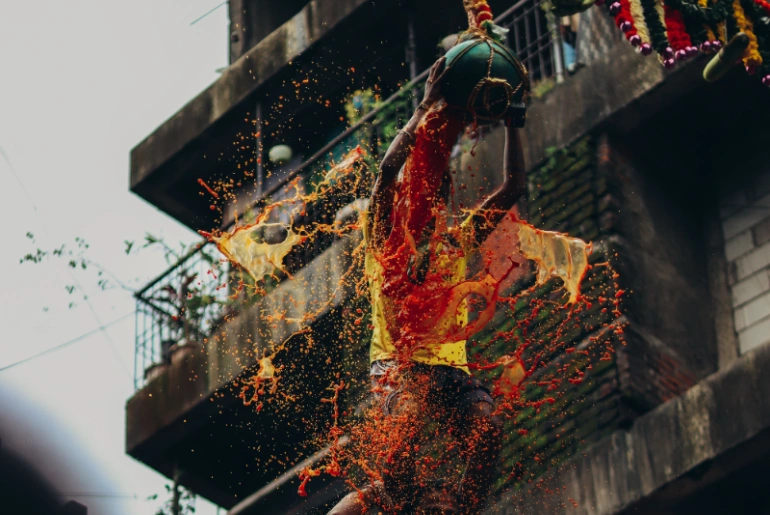
September 4 is the date for Janmashtami 2026 while September 5 is the date for Nandotsav, Gopal Kala, or Dahi Handi across most parts of India.
So September 5 is not the date for Janmashtami 2026 for most of India but the date for Nandotsav or Dahi Handi instead.
Also Read: How To Reach Mathura By Flight, Train, And Road; Best Route Options
Author’s Note
Janmashtami 2026 will fall on September 4 across most parts of India. However, I’d recommend checking with the local panchang calendar or getting in touch with a local priest to understand the exact date and timings of the celebration in your city / town.
Summing Up
Janmashtami and Dahi Handi are some of the most anticipated festivals in India. The celebration marks the birth of Krishna as per Hindu mythology and is celebrated across many parts of India. Janmashtami date 2026 will fall on September 4 while Nandotsav or Dahi Handi will take place the next day, i.e. September 5, 2026.