Why Does Goa Burn Giant Narkasur Effigies Before Diwali? Where To Watch
Goa marks Diwali with giant Narkasur effigies that are paraded and burnt before dawn. Discover the legend, 2026 dates and where to watch.
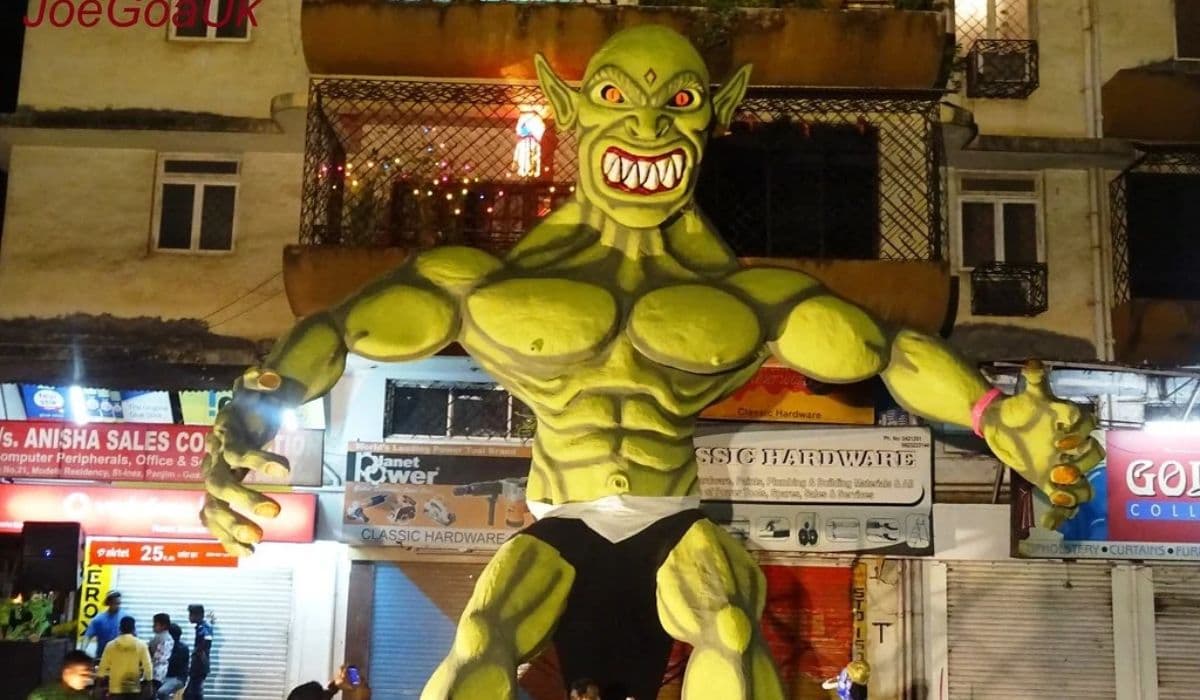
Diwali is probably the most famous festival originating in India. As such, many might feel as if they know everything there is to know about it. But did you know that in Goa, this festival is celebrated not by lighting diyas, but by lighting giant effigies of Narkasur? Locally, this festival is known as Narkasur Parba or Naraka Chaturdashi, and it’s a centuries-old Goan tradition transforming cities and villages into open-air sculpture galleries. If you’re keen on witnessing this unique way of celebrating Diwali, this unstumbled guide can be of help.
The Mythological Legend: Why Narkasur Is Burnt In Goa
This particular Goan Diwali tradition is rooted in the legend of Narakasura or Narkasur. He was believed to be an arrogant and tyrannical demon ruler who brought terror to the region in the olden days. As per Hindu Scriptures, Narkasur acquired immense power through penance.
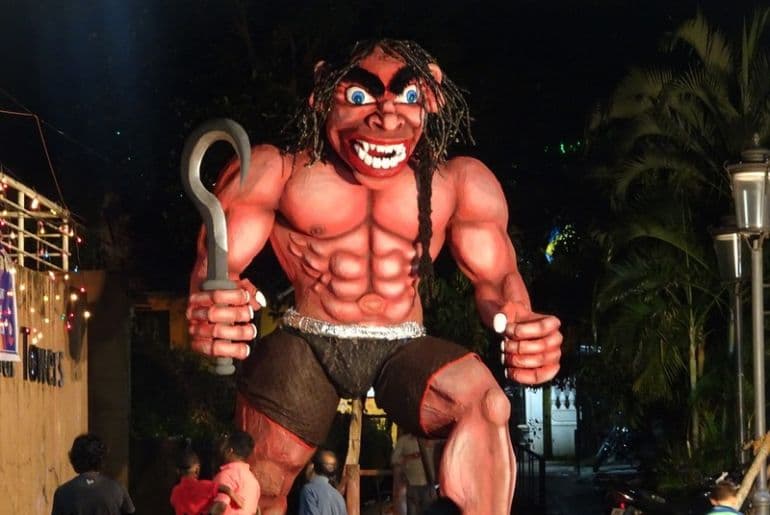
Narkasur effigy | Image Credits: Flickr
Once he gained this power, he began looting villages, spreading darkness across the land, and holding 16,000 women captive in his mountain stronghold. Many tried to defeat him, but they failed as he held a boon: that he could only be killed by his mother, Bhudevi, who is the Earth Goddess.
People affected by Narkasur’s reign of terror desperately prayed to Lord Krishna. He finally heeded their prayers and rode into battle against Narkasur on the night of Ashwin Amavasya. Accompanying Lord Krishna was his third wife and consort, Satyabhama, who was considered the reincarnation of Bhudevi.
What ensued was a fierce clash, and it only ended when Satyabhama unleashed the fatal arrow that defeated the demon king. However, before dying, Narkasur repented and requested that his death be celebrated as an ushering in of light and freedom.
Since Narkasur was defeated just before dawn or Brahma Muhurta, the freed captives lit thousands of earthen diyas across the kingdom to celebrate their liberation, marking the very first Diwali.
Also Read: 7 Famous Diwali Sweets From Different Indian States And Where To Find Them
How The Effigies Are Built: A Local Community Craft
This is the legend that Goans reenact to portray the triumph of good over evil. Narkasur effigies are paraded through the night and torched at dawn, right before taking the traditional early morning holy oil bath or Abhyanga Snan.
The building of the effigies is a proper community-oriented task that binds Goan neighborhoods together. Local youth clubs or yuvak sanghs from each ward that are also called waddos spend weeks sculpting paper-mâché, hay, and bamboo demons.
They gather nightly weeks in advance to construct the demon frame. Using bamboo poles, hay padding, and up to 30 layers of paper-mâché paste called chikki, which is made from flour and warm water, artists craft fearsome facial masks with bulging eyes, sharp fangs, and crowned heads.
The interior of the hollow effigy is stuffed with fireworks and hay. On the eve of Diwali, sound systems get installed beneath the monsters, and DJ beats echo through the streets while locals judge the craftsmanship of the effigy. Some of these effigies climb a height of more than 30 feet! They’re equipped with glowing eyes, moving jaws, and built-in pyrotechnics for a thrilling viewer experience.
Best Places To Watch Narkasur Competitions In Goa
There are a number of places in Goa where you can witness the Narkasur Parba. It is an open-air public festival, which means that there are no entry tickets. The best way to experience this festival is to take a late-night drive or walking tour through major municipal wards.
1. Panjim, Capital City Circuit
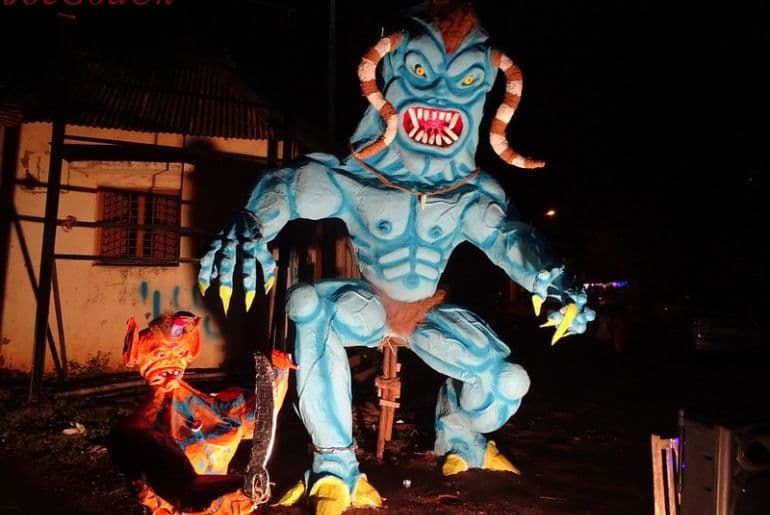
Narkasur Effigy | Image Credits: Flickr
Also called Panaji, this town witnesses some of the largest official state-sponsored and private Narkasur competitions. Scores of 25-foot effigies line the main avenues, accompanied by elaborate lighting rigs and DJ music setups during this festival.
Where To See: Mala, Taleigao, St. Inez, Miramar Circle, and the main KTC Bus Stand Junction.
2. Margao, South Goa Hub
This region, also known as Madgaon, is renowned for its traditional and highly artistic effigies. There are many local youth clubs such as Aapso Jageshwar Yuva Sangh and Shri Krishna Houshi Mandal that showcase detailed, mechanically animated effigies that move their hands and head before burning.
Where To See: Municipal Garden Circle, Tembi Wada, and Phatorda Junction.
3. Porvorim And Mapusa, North Goa
Porvorim and Mapusa also have a number of excellent spots for family crowds looking for accessible roadside viewing along the NH 66 corridor.
Where To See: Alto-Betim junction (Porvorim) and Mapusa Municipal Market Square.
4. Ponda And Vasco Da Gama
For those looking for a deeply religious and authentic vibe, the celebrations at Ponda are perfect. Here, older artists guide younger generations in crafting classic clay-faced demons.
Where To See: Bandora village (Ponda) and Swatantra Path (Vasco).
Also Read: Is Kashi Vishwanath Temple Open On Diwali 2026? Darshan And Aarti Schedule
Summing Up
Narkasur Parba in Goa is one of the most unique ways to celebrate Diwali. If you happen to be in Goa around this time of year, make sure you witness it!
Frequently asked questions
Is there an entry ticket required to watch the Narkasur celebrations in Goa?
No. Narkasur Night is a free street festival open to all residents and tourists. Anyone can walk or drive through the city streets to watch the displays.
At what time are the Narkasur effigies burned?
While celebrations start around 8 PM on Diwali eve, the official symbolic burning (Narkasur Vadh) takes place at dawn between 4:30 AM and 6 AM, symbolizing the destruction of evil before sunrise.
What is the difference between Ravan Dahan and Narkasur Vadh?
Ravan Dahan occurs on Dussehra (Vijayadashami) across North and Central India to celebrate Lord Rama's victory over Ravana. Narkasur Vadh is unique to Goa (and parts of coastal Karnataka) and occurs on Diwali eve (Naraka Chaturdashi) to commemorate Lord Krishna and Satyabhama's victory over Narakasura.
- Published:
- Updated:
About the author
Tooba Shaikh
Tooba Shaikh has over three years of experience in writing and editing long-form, SEO-friendly content, mainly in the food and travel niche. She has previously worked with Curly Tales and is skilled with CMS like WordPress. To put it simply, not only does she make sure that your content sounds flawless, but also that it is actually visible to relevant audiences. You can connect with her on: Email: tooba.shaikh@moes-art.com
Related stories