What Is Diwali Marundhu? The Traditional Deepavali Food From Tamil Nadu
Deepavali Marundhu is a traditional spiced paste eaten on Diwali morning in Tamil Nadu. Discover its ingredients, preparation and more.
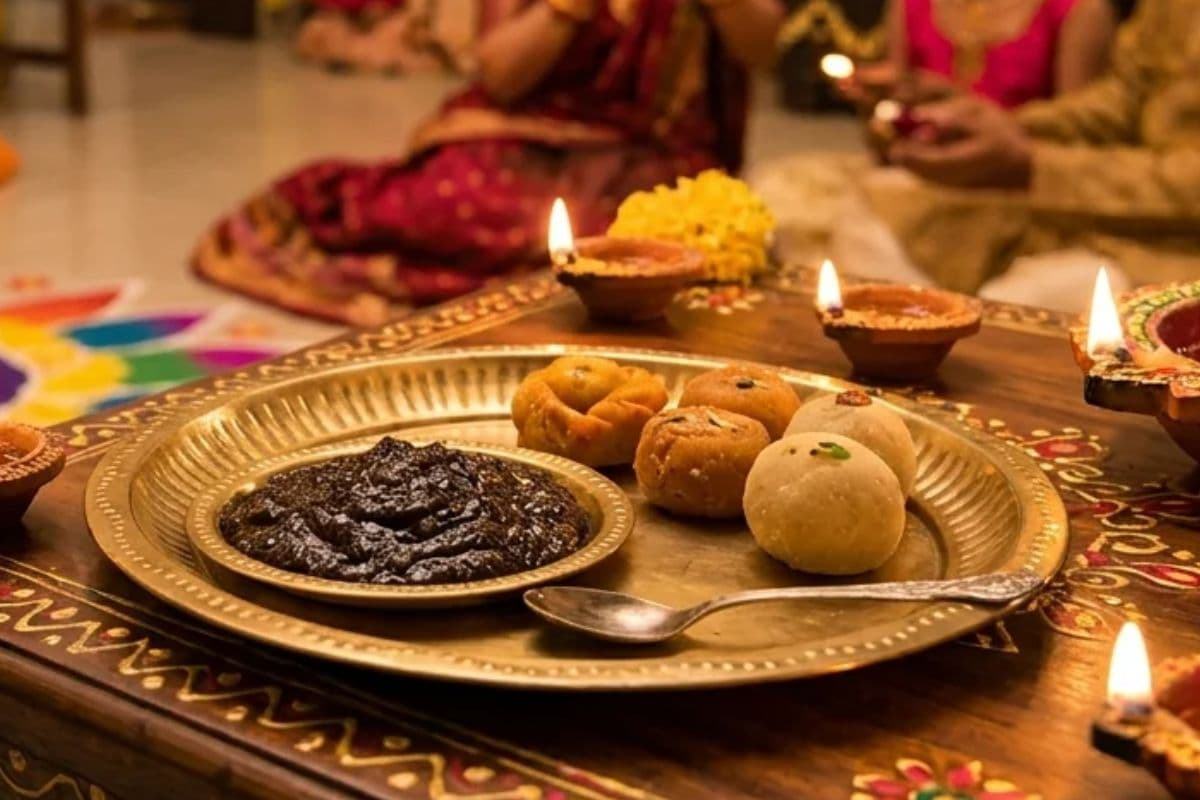
Diwali Marundhu | Photo Credits: Gemini AI
Diwali across India is celebrated with an extravagant spread of ghee-laden sweets and savory fried snacks, but Tamil households have a unique take on this. They begin their Diwali mornings with a preparation that breaks these festive culinary rules that speak only of sweet and savory items. Every family member consumes a small lump of an aromatic herbal paste known as Diwali Murundhu. Yes, you read that right. It is a deeply revered festive ritual that speaks about the wisdom of ancient food philosophy. Sounds interesting? Let's learn more about it.
What Is Diwali Marundhu?
Diwali Marundhu, also known as Deepavali Legiyam, literally translates to Diwali Medicine. It is a traditional South Indian (Tamil Nadu) medicinal spice and herb paste that is consumed on an empty stomach on the morning of Diwali. It is a festive ritual that holds the wisdom of traditional Siddha and Ayurvedic food philosophy. This paste is known to ensure that the stomach is well-fortified before the day’s decadent indulgence begins.

Diwali Marundhu | Photo Credits: Gemini AI
Tamil Deepavali Traditions
The morning of Deepavali in Tamil Nadu follows a centuries-old sequence of sacred rituals that are designed to clean both the mind and body. The day begins before sunrise when the auspicious bath, Ganga Snanam, takes place. It is a bath in which oil infused with raw ginger, omam, and peppercorns is applied to the head before washing.
After this auspicious bath, the family members offer prayers to the god. The head of the house then distributes a small gooseberry-sized ball of Diwali Murundhu to each family member. The consumption of this ball is followed by a warm sip of milk or water. The festive celebrations of Diwali officially begin after this ball is consumed by every family member, which means the tray of sweets and savories is now open to be gorged on.
Also Read: 7 Famous Diwali Sweets From Different Indian States And Where To Find Them
Why Do Tamilians Eat Diwali Marundhu?
There is no mythological folklore or story associated with Tamilians consuming Diwali Marundhu, unlike other Diwali traditions or rituals in Hinduism. Instead, there is a cultural logic related to traditional South Indian Ayurveda behind this ritual, which is simple yet brilliant. The festive eating (ghee, sugar, rich festive foods, fried savories) leads to heavy digestion, overindulgence, and sluggishness.
Diwali Marundhu actually acts like a digestive shield by priming the digestive fire in the stomach. This prevents acidity, indigestion, flatulence, and bloating caused by the sudden influx of fried, rich, and sugary foods throughout the festival.
Also Read: Here’s Where You Can Eat, Sip And Socialize This Diwali 2026 In Mumbai
Deepavali Lehyam Ingredients & Recipe
The reason that makes Diwali Marundhu or Deepavali Lehyam so effective is the fact that it is made using medicinal roots, aromatic spices, and natural digestives. The recipe is rooted in Siddha and Ayurvedic principles, offering a balance of ingredients that have immunity-boosting, anti-inflammatory, and strong carminative properties.
Note that the recipes for this flighty vary from region to region and family to family. But here’s a list of the core ingredients:
Sukku or Dry Ginger: It relieves gas, nausea, and abdominal discomfort.
Thippili or Long Pepper: It supports respiratory health.
Jeeragam or Cumin seeds: It balances body heat.
Kandathippili and Arathai: These are medicinal roots that are helpful in fighting body aches, seasonal coughs, and slow metabolism.
Nalla Ennai or Ghee and Sesame oil: It lubricates the digestive tract and soothes inflammation.
Inji or Ginger: It helps break down heavy fats.
Milagu or black pepper: It aids in cleaning mucus.
Omam or carom seeds: They offer instant relief from bloating and indigestion.
Dhaniya or Coriander Seeds: They soothe the intestinal tract.
Vellam or Jaggery: It acts as a natural sweetener and blood purifier.

Jaggery | Photo Credits: Wikimedia Commons
Recipe:
The dry spices are sun-dried for a few hours. Dry ginger, long pepper, cumin, carom, black pepper, and coriander are lightly dry-roasted on low heat.
The roasted spices and medicinal roots are soaked in warm water for 2 to 3 hours. Then blend these soaked spices with fresh ginger into a fine paste using minimal water.
Melt jaggery in a thick-bottomed brass or iron vessel with a splash of water. Strain out any impurities, then place on low heat.
Now add the herbal paste to this. Blend the flavors by stirring continuously over a low to medium flame.
Slowly drizzle in some ghee and sesame oil as the paste thickens. The mixture will absorb the fats and can be seen on the sides of the pan. Now cook this until the paste turns dark brown to black and is non-sticky. Turn off the heat and let it cool completely.
In this fast-paced modern life, people tend to buy pre-made Marundhu powder from Ayurvedic pharmacies.
Also Read: What Is Diwali Faral? A Guide To Maharashtra’s Festive Snacks
Summing Up
Diwali Marundhu is a reminder of ancient Indian culinary wisdom where food is also a medicine. This traditional food balances mindful wellness with rich celebration. The experience of grinding and making this paste at home is an irreplaceable festive memory.
Frequently asked questions
When is Diwali Marundhu consumed during the Deepavali festival?
It is traditionally consumed on an empty stomach early morning on Diwali after the Ganga Snanam.
What does the term "Deepavali Legiyam" mean?
The term Deepavali Legiyam or Diwali Marundhu literally translates to "Diwali Medicine" in Tamil.
Why is jaggery used in the Diwali Marundhu recipe?
Jaggery acts as a natural sweetener to balance the bitter medicinal herbs in Diwali Marandhu.
- Published:
- Updated:
About the author
Vaishalee Kalvankar
Vaishalee Kalvankar writes about travel and food for unstumbled. With five years of content and event management experience, she has worked at Curly Tales India, Curly Tales Middle East, Tit Bit Foods, Minority, and Seventy Seven Entertainment. She holds a postgraduate degree in media, entertainment, and marketing from KES Shroff College in Mumbai. Apart from writing, she is a traveller at heart who also loves dancing, drawing, and reading. Her expertise in festive travel recommendations and...
Related stories