

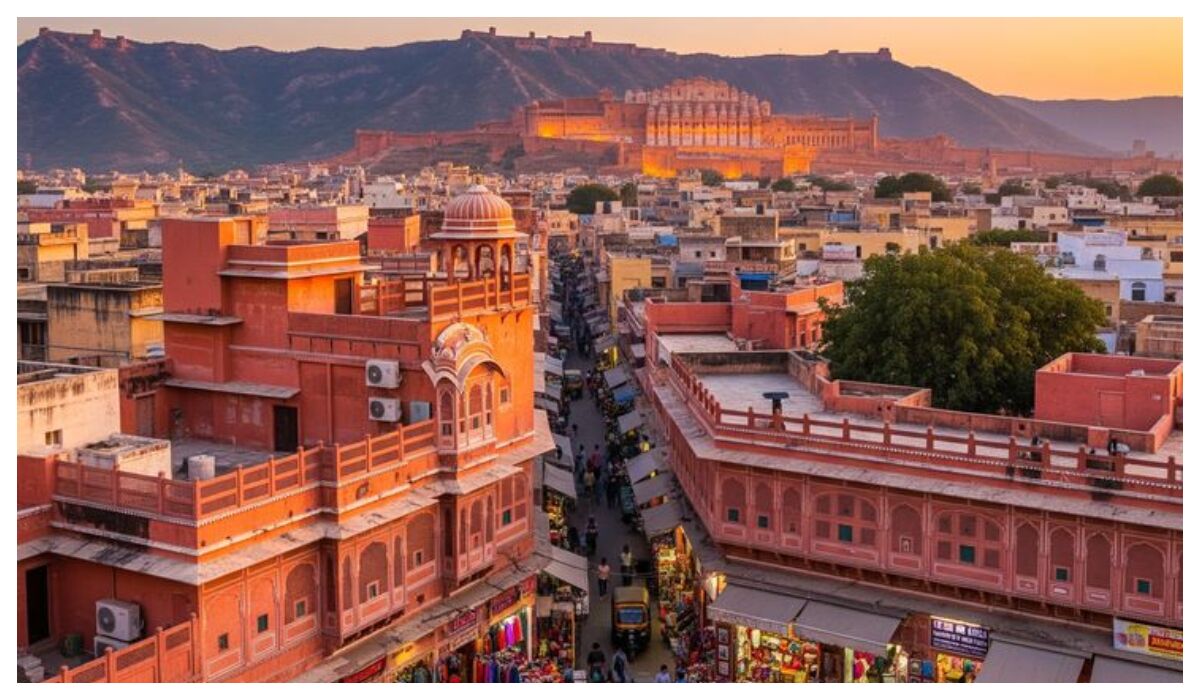
October is a good time to explore Jaipur after the monsoon, especially for a short stopover if you want to spend your days exploring forts, palaces, markets, museums, and the old walled city. Rainfall drops considerably during the month, while mornings and evenings become more comfortable for sightseeing. The afternoons, however, can still be quite warm, so planning the day around the weather makes a noticeable difference. A trip to Jaipur in October can easily combine the city’s major landmarks with local markets, Rajasthani food, and some slower-paced time in the Pink City, rather than trying to follow a packed itinerary, group nearby attractions, and save the hotter part of the day for indoor stops or a break.
What Is The Weather Like In Jaipur In October?
According to the India Meteorological Department’s 1991–2020 climatological data, Jaipur records an average maximum temperature of 34.1°C in October and an average minimum of 20.1°C. Average rainfall for the month is 19.4 mm, spread across approximately 1.2 rainy days. This means you should not pack for proper winter weather just yet. Early mornings and evenings can feel pleasant, but temperatures can rise considerably by afternoon. Outdoor attractions in Jaipur are best explored early in the day, while museums, restaurants, cafés, and hotel breaks can be saved for the warmer hours during a short stopover.
Which Places Should You Visit In Jaipur In October?
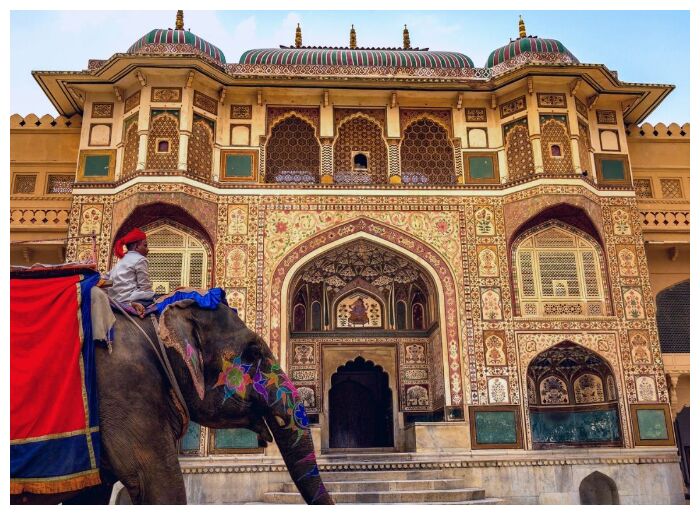
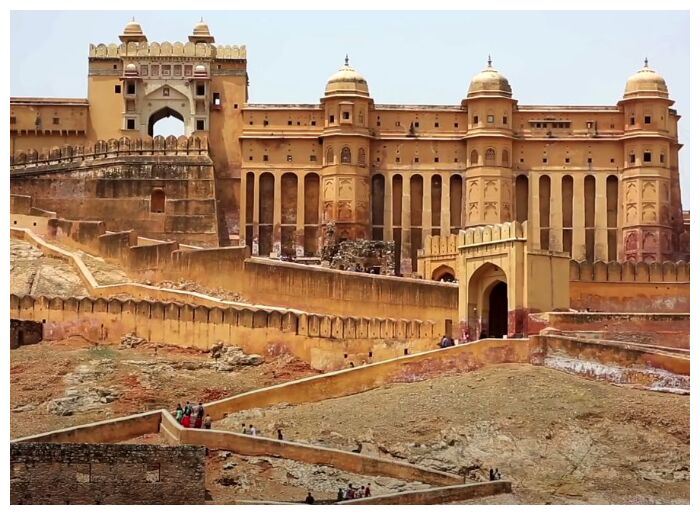
Amber Palace is one of the major places to visit in Jaipur in October, and starting early makes the experience much more comfortable. Located around 11 km from central Jaipur, the historic complex combines pale yellow and pink sandstone with white marble. Diwan-e-Aam and Sheesh Mahal are among its notable sections.
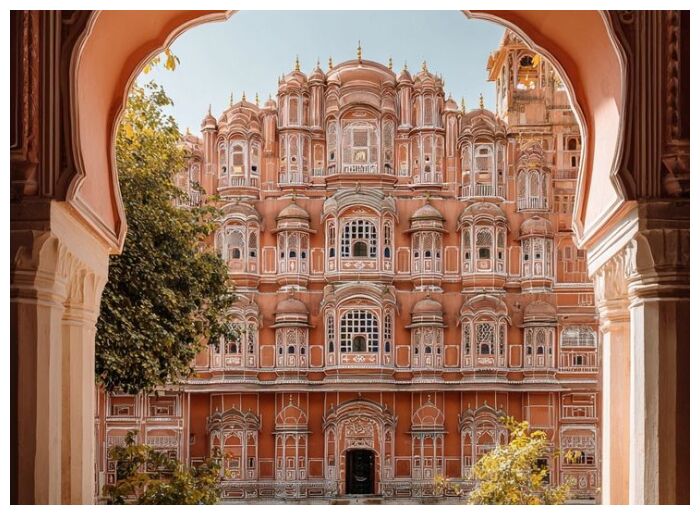
Jaigarh Fort can be combined with Amber, while Jal Mahal provides an easy stop for views across Man Sagar Lake. Nahargarh Fort is better kept for later in the day, when its ridge-top setting offers panoramic views over Jaipur. A taxi or private vehicle is the more convenient way to cover this circuit, especially because direct public transportation to Nahargarh is limited. Hawa Mahal, City Palace, and Jantar Mantar are located close enough to be covered together without spending too much time traveling between attractions. Jantar Mantar is a UNESCO World Heritage Site containing roughly 20 principal fixed astronomical instruments.
If you have more time, add the Albert Hall Museum and Galtaji. Albert Hall Museum has collections covering metalwork, carpets, sculptures, arms and weapons, ivory objects, woodcraft, and miniature paintings. Galtaji offers a distinct experience, with its temples, pavilions, and sacred water tanks set amid the surrounding hills.
What Can You Do Around Jaipur’s Old City?
The historic center deserves more time than a simple move from one monument to another. Jaipur was founded in 1727 by Sawai Jai Singh II and developed around a planned grid. UNESCO recognizes the walled city for its urban planning, public squares, bazaars, and continuing craft traditions.
Once you have visited Hawa Mahal, City Palace, and Jantar Mantar, spend some time walking through the surrounding markets. Johari Bazaar, Bapu Bazaar, Nehru Bazaar, Badi Chaupar, Chhoti Chaupar, and MI Road are among the city’s established shopping areas. Jaipur is particularly associated with textiles, handicrafts, handloom products, and traditional Kundan and Meenakari jewelry.
Planning to shop in the Pink City? Take a guided tour of the best shopping markets in Jaipur and discover where to browse for local finds.
How Should You Get Around Jaipur?
Walking works well for parts of the historic center, especially when several attractions are close together. Auto-rickshaws, taxis, and the Metro can help with longer journeys within the city. Badi Chaupar is the nearest Pink Line Metro station to City Palace. Pasted text For Amber, Jaigarh, and Nahargarh, hiring a taxi or private car is more practical. Group attractions by area so you do not keep crossing the city, which can save a surprising amount of time during a short trip.
What Should You Pack For Jaipur In October?
Lightweight, breathable clothes make sense for warm daytime in Jaipur in October. Comfortable walking shoes are important if you plan on exploring forts and the Old City. Sunscreen, sunglasses, a hat or cap, and a reusable water bottle are also practical additions. A light extra layer can be useful once the temperature drops in the evening. Heavy winter clothing is generally unnecessary under normal October conditions.
Wondering where to eat in the Pink City? Discover the best places to eat in Jaipur from a local’s point of view.
Author’s Note
The information in this guide has been compiled primarily from official sources, including Rajasthan Tourism, RTDC, the India Meteorological Department, UNESCO, and the City Palace Jaipur. These sources were used to verify Jaipur’s October weather, major attractions, historical details, timings, and visitor information. Since timings and admission details can change, travelers should check the latest official information before visiting.
Summing Up
Jaipur in October gives travelers a good balance between improving weather and plenty of opportunities to explore outdoors. Daytime temperatures can still reach around 34°C, so the trip works best when forts and outdoor monuments are visited in the morning and evening rather than during the hottest part of the afternoon. Build your short stopover around Amber, Jaigarh, and Nahargarh on one side of the city; keep Hawa Mahal, City Palace, Jantar Mantar, and the Old City markets together; and leave some room for food, shopping, museums, and unplanned wandering. That way, Jaipur feels like a city you have actually had time to explore rather than a checklist of attractions.