

The UNESCO World Heritage Sites program is one of the world’s most significant initiatives for protecting places of outstanding cultural and natural value. Established under the 1972 World Heritage Convention, the program recognizes landmarks, landscapes, monuments, and ecosystems that possess exceptional importance for humanity. Today, the UNESCO World Heritage Sites list includes more than 1,200 cultural, natural, and mixed properties spread across over 170 nations, making it a truly global network of shared heritage. Despite this broad distribution, the top 10 countries with UNESCO World Heritage Sites collectively account for roughly one-third of all inscriptions. These nations represent centuries of civilization, remarkable biodiversity, and architectural excellence, consistently leading the UNESCO World Heritage ranking through their preservation efforts and cultural significance.
Top 10 Countries With UNESCO World Heritage Sites
1. Italy
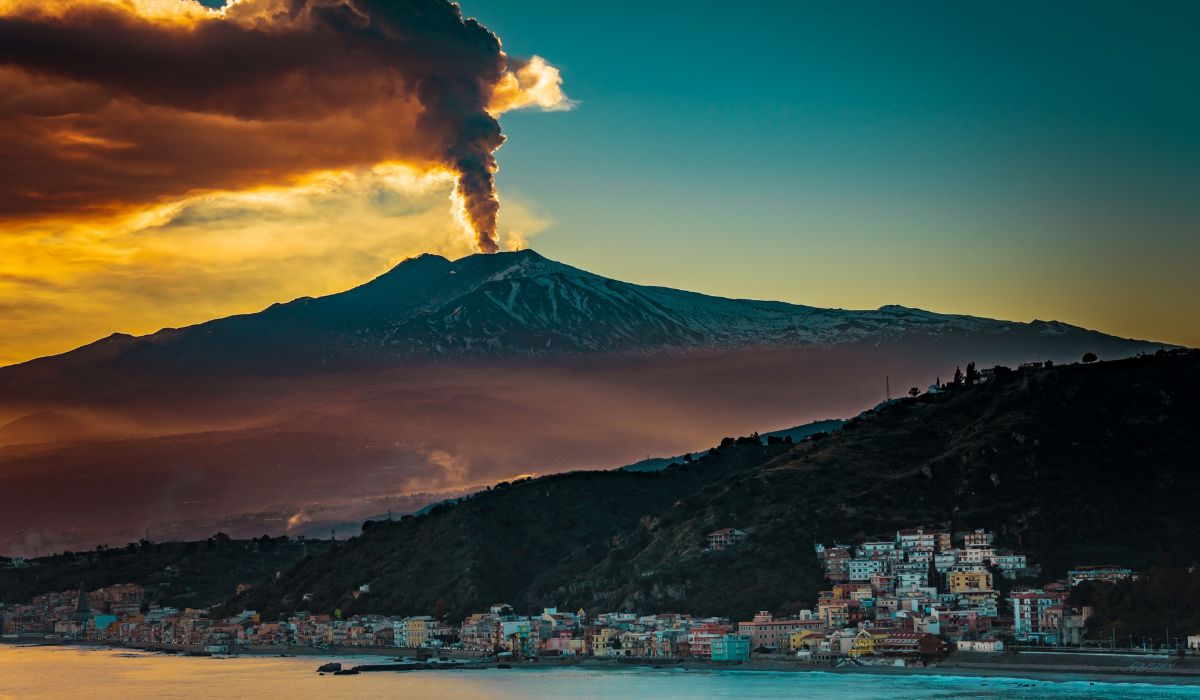
Leading the latest UNESCO heritage ranking is Italy. It is the unequivocal global leader thanks to its extraordinary concentration of UNESCO cultural sites. From the Historic Centre of Rome to Florence, Venice, and the archaeological remains of Pompeii, this country offers an unparalleled journey through Roman civilization, the Renaissance, and medieval Europe. Its natural heritage is equally impressive. It features the spectacular Dolomites and Mount Etna, one of Europe’s most active volcanoes. Italy’s consistent investment in conservation and heritage tourism ensures these landmarks continue to attract millions of visitors while remaining carefully protected.
Total UNESCO World Heritage Sites: 61
2. China
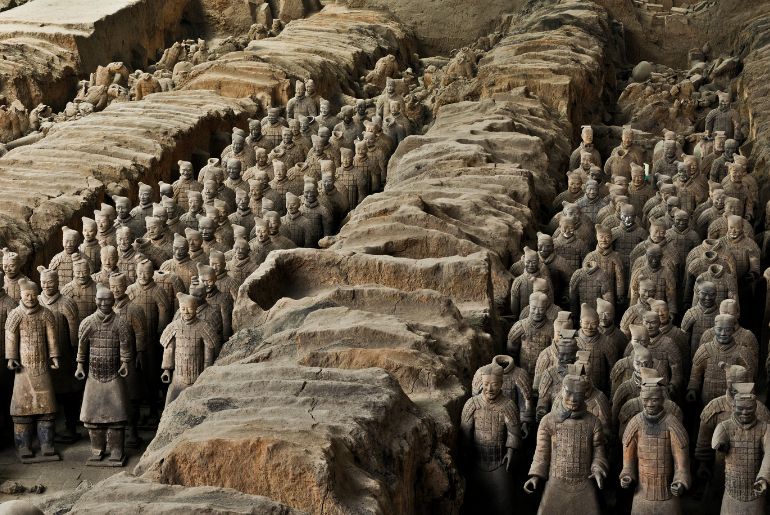
China follows closely with 60 inscriptions, making it one of the most diverse UNESCO heritage countries. Architectural icons such as the Great Wall, the Forbidden City, the Terracotta Army, and the Mogao Caves showcase thousands of years of imperial history. Beyond cultural landmarks, China boasts one of the world’s richest collections of natural heritage. Sites including South China Karst, Wulingyuan Scenic Area, and Sanqingshan demonstrate the country’s remarkable geological and ecological diversity recognized by the World Heritage Committee.
Total UNESCO World Heritage Sites: 60
3. Germany
Germany’s position in the UNESCO World Heritage ranking reflects both its historic architecture and industrial legacy. Visitors can explore Gothic masterpieces like Aachen Cathedral and Cologne Cathedral alongside Classical Weimar, Bauhaus landmarks, and the Zollverein Coal Mine Industrial Complex. The country’s heritage demonstrates how cultural evolution spans medieval kingdoms, modern design movements, and industrial innovation.
Total UNESCO World Heritage Sites: 55
4. France
France has a number of royal palaces, medieval monuments, and spectacular landscapes within its extensive collection of UNESCO cultural sites. Highlights include the Palace of Versailles, Mont-Saint-Michel, the Loire Valley Châteaux, the Banks of the Seine, and the newly recognized Megaliths of Carnac. These landmarks illustrate France’s influence on architecture, art, and European history while remaining central to sustainable heritage tourism initiatives.
Total UNESCO World Heritage Sites: 54
5. Spain
Spain’s remarkable heritage reflects Roman engineering, Islamic architecture, Gothic cathedrals, and modernist masterpieces. The Alhambra, Historic Centre of Córdoba, Santiago de Compostela, and Antoni Gaudí’s architectural works attract millions each year. Natural treasures such as Doñana National Park further enhance Spain’s reputation.
Total UNESCO World Heritage Sites: 50
Also Read: Sarnath Travel Guide: India’s 45th UNESCO World Heritage Site
6. India
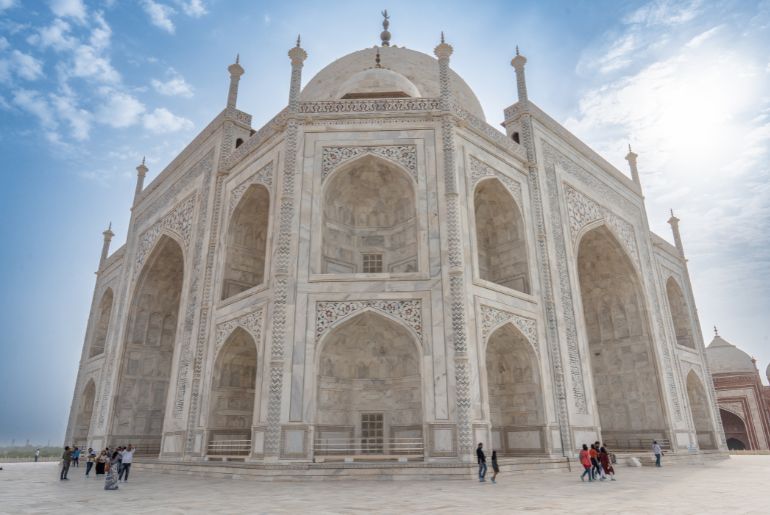
Among the fastest-growing entries in the UNESCO World Heritage Sites list, the sites in India represent thousands of years of civilization and religious diversity. Famous landmarks include the Taj Mahal, Ajanta and Ellora Caves, Jaipur City, the Western Ghats, Kaziranga National Park, and the recently inscribed Moidams of Charaideo in Assam. With Buddhist monasteries, Mughal architecture and even biodiversity hotspots, India is among the world’s leading UNESCO heritage countries.
Total UNESCO World Heritage Sites: 44
7. Mexico
Mexico celebrates the legacy of the Maya and Aztec civilizations through sites like Chichén Itzá, Teotihuacan, Palenque, and Calakmul. Colonial centers, including the Historic Centre of Mexico City, complement its archaeological treasures. Natural sites such as the Monarch Butterfly Biosphere Reserve further highlight Mexico’s ecological significance.
Total UNESCO World Heritage Sites: 36
8. United Kingdom
The United Kingdom showcases a broad historical timeline, from prehistoric Stonehenge and the Jurassic Coast to the Palace of Westminster and Maritime Greenwich. Giant’s Causeway and Hadrian’s Wall further demonstrate the country’s combination of natural beauty and historical importance. Its heritage management serves as a model for balancing conservation with public access.
Total UNESCO World Heritage Sites: 35
9. Russia
Russia’s UNESCO World Heritage Sites span magnificent imperial architecture and immense natural landscapes. The Moscow Kremlin, Red Square, and the Historic Centre of Saint Petersburg represent centuries of political and artistic achievement. Meanwhile, Lake Baikal and the Volcanoes of Kamchatka showcase some of Earth’s most unique ecosystems.
Total UNESCO World Heritage Sites: 33
10. Iran
The growing recognition of the heritage in Iran reflects the country’s extraordinary historical depth. Among the most celebrated examples are Persepolis, Pasargadae, Meidan Emam in Isfahan, the Sheikh Safi al-din Khānegāh, and the Lut Desert. Iran’s cultural heritage extends from ancient Persian empires to Islamic architecture. One site attracting increasing international attention is Alamut Castle, often discussed under Alamut Castle UNESCO due to its historical importance and ongoing interest in future recognition. While Alamut Castle remains a significant symbol of Persian history, it is not currently inscribed on the UNESCO World Heritage List. Nevertheless, it continues to be an important destination for those interested in Iran’s cultural heritage and medieval history.
Total UNESCO World Heritage Sites: 28
Here is a brief overview of the top ten countries on the list:
| Rank | Country | Total UNESCO Sites | Cultural | Natural | Mixed | Iconic Highlight |
| 1 | Italy | 61 | 54 | 6 | 1 | Historic Centre of Rome, Dolomites |
| 2 | China | 60 | 39 | 17 | 4 | Great Wall, Forbidden City, Jiuzhaigou |
| 3 | Germany | 55 | 52 | 3 | 0 | Cologne Cathedral, Museumsinsel Berlin |
| 4 | France | 54 | 46 | 7 | 1 | Mont-Saint-Michel, Palace of Versailles |
| 5 | Spain | 50 | 44 | 4 | 2 | Alhambra, Sagrada Família (Barcelona) |
| 6 | India | 44 | 35 | 8 | 1 | Taj Mahal, Moidams of Charaideo |
| 7 | México | 36 | 27 | 7 | 2 | Teotihuacán, Chichén Itzá |
| 8 | United Kingdom | 35 | 29 | 5 | 1 | Tower of London, Stonehenge, Jurassic Coast |
| 9 | Russia | 33 | 21 | 12 | 0 | Moscow Kremlin, Lake Baikal |
| 10 | Iran | 28 | 26 | 2 | 0 | Persepolis, Meidan Emam (Esfahan) |
How UNESCO World Heritage Sites Are Selected
After reading about so many fantastic cultural and natural heritage sites, you must be wondering how exactly UNESCO goes about selecting its World Heritage Sites. Well, the UNESCO World Heritage ranking is determined through a rigorous evaluation process overseen by the World Heritage Committee.
To earn inscription, properties must demonstrate “Outstanding Universal Value” by satisfying at least one of ten selection criteria. Six of these criteria recognize cultural achievements, including architecture, archaeology, urban planning, and artistic significance, while four focus on natural values such as biodiversity, geological formations, and ecological processes.
In recent years, UNESCO has worked to improve geographic representation by encouraging more nominations from Africa, South America, and parts of Asia. This is to ensure the list better reflects the world’s cultural diversity.
Discussions at recent World Heritage Committee sessions, including meetings in Busan, have talked about the importance of balanced global representation alongside stronger conservation standards. Another emerging trend is sustainable heritage tourism. Many of the world’s most visited UNESCO cultural sites now implement visitor caps, advanced digital ticketing, timed entry systems, and conservation-led management plans to reduce overcrowding.
These measures help preserve fragile monuments while supporting local communities through responsible tourism. As climate change and urban development continue to threaten historic landmarks and natural ecosystems, collaboration between UNESCO, national governments, and local communities will remain essential to safeguarding these irreplaceable treasures for future generations.
Also Read: UNESCO Adds Deepavali To Intangible Cultural Heritage List
Summing Up
This heritage enterprise by UNESCO plays a vital role in preserving humanity’s most valuable cultural and natural treasures. Together, the top countries with the most UNESCO World Heritage Sites showcase an extraordinary range of ancient civilizations, architectural masterpieces, sacred monuments, and protected natural landscapes. They reflect the diversity of human history and the natural world. Protecting these sites requires sustained conservation efforts, responsible heritage tourism, and international cooperation. Only then can challenges such as climate change, urban development, and overtourism be addressed. Whether you’re planning your next trip or exploring world history, these remarkable destinations highlight the shared heritage that UNESCO seeks to preserve for present and future generations.




5 Responses