7 Lesser Known Indian Textiles To Add To Your Diwali Wardrobe
These seven traditional fabrics and crafts deserve a place in your wardrobe, and their places of origin make for interesting shopping getaways too.
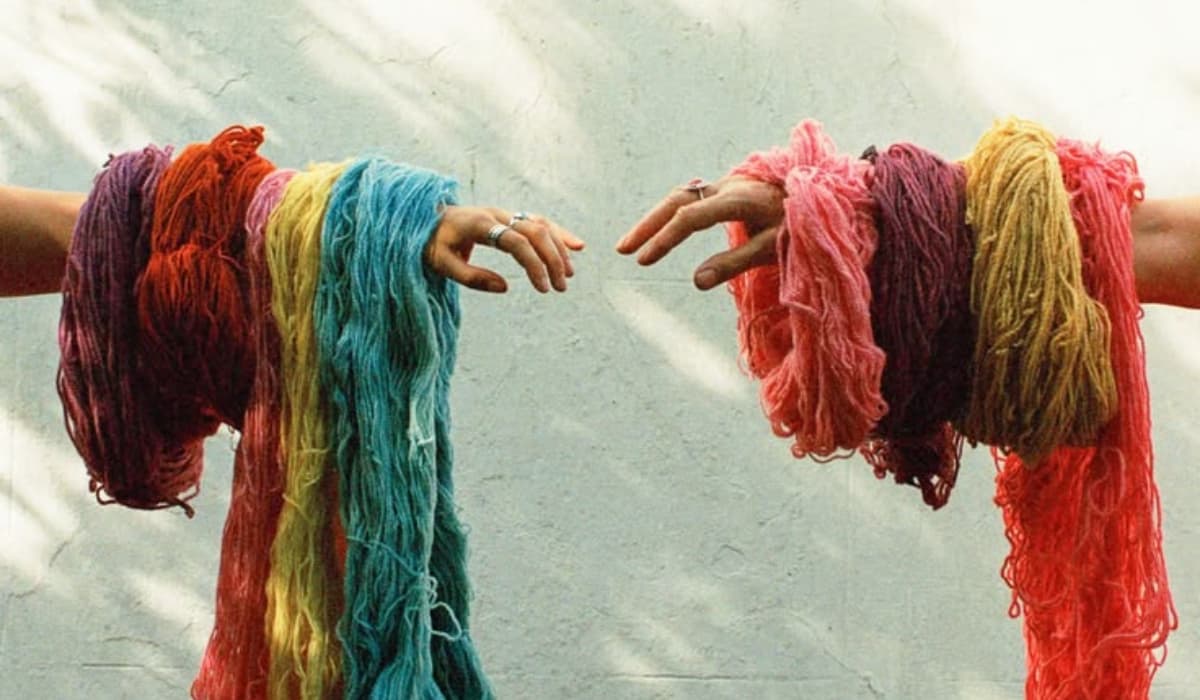
Editorial photograph symbolizing Indian textile heritage | Credits: Pinterest
Diwali is the perfect excuse to give your wardrobe a festive makeover. And while Banarasi silks, Kanjeevaram silks, and Bandhani are quite common during the festive season, it’s time to explore India’s rich textile heritage beyond the common names. From delicate weaves and traditional embroidery, there is so much more to Indian fashion than the usual choices.
These seven traditional fabrics and crafts deserve a place in your wardrobe, and their places of origin make for interesting shopping getaways too.
Lesser Known Indian Textiles To Buy This Diwali
1. Kota Doria From Kota, Rajasthan
If you love lightweight fabrics that look elegant without being too heavy, Kota Doria deserves your attention. According to the official Pothys website, this weaving technique flourished under royal patronage during the reign of Rao Kishore Singh, who died in 1696 while fighting for Emperor Aurangzeb.
This traditional weave from Rajasthan is recognized by its distinctive square-check pattern, locally called khat. Made using cotton and silk yarns, the fabric is known for its delicate appearance and subtle sheen.
The lightweight fabric is ideal for daily wear as well as festive occasions without feeling too heavy. You can style a Kota Doria saree with a statement blouse, traditional earrings and a pair of juttis. If sarees aren't your thing, look for dupattas and dress materials that can be styled with contemporary silhouettes.
To find the best quality Kota Doria, head to Kaithoon near Kota. You can also find this fabric in local handloom outlets in Kota.
2. Ilkal From Bagalkote, Karnataka
Ilkal or Irkal sarees are a beautiful example of how traditional Indian textiles can make a statement through color and craftsmanship rather than elaborate embellishments. The fabric finds its origins in the Bagalkote district of Karnataka and is traditionally woven using cotton and silk yarns. Their distinguishing features include contrasting borders, vibrant color combinations and striking pallus.
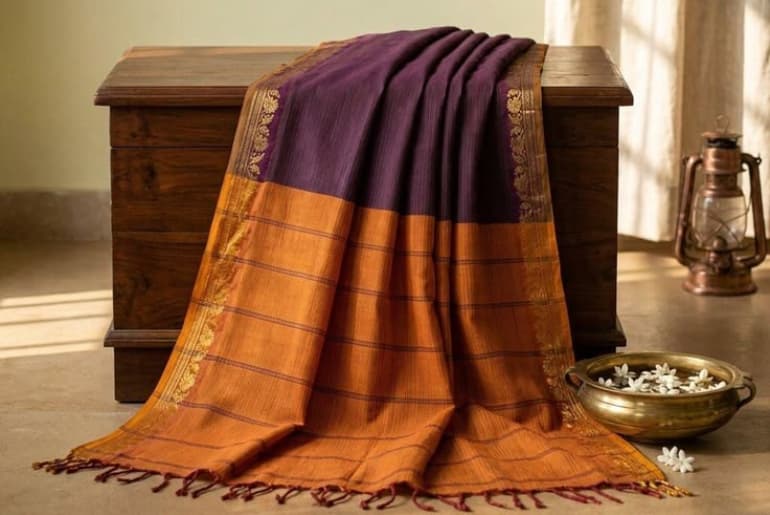
A traditional Ilkal saree | Credits: Pinterest
One of the interesting aspects of Ilkal sarees is their traditional Tope Teni technique, used to join the body and pallu. For Diwali, choose an Ilkal saree in deep red, green or purple and pair it with antique jewelry. You can also experiment with a contemporary blouse to give the traditional drape a modern update. To find the most authentic Ilkal sarees, visit Ilkal Town and nearby weaving centers. However, you can easily find Ilkal sarees across stores in Maharashtra and Karnataka as well as on online platforms.
3. Himroo From Chhatrapati Sambhajinagar, Maharashtra
Maharashtrian textiles are simply class apart when it comes to craft. Himroo is one such textile, hailing from Chhatrapati Sambhajinagar. This silk-and-cotton fabric has Persian design influences and is known for its intricate patterns and distinctive woven appearance. Historically, Himroo was associated with royal households and was inspired by the luxurious Kimkhwab brocades.
For your Diwali wardrobe, consider a Himroo dupatta paired with a solid-colored kurta set or a statement stole over an understated festive outfit. It is also a lovely way to add a piece of Maharashtra’s textile heritage to your collection. The Gaffar Gate in Chhatrapati Sambhajinagar is a great place to shop for Himroo garments.
Also Read: Why Do Men Dress In Sarees And Wear Makeup At This Kerala Temple? The Unique Ritual Explained
4. Tangaliya From Surendranagar, Gujarat
If you enjoy unusual textures and distinctive patterns, Tangaliya is a craft worth exploring. The textile craft is practiced by the Dangasia community in Gujarat’s Surendranagar. Reports suggest that the craft is about 700-year-old. The style is distinguished by its signature raised dots that feel like embellished art on cloth. These dotted patterns are created by twisting additional threads around the warp during the weaving process, giving the fabric a textured look.
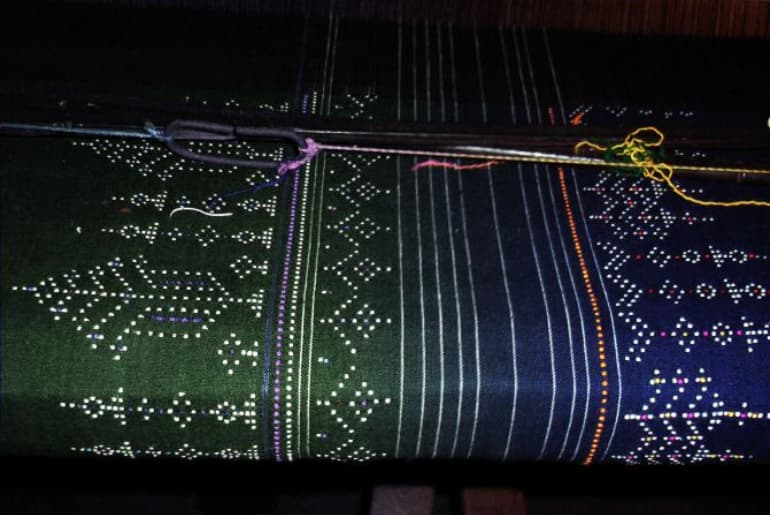
Tangaliya weave | Credits: Pinterest
Traditionally, Tangaliya was used to create woollen garments and textiles. Today, the craft has found its way into contemporary fashion through dupattas, shawls and dress materials. For Diwali, you can style a Tangaliya dupatta with a simple black or ivory kurta set. You can also style it in your everyday wear and officewear for a clean, traditional look. To find the most authentic Tangaliya fabrics, you can visit weaving villages such as Dedadra, Derwada, Vastadi and Sayla in Surendranagar district.
Also Read: Diwali Pahat 2026 In Mumbai: Dates, Venues And Ticket Guide
5. Khandua From Nuapatna, Odisha
If you’re looking for lesser known Indian textiles, you must explore Odisha’s rich textile heritage. Khandua is one such traditional weave that deserves a place in your festive wardrobe. Originating in Nuapatna and Maniabandha in Cuttack district, Khandua is closely associated with the traditions of the Jagannath Temple in Puri. Its distinctive tie-and-dye weaving technique creates beautiful patterns across the fabric.
Sarees made in this weave stand out for their colorful borders and pallus. They also feature motifs such as conch shells, peacocks, lotuses, elephants, and other elements inspired by religious symbols.
This Diwali season, style a Khandua saree with delicate jewelry and a contrasting blouse. Men can also style a Khandua saree as a dhoti and pair it with a subtly colored kurta. Nuapatna and Maniabandha in Cuttack district have some of the best stores selling Khandua weaves.
Also Read: Ralph Lauren Bandhani Skirt Debate: 7 Times Indian Fashion Didn’t Get Its Due
Note: All information used in the blog has been taken from verified online sources
Summing Up
This Diwali, go beyond the mainstream and explore these lesser known Indian textiles. From Kota Doria and Khandua to Himroo and Ilkal, these lesser known fabrics carry a story of craftsmanship, regional identity, and generations of artisanal knowledge.
Frequently asked questions
Which Are Some Lesser-Known Traditional Indian Textiles?
Some lesser-known Indian textiles include Kota Doria, Ilkal, Himroo, Tangaliya, Khandua, Muga silk and traditional Toda embroidery.
Where To Find The Best Ilkal Sarees?
The best Ilkal sarees can be purchased from Ilkal town and neighboring weaving villages in Bagalkot, Karnataka.
Surendranagar Is Known For Which Traditional Weave?
Surendranagar is known for its traditional Tangaliya weave.
- Published:
- Updated:

About the author
Mithilesh Chougule
Content Writer
Mithilesh Chougule is the content writer for unstumbled. He has previously worked as a digital media intern at ELLE India, covering fashion and pop culture. He has also briefly worked at Not Your Idea as a Content Writer. Mithilesh holds a Bachelor of Arts Degree in Sociology from K. J. Somaiya College, Mumbai University. Apart from writing about travel and food, Mithilesh has newly begun solo traveling and enjoys cafe hopping, singing, documenting content, and writing on Substack. Trust...
Related stories