
Jaipur may be best known for its forts, palaces, and colorful bazaars, but temples are equally important to the city’s cultural landscape. Some sit within historic palace complexes, others occupy hills overlooking the Pink City, while newer marble temples bring a completely different style of architecture. For travelers interested in history, architecture, or spirituality, visiting a few of them can easily become part of a regular Jaipur sightseeing itinerary.
From the sacred kunds of Galta Ji to the white marble Birla Mandir and the daily darshan at Govind Dev Ji Temple, these seven temples offer very different experiences. Here are some of the best temples to visit in Jaipur, along with their timings, addresses, and entry fees.
Which Are The Best Temples To Visit In Jaipur?
1. Garh Ganesh Temple
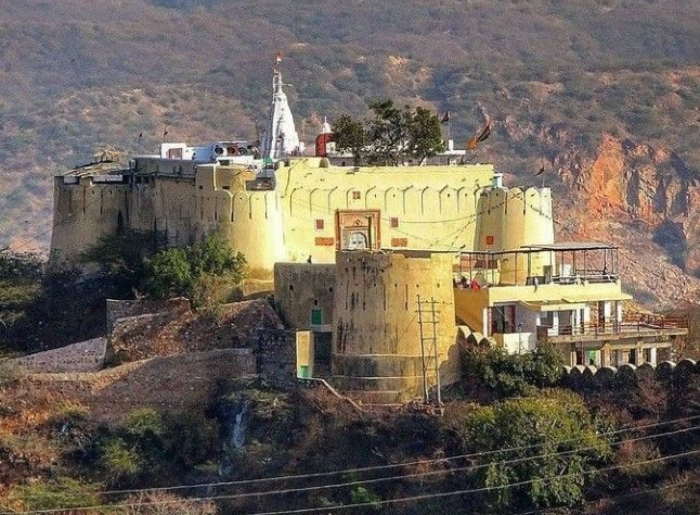
Perched on the hills near Gatore Ki Chhatriyan, Garh Ganesh Temple is dedicated to Lord Ganesha and is one of Jaipur’s well-known religious sites. The temple predates the foundation of Jaipur and is believed to have been established by Maharaja Sawai Jai Singh II. Its hillside location also gives visitors views across parts of the Pink City. Reaching the temple requires an uphill climb, so comfortable footwear is useful. Wednesdays have extended darshan hours and can also be busier than regular days. The temple’s official website notes that timings may change during festivals and special occasions.
- Timings: Monday, Tuesday, Thursday to Sunday: 7:30 AM to 12 PM and 4 PM to 8:30 PM; Wednesday: 6:30 AM to 1 PM and 4 PM to 10:30 PM
- Address: Shree Garh Ganesh Temple, Gatore Ki Chhatriyan, Krishna Nagar, Brahampuri, Jaipur, Rajasthan 302002
- Entry Fee: No entry fee
2. Shila Devi Temple
Located inside the Amer Palace complex, Shila Devi Temple is dedicated to Shila Mata and has long been associated with Jaipur’s former royal family. The temple can conveniently be included while exploring Amer, making it one of the easiest additions to a standard Jaipur itinerary. The temple becomes particularly important during Navratri, when large numbers of devotees arrive for darshan and special prayers. Since its opening schedule can change on religious occasions, checking the timings before visiting during a festival is sensible.
- Timings: 6 AM to 12 PM and 4 PM to 8 PM
- Address: Shila Devi Temple, Amer Palace, Amer, Jaipur, Rajasthan 302028
- Entry Fee: No entry fee for temple darshan
Wondering where to eat in the Pink City? Discover the best places to eat in Jaipur from a local’s point of view.
3. Galta Ji Temple
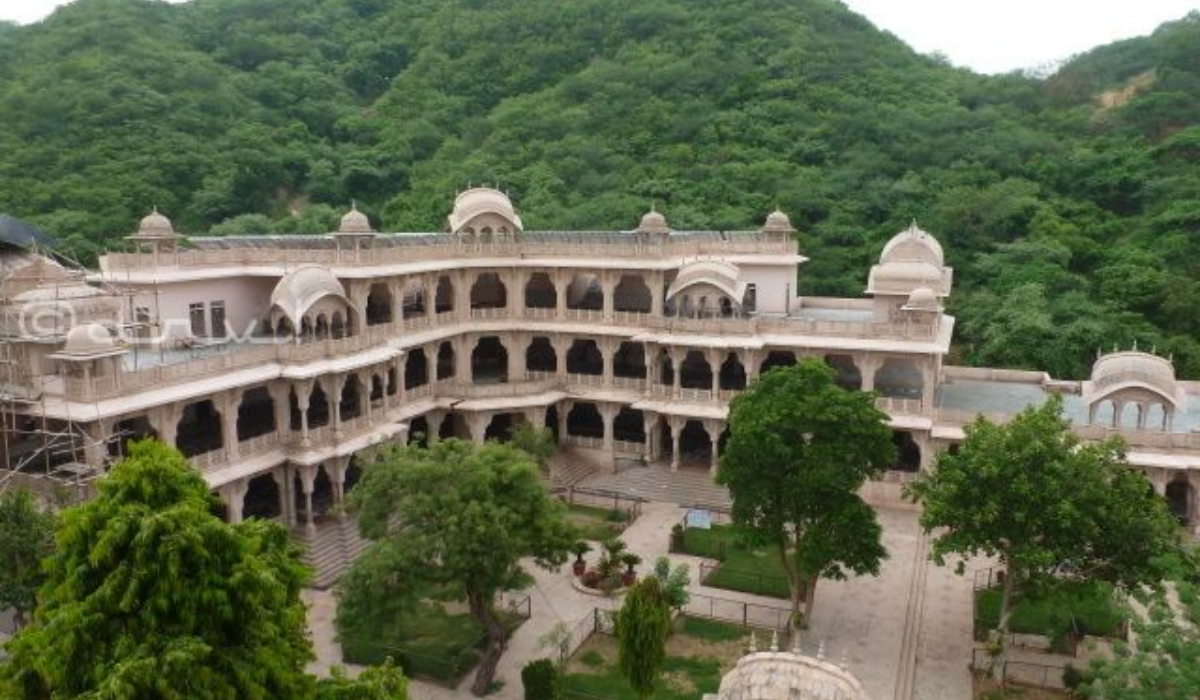
Galta Ji is more than a single temple. The historic pilgrimage complex sits among the Aravalli Hills and contains temples, pavilions, natural springs, and sacred water tanks known as kunds. The Galta Kund is the most important of these, and devotees visit the complex to take a ritual bath. Monkeys are also commonly seen around the complex, which has led to Galta Ji being popularly referred to as the Monkey Temple. Travelers should allow enough time to walk around the complex rather than treating it as a quick temple stop.
- Timings: 5 AM to 9 PM
- Address: Galta Ji Temple, Galta Ji, Jaipur, Rajasthan 302003
- Entry Fee: No entry fee
4. Birla Mandir
Birla Mandir, officially known as the Lakshmi Narayan Temple, offers a striking contrast to Jaipur’s older shrines. Located at the base of Moti Dungri Hill, the temple is built from white marble and is dedicated to Lord Vishnu and Goddess Lakshmi. The marble carvings are among its most noticeable features, while the temple looks particularly impressive when illuminated in the evening. Its central location also makes Birla Mandir relatively easy to combine with other Jaipur attractions.
- Timings: 8 AM to 12 PM and 4 PM to 8 PM
- Address: Birla Mandir, Jawahar Lal Nehru Marg, Tilak Nagar, Jaipur, Rajasthan 302022
- Entry Fee: No entry fee
5. Govind Dev Ji Temple
Located within the City Palace complex, Govind Dev Ji Temple is one of Jaipur’s most important Krishna temples. The temple is dedicated to Lord Krishna and Radha, and the deities are traditionally associated with Vrindavan and Jaipur’s royal history. Unlike an attraction that can be visited at any point during its opening hours, worship here revolves around different darshan and aarti periods during the day. The exact jhanki timings can vary, particularly during festivals and special occasions, so travelers who want to attend a particular darshan should check the day’s schedule before visiting.
- Timings: 4:30 AM to 8:30 PM; individual darshan periods vary
- Address: Govind Dev Ji Temple, City Palace Complex, Jalebi Chowk, Jai Niwas Garden, Jaipur, Rajasthan 302002
- Entry Fee: No entry fee
Planning a shopping spree in the Pink City? Take a guided tour of the best shopping markets in Jaipur.
6. Moti Dungri Ganesh Temple
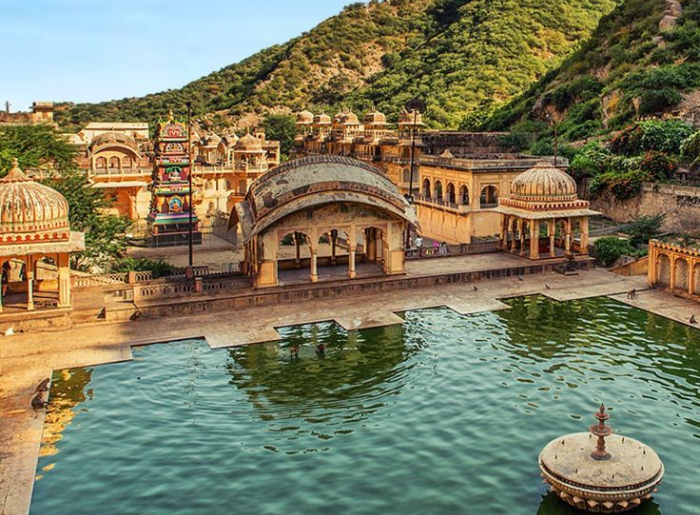
Moti Dungri Ganesh Temple sits at the foot of Moti Dungri Hill and is one of Jaipur’s most important temples dedicated to Lord Ganesha. It is particularly popular among devotees beginning something auspicious, while Wednesdays draw larger crowds and have special religious significance. The temple’s official schedule begins with Mangla Aarti at 5 AM, with several other aartis held during the day. Wednesday schedules differ from regular days, with the official temple website listing the final Shayan Aarti at 11 PM instead of 9 PM.
- Timings: 5 AM to 1:30 PM and 4:30 PM to 9:30 PM; timings vary on Wednesdays and special occasions
- Address: Moti Dungri Ganesh Temple, Moti Dungri, Near Birla Temple, J.L.N. Marg, Jaipur, Rajasthan
- Entry Fee: No entry fee
7. Khole Ke Hanuman Ji Temple
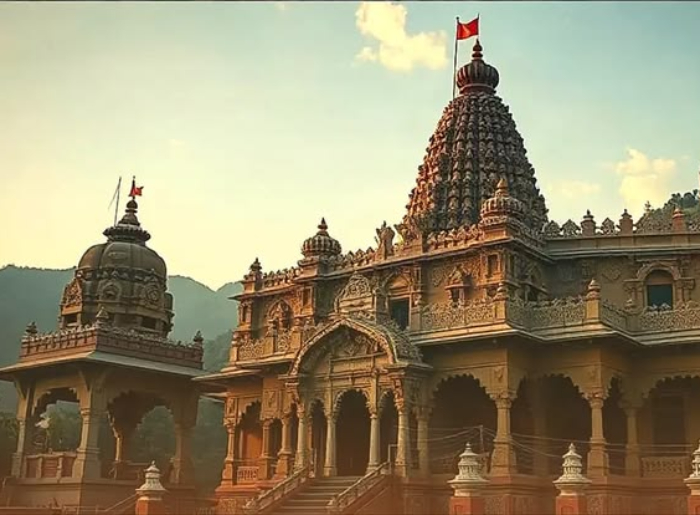
Located around Laxman Dungri, Khole Ke Hanuman Ji Temple is dedicated to Lord Hanuman and has grown into a large religious complex since its establishment in the 20th century. Its location around the hills gives it a different atmosphere from temples in Jaipur’s busy historic center. The temple attracts both devotees and visitors interested in exploring its surroundings. It can become particularly crowded on religious occasions, so visiting outside the busiest periods may be more comfortable if you primarily want to explore the complex.
- Timings: 5 AM to 11 PM
- Address: Shri Khole Ke Hanuman Ji, Shri Narvar Ashram, Baba Shri Nirmal Das Ji Ka Khola, Laxman Dungri, Delhi Road, Jaipur, Rajasthan 302002
- Entry Fee: No entry fee
What Should You Know Before Temple Hopping In Jaipur?
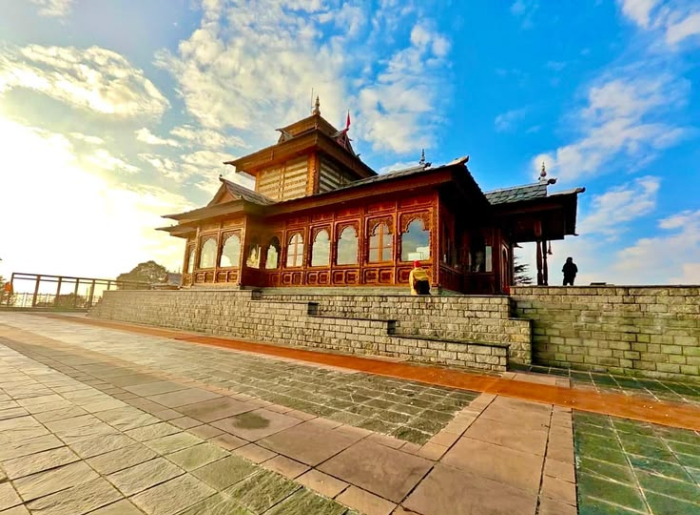
Temple timings can change during festivals, religious occasions, and special events, so checking the latest schedule before visiting is useful. This is particularly important at Govind Dev Ji Temple, where darshan takes place at different times throughout the day, and at Moti Dungri Ganesh Temple, where Wednesdays follow a different schedule. Dress respectfully and remember that footwear generally needs to be removed before entering the main temple areas. If you plan to visit several temples in one day, grouping nearby sites can save time. Birla Mandir and Moti Dungri Ganesh Temple are particularly easy to visit together, while Shila Devi Temple can naturally be combined with a trip to Amer Palace.
Looking for some thrills without overspending? Here are the best adventure activities to do in Jaipur under INR 5,000
Author’s Note
Having visited Jaipur, I’ve always associated the city with its forts, palaces, markets, and food, but I’ve also heard a lot about its temples and their importance to the city. They offer another side of Jaipur that is easy to miss on a typical sightseeing trip, and several can be naturally added to an itinerary while exploring different parts of the city.
Summing Up
Temple hopping in Jaipur adds another side to a trip that might otherwise revolve around forts, palaces, shopping, and food. Govind Dev Ji and Shila Devi connect closely with Jaipur’s royal history, Galta Ji combines pilgrimage with the Aravalli landscape, while Birla Mandir represents a much more modern style of temple architecture. You do not need to cover all seven temples in a single day. Choose the ones that fit naturally into the rest of your Jaipur itinerary, check the latest darshan timings before leaving, and allow additional time during festivals, Wednesdays, and other particularly busy religious occasions.