Why Is Diwali Celebrated Differently At Kamakhya Temple In Assam?
Diwali 2026: Kamakhya Temple in Assam observes Diwali with Shyama Kali Puja and distinctive Shakta traditions. Discover the rituals and significance behind the celebration this festival.
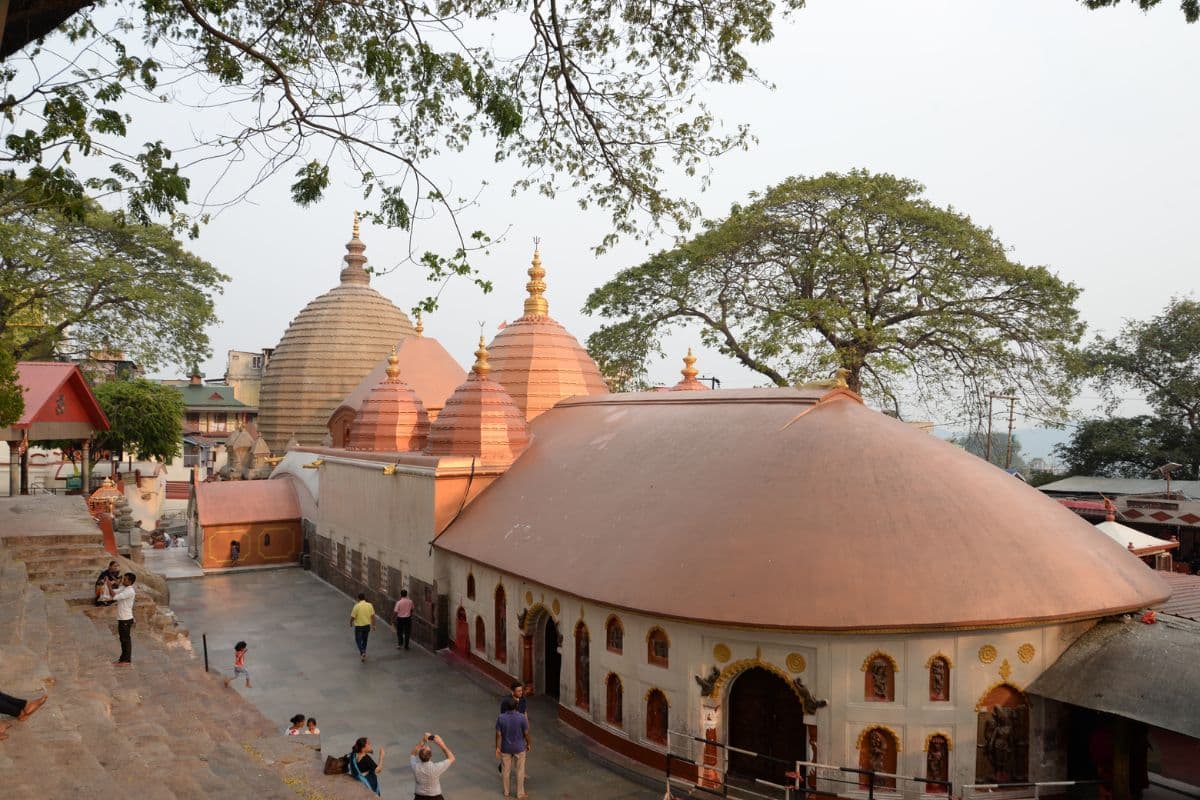
Kamakhya Temple | Photo Credits: Wikimedia Commons
The ancient Kamakhya Temple is one of the world's oldest and most revered Shakti peethas. It is located atop the Nilachal Hill in Guwahati, Assam, and is known across the globe for the celebration of the menstruation of Goddess Kamakhya. While most parts of India celebrate Diwali as the festival to worship Goddess Lakshmi, or the festival of lights and honor the return of Lord Rama to Ayodhya, Kamakhya Temple celebrates this festival in a completely different manner. Here, the focus is not on any grand celebrations or wealth but on Tantric Shaktism. Wondering what this is? Well, let's understand.
Diwali At Kamakhya Temple
While in most Diwali celebrations, ornate clay or metal idols of deities are installed, decorated, and worshipped, Kamakhya has been following an iconographic tradition. There is no idol or image of the Goddess installed in the inner sanctum of the temple.
The inner sanctum of the temple is a natural cave that houses a rock fissure with an underground natural spring. It is naturally shaped like a Yoni, or a woman’s womb or vulva, which represents the source of the cosmic creation.
On Diwali night, this natural rock fissure is adorned with a red silk saree, vermilion, or sindoor, and flowers. There are hundreds of flickering oil lamps or diyas lit inside, and devotees worship and celebrate this raw form of the goddess.
Thousands of brass and earthen oil lamps or diyas are lit and placed along the outer walls, stone steps, and courtyard of the Nilachal Hills. You can also hear the continuous chanting of Chandi Path and Kali Kavach.

Kamakhya Temple | Photo Credits: Wikimedia Commons
Also Read: Where Can You Buy Diwali Diyas And Decor In Mumbai At Wholesale Prices?
Shyama Kali Puja
The night of Kartik Amavasya, which is the new moon night of Diwali, is celebrated by worshipping the Goddess of Wealth in Hinduism, Goddess Lakshmi. But in the eastern part of the country, especially at the Kamakhya Temple, Goddess Shyama Kali is worshipped on this night.
While the standard Lakshmi puja takes place during the evening of Kartik amavasya, the main rites of the Kamakhya Temple’s Shyama Kali puja take place at deep midnight. This auspicious time is known as Nishita Kaal, unlike the Pradosh Kaal timings followed by the rest of India.
The puja of Goddess Lakshmi focuses on home abundance, but here Goddess Shyama Kali is worshipped as the protective, transformative, and dark aspect of the divine mother. She is known to destroy and defeat ego, darkness, and the cosmic devils.
Kamkhya Temple houses 10 individual shrines that are dedicated to the Das Mahavidyas, or the Ten Wisdom Goddesses. They are Kali, Tara, Bhuvaneshwari, Bhairavi, Chhinnamasta, Dhumavati, Bagalamukhi, Matangi, and Kamala. Distinct midnight tantric rites are observed at each of these shrines during Diwali.
Also Read: What To Gift This Diwali? Unique Ideas Beyond Mithai And Dry Fruits
Tantric Traditions Of Kamakhya
The mainstream Diwali puja is focused on family gatherings, domestic purity, and vegetarian feasts, but Diwali at Kamakhya Temple involves Tantric sadhnanas and rituals. These rituals and sadhanas are performed by priests, sadhus, and tantric practitioners who actually gather on the Nilachal Hills from across India.
According to ancient scriptures like the Kalika Purana and Yogini Tantra, special Vamachara (left-hand path) and Dakshinachara (right-hand path) rituals are performed simultaneously.
They also observe Panch Makara practices. These are highly controlled, ritualistic, and symbolic offerings that involve secret mantras, sacrificial elements, and specialized mudras. These practices are performed in order to appease the fiercer manifestations of the Goddess.
There are night-long tantric chants that continue to awaken and appease the Goddess. Young girls who have not yet attained puberty are ritualistically offered food, clothes, and honors. It is a way to worship these young girls as living incarnations of Goddess Kamakhya.
Also Read: What Is Diwali Faral? A Guide To Maharashtra’s Festive Snacks

Kamakhya Temple | Photo Credits: WIkimedia Commons
Animal Sacrifice Or Bali
The biggest difference between Diwali in Kamakhya and Diwali in the rest of the country is the ritualistic animal sacrifice, or Bali, that takes place. The Shakta rites at Kamakhya actually mandate the ritualistic offering of animals like Buffalo or male goats. If not animals, devotees can also pick vegetable substitutes like sugarcane, gourds, or cucumbers.
This ritualistic animal or vegetable sacrifice is not at all viewed as violence. It is putting a ritualistic end to a human’s animalistic tendencies, ignorance, and human ego right in front of the Divine Mother. This sacrificed prasad is cooked and consumed by priests and devotees as mahaprasad.
Also Read: 7 Famous Diwali Sweets From Different Indian States And Where To Find Them
Summing Up
Diwali is celebrated differently at Kamakhya Temple because its emphasis is on worshipping the transformative power of Shakti and not on material abundance. It is more about celebrating Shyama Kali and the spiritual awakening of the divine feminine power.
Frequently asked questions
Which goddess is worshipped during Diwali at Kamakhya Temple?
Goddess Shyama Kali is worshipped during Diwali night at Kamakhya Temple.
Why is Shyama Kali Puja performed at midnight at Kamakhya Temple?
The Shyama Kali Puja is performed at midnight because it is considered the most potent auspicious time for Tantric rites.
Why are young girls worshipped on Diwali At Kamakhya Temple?
Young girls (pre-puberty) are worshipped on Diwali as they are considered as the living incarnations of Goddess Kamakhya.
- Published:
- Updated:
About the author
Vaishalee Kalvankar
Vaishalee Kalvankar writes about travel and food for unstumbled. With five years of content and event management experience, she has worked at Curly Tales India, Curly Tales Middle East, Tit Bit Foods, Minority, and Seventy Seven Entertainment. She holds a postgraduate degree in media, entertainment, and marketing from KES Shroff College in Mumbai. Apart from writing, she is a traveller at heart who also loves dancing, drawing, and reading. Her expertise in festive travel recommendations and...