
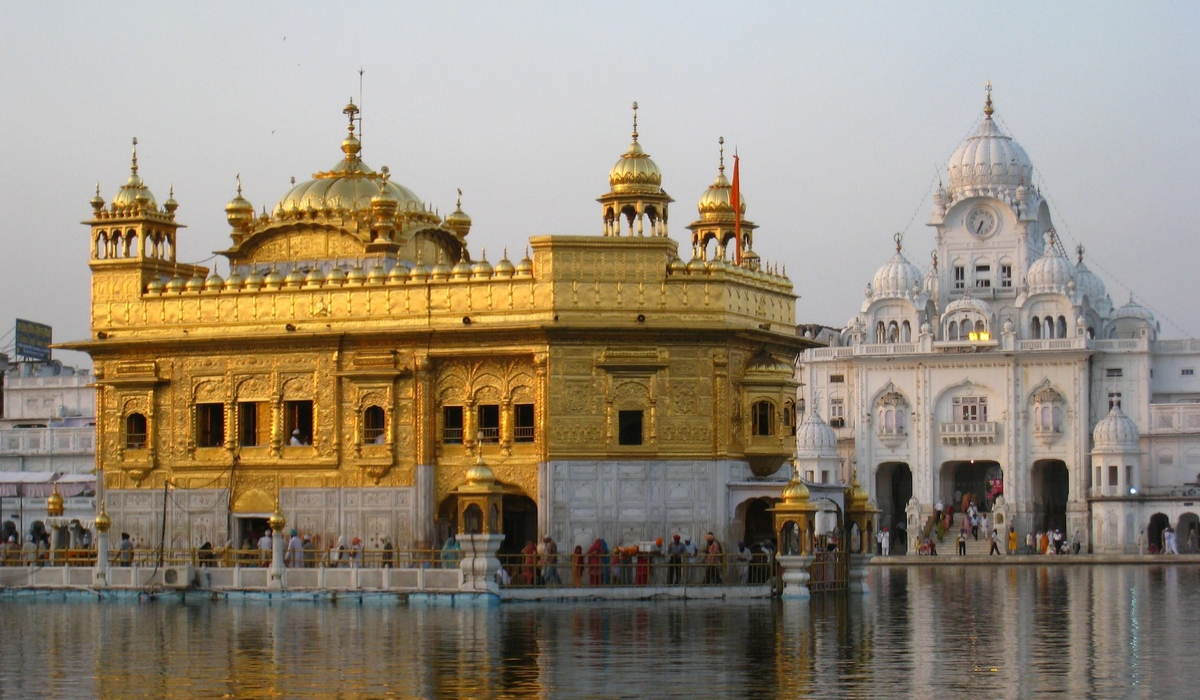
A visit to the Golden Temple can feel remarkably different depending on what time you arrive, whether it’s before or after sunset or sunrise. You will see Sri Darbar Sahib at one of its most significant times of day, when prayers and the Prakash ceremony shape the experience. Come back after dark, and the temple is illuminated, its golden exterior reflected across the Amrit Sarovar. So, when comparing the Golden Temple at night versus in the morning, consider more than just the view. Morning suits travelers interested in the ceremony and quieter early hours, while night offers the illuminated view many visitors want to see. If you are staying in Amritsar overnight, there is a strong case for experiencing both.
What Is A Golden Temple Morning Visit Like?
Between roughly 3:30 AM and 6 AM, visitors can experience the complex before the busiest daytime hours and witness the Prakash ceremony. This is when the Sri Guru Granth Sahib is ceremonially brought and installed for the day. The ceremony begins at approximately 3:30 AM in summer and around 4 AM in winter. Visiting the Golden Temple at sunrise also lets you watch the surroundings gradually change as daylight arrives. For anyone primarily interested in the religious and ceremonial aspects of Harmandir Sahib, an early morning visit to the Golden Temple has a clear advantage.
What Is A Golden Temple Night Visit Like?
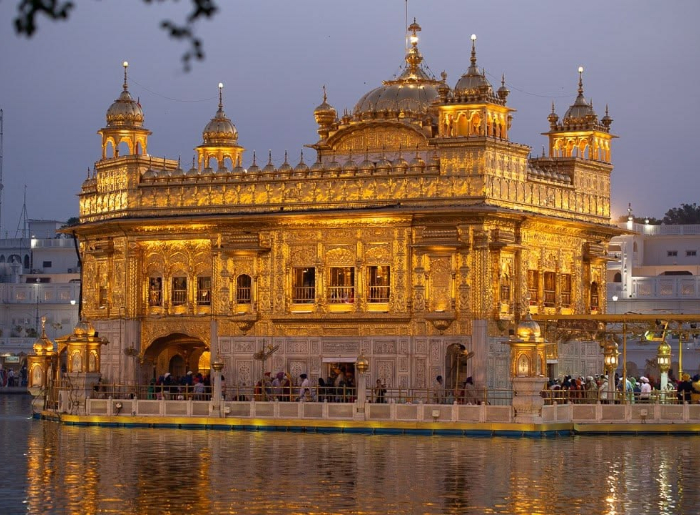
After dark, the illuminated shrine stands out against the night sky, while its lights are reflected in the Amrit Sarovar. It is a completely different view of the Golden Temple from the one you see in the morning. Late night can also be considerably quieter than daytime hours. This gives visitors more time to take in the complex without the same level of daytime activity around them. A Golden Temple night visit is therefore particularly suited to travelers who want to see the illuminated temple and experience the complex during a calmer part of the day.
When Is The Golden Temple Less Crowded?
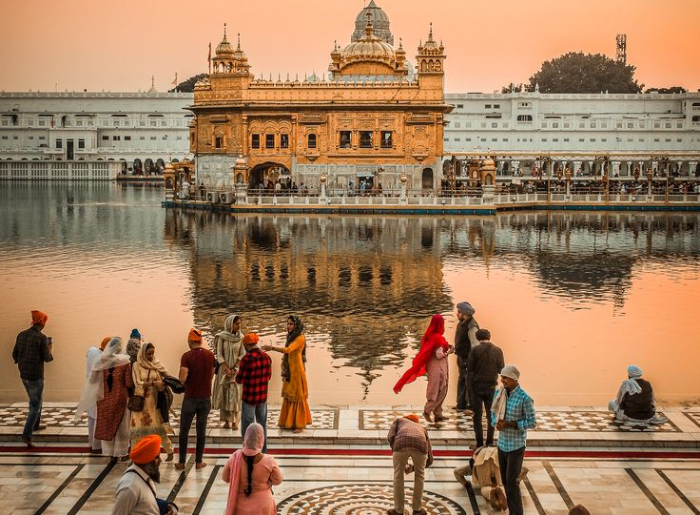
No fixed period guarantees small crowds, and no booking limit is mentioned here, but the information available points to early morning and late night as better options than the busiest daytime hours. Weekdays and non-festival days can also provide a more peaceful experience. Weekends, Gurpurabs, Diwali, Baisakhi, and other major occasions can bring much larger crowds and longer queues. When considering Golden Temple crowd timings, consider both the date and the hour. Even an early visit can be busy during an important festival. If avoiding crowds is a priority, a regular weekday outside a major celebration is the more practical choice.
Is Morning Or Night The Best Time To Visit The Golden Temple?
The Golden Temple’s best time to visit largely depends on what kind of experience you are looking for, if you visit in the morning has the advantage of the Prakash ceremony, prayers, cooler early hours, and the transition from darkness into daylight. It makes sense for visitors who want their trip to center more closely on the religious experience of Harmandir Sahib.
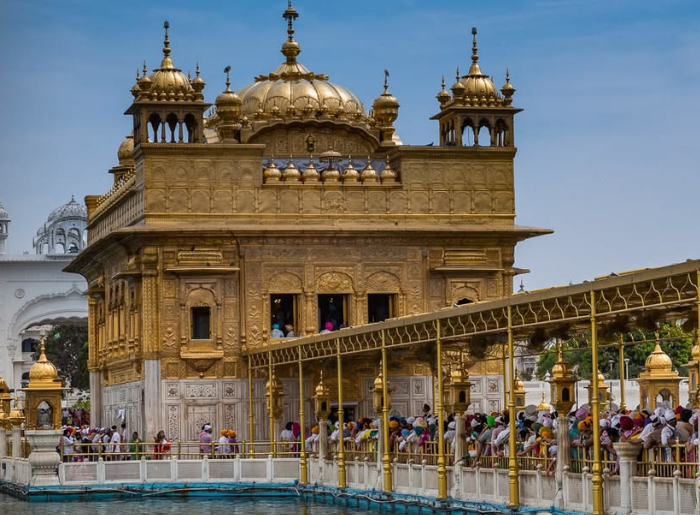
Night offers something completely different as you get to see the Golden Temple at night means experiencing the illuminated shrine and its reflection across the water. A Golden Temple evening visit can work, too, but staying later can help you avoid some of the busier daytime periods. If your itinerary allows an overnight stay, visiting once before sunrise and returning after dark gives you the most complete comparison.
Which Season Is Best For Visiting The Golden Temple?
October to March is considered the most comfortable season to visit because the weather in Amritsar is generally cooler. Mornings and nights can become chilly, particularly during winter, so that an extra layer can be useful. December and January can also bring cold conditions and occasional fog.
April to June is considerably hotter, with temperatures that can reach above 40°C. During these months, an early-morning or late-evening visit makes more sense than spending extended periods at the complex in the afternoon. July to September brings monsoon conditions and higher humidity. Weather, therefore, is worth considering when deciding the best time to visit the Harmandir Sahib.
What Should You Know Before Visiting?
Whatever time you choose, visitors are expected to follow the same rules inside the Golden Temple complex. Shoes must be removed at the designated counters, feet should be washed before entering, and heads need to remain covered. Visitors should dress modestly, with shoulders and knees covered. Alcohol, tobacco, meat, and non-prescription drugs are not permitted on the premises.
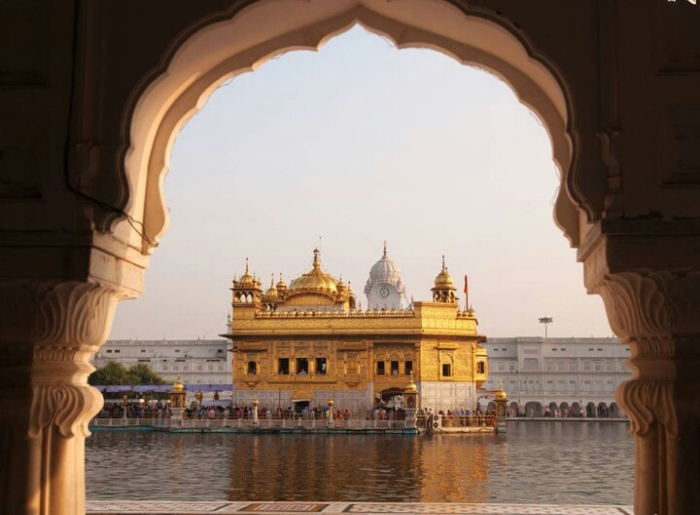
Visitors should also follow the proper queue for darshan. If Golden Temple photography is part of your plans, remember that it is, first and foremost, an active place of worship. The experience should not be treated simply as a photo opportunity, whether you arrive for sunrise or the illuminated nighttime view.
Visiting Amritsar during Baisakhi for the first time? Follow this 48-hour Amritsar itinerary for first-time visitors during Baisakhi.
Should You Visit The Golden Temple Twice?
If you have enough time and want to immerse yourself in the full experience, visiting twice solves the morning-versus-night question neatly. An early visit lets you experience the Prakash ceremony and the start of the day, while returning after dark lets you see the temple illuminated. Additionally, by extending your trip you also give yourself enough time to explore Amritsar, with the city offering visitors with a variety of things to do, taste local cuisines and explore other ancient and old places of worship.
Author’s Note
Having visited the Golden Temple, I found that the experience goes far beyond simply seeing the shrine. Spending time around the Amrit Sarovar, listening to the prayers, and watching the temple reflected in the water are moments that stay with you. If I were planning another visit, I would make time to see it both early in the morning and after dark, because each offers a completely different atmosphere.
Summing Up
Choosing between the Golden Temple at night and in the morning comes down to what matters more to you. Morning is the stronger choice for experiencing the Prakash ceremony, prayers, and the temple around sunrise. Night is better suited to seeing the illuminated shrine, its reflection in the Amrit Sarovar, and a different side of the complex after the daytime rush. For travelers with enough time, the better plan is not to choose at all. Visit early in the morning and return after dark. The setting may be the same, but the experience is noticeably different.