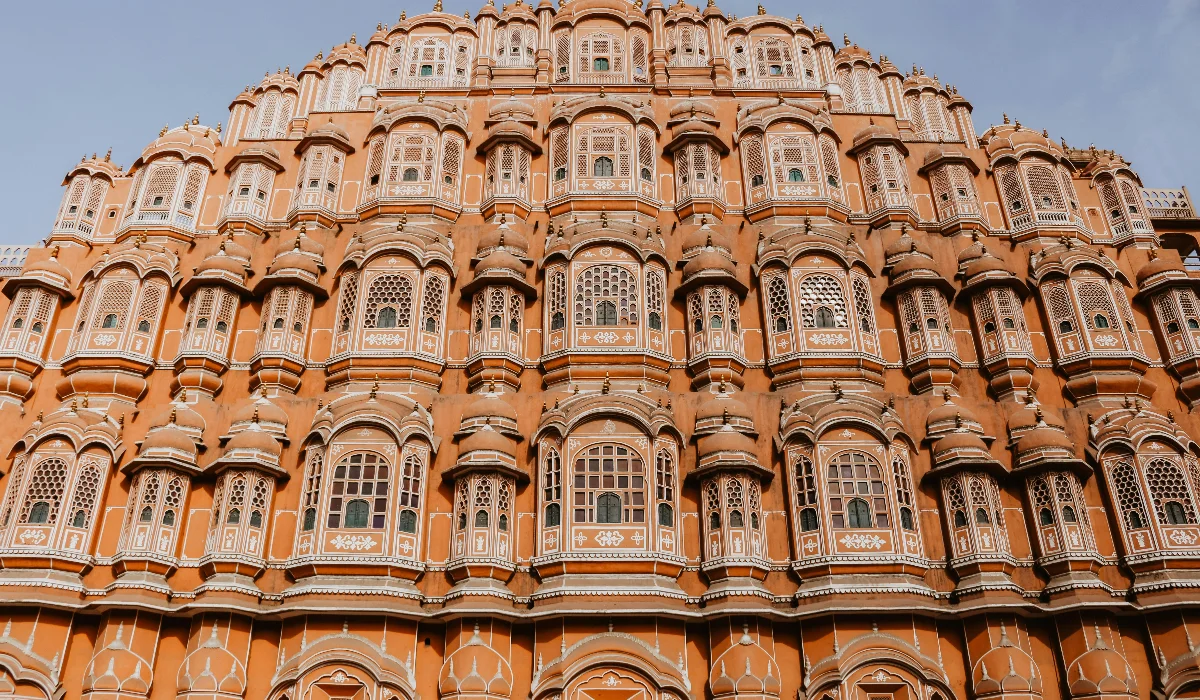

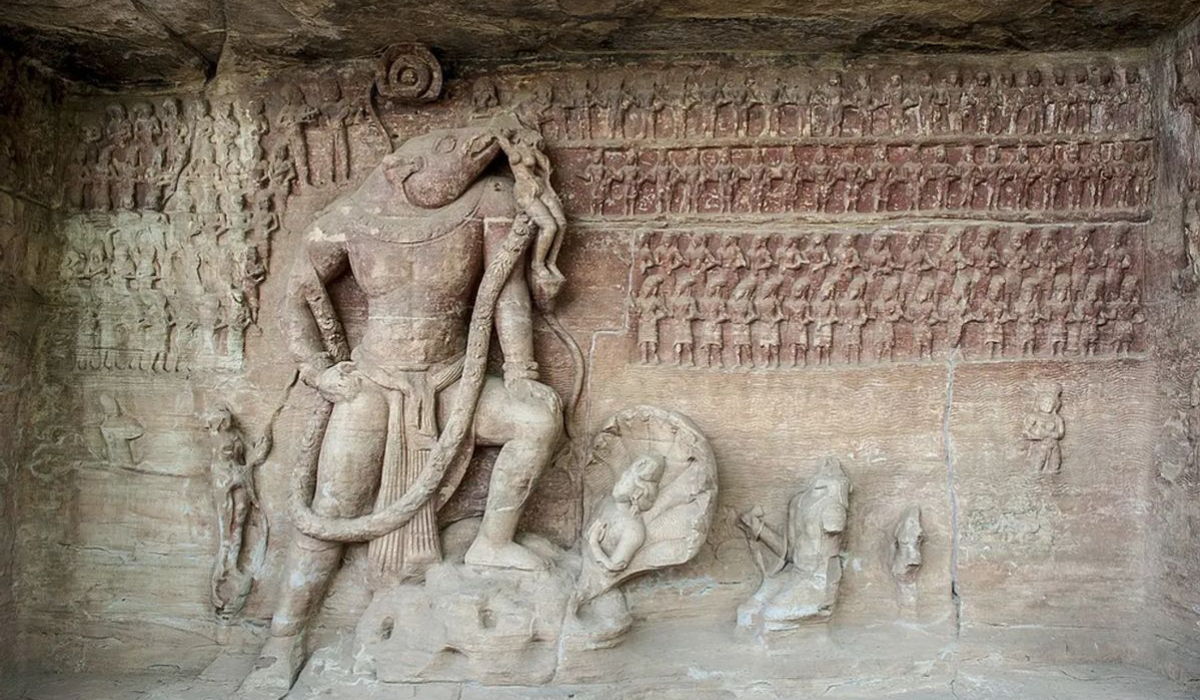
India’s UNESCO Tentative List has expanded again, with five new entries bringing the country’s total to 78 sites. Four of the additions are in Madhya Pradesh, while the fifth is a transnational proposal connecting locations associated with Mahatma Gandhi’s Satyagraha movement in India and South Africa. The five additions are Bagh Cave Paintings, Udaigiri Caves, Ginnorgarh Fort, the Group of Temples of the Chambal Valley, and the Sites of Satyagraha. Being placed on the Tentative List does not mean a site has received World Heritage status. Instead, the list contains properties a country may consider nominating for the UNESCO World Heritage List in the future.
Which 5 Sites Have Been Added To India’s UNESCO Tentative List?
1. Udaigiri Caves, Madhya Pradesh
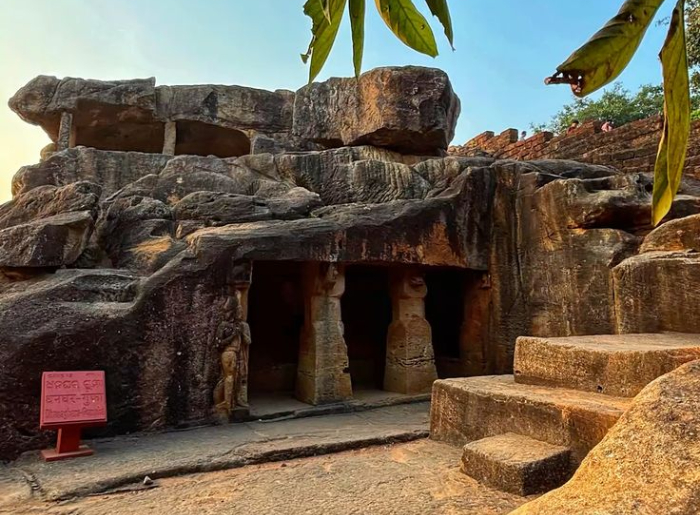
The Udaigiri Caves UNESCO entry covers a rock-cut sacred complex primarily developed under Gupta patronage between the late 4th and early 5th centuries CE. The site contains 20 excavated caves along with sculptural panels, inscriptions, pathways and other features that together form a larger ritual landscape.
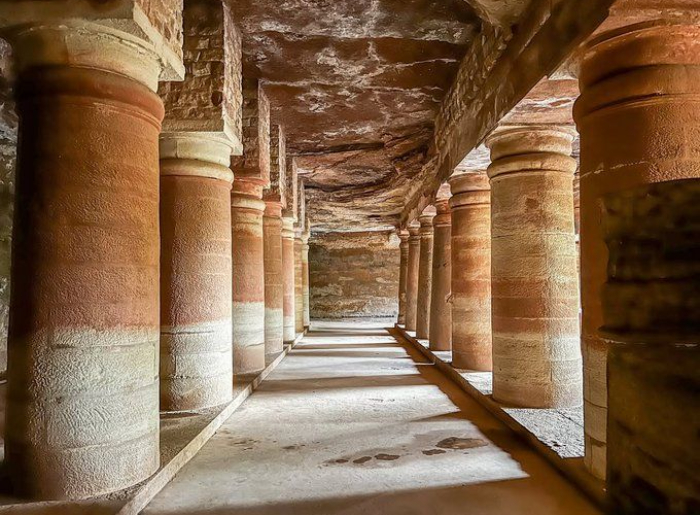
Udaigiri is particularly important for understanding an early phase in the development of Hindu sacred architecture. Its combination of rock-cut shrines, monumental sculpture, inscriptions and the surrounding landscape provides a glimpse into how religious architecture was taking shape during the Gupta period.
2. Bagh Cave Paintings, Madhya Pradesh
The Bagh Caves are a group of nine rock-cut Buddhist caves on the southern slope of the Vindhyan range, beside the Baghni River in western Madhya Pradesh. Developed around the 4th to 6th centuries CE, the caves are particularly known for their surviving mural paintings. The UNESCO entry for the Bagh Cave Paintings highlights the site’s artistic and architectural significance.
UNESCO notes that the murals, especially those preserved in Cave 4 or Rang Mahal, are among the important surviving examples of Buddhist mural painting in India after Ajanta.
3. Ginnorgarh Fort, Madhya Pradesh
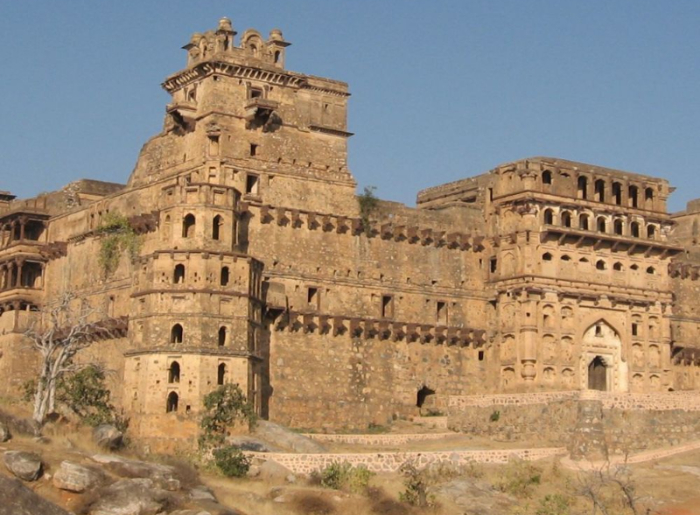
Ginnorgarh Fort is another Madhya Pradesh site included in the UNESCO Tentative List India 2026. The fort is associated with the Raj Gond rulers of central India and has been described as their principal fortified capital. Its inclusion brings attention to the region’s Gond history and architectural heritage.
4. Group Of Temples Of The Chambal Valley, Madhya Pradesh
The fourth Madhya Pradesh addition groups the temple complexes of Bateshwar, Padavali and Kakarmath in the Chambal Valley. Rather than treating them as unrelated monuments, the proposal presents them together to represent the region’s architectural heritage.
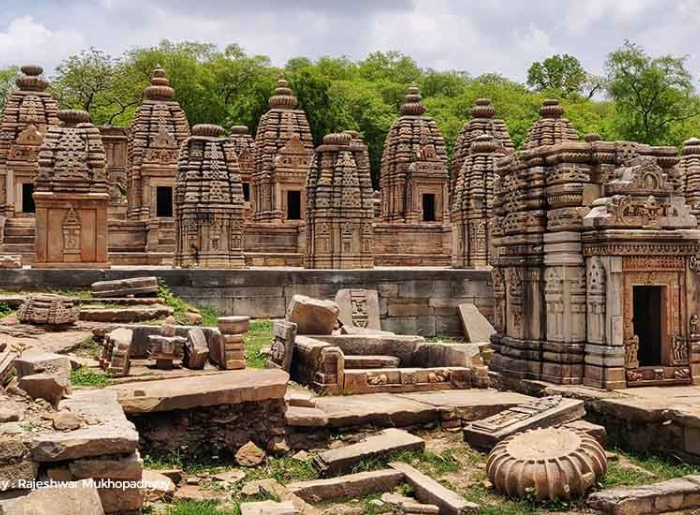
This inclusion also adds another dimension to Madhya Pradesh’s heritage, alongside the Buddhist caves at Bagh, the Gupta-era complex at Udaigiri, and Ginnorgarh Fort.
What Are The Sites Of Satyagraha Proposal?
Sites of Satyagraha is a proposed serial transnational property connecting India and South Africa, tracing the development of Mahatma Gandhi’s idea of Satyagraha from its beginnings in South Africa through its expansion and institutionalization in India. The proposal contains nine components, with Pietermaritzburg Station and Phoenix Settlement in South Africa. The seven Indian components are Mahatma Gandhi Satyagraha Smarak, Sabarmati Ashram, Mani Bhavan, Harijan Sevak Sangh, Sevagram Ashram, Aga Khan Palace and Gandhi Smriti.
Wondering which countries have the highest number of UNESCO-listed sites? Discover the top 10 countries with the most UNESCO World Heritage Sites in 2026.
Does Being On The UNESCO Tentative List Mean World Heritage Status?
Being added to the UNESCO Tentative List does not mean that a place has become a UNESCO World Heritage Site. The Tentative List is an inventory of cultural and natural properties that a country considers suitable for future World Heritage nomination. A site must first appear on this list before UNESCO can consider a formal nomination.
The country must conduct a preliminary assessment of the site and, if it decides to proceed, prepare a detailed nomination dossier. UNESCO’s advisory bodies then evaluate the nomination, including whether the property demonstrates Outstanding Universal Value and meets the necessary protection, management, authenticity or integrity requirements. The World Heritage Committee makes the final decision on inscription.
So, the five additions to the UNESCO Tentative List India 2026 should be viewed as potential candidates rather than newly declared World Heritage Sites. Their inclusion is an important first step, but it does not guarantee that any of them will eventually receive UNESCO World Heritage status.
Curious about India’s globally recognized cultural and natural treasures? Explore the UNESCO World Heritage Sites in India and what makes them significant.
Summing Up
With these five additions, the India UNESCO Tentative List now contains 78 sites. The latest entries cover Buddhist art, Gupta-era sacred architecture, Gond heritage, historic temples and locations connected to the evolution of Satyagraha. Together, they broaden the range of Indian cultural heritage that could be considered for future World Heritage nomination.