
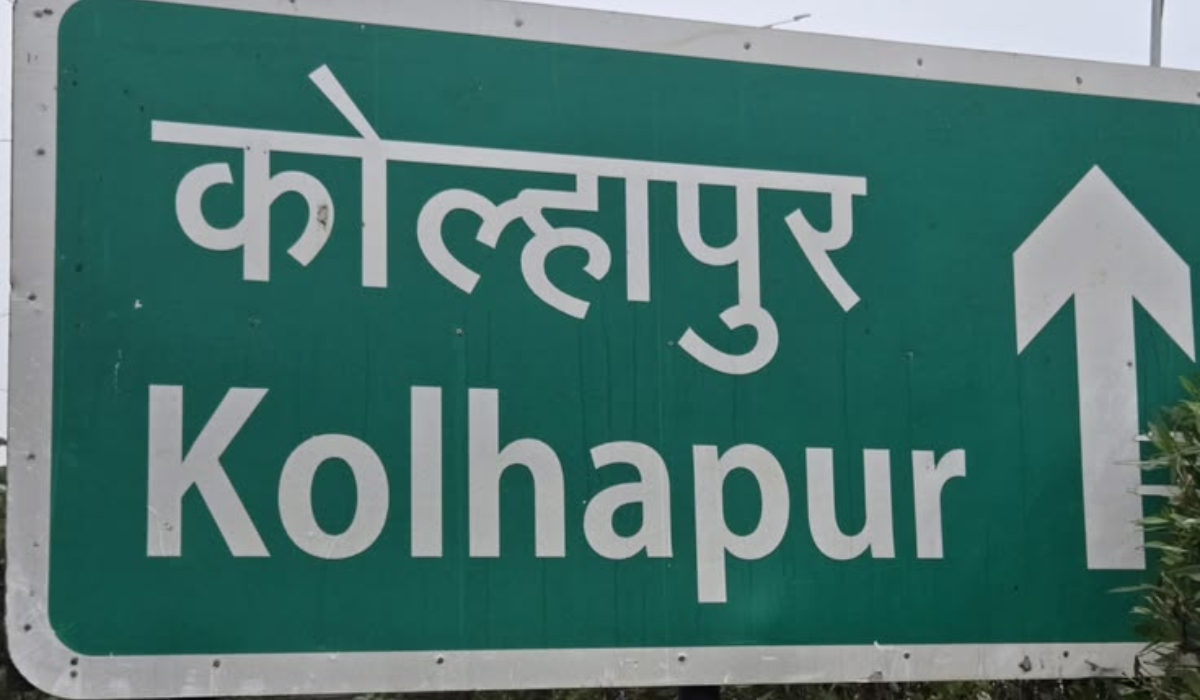
Situated in the southwest region of Maharashtra, Kolhapur is a city of immense cultural and historical significance. From centuries-old temples and Maratha-era landmarks to traditional wrestling grounds and bustling shopping streets, the city has preserved several aspects of its heritage while growing into one of southern Maharashtra’s major urban centers.
We’d love to go on and tell you about all the marvels this city holds. However, that would take much more than one article. So, here are 7 places to visit in Kolhapur that should give you a good introduction to the city and its surroundings.
7 Places To Visit In Kolhapur
- The Forts
- The Temples
- Rankala Lake
- New Palace
- Radhanagari Dam
- Motibag Taleem
- Mahadwar Road and Shivaji Road
The Forts
Kolhapur and its surrounding region have a long association with Maratha history, and several forts around the district offer a glimpse into different periods of Maharashtra’s past. One of the most famous is Panhala Fort, located about 20 km northwest of Kolhapur. Built between 1178 and 1209 CE during the rule of the Shilahara dynasty, Panhala changed hands several times over the centuries. It eventually became an important stronghold of the Maratha Empire. Chhatrapati Shivaji Maharaj captured Panhala in 1673 and spent more than 500 days at the fort during different periods, longer than at most other forts associated with him.
There is plenty to explore once you reach Panhala. Teen Darwaza, or the Three-Gate Entrance, is one of its best-known structures. You can also see Ambarkhana, a massive granary used to store food during prolonged sieges, and Andhar Bavadi, an ingenious underground water structure. The fort’s strategic location overlooking an important Sahyadri pass also explains why so many powers fought for control of it.
Panhala isn’t the only fort around Kolhapur. Vishalgad, Gandharvagad and several smaller fortifications are scattered across the district and surrounding region. Vishalgad, in particular, has strong associations with the events surrounding the Battle of Pavan Khind and Baji Prabhu Deshpande. Travelers interested in Maratha history can easily turn a trip to Kolhapur into a much longer exploration of these forts.
The Temples
Religion and spirituality are an important part of Kolhapur’s identity. While the city and surrounding district contain numerous temples and pilgrimage sites, two of the most significant for travelers are the Shree Karveer Niwasini Ambabai Mahalaxmi Temple and Shree Jyotiba Temple.
The Shree Ambabai Mahalaxmi Temple is one of Kolhapur’s most important religious landmarks and is regarded as one of Maharashtra’s three-and-a-half Shakti Peethas. Maharashtra Tourism dates the shrine to around 700 CE. The temple is particularly known for its stone architecture, religious traditions, and the west-facing idol of Goddess Ambabai. The temple continues to attract pilgrims throughout the year, with particularly large gatherings during important religious festivals.
Jyotiba Temple sits on a hill, approximately 18 km northwest of Kolhapur, at an elevation of approximately 3,124 feet. The present main temple was built by Ranoji Shinde in 1730, while other shrines within the complex were constructed during different periods. One of the most distinctive sights here comes during the annual Chaitra festival, when devotees cover themselves and much of the temple surroundings in pink gulal while chanting “Jyotibachya Navane Changbhala.”
Other religious places worth exploring around Kolhapur include Bhavani Mandap, Nrusinhawadi, Kopeshwar Temple and Bahubali Temple. Keep in mind that some of these are outside Kolhapur city, so they are better planned as separate excursions rather than stops on a walking tour of central Kolhapur.
Planning a quick getaway to Kolhapur? Here’s a 2-day itinerary for spending a weekend in Kolhapur.
Rankala Lake
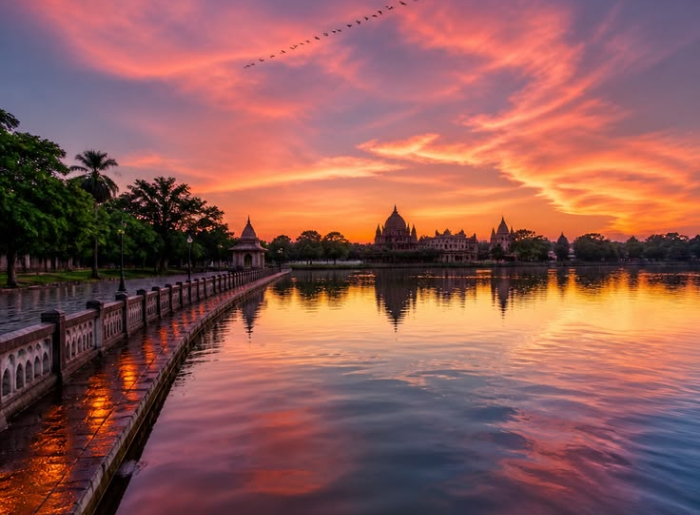
Rankala Lake is one of Kolhapur’s best-known recreational spots, located about half a kilometer from the Mahalaxmi Temple. The lake has a particularly interesting history. According to the Kolhapur district administration, the area was once an extensive black-stone mine. Earthquakes between approximately 800 and 900 CE altered the landscape, after which underground water accumulated in the resulting depressions.
Shalini Palace stands along the northern side of the lake, while Padmaraje Garden lies toward its southeast. There is also an old Nandi temple near the lake. Local folklore surrounding the Nandi idol has been passed down for generations, including a belief that it gradually moves toward the lake. It is best understood as part of the local religious folklore rather than a literal phenomenon.
Today, Rankala is surrounded by a chaupati and gardens and remains a popular place for evening walks. Street-food stalls around the lake serve snacks such as bhel puri and ragda patties, making it an easy place to slow down after a day spent sightseeing around Kolhapur.
Radhanagari Dam
Radhanagari Dam is located around 45 km from Kolhapur and is surrounded by the green landscapes of the Western Ghats. Construction of the dam was initiated during the reign of Rajarshi Chhatrapati Shahu Maharaj as part of efforts to improve irrigation and agricultural development in the region.
One of the engineering features commonly associated with Radhanagari is its automatic gates, which operate in response to water levels without relying on conventional powered opening mechanisms. The reservoir and surrounding hills also make the area considerably different from the busy streets of central Kolhapur.
The wider Radhanagari area is particularly important for nature lovers because it is home to the Radhanagari Wildlife Sanctuary. The sanctuary protects an important Western Ghats ecosystem and is especially known for the Indian gaur, as well as numerous other mammals, birds, and plant species. Because Radhanagari is farther from Kolhapur, it makes more sense as a half-day or full-day excursion rather than a quick stop.
Motibag Taleem
Wrestling, or kushti, has been an important part of Kolhapuri sporting culture for generations. Traditional wrestling training centers here are commonly known as taleems, and Motibag Talim is one of the city’s best-known. The training ground is located in Mangalwar Peth, making it relatively easy to combine with other attractions in central Kolhapur.
In a traditional taleem, wrestlers train according to routines that may include wrestling practice, strength exercises, and disciplined dietary and fitness regimens. Motibag offers travelers the opportunity to witness a living sporting tradition rather than something preserved solely as a tourist attraction.
Another important wrestling landmark is Khasbag Maidan. Rajarshi Shahu Maharaj had Khasbag developed as a dedicated wrestling arena. Its distinctive bowl-like layout allows spectators to look down toward the central wrestling area. The ground remains one of the landmarks most closely associated with Kolhapur’s wrestling heritage. Together, Motibag Talim and Khasbag Maidan help explain why kushti continues to occupy such an important place in Kolhapur’s sporting identity.
New Palace
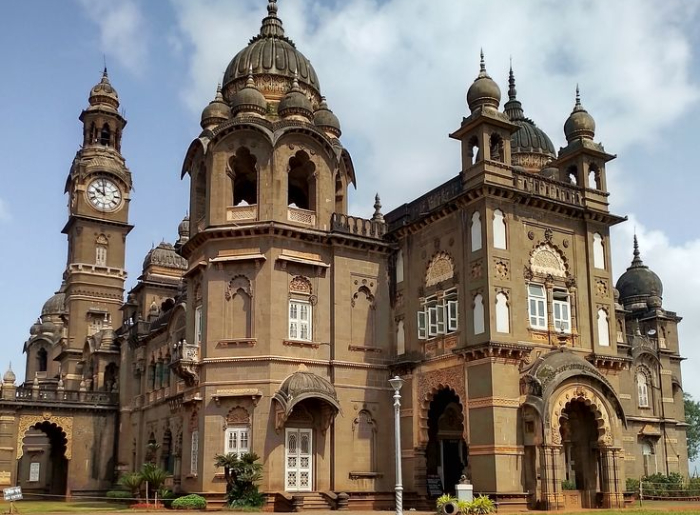
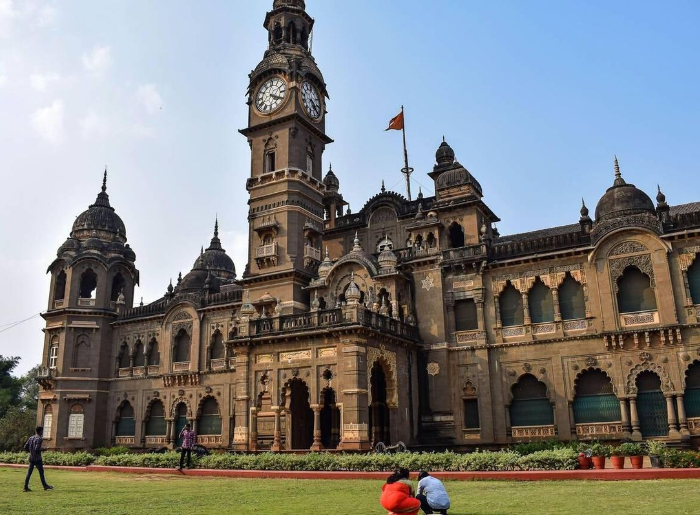
Built between 1877 and 1884, New Palace is one of Kolhapur’s most recognizable royal landmarks. The palace was constructed of polished black stone and continues to serve as a royal residence today. At the same time, part of the ground floor houses the New Palace Museum, also known as the Shahaji Chhatrapati Museum. The museum’s collection offers an insight into the lives of Kolhapur’s rulers. Displays include royal clothing, jewelry, coins, weapons, silver elephant saddles, photographs and other memorabilia associated with the royal family. The central Darbar Hall is another highlight, with carved columns, a raised throne and stained-glass panels depicting scenes from the life of Chhatrapati Shivaji Maharaj.
The palace grounds also contain gardens, a small lake and an open zoo area. However, remember that New Palace is not entirely a museum. Parts of the complex remain associated with the residence of Kolhapur’s royal family, so visitors only have access to designated public areas.
Visiting Kolhapur for the first time? Here’s a Kolhapur travel guide covering what you need to know before planning your trip.
Mahadwar Road And Shivaji Road
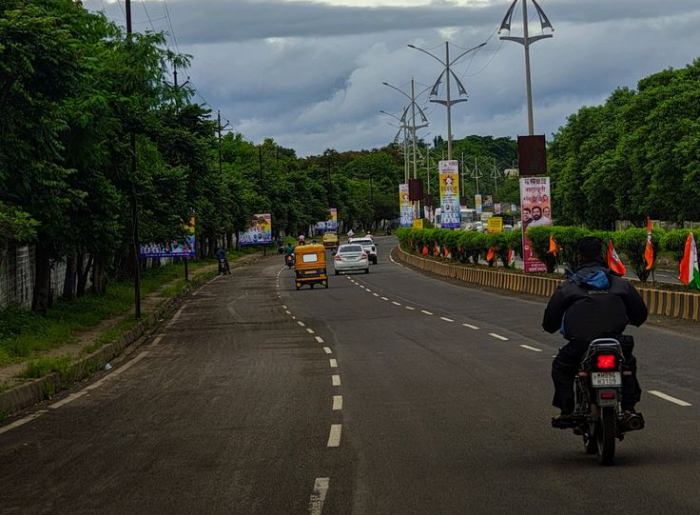
After exploring forts, temples and museums, you should spend some time shopping. Mahadwar Road and Shivaji Road run through one of the busiest parts of old Kolhapur and are useful places to explore the city’s markets, local products and food. Mahadwar Road is closely associated with the Mahalaxmi Temple and the surrounding old-city market. Shops in the area sell some of the products most strongly associated with Kolhapur, including Kolhapuri chappals, traditional jewelry, sarees, religious items and souvenirs. Rather than rushing into the first store you see, walk through the lanes and compare products before deciding what you want to take home.
Food is another reason to explore central Kolhapur. Look out for local dishes such as misal, tambda rassa and pandhara rassa at restaurants and eateries around the old city. Kolhapur is also known for jaggery produced in the surrounding agricultural region, so locally made jaggery is another option if you want an edible souvenir. The fun of Mahadwar Road and Shivaji Road is not necessarily about checking off a particular landmark. Take a walk, browse the shops, stop for something to eat, and experience one of the busiest parts of everyday Kolhapur.
Summing Up
Now that you know which places to visit in Kolhapur, it might be time to add the city to your travel plans. Whether you’re interested in Maratha history, centuries-old temples, traditional wrestling, local food or shopping, Kolhapur manages to pack a surprising amount into the city and its surrounding district. Just remember that attractions such as Panhala Fort, Jyotiba Temple and Radhanagari Dam are outside central Kolhapur. Give yourself at least two or three days if you want to explore the city without rushing and include some of these longer excursions. There is far more to Kolhapur than can fit into a single list, but these seven stops are a good place to begin.