

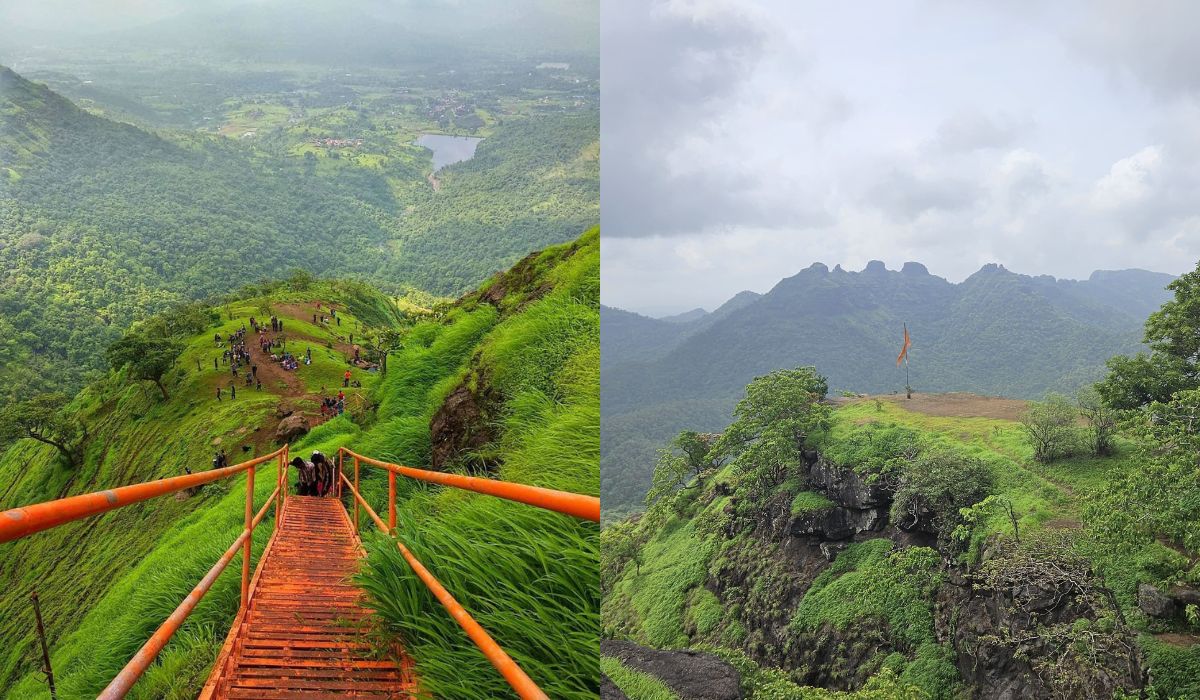
While popular destinations like Lohagad and Rajmachi draw massive crowds, the Sahyadri range hides ancient, silent stone sentinels untouched by overtourism. Perched on remote ridges, these lesser-known forts have silently witnessed centuries of conflict, where the ambitions of the Marathas, Portuguese, Mughals, and later the British intersected across the rugged Western Ghats. Their weathered ramparts, rock-cut water cisterns, and crumbling gateways preserve stories that rarely make it into mainstream travel itineraries.
For Mumbaikars seeking an escape beyond crowded trekking trails, these hidden forts offer the perfect blend of history, solitude, and adventure. With growing interest in sustainable and offbeat travel in the monsoon, these quiet hill forts promise a more authentic trekking experience where nature, heritage, and tranquility come together far from the weekend rush. So, here are a few hidden forts near Mumbai that are an absolute must-visit for trekkers and nature trail-lovers!
Hidden Forts Near Mumbai
1. Korigad Fort: A Hidden Lakeside Retreat
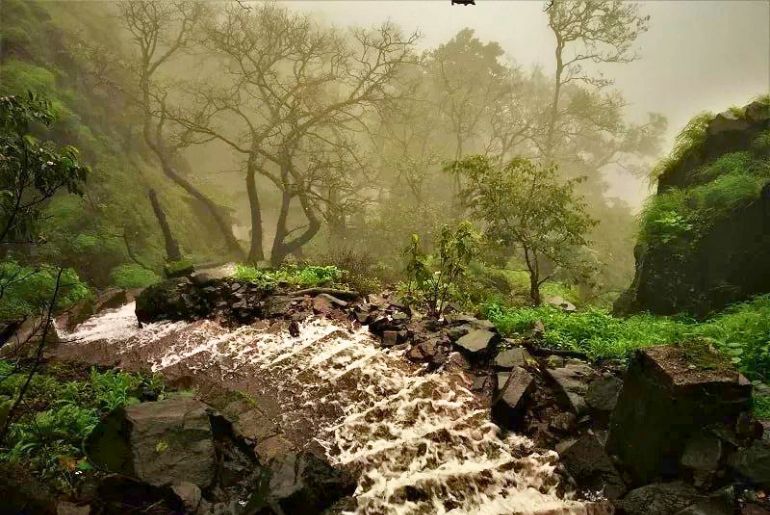
Overlooked by travelers heading to Lonavala, Korigad sits high above the Aamby Valley. It is highly accessible yet retains a peaceful, misty atmosphere. A gentle walk through deep forest canopy transitions into a flight of stone steps that leads you directly to the massive main gateway.
Must-See: The two large, freshwater lakes at the top and the beautifully preserved temple dedicated to Goddess Koraidevi.
Trek Difficulty Level: Easy
2. Sondai Fort: The Forgotten Watchtower Of Karjat
Not your conventional military fort, Sondai was primarily used as a strategic watchtower to guard the ancient trade route of the Karjat region. Starts from Sondewadi village. The trail here winds through emerald paddy fields, ending with a thrilling final climb on a series of fixed iron ladders.
Must-See: The idol of Sondai Devi at the peak and panoramic views of the Morbe Dam reservoir.
Trek Difficulty Level: Easy
3. Kohoj Fort: Guardian Of The Palghar Highway
This is an ancient fort dating back to the Bhoj dynasty, and it is dominated by a mysterious, wind-carved vertical rock structure. It has a moderate trail starting from Waghote. Trekkers will walk alongside a scenic lake at the base before pushing up through thick woods.
Must-See: The striking “human-like” stone pinnacle that towers over the summit, visible from miles away.
Trek Difficulty Level: Easy to moderate
4. Asherigad Fort: The Giant of the Western Line
Once the capital fort of the Jawhar region, Asherigad is massive, towering, and rarely visited compared to its southern counterparts. Trekking at the Asherigad Fort begins at Khodkona village. The hike climbs steadily under a heavy forest canopy. Then, there is a brief scramble up a vertical rock face, helped by a sturdy steel ladder.
Must-See: Large rock-cut water tanks, a stone-carved temple, and a breathtaking, uninterrupted 360-degree view of the surrounding Palghar hills.
Trek Difficulty Level: Easy to moderate
5. Mrugagad Fort: The Hidden Gem of Sudhagad
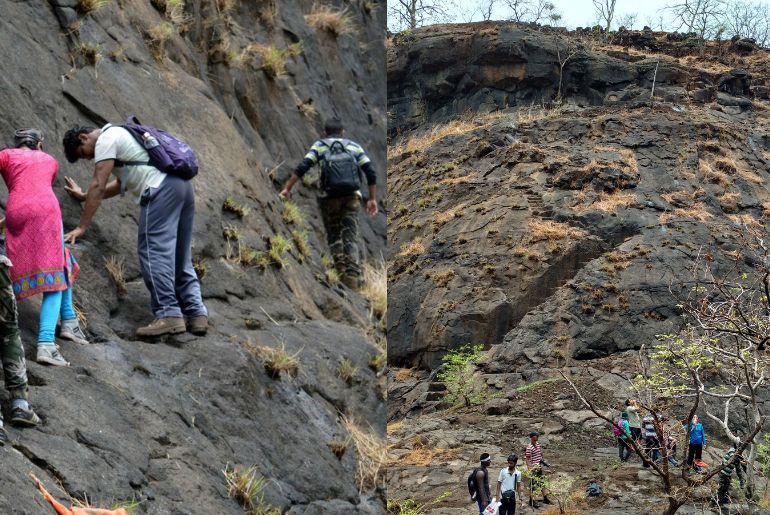
Mrugagad Fort is a tiny, hillock-style fort located on the Khopoli-Pali road that looks like an impenetrable stone block from a distance. The trail here is short but moderately steep, starting from Bheliv village. It winds through dense forests before presenting the real challenge: a series of steps carved directly into the vertical cliffside.
Must-See: The ancient rock shelters (caves) and the sheer vertical drop-offs that overlook the lush Konkan valleys.
Trek Difficulty Level: Easy to moderate
Here is a convenient table for quick information:
| Fort Name | Location/Base Village | Difficulty Level | Trek Duration | Key Highlight |
| Korigad | Near Lonavala (Peth Shahpur) | Easy | 1.5 to 2 Hours | Two beautiful pristine lakes on the summit |
| Sondai | Near Karjat (Sondewadi) | Easy | 1.5 Hours | Carved rock-cut steps and water cisterns |
| Kohoj | Palghar (Waghote) | Medium | 2.5 to 3 Hours | Naturally formed man-shaped stone pinnacle |
| Asherigad | Palghar (Khodkona) | Medium | 2.5 Hours | Massively expansive plateau and ancient caves |
| Mrugagad | Khopoli-Pali (Bheliv) | Medium | 1.5 to 2 Hours | Thrilling, narrow rock-cut stone stairs |
Also Read: 7 Iconic Forts To Visit In Maharashtra
Best Time To Visit, How To Reach, And What To Pack
- The easiest way to access these locations is to take local trains to the nearest junction (Karjat, Lonavala, or Palghar) and hire local auto-rickshaws to the base villages.
- The best time to visit is from mid-June to February. With monsoon offering lush green valleys, and winter offers cool trekking temperatures.
- Pack trekking shoes with solid, reliable grip.
- In addition to this, also carry rain gear and waterproof dry-bags for electronics.
- You should also have with you at least two to three liters of water (clean drinking water is scarce on these remote summits)
- Make sure you also carry a packed lunch/trail snacks, as these offbeat villages do not have commercial hotels or restaurants.
Summing Up
The Sahyadris are home to hundreds of forts, but not all of them feature on popular weekend trekking lists. Hidden gems like Korigad, Sondai, Kohoj, Asherigad, and Mrugagad offer the increasingly rare, peaceful trails that are rich in history and also offer spectacular landscapes without the heavy footfall seen at more famous destinations. Whether you’re a beginner looking for an easy monsoon trek or an experienced hiker searching for an offbeat adventure, these forts provide a rewarding blend of natural beauty and centuries-old heritage.
As interest in responsible and sustainable travel continues to grow, exploring these lesser-known forts also helps distribute tourism beyond overcrowded hotspots. Respect the local communities, avoid littering, and leave every trail exactly as you found it, ensuring these historic landmarks remain preserved for future generations of trekkers.



One Response