How Did Parsis Come To India? Exploring 1,300 Years Of Parsi Heritage In Udvada
Discover how Persian Zoroastrian refugees sailed to India over 1,300 years ago. Trace the history of Parsi migration, Sanjan, and the spiritual heartland of Udvada.

unstumbled in Udvada | Photo Credits: self
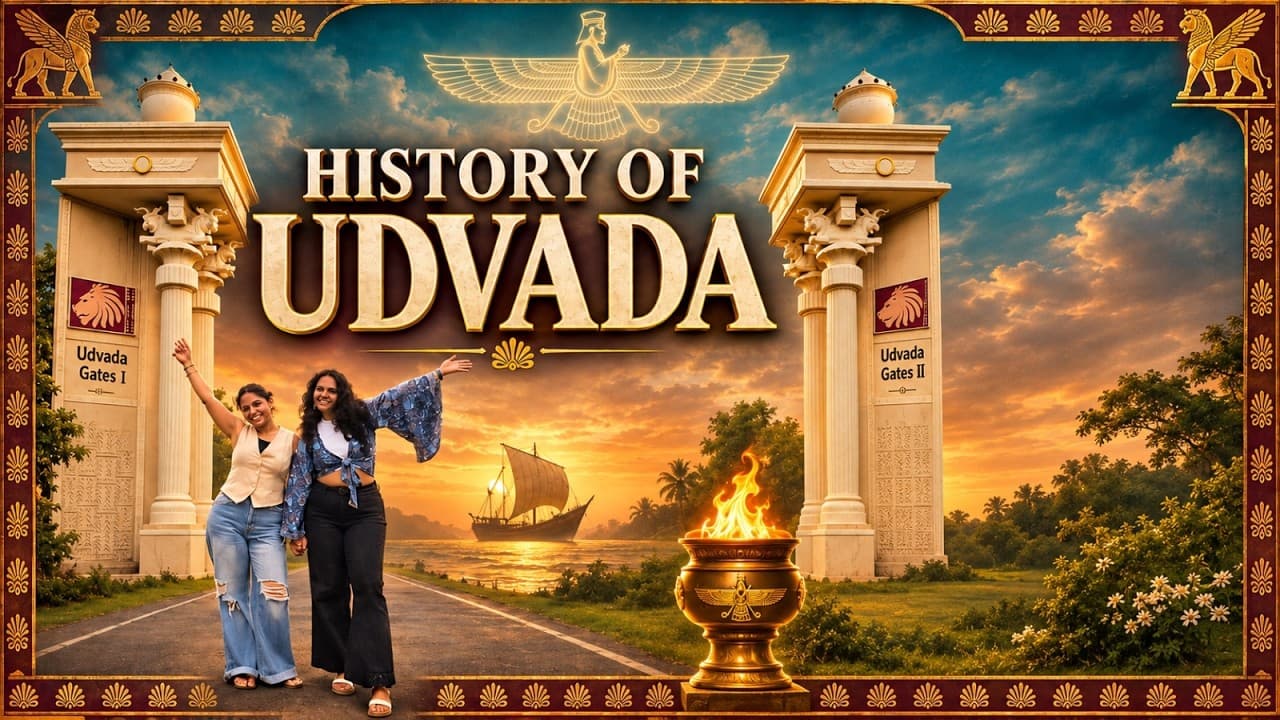
Across the vast cultural tapestry of India, there exists a small yet extraordinary, influential community that many people still don't know much about. Yes, we are talking about the Parsi community who have a population of roughly 60,000 and has reached the tribal status. From industrial pioneers like the Tata family to global music icons like Freddie Mercury, this community has shaped modern India in ways that are surely inspirational. It is a community that has immense and unwavering pride in its heritage, traditions, and lineage. To truly understand how the Parsis came to India and their journey, unstumbled visited the coastal town of Udvada in Southern Gujarat and explored 1,300 years of Parsi heritage.
Parsi History In India Udvada
Udvada is a sleepy seaside town that is tucked away along the southern coast of Gujarat. Here, the pace of life feels like a gentle crawl, with streets lined with weathered wooden verandahs, old Parsi-style bungalows, and air filled with nostalgia. The town is so compact that a visitor can easily explore it in half a day.
It is centered beautifully around the Iranshah Atash Behram which is the oldest and the most sacred fire temple in India. There is a holy fire inside this hallowed sanctuary which has been kept alight continuously for centuries now. We got the opportunity to speak to the head priest of this wonderful historic place, Dastur Tehemton Burjor Mirza, and he helped us understand how the Parsis came to India.
Also Read: Why Is Udvada Famous For Parsi Food? What To Eat Here, Here's Your unstumbled Guide
Ancient Roots: Parsis, Zoroastrians, and Iranis
If you wish to understand this community, first you need to understand the distinction between the three closely related terms that are generally used interchangeably: Parsi, Zoroastrian, and Irani.
Parsi: The term Parsi has an ethnic and geographic lineage. In ancient Iran, there was a major concentration of people living in a region known as Pars or Fars. When the ancient Greeks encountered the inhabitants of this region, they began calling them Persians. Hence, Parsis is an ancient ethnic identity that has been carried forward for thousands of years.
Zoroastrian: While Parsi refers to ethnicity, Zoroastrianism refers to the religion. Even before the birth of the prophet Zarathustra, during the later era of the dynasty, the people of the ancient era practiced a faith known as the Mazda religion. When the prophet Zarathustra emerged, he elevated this existing faith, and from then onwards, the followers came to be known as Mazdayasni Zarathustis.
Irani: While the Parsis migrated to India over a millennium ago, a small population of Zoroastrians remained in Iran. They migrated to India much later during the 18th and 19th centuries to escape the continued persecution.
Also Read: Parsi New Year In India: Navroz Celebration Of Community And New Beginnings
How Did Parsis Come To India?
There is a common misconception that the Parsi identity was born only after the community arrived in India. In reality, the roots of the Parsis stretch back thousands of years to the Achaemenid Empire in ancient Iran.
Over 1,300 years ago, the ancestors of the Parsis lived in ancient Iran, where they practiced one of the world’s oldest religions known as Zoroastrianism. Following the Arab conquest of Persia, around the 7th century, Zoroastrians faced severe religious persecution. A group of them were determined to protect their ancient faith and sacred fire and hence sailed across the Arabian Sea to seek safety.

Atash Behram | Photo Credits: Wikimedia Commons
This group first landed in Diu and then later settled in Sanjan, which is a coastal town in Gujarat. They asked the local ruler, King Jada Rana, for shelter. They made four key promises to the local ruler, King Jadi Rana, to live there peacefully without disrupting local life. The promises were:
Parsi women would give up their traditional attire and adopt the Indian saree.
The men would lay down their weapons and swords.
Aligning with Hindu customs, the marriage ceremonies would be conducted in the evening after sunset.
The community would adopt Gujarati as their spoken language instead of Farsi or Persian.
They also assured the king that their religion does not believe in converting others.
In Sanjan, they consecrated their sacred holy fire, the Iranshah. In order to keep the flame safe from invasions, over the centuries, the fire was moved several times. This includes a 300-year stay in Navsari in Gujarat before finding its permanent home in 1742 in Udvada.
Also Read: Inside The Magic Table At Grand Hyatt Mumbai: India's First Magic Dining Experience
Summing Up
While the bustling metropolitan city of Mumbai offers a vibrant glimpse into Parsi life through iconic cafes, heritage colonies, and institutions, the true soul of this wonderful community lies in Udvada, Gujarat. The story of how Parsis came to India is surely a testament to resilience, as a group of people crossed the ocean to protect a flame and enrich India by keeping the promises they gave to King Jadi Rana.
Frequently asked questions
What is the current population size of the Parsi community in India?
The Parsi community currently has a small population of roughly 60,000 people in India.
How long does it take to explore the heritage town of Udvada?
Udvada is so compact that visitors can easily explore its heritage streets, old Parsi-style bungalows, and historic sites in half a day.
Where did the Parsis first land and settle upon arriving in India?
They first landed in Diu before settling in the coastal town of Sanjan in Gujarat.
- Published:
- Updated:

About the author
Vaishalee Kalvankar
Vaishalee Kalvankar writes about travel and food for unstumbled. With five years of content and event management experience, she has worked at Curly Tales India, Curly Tales Middle East, Tit Bit Foods, Minority, and Seventy Seven Entertainment. She holds a postgraduate degree in media, entertainment, and marketing from KES Shroff College in Mumbai. Apart from writing, she is a traveller at heart who also loves dancing, drawing, and reading. Her expertise in festive travel recommendations and...