
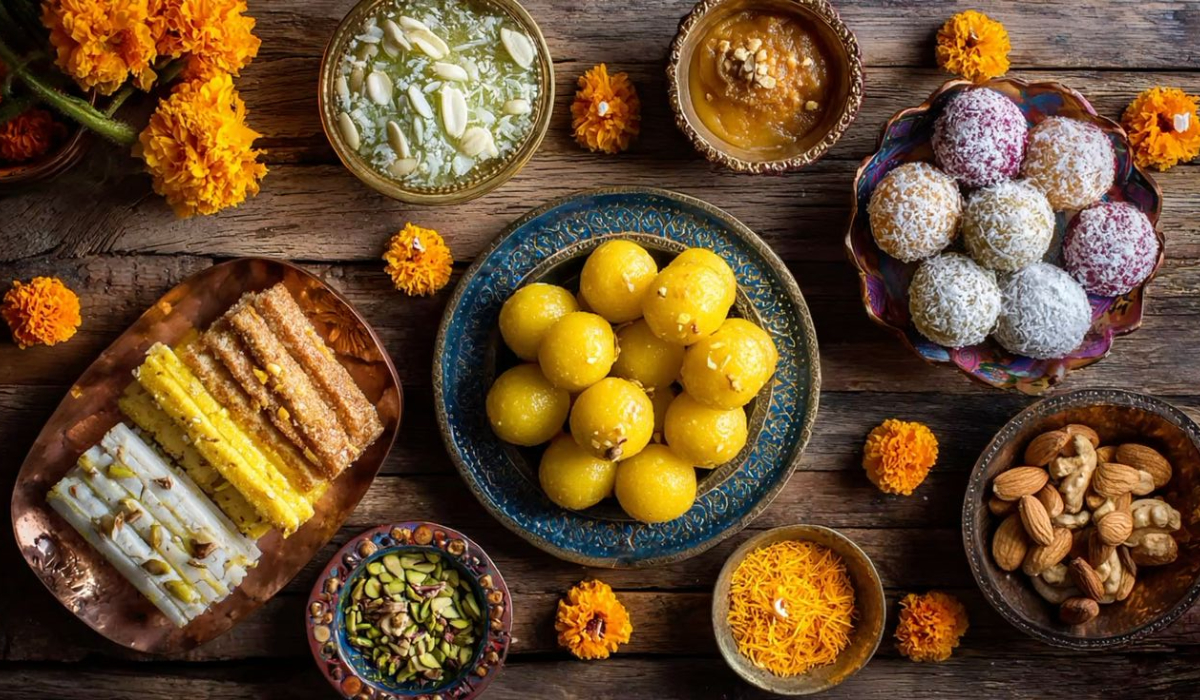
We all love desserts and that’s no secret. Whether you prefer something light and creamy or rich and decadent, there is no right or wrong when it comes to satisfying a sweet tooth. India has an enormous range of sweet dishes, and North India, especially Punjab, has plenty worth exploring.
Punjabi winter food is particularly comforting, with ingredients such as ghee, wheat flour, milk, jaggery, nuts, and dry fruits appearing in several traditional preparations. While some of the sweets on this list are distinctly associated with Punjab, others are enjoyed across North India but remain popular in Punjabi homes. Here are 9 Punjabi sweets and sweet treats worth trying this winter.
9 Authentic Punjabi Sweets To Try This Winter
- Phirni
- Kheer
- Meetha Chilla or Meetha Pooda
- Dodha Barfi
- Panjiri
- Pinni
- Shakarpaare
- Lauki Halwa
- Besan Barfi
1. Phirni
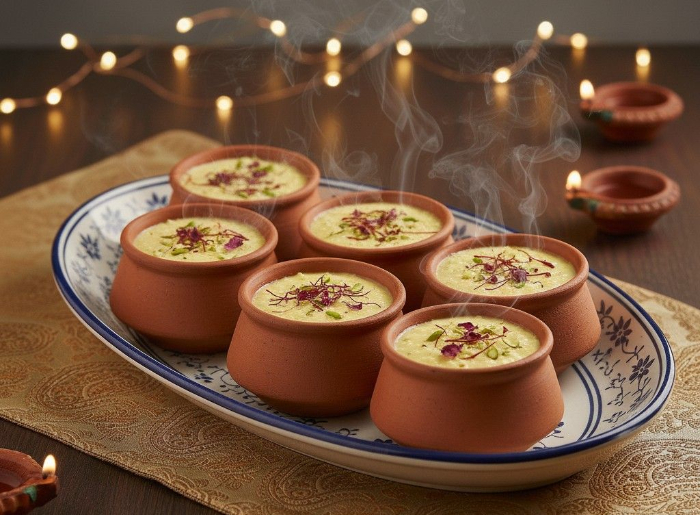
Every foodie with a weakness for creamy desserts should try phirni. Also spelled firni, this traditional North Indian pudding is made by slowly cooking ground or coarsely ground rice with whole milk and sugar. Cardamom, saffron, rose water, almonds, and pistachios can be added for extra flavor depending on the recipe. Unlike the original version of this article suggested, khoya is not an essential ingredient in traditional phirni.
The ground rice is what gives phirni its thick, creamy consistency and distinguishes it from regular rice kheer. It is especially popular across North India and is associated with celebrations and special occasions. Punjabi versions traditionally use ground rice as the thickening ingredient.
Another thing that makes phirni special is how it is served. Rather than being eaten straight from the cooking pot while hot, it is traditionally poured into small earthen bowls or shikoras, allowed to set, and served chilled. Top it with sliced nuts, saffron, or rose petals, and you have a simple dessert that feels much more indulgent than its short ingredient list suggests.
Visiting Varanasi during the festive season? Discover the city’s rare winter Malaiyo and five must-try seasonal sweets.
2. Kheer
How can you talk about Punjabi sweets without mentioning kheer? This classic milk-and-rice dessert appears at celebrations and family meals across India, rather than belonging exclusively to Punjab. However, rice kheer remains an important part of Punjabi home cooking and festive meals.
At its simplest, kheer requires rice, whole milk, and sugar. Cardamom, saffron, raisins, almonds, cashews, or pistachios can be added depending on the recipe. Some households use jaggery instead of refined sugar, although jaggery needs to be handled carefully when combining it with hot milk to prevent curdling.
Kheer is slowly simmered until the rice becomes tender and the milk reduces into a rich, creamy consistency. Unlike phirni, the rice grains generally remain intact. Another difference is that kheer works beautifully both warm and chilled, making it an easy dessert to adapt according to the season and your preference.
3. Meetha Chilla Or Meetha Pooda
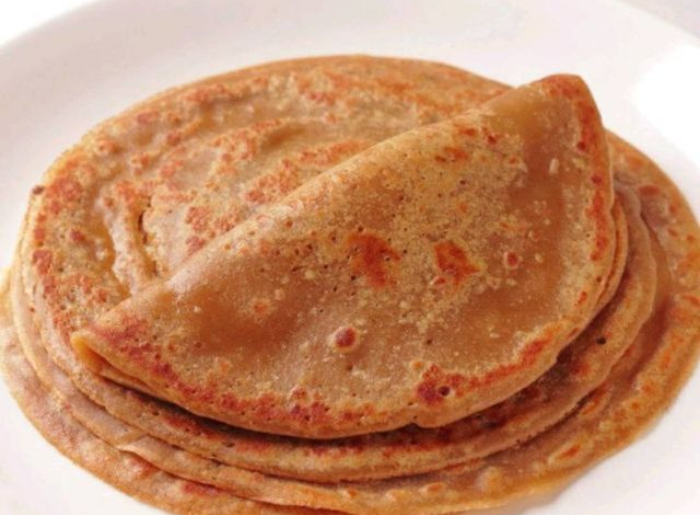
If you have grown up in a Punjabi household, meetha pooda might already be familiar. This sweet pancake is traditionally prepared using whole wheat flour, sugar, milk or water, and fennel seeds before being cooked with ghee on a hot pan. Its appearance is similar to a chilla, while its sweetness and fennel flavor can remind you of a thinner, simpler malpua.
Meetha pooda has a particularly strong association with Baisakhi in Punjabi households. Recipes vary from family to family, with differences in thickness, sweetness, and whether milk or water is used in the batter. Some versions are thin and soft, while others are cooked slightly thicker.
The best part is its simplicity. There is no complicated technique or elaborate list of ingredients involved. Serve the poodas fresh from the pan with a little ghee, and you have one of the easiest Punjabi sweet treats to recreate at home.
4. Dodha Barfi
If you like sweets with plenty of texture, Dodha Barfi deserves your attention. This dense, caramel-colored milk sweet is particularly associated with Punjab and is recognizable by its rich flavor and distinctive grainy texture.
Traditional versions are made by slowly cooking ingredients such as milk, sugar, ghee, and wheat or sprouted wheat, with nuts often added to the mixture. Modern recipes and commercial preparations can vary considerably. Some use khoya or reduced milk solids as well.
One thing Dodha Barfi is not, however, is a sweet you should expect to prepare properly in just 30 minutes. Traditional preparation involves patiently reducing and cooking the mixture over low heat to develop its characteristic texture and deep caramelized flavor. Accounts of its preparation describe the process as taking hours rather than minutes.
That slow preparation is exactly what makes it worth trying. Cut into dense squares and packed with milk, ghee, wheat, and nuts, Dodha Barfi is the kind of rich sweet that feels right at home during a cold Punjabi winter.
5. Panjiri
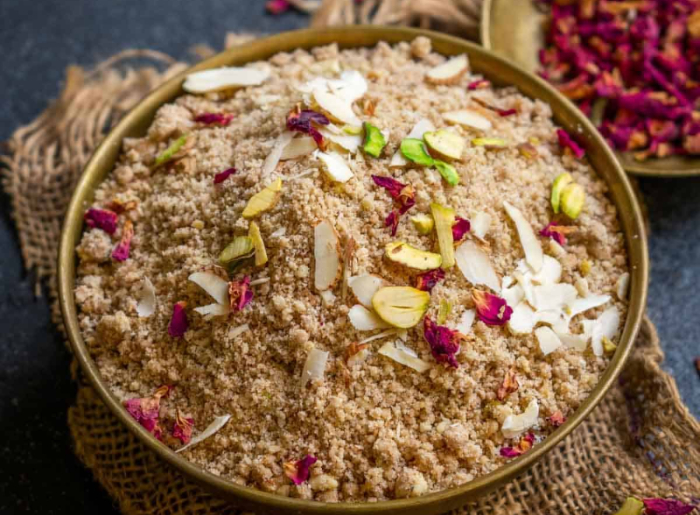
Panjiri is one of the Punjabi foods most strongly associated with winter. Traditional versions start with whole wheat flour slowly roasted in desi ghee until it develops a deep, nutty aroma. Sugar or jaggery and nuts are then added, while more elaborate versions can contain gond, makhana, seeds, dried ginger, cardamom, and other ingredients.
The result is not a barfi or ladoo but a loose, crumbly mixture generally eaten by the spoonful. Recipes vary enormously between families, which is part of Panjiri’s charm. Some are relatively simple combinations of atta, ghee, sugar, and nuts, while others contain a much longer list of ingredients.
Panjiri is also traditionally prepared in some Punjabi families during the postpartum period, although those preparations can differ from everyday winter Panjiri. Rather than treating it as a medicine or making specific health promises, it is better understood as an energy-dense traditional food whose ingredients and recipes have been passed between generations.
6. Pinni
Another winter favorite closely associated with Punjab is pinni. These dense sweets are commonly made with roasted whole wheat flour, plenty of ghee, sugar or jaggery, and nuts. Gond, cardamom, raisins, and other ingredients can also make an appearance depending on the household recipe.
The mixture is roasted carefully before being shaped into round or slightly oblong portions while it is still workable. Like Panjiri, Pinni is particularly popular during colder months, when Punjabi households traditionally prepare rich foods containing ghee, flour, nuts, and dry fruits.
Pinni also keeps considerably better than many fresh milk-based Indian desserts when properly prepared and stored in a clean, airtight container. However, there is no reason to claim that every homemade pinni will remain good for exactly three months. Its shelf life depends on the ingredients, preparation, storage conditions, and whether perishable additions such as khoya have been used. Make a batch, store it properly, and enjoy one alongside a cup of hot tea or milk when you want something particularly rich on a cold evening.
Curious about Goa’s sweeter side? Discover the top Goan sweets and what makes them worth trying.
7. Shakarpaare
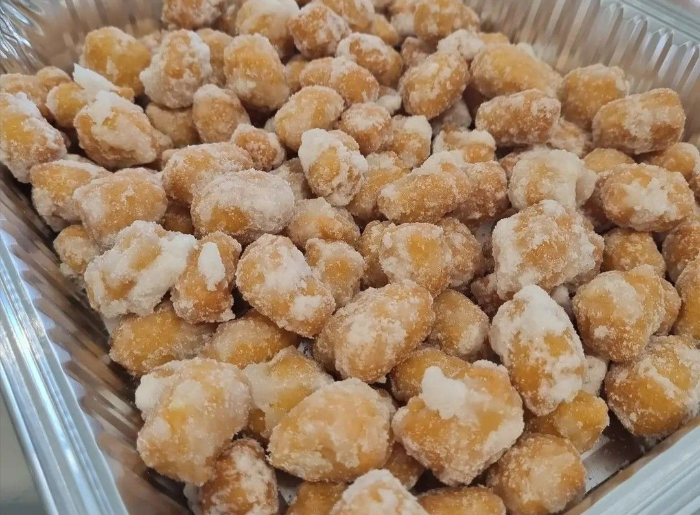
Crispy, sweet, and dangerously easy to keep snacking on, shakarpaare are another traditional treat enjoyed in Punjabi homes. Pieces of flour-based dough are fried until crisp before being sweetened, often with a crystallized sugar coating. Punjabi recipes commonly use wheat flour, ghee, water, and sugar.
The result is a crunchy, flaky, bite-sized sweet that can be prepared ahead of celebrations and stored in an airtight container. Shakarpaare are particularly associated with festivals and special occasions, including Diwali, but they are by no means exclusive to Punjab.
In fact, versions of the snack exist across the Indian subcontinent under different names. Shankarpali is particularly associated with Maharashtra and neighboring regions, while shakarpara or shakkarpare is the more appropriate name when discussing the Punjabi version. That regional distinction makes this simple snack even more interesting. Different parts of India have taken the same basic idea of fried, sweetened dough and given it their own identity.
8. Lauki Halwa
Bottle gourd might not be the first ingredient that comes to mind when you think of dessert, but lauki ka halwa proves that it can work remarkably well. Grated bottle gourd is slowly cooked with milk, sugar, ghee, and cardamom until it transforms into a soft, rich halwa. Nuts such as almonds and cashews can be added for texture.
Some recipes add khoya or condensed milk for extra richness, while others rely entirely on reducing whole milk. That means you don’t necessarily need mawa or khoya to make a creamy lauki halwa at home.
Lauki halwa is enjoyed in North Indian cooking, including Punjabi households, but it should not be presented as an exclusively Punjabi creation. Similarly, while individual families may prepare it for festivals or religious occasions, there isn’t strong enough evidence to describe it specifically as a traditional Janmashtami sweet across Punjab.
Instead, think of it as an excellent example of the Indian ability to turn an everyday vegetable into something completely different. Served warm during winter, it is particularly comforting.
9. Besan Barfi
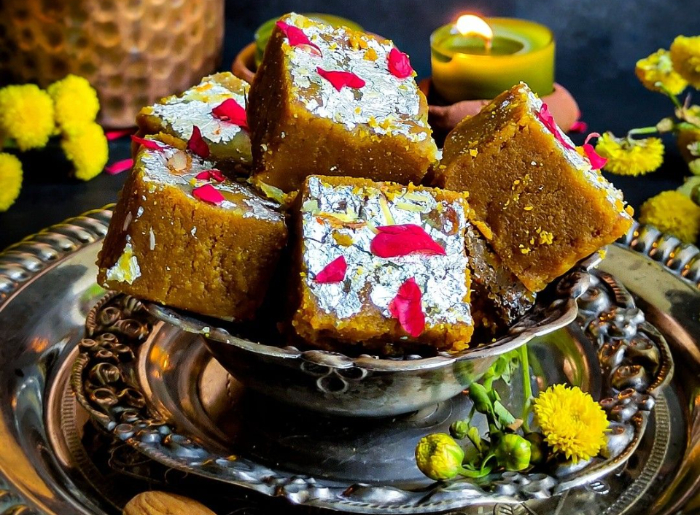
Besan barfi rounds out our list with its unmistakably nutty flavor. Made primarily by roasting besan, or gram flour, in ghee before combining it with sugar, the sweet develops a rich aroma and dense but tender texture. Cardamom and nuts are common additions. As with kheer and lauki halwa, besan barfi isn’t exclusive to Punjab. Different forms are prepared throughout North India and elsewhere in the country. Still, it is widely enjoyed in Punjabi homes and sweet shops, particularly around festivals and family celebrations. You can also prepare a batch at home with relatively straightforward ingredients. Once the mixture has been cooked properly, it is spread into a tray, allowed to set, and cut into squares or diamonds. Just make sure it is completely cool before storing it in a clean, airtight container.
Wondering what to indulge in this festive season? Discover seven Diwali sweets every Indian must try at least once and where to buy them in India.
Summing Up
Punjab is known for its vibrant festivals, lively music and dance, fascinating history, and, of course, its food. While dishes such as Pinni, Panjiri, Meetha Pooda, and Dodha Barfi have particularly strong connections with Punjabi food traditions, other sweets on this list belong to a broader North Indian culinary heritage and have found an equally comfortable place in Punjabi kitchens.
And that is precisely what makes exploring the region’s sweets so interesting. You can start with chilled, silky phirni, move on to crumbly Panjiri and crisp Shakarpaare, and save a rich Pinni or piece of Dodha Barfi for the coldest winter evening. If you’ve got a sweet tooth, Punjab certainly gives you plenty to work through.