

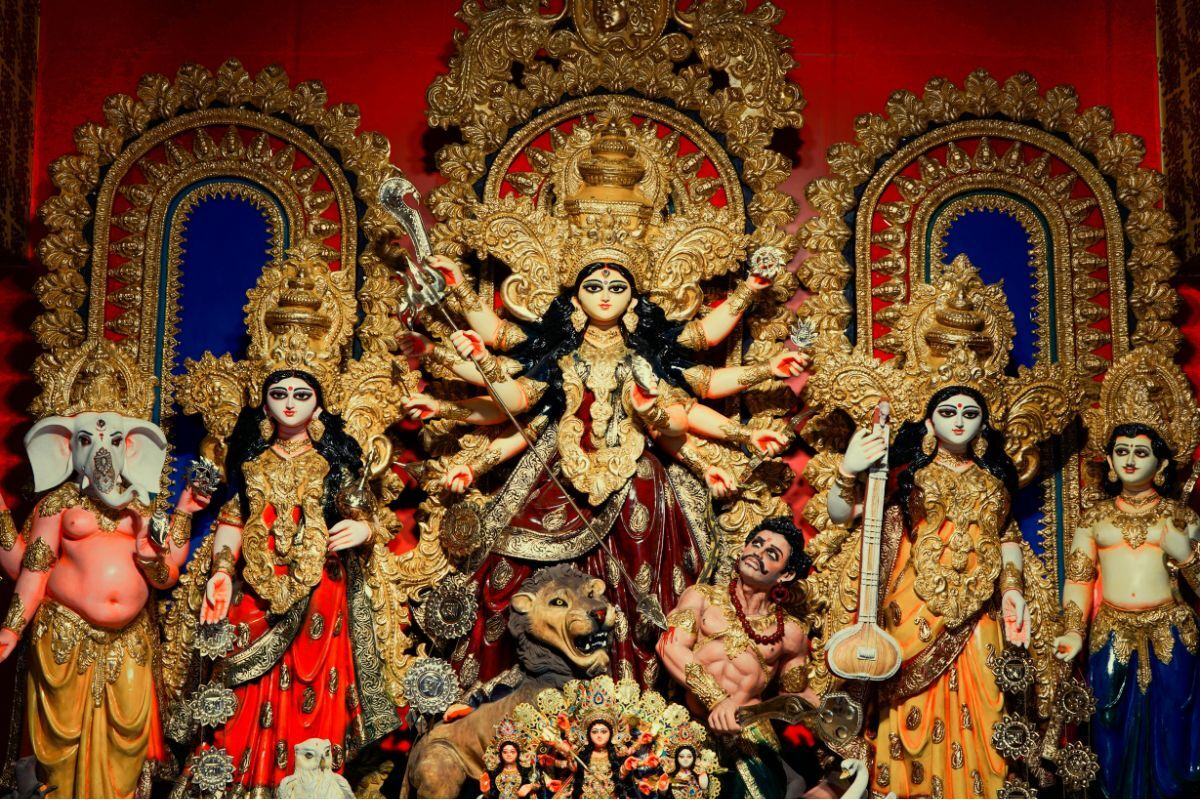
Durga Puja is just around the corner, and for the City of Joy, Kolkata, it is more than just another festival. It is a cultural spectacle, an annual homecoming, and an emotion that transforms the city into an art gallery. While people confuse it with Navratri, Durga Puja lasts for five sacred days, not nine days. It begins on Sasthi and ends on Vijayadashami, which simply brings the city alive with ceremonial observances, delicious food, and joyful celebrations. But why only five days? Well, let’s understand why Kolkata celebrates Durga Puja for five days.
Durga Puja In Kolkata 2026
To understand why Durga Puja is celebrated for five days, you must understand the ancient Hindu mythology and socio-cultural traditions. There are two mythological stories around this: one is the cosmic battle between the Goddess and the demon, while the other is the homecoming of a daughter.
According to Devi Mahatmya and Markandeya Purana, demon king Mahishasura had obtained a boon of invincibility. This meant that no god or man could ever defeat him. When all the gods tried to defeat him individually and failed miserably, they pooled their divine energies, which led to the emergence of Goddess Durga.
She engaged the demon in a 10-day-long battle. The final five days mark the climax of the conflict, beginning on Sasthi and concluding on Dashami (10th day).
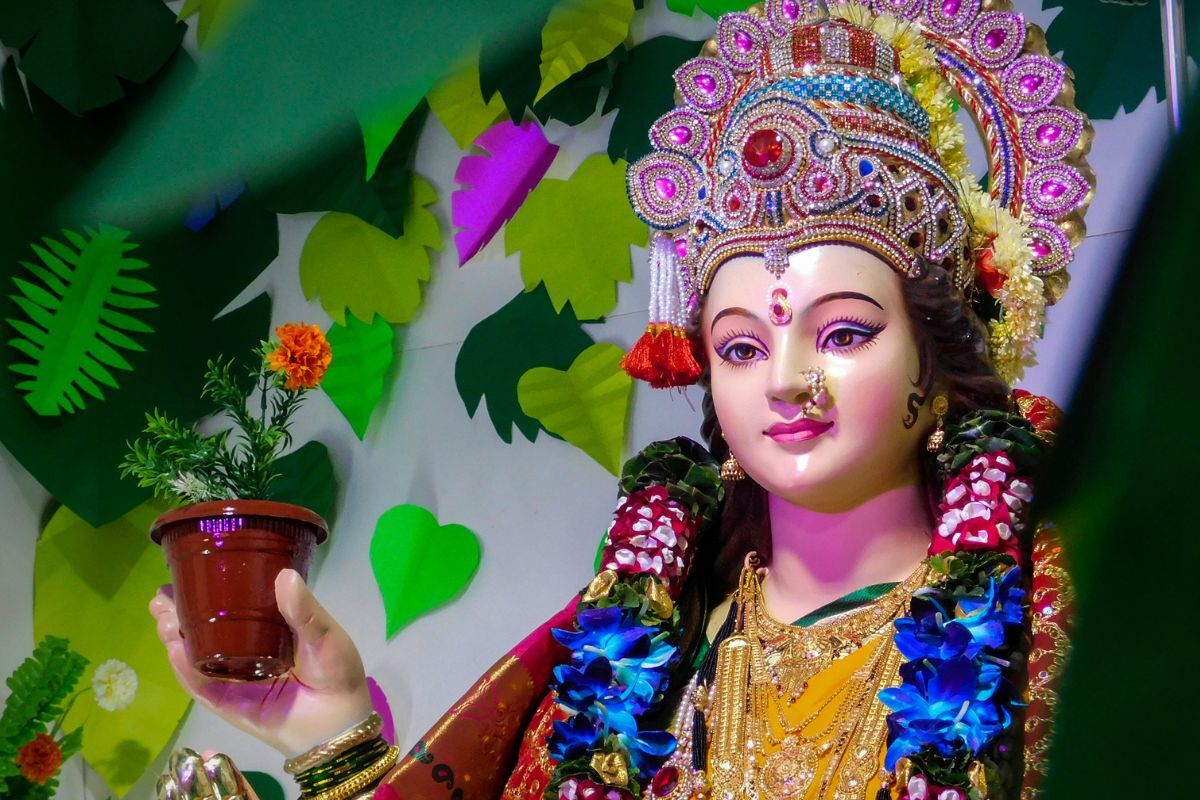
Parallel to this conflict is a legend rooted in Bengali culture in Kolkata. Here, Goddess Durga is seen as Uma or Gauri, the daughter of King Himavat and Queen Menoka of the Himalayas as well as the consort of Lord Shiva.
It is believed that Goddess Uma resides at Mount Kailash, which is her marital abode. Every year, for five days, she comes down to her earthly home with her four children. These children are Goddess Lakshmi, Goddess Saraswati, Lord Ganesha, and Lord Kartikeya. Hence, Durga Puja is the arrival of a daughter for the people of Bengal.
This emotional duality brings the warmth and intensity into the five days of celebration.
Also Read: Inside Vaishnavghata Patuli’s Underground Durga Puja Pandal: What The 2026 Theme Means
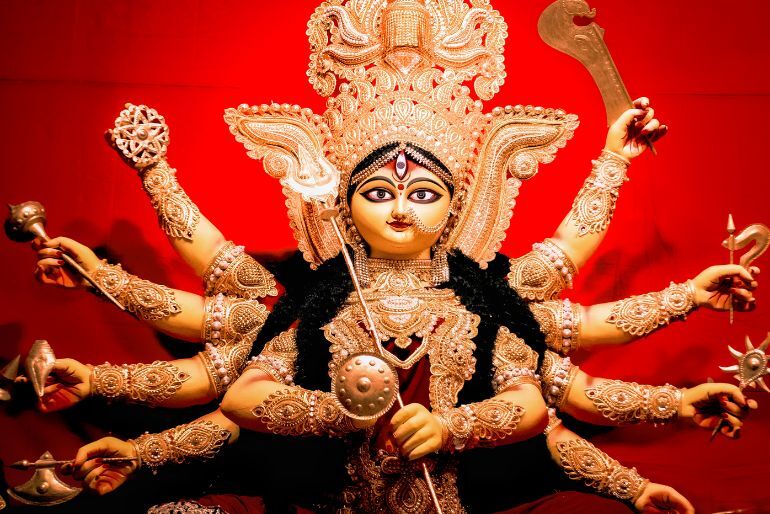
Durga Puja Days In Kolkata
Every single day of Durga Puja in Kolkata has its own ritualistic identity.
Day 1: Maha Sashthi
Durga Puja in Kolkata officially begins with Sasthi or Maha Sashthi. It is the sixth day of the bright lunar fortnight or Shukla Paksha of the Hindu month Ashwin. This is the day when Goddess Durga is awakened from her divine slumber, as per mythology. The Bodhon ritual is performed early in the morning, which unveils the idol of Goddess Durga. The goddess is formally invited to reside within the idol for the upcoming days and is called Amantran.
All the final touches on pandals are completed, lighting installations illuminate the entire area, and the air is filled with the sound of Dhak. People throng to the Durga Puja pandals to witness amazing themes, decoration, and idols.
Day 2: Maha Saptami
Saptami marks the formal beginning of high worship and is significant for Nabapatrika Snan or Kola Bau. At dawn, nine different plants are tied together, which represent nine forms of Goddess Durga. They are taken to the River Ganga for a ritual bath. The bundle resembles a bride and hence is draped in a yellow-bordered red saree. It is then placed beside Lord Ganesha and represents nature’s nurturing power and fertility.
Devotees continue religious rituals while the festive spirit at most pandals is kept alive with traditional music and dance performances.
Also Read: How Is Durga Puja In Kolkata Different From Navratri? Rituals, Food & What Changes
Day 3: Maha Ashtami
Maha Ashtami is considered the most sacred day which is characterized by solemn rituals and devotion. Millions of people fast until morning and then offer fresh flowers and chant sacred mantras. This is known as Pushpanjali, as devotees pray for happiness, health, and peace. The climax of Ashtami is the Sandhi Puja, which is performed during the transition period from Ashtami to Navami. Some people also perform Kumari Puja, where young girls are worshipped as the embodiment of Goddess Durga’s energy.
It is a day of tradition where women typically wear red-bordered white sarees (lal-paar), and men wear kurta dhoti (panjabi). Everyone gathers together for Bhog, which typically includes Labra, Khichuri, and Payesh.
Day 4: Maha Navami
Navami is the day when people prepare for the festival’s conclusion. On this day, Maharatri and Homa are performed by the priests with large multi-tiered brass lamps. Devotees participate in Dhunuchi Naach, which is a well-known energetic dance. It uses earthenware burners filled with Jhuno and dancing to the rhythm of Dhak.
This day has a bittersweet energy as celebrations reach their peak, but also comes the awareness that the stay of their beloved goddess is about to end.
Also Read: When Is Durga Puja 2026? 7 Places In India To Experience Grand Celebrations Beyond Kolkata
Day 5: Vijaydashami
Vijaydashami marks the victory of good over evil and the moment when the Goddess begins her journey to go back to Mount Kailash. The priest conducts Darpan Bisarjan, which means releasing the presence of the goddess back into the water using mirror reflection. The clay idols are carried to the Hooghly River in grand processions for visarjan.
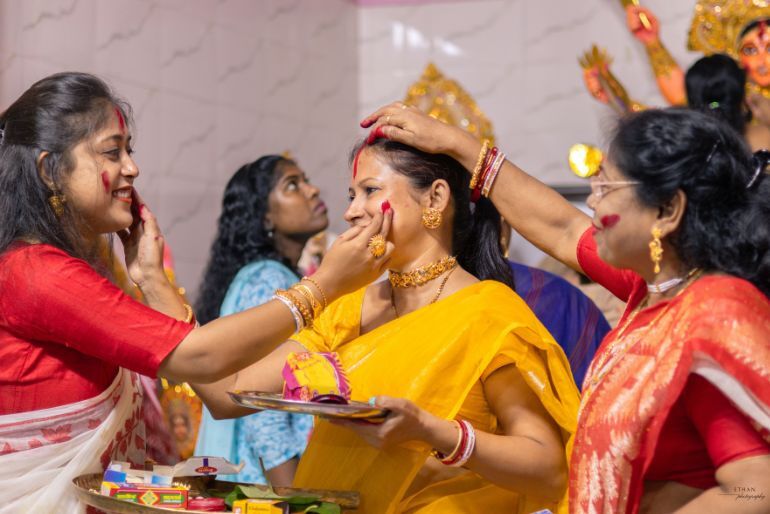
Married women gather in pandals and smear sindoor on the feet and forehead of the Goddess. After this, they apply sindoor to each other, wishing each other a prosperous married life.
Note: This article was compiled after verifying current publicly available business information.
Summing Up
The five days of Durga Puja from Sasthi to Dashami actually reflect the cycle of life itself. It begins with anticipation, moving towards arrival, joy, reflection, and ends with a farewell. Kolkata simply brings the mythological folklore to life over the five days, with each day having its own importance.


One Response