
There’s something oddly comforting about walking into Namah. It doesn’t overwhelm your senses from the moment you walk in, but invites you into a gentle, hypnotic space where regional South Indian food finds its way to your hearts.
No extravagant interiors. No dramatic lighting. No gimmicks. Just warm smiles, the aroma of freshly brewed filter coffee, the sound of dosas crisping on the griddle, and people from every age group happily waiting for a table.
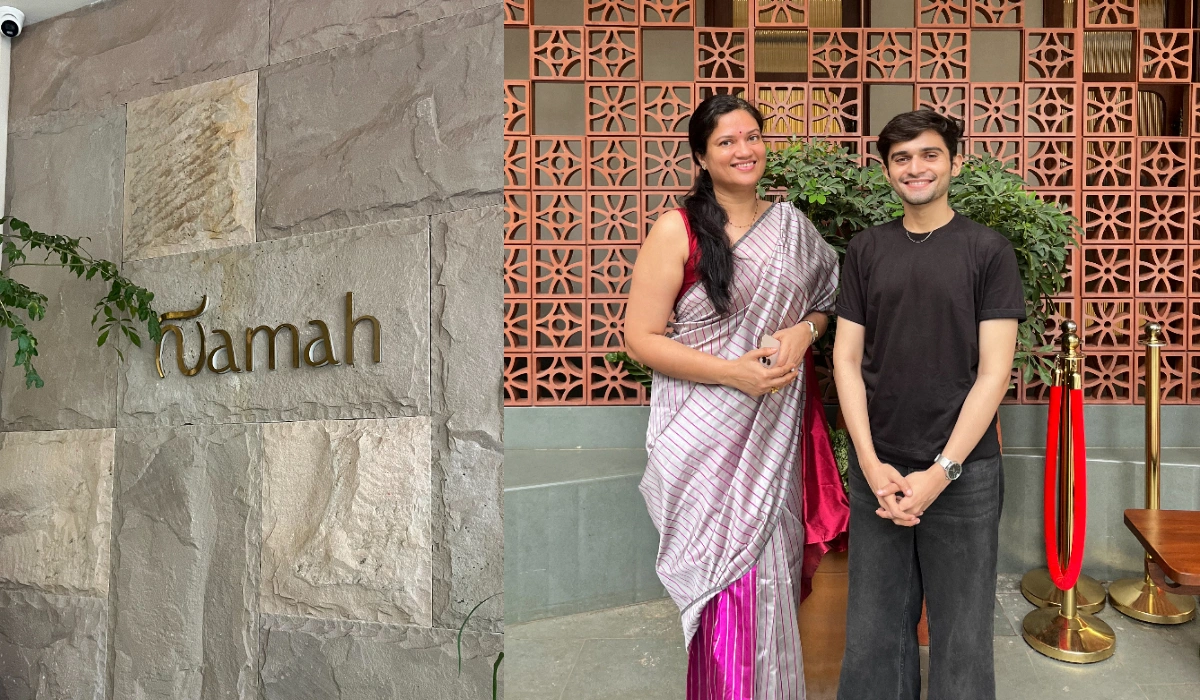
The coffee house, created by Arvind and Pallavi Shetty, borrows from the familiarity of the beloved darshini while presenting it in a way that feels refreshingly contemporary. During our conversation with Pallavi Shetty, one thought kept resurfacing.
“Come as you are.” or “Namma mane, nimma mane”
That’s the philosophy behind Namah, and it quietly reveals itself in every corner of the space. Here’s our excerpt from the candid conversation – as we chatted with Pallavi Shetty, multiple cups of filter coffee giving us company!
A Darshini, Reimagined
The inspiration came from the traditional darshini, but the intention wasn’t to replicate it.
“We felt we could offer something much better than what already exists in Mumbai,” Pallavi tells us.
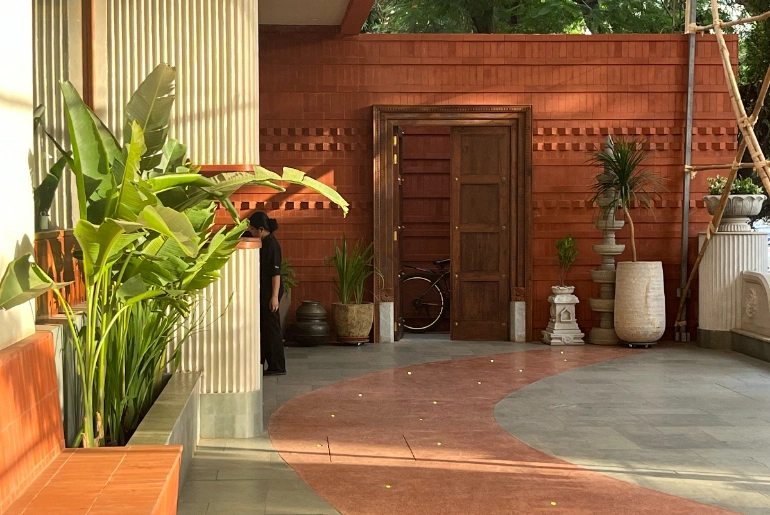
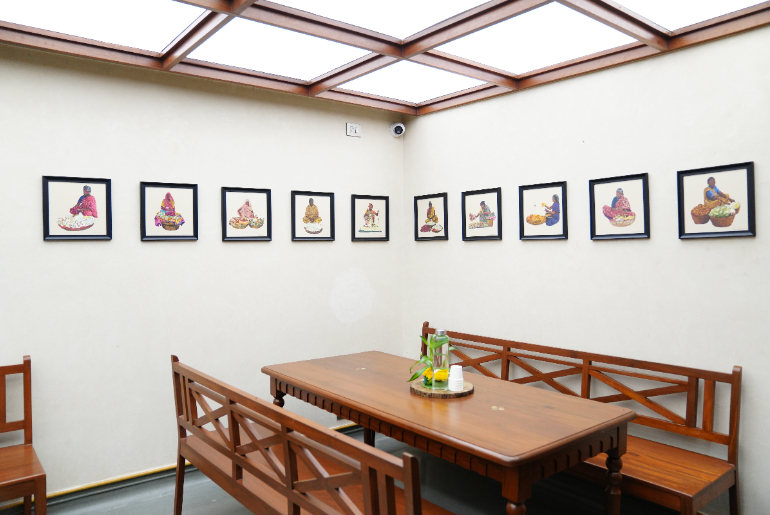
The result is a space that feels more like someone’s home than a restaurant. The flooring uses traditional South Indian materials, while an amphitheater-style seating area draws inspiration from a familiar sight in Bengaluru – people casually sitting on steps, chatting over coffee or waiting for friends.
Nothing feels intimidating. Nothing feels overly designed. Everything has been designed to invite you to settle in.
Life Is More Than Benne Dosa
If there’s one message Namah wants to send, it’s this:
“Life is more than benne dosa.”
While Bengaluru and Mumbai’s obsession with benne dosa continues to grow, Namah is determined to remind diners just how diverse South Indian cuisine truly is.
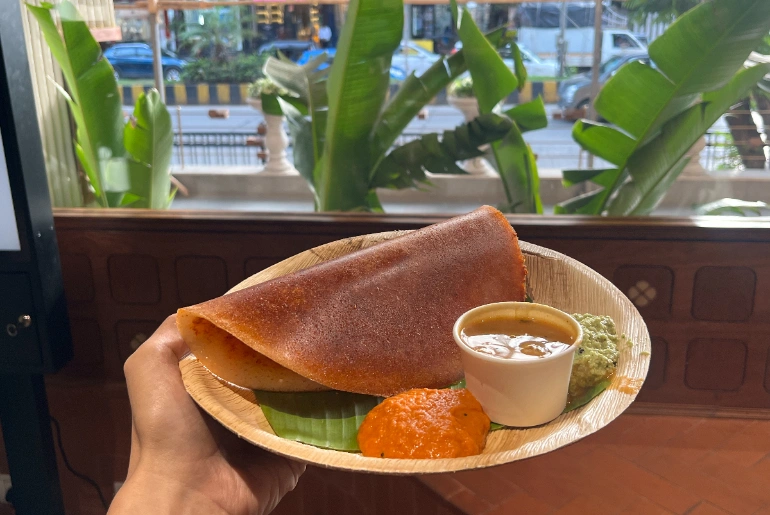
Patrons at Namah are sure to enjoy their benne dosa but there’s way more on the menu than just that. Their menu reads like a celebration of regional comfort food.
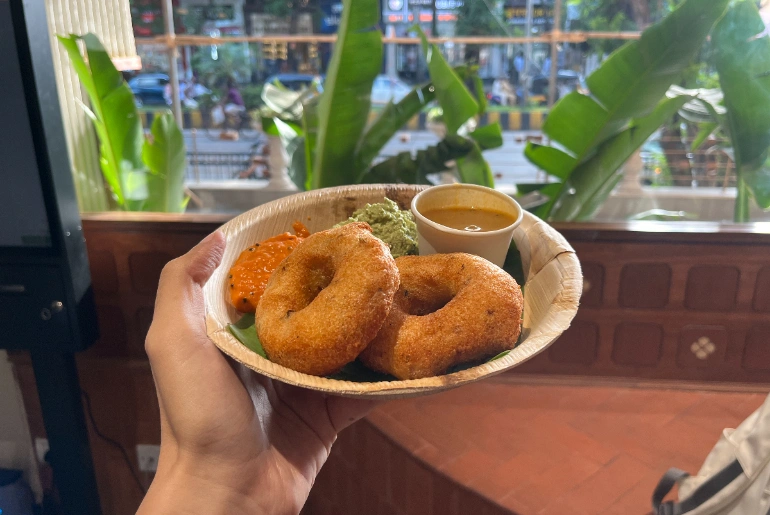
In this moment, warm plates of crispy medu vadas make their way to our table. They’re perfectly round, crisp golden on the surface and served with tempting chutneys and a good serving of sambar. Recently opened South Indian eateries had seemed to quietly put sambar in the background or outright eliminate it from the menu – so it was a pleasant sight to see sambar being served upfront!
Trying our best to not get tempted to take a bite just yet, we continued the conversation.
Pallavi promptly then tells us about the dosas that she’s grown up eating and those that’ve made it on the menu.
“Instead of just one or two dosas, you’ll find set dosa, open butter masala dosa, ragi dosa, multigrain dosa, podi masala dose and several other varieties that rarely make it to mainstream menus”, she says.
Interestingly, despite serving buttery favorites, Namah consciously uses ghee in moderation, allowing the flavors of the batter and fillings to shine instead of overwhelming every bite.
And then there are dishes that don’t always get their moment in the spotlight.
Pongal.
Shevige Bath.
Sweet Khara Bath.
Six different rice preparations.
Pineapple Sheera.
Bele Obbattu (Bobbatlu).
It’s a menu built not around trends but around memories.
We Ate Our Way Through The Menu
Naturally, we couldn’t leave without sampling a few favorites.
The goli bajje arrived just a few moments after the medu vada arrived. Golden, crisp on the outside and unbelievably soft inside. Every bite was light, airy and dangerously addictive.
The Mangalore buns were equally comforting. Slightly sweet, fluffy and served warm with their traditional chutneys and dips, they felt exactly like the kind of breakfast you’d want on a lazy Sunday morning.
Then we digged into the medu vada. And let us tell you, we reached food heaven.
Perfectly crisp around the edges while staying soft and fluffy in the center, it reminded us why this humble snack continues to remain timeless. And of course, there was the coffee. Not the trending iced version served with an expensive alternative to cow milk. We’re talking about the OG filter kaapi that’s carved its legacy in traditional Indian kitchens and breakfast places.
Also Read: Run And Clean – With A Cause: In Conversation With The ‘Plogman’ Vivek Gurav
The Coffee That Completes The Meal
No South Indian meal feels complete without filter coffee, and Namah takes this seriously.
Their blend consists of 70-30 coffee blend, striking that familiar balance between strength, aroma and sweetness.
Served piping hot, it isn’t just an accompaniment – it becomes the final chapter of the meal. And the verdict? We thoroughly enjoyed it!
Food That Feels Like Home
As Pallavi reminisced about growing up, it became clear that much of Namah’s menu comes from lived experiences rather than market research.
She spoke fondly of podi masala dose, of the many varieties of idlis made back in their village, and of dishes that often disappear from restaurant menus despite being staples in South Indian homes.
Ironically, she laughs, they never particularly liked plain idlis while growing up.
Those personal memories now shape a menu that feels authentic rather than performative.
Winning Over Every Generation
Modern cafés often chase Gen Z. Namah certainly attracts them, but not because it’s trying to.
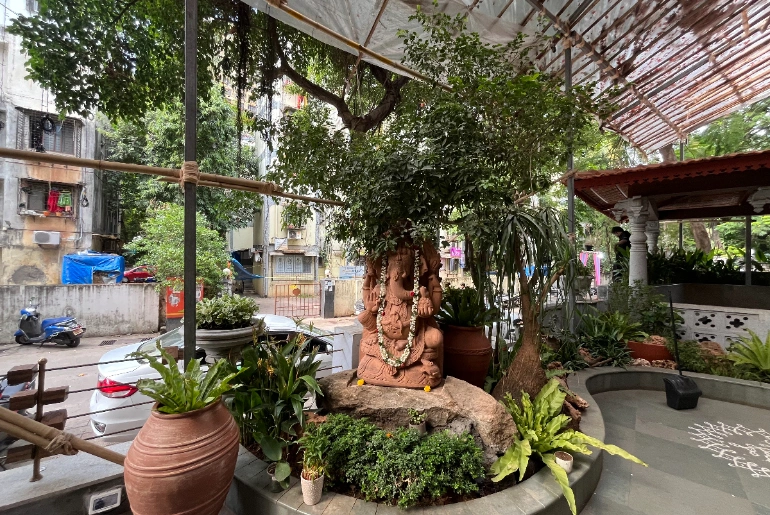
The café has become popular across generations – from college students and young professionals to families and elderly diners.
For Pallavi, that’s perhaps the biggest compliment. The food speaks to nostalgia for some and discovery for others. And that’s a rare feat to achieve for a cafe that has opened just a few months ago in 2026.
Legacy Isn’t The Competition For Namah
Opening a South Indian café inevitably invites comparisons with legendary South Indian establishments. But Namah certainly interested in competing with or replacing them.
“Mumbai is one of the biggest markets for food and beverage,” Pallavi says. “People here give so much love to restaurants. The legendary places have earned their place, and we’re not here to eat into that legacy. We’re simply here to serve our best.”
It’s a refreshing perspective in an industry where comparisons often dominate conversations. Namah quietly steers away from it.
When Social Media Isn’t The Hero
In today’s world, almost every restaurant launch arrives with perfectly choreographed reels, influencer previews and carefully planned aesthetics. Namah doesn’t seem to be
Namah has taken a different route.
Their social media reflects real interviews, genuine conversations and authentic interactions. Nothing feels scripted. Nothing is manufactured for the algorithm.
Pallavi smiles as she explains that none of this was planned. That philosophy extends beyond Instagram and into every guest interaction.
Also Read: In Conversation With Mokai Founder, Karreena Bulchandani: On Community, Creativity, & Comfort Food
The Only Challenge? People Never Want To Leave
Success, of course, brings its own challenges.
Since the day Namah opened its doors, queues have become a regular sight outside Namah. Inside, guests often end up lingering for hours, savoring the delicious food and enjoying the warmth of the cafe.
While the team loves seeing people enjoy the space, they’d kindly like to use this platform to gently educate visitors about being mindful of others waiting for a table.
It’s a challenge most restaurateurs would happily accept.
More Than A Restaurant – A Familiar Space To Unwind
By the time we left Namah, what stayed with us wasn’t just the crisp goli bajje or the comforting coffee. It was the honesty of the people who’ve built it from the ground up.
Namah’s interiors aren’t designed just for selfies. The menu isn’t changing trends. Even the storytelling comes without exaggeration.
If South Indian food is what gives you comfort, you must make your way to Namah. It reminds you that comfort food doesn’t need otherworldly innovation – it simply needs to be served with sincerity.
And perhaps that’s why the café continues to draw long queues.
Namah – Bengaluru Coffee House: Essential Details
Address: Ground Floor, 101, Sindhudurg Bhavan, Namah Coffee House, RTO Cross Lane, Four Bungalows, Andheri West, Mumbai, Maharashtra 400053
Timings: 7 AM to 11:30 PM
Cost for two: INR 800