

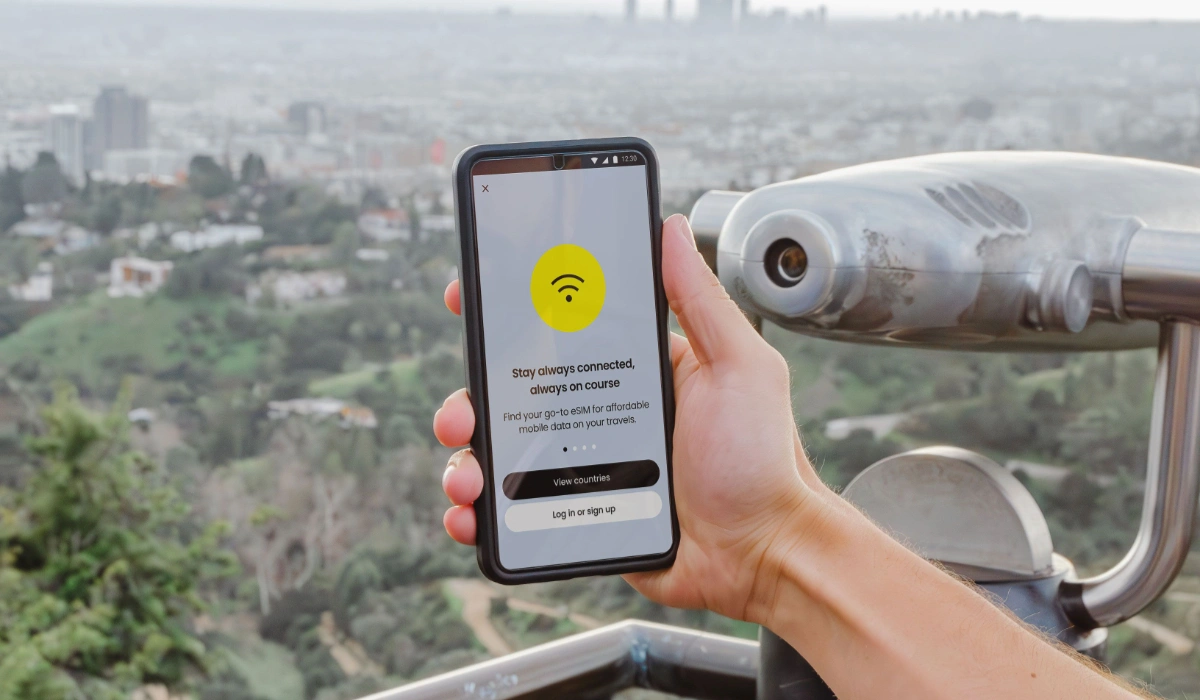
Flying international means two things: either switch off your mobile data and hunt for Wi-Fi wherever you go or choose an eSIM or a local SIM or international roaming. Today, travelers have the option to install a digital SIM before leaving home and connect to a local network soon after landing.
But that doesn’t automatically make an eSIM the right choice for every trip. A local SIM can still offer better value for longer stays, while international roaming remains the simplest option if you want to keep using your existing number with virtually no setup. So, when it comes to eSIM vs local SIM vs roaming, which one actually makes sense? In this guide, let’s take a look at how eSIM vs Local SIM vs international roaming works in foreign countries.
eSIM vs Local SIM vs Roaming: What’s The Difference?
eSIM
An eSIM is a digital SIM profile that can be installed directly on a compatible smartphone. You purchase a plan online, scan a QR code or install it through an app, and activate it according to the provider’s instructions. Many travel eSIMs are data-only while others offers calls and texts.
Local SIM
A local SIM is a conventional physical SIM card you purchase after arriving in a foreign country. It connects you to a local mobile operator and generally gives you a local number, data allowance and calling benefits.
International Roaming
International roaming allows your existing mobile operator to connect your phone to a partner network abroad. You retain your home number and don’t need a physical SIM card. The charges depend entirely on your carrier and roaming plan.
eSIM vs Local SIM: Which Is More Convenient?
When it comes to convenience between eSIM vs local SIM, an eSIM has a clear advantage. You can purchase and install one even before landing in a country, meaning you don’t have to search for a telecom store or airport kiosk after landing. Simply purchase the plan and be ready to connect once you arrive, depending on the plan’s activation rules.

A local SIM involves more effort. You need to find a seller, purchase the correct plan, install the physical SIM and, depending on the country, complete identification or registration requirements. Some countries require ID registration for local SIM cards, so it can get a little hectic for travelers.
There is one more advantage to eSIMs: you can often keep your physical home SIM in the phone while using the benefits of an eSIM. The only downside is that older phone models don’t support eSIM, so you’ll have to check your phone’s compatibility.
Also Read: Japan Launches Tourist Travel Card Offering Unlimited Trains, Buses & Shopping Benefits
eSIM vs Roaming: Which Is Better?
This is perhaps the most common dilemma for international travelers.
In terms of convenience between eSIM and roaming, the latter can be a simpler choice. You leave your existing SIM in the phone, activate an international plan if necessary and continue using your number abroad. There’s no installation, no SIM swapping and no need to figure out a new network.
However, roaming, depending on the carrier and destination, can be significantly more expensive than an eSIM. Recent comparisons continue to find travel eSIMs substantially cheaper than many standard roaming options for comparable data usage.
An eSIM, on the other hand, lets you purchase a specific amount of data for a defined destination and validity period. This makes it easier to control your spending.
So, travelers needing their home number for calls and SMS can opt for roaming while those looking for flexible plans and convenience can go for eSIMs.
Also Read: 10 Easiest Visa Countries For Indians: First International Trip Guide
Local SIM vs Roaming: Which Is Cheaper?
A local SIM is generally cheaper than a roaming plan. Local SIMs offer affordable and flexible data plans designed around domestic use. For example, a traveler visiting Thailand for two weeks can get data plans suited to their use and duration of stay in Thailand.

The trade-off is convenience. You need to purchase and register the SIM, and you may lose access to your usual number while using it unless your phone supports dual-SIM functionality.
For a three-day city break, the savings may not justify the hassle. For a month-long stay, they potentially can.
What About Your Indian Number And OTPs?
If your bank, UPI account, credit cards or other services send OTPs to your Indian number, don’t simply remove your primary SIM and assume everything will continue working normally.
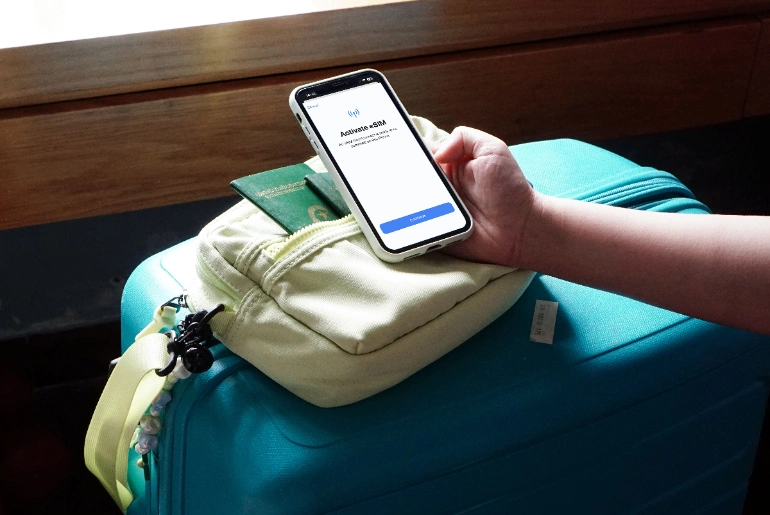
One practical setup is to retain your Indian SIM in a dual-SIM phone while using eSIM. However, also check international SMS and roaming rules before traveling, particularly if you need to receive messages abroad.
The exact functionality depends on your handset, carrier and plan, so don’t wait until you’re standing at an overseas airport trying to access your bank account.
Flying international but don’t know what to do if flight gets delayed by rains? Read it in our guide here!
Which Option Is The Best For Different Types Of Trips?
In the end, there is no one universal answer to which kind of data connection is better: eSIM vs local SIM vs roaming. It largely depends on the kind of trip you’re going on:
Choose an eSIM if you’re going on a short holiday. You can install it before you land in the foreign country. For a longer stay, you can opt for an eSIM or a local SIM as the latter offers data allowances at competitive prices. An international or regional eSIM can also be convenient if you’re going for a multi-destination, multi-country trip. However, if you’re looking for maximum convenience, you must choose roaming plans.
Also Read: What Should You Eat Before A Flight? Foods That Can Help You Feel Less Bloated While Traveling
Author’s Note
eSIM vs local SIM vs roaming – the debate of choosing between these three kinds of data connection can be sorted once you’ve decided how you want to travel. If you value convenience and want to be connected the moment you land, an eSIM is hard to beat. If you’re traveling for longer and want the best local rates, a local SIM may make more sense.
Summing Up
Finding which data connection – eSIM vs local SIM vs international roaming – is the best depends on the balance between convenience, flexibility, and cost. Ultimately, the choice depends on you and how you intend to use it for your travel.




One Response