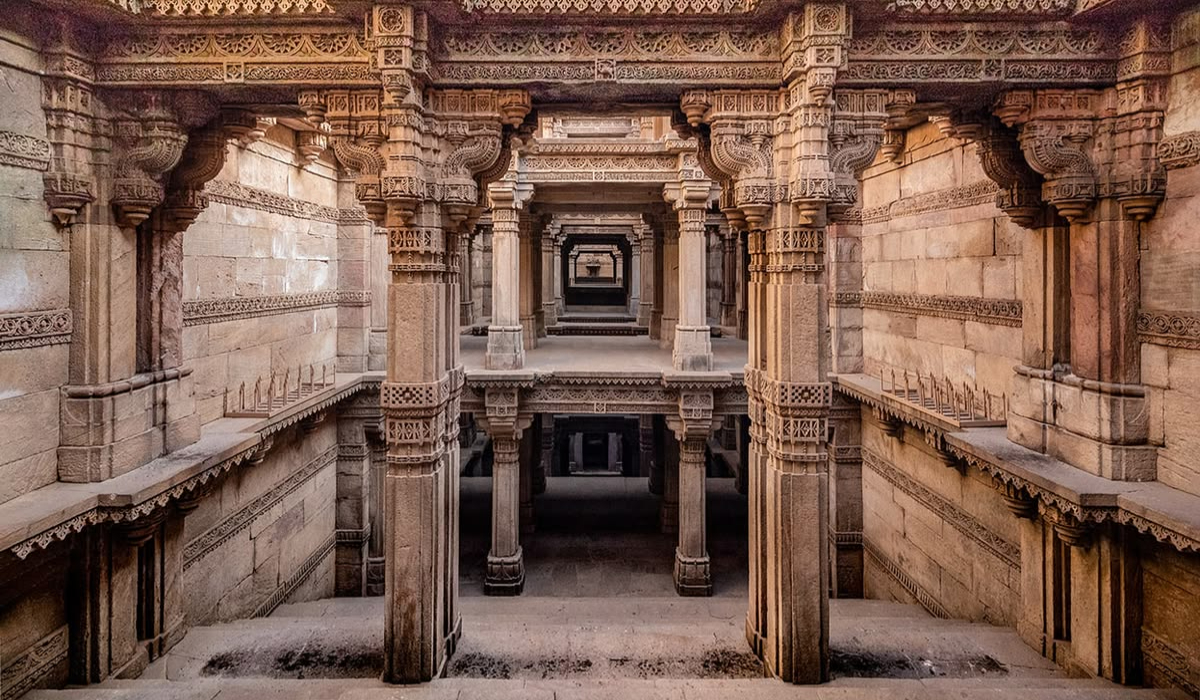

Train stations are usually designed around movement, helping thousands of people get from one place to another as efficiently as possible. Still, a new generation of stations is showing that transport infrastructure can also become an important part of a city’s architecture and identity. The most beautiful train stations in the world for 2026 bring together seven projects that blend transportation with ambitious design, local heritage, public spaces, and art.
Announced on September 28, the Prix Versailles 2026 list of train stations includes projects from Australia, France, Italy, Saudi Arabia, and the United States. These stations approach design in very different ways while remaining functional public spaces, from an underground station that takes passengers through Rome’s archaeological history to a transport hub inspired by Saudi Arabia’s desert landscape.
Which Are The 7 Most Beautiful Train Stations In The World In 2026?
1. Town Hall Station, Melbourne, Australia
Built beneath Swanston Street in Melbourne’s historic center, Town Hall Station creates a surprising sense of scale for an underground space. Designed by Hassell, RSHP, and WW+P, the concourse sits beneath City Square, where eight enormous columns rise to support the canopy. Copper-toned vaulted ceilings rise 10 meters above the particularly wide platforms, giving the station an open, almost cathedral-like appearance.
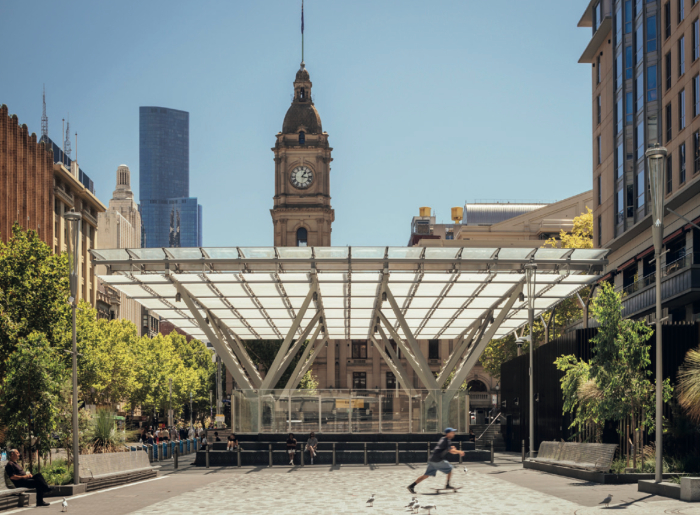
Art is also incorporated directly into the passenger experience. Maree Clarke’s Barerarerungar lines the station’s Federation Square entrance, while her artwork Tracks appears along the platforms of all five new Metro Tunnel stations. Together, the architecture and artwork turn an everyday commute into a more visually distinctive experience.
2. Lyon Part-Dieu Station, Lyon, France
After roughly a decade of redevelopment, Lyon Part-Dieu Station has been transformed into a much larger multimodal hub while retaining an interesting role it had already developed within the city. Residents had been using the station as a shortcut between neighborhoods, and AREP and L’AUC’s redesign brought this movement into the new layout.
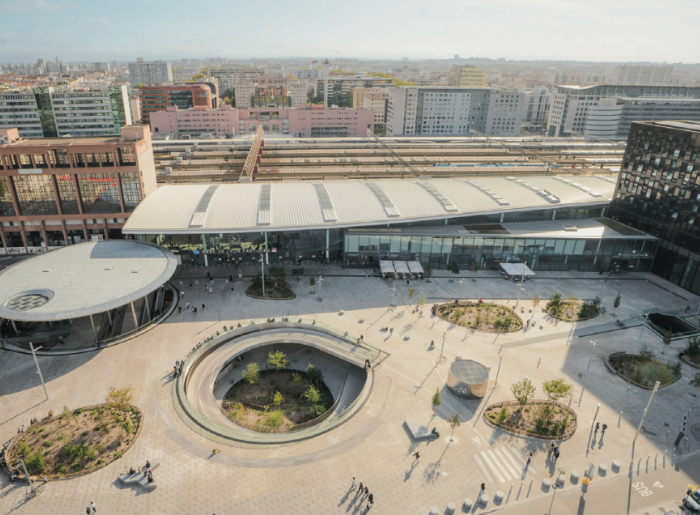
The station has doubled in size, with additional entrances and routes through the complex helping it accommodate growing passenger numbers. Place Charles Béraudier is now a two-level urban square containing France’s largest bicycle parking garage, while a 210-meter-long, 15-meter-high gallery opens onto new public areas. The design also draws inspiration from Lyon’s traboules, the passageways associated with Vieux-Lyon and Croix-Rousse.
Traveling internationally with a layover in France? Here’s what to know as France scraps the airport transit visa requirement for Indian travelers.
3. Colosseo – Fori Imperiali Station, Rome, Italy
Building a Metro station beneath Rome presents an unusual challenge because excavation can uncover centuries of history, and Colosseo – Fori Imperiali Station makes those archaeological discoveries part of the journey rather than separating them from the transport space. Spread across four levels and reaching a maximum depth of more than 30 meters, the station allows passengers to encounter archaeological finds discovered during construction.
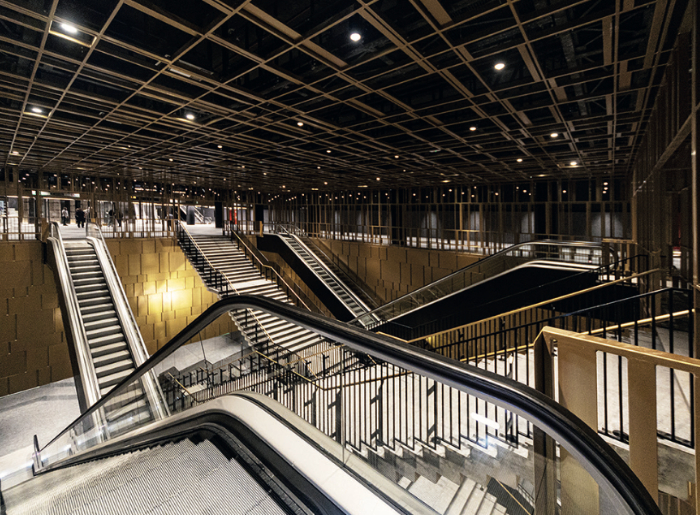
The Archaeological Park of the Colosseum developed the museum component in collaboration with Sapienza University. Ancient wells influence the architecture, while the use of light and shadow highlights different historical layers beneath the city. Another memorable feature is an oculus that gives transferring passengers an unexpected view of the Colosseum, making it one of the most distinctive and beautiful metro stations on the 2026 list.
4. Monte Sant’Angelo Station, Naples, Italy
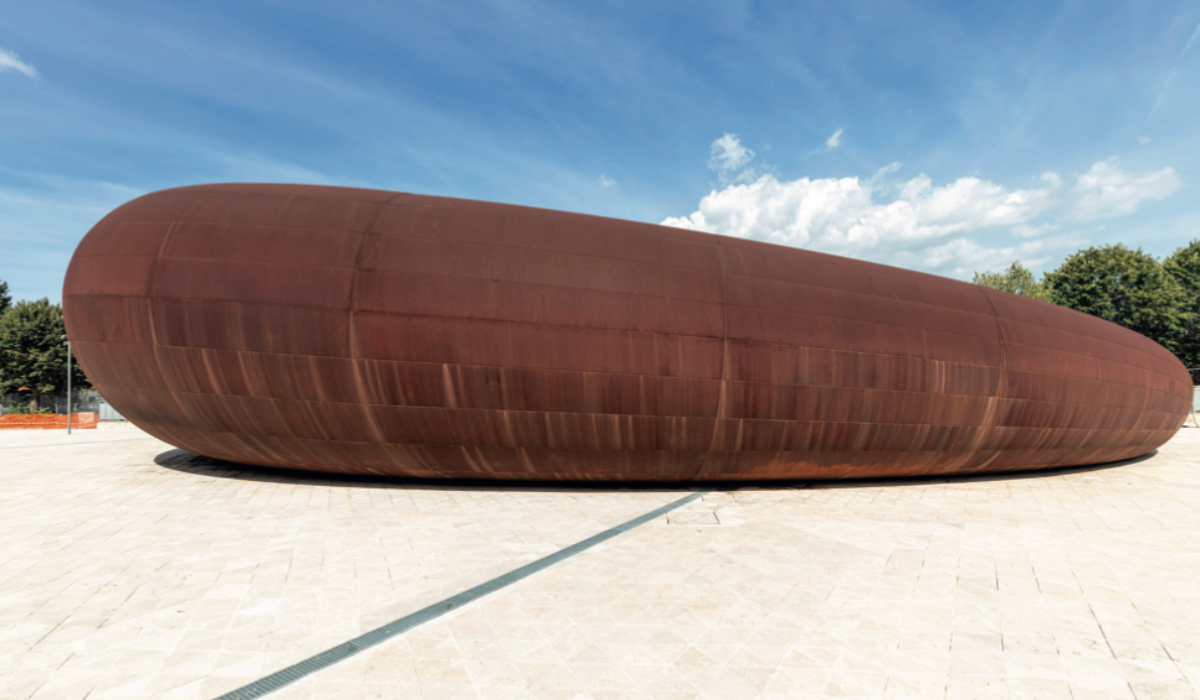
Rather than placing individual artworks inside a conventional Metro station, Monte Sant’Angelo Station in Naples has been conceived as a sculpture that passengers can physically enter. Artist Anish Kapoor worked with architectural firms Future Systems and AL_A on the project, which took more than two decades to develop.
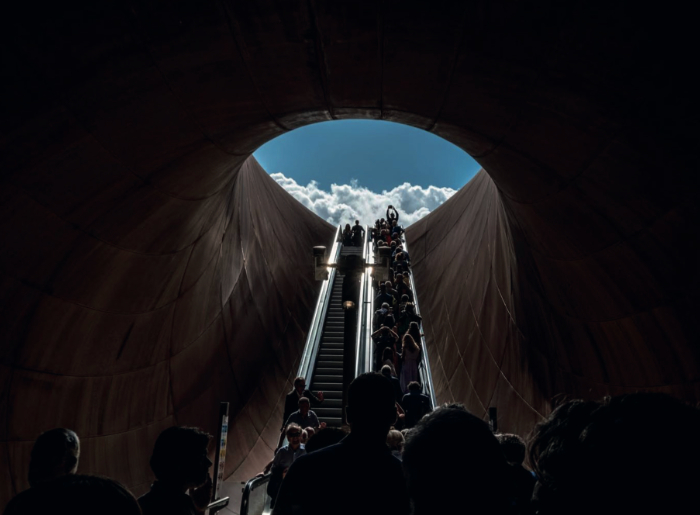
Two monumental openings constructed from Corten steel and aluminum lead passengers underground, with their forms recalling Mount Vesuvius, a cave, and the legend of the Cumaean Sibyl. At a depth of 48 meters, deliberately rough walls and ceilings continue the subterranean atmosphere. Covering 6,500 square meters, the station serves Federico II University’s Monte Sant’Angelo Campus as well as neighborhoods in western Naples.
Curious about Italy’s changing travel trends? Here’s what to know about the surge in open-air tourism in Italy and why it is gaining popularity.
5. National Museum Station, Riyadh, Saudi Arabia
Designed as a gateway to Riyadh’s National Museum and historic center, National Museum Station in Saudi Arabia uses its surroundings as a major influence on its architecture. Created by Arup, the station has a lattice-covered concrete shell modeled after the topography of Tuwaiq Mountain, while Najdi-inspired triangular openings provide glimpses of the vivid blue interior.
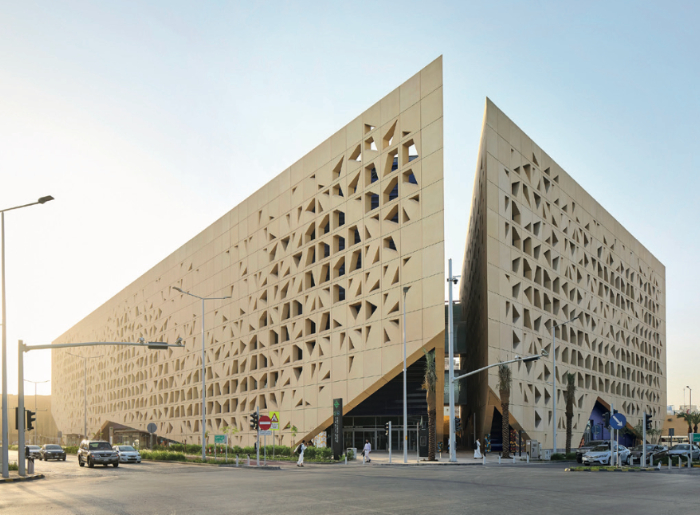
Stepping inside creates an entirely different impression, with blue surfaces and a large naturally lit atrium contrasting against the stone-like exterior. From there, passengers descend toward platforms located as deep as 33 meters underground. Serving Riyadh Metro’s Blue and Green Lines, the station demonstrates how regional influences can shape modern train station architecture.
6. Western Station, Riyadh, Saudi Arabia
Located on the site of a former open-air marketplace, Western Station was designed by Omrania to transform the area without removing its role as a public gathering place. Shops, a mosque, pedestrian spaces, squares, and gardens surround the tracks, allowing people to continue using the area while also making it a useful stopover point.
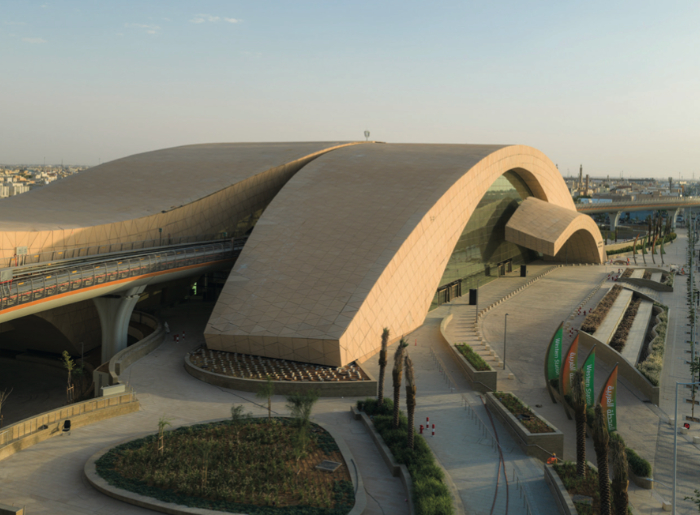
Its most recognizable features are two long structures topped by undulating roofs inspired by desert dunes. The curved forms create shaded spaces while allowing light and air to pass through the buildings, and a passageway connecting them takes inspiration from the seasonal riverbed of a wadi. Below, trains run along a viaduct through the site, allowing the public spaces above to remain active.
Planning a trip to Saudi Arabia? Here’s what Indian travelers should know about the new Package Visa, including eligibility, approved countries, costs and how to apply.
7. LAX/Metro Transit Center, Los Angeles, United States
In a city historically associated with cars and large freeway networks, the LAX/Metro Transit Center introduces a very different approach to urban transportation. Designed by Grimshaw Architects in collaboration with Gruen Associates, the multimodal station connects Metro’s C and K Lines with 16 bus lines, a regional bicycle hub, and forthcoming automated people movers, making it a major stopover point.
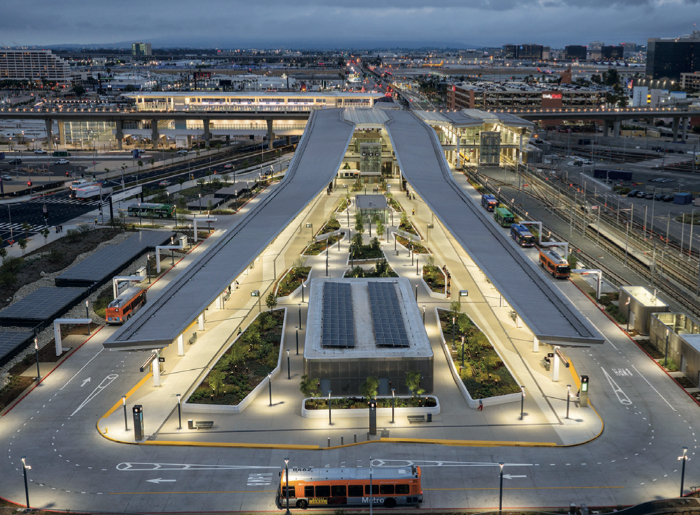
Sweeping sculptural canopies and glass ceilings give the station a light, open appearance, while its environmental features are integrated into the design rather than added separately. Natural ventilation and awnings help reduce the need for air conditioning, while solar panels meet about half of the building’s interior energy demand. These features place it among the best-designed train stations in the 2026 selection.
What Makes These Stations Stand Out?
What connects the world’s most beautiful train stations is not a single architectural style. Instead, each project responds differently to its location and to the way people move through it. Rome incorporates archaeology into the commute; Naples turns the journey underground into an artistic experience; Riyadh draws on desert landscapes and regional architecture; and Melbourne creates monumental spaces beneath the city.
The most beautiful train stations 2026 also show how railway and Metro architecture is expanding beyond platforms, tracks, and waiting areas. Public squares, gardens, artwork, bicycle facilities, natural ventilation, and connections between neighborhoods are now part of how these stations function within their cities.
Applying for or renewing an Indian passport? Here’s what to know about the 2026 passport rules, including new fees and passport validity for children.
Author’s Note
The information in this article has been sourced from the official Prix Versailles 2026 press release, published on September 28, 2026. The document was used to verify the seven stations included in the World’s Most Beautiful Stations List 2026, along with details about their architecture, design, and cultural significance.
Lost your passport during an international trip? Here’s what Indian travelers should do if their passport is lost abroad.
Summing Up
Town Hall Station, Lyon Part-Dieu Station, Colosseo – Fori Imperiali Station, Monte Sant’Angelo Station, National Museum Station, Western Station, and LAX/Metro Transit Center show just how varied beautiful railway stations in the world can be. Some draw directly from their city’s history, while others use landscape, art, sustainability, or public space to shape the passenger experience.
Rather than simply serving as places to board and leave a train, these seven projects demonstrate how stations can become recognizable pieces of their cities. For travelers interested in architecture as much as transportation, the most beautiful stations in the world offer plenty to notice before the journey even begins.