
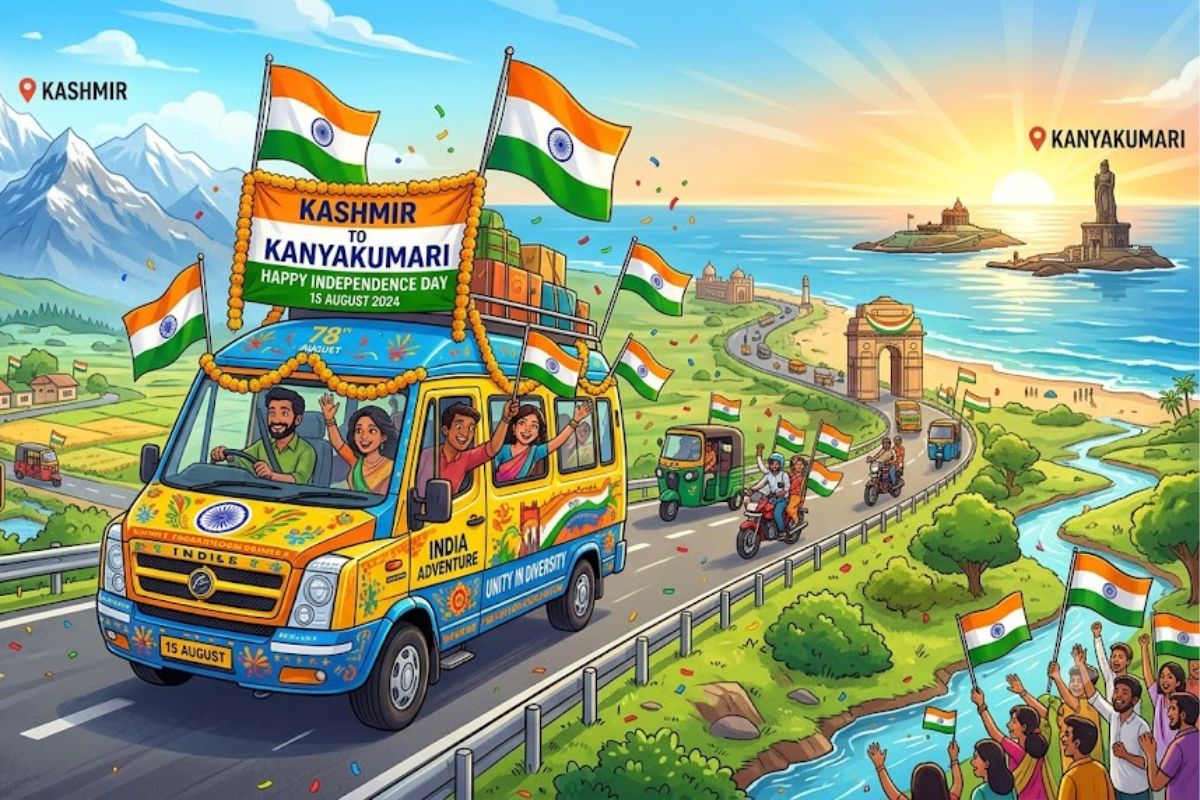
Every year on August 15, every little corner in the country hosts the unfurling of our tricolor. The moment is a sign of collective pride and reflection. As we celebrate the 80th Independence Day, there is no better way to honor the legacy of the Indian Independence Movement than by embarking on a journey to explore the country’s most amazing landmarks that hold a piece of history within them. From the snow-capped mountains of Kashmir to India’s southernmost tip, Kanyakumari, many places are immersed in history. So, from Kashmir to Kanyakumari, here’s a freedom-themed bucket list for you.
Freedom-Themed Travel Bucket List: Kashmir To Kanyakumari
Ladakh And Punjab
The journey begins in Ladakh, known for its breathtaking mountain scenery.
1. Kargil War Memorial, Dras
The Kargil War Memorial in Dras, Ladakh, was built by the Indian Army. It is built on the Srinagar-Leh National Highway 1D and honors all the brave martyred soldiers from the 1999 Kargil War (Operation Vijay). You can read the names of the martyrs on a pink sandstone wall which stands against teh backdrop of Tiger Hill. It houses teh Amar Jawan Jyoti, which is an eternal flame lit to remember all the heroes. There is a Captain Manoj Pandey Memorial here which houses war documents, seized enemy weapons, personal letters and archival photos.
2. Jallianwala Bagh
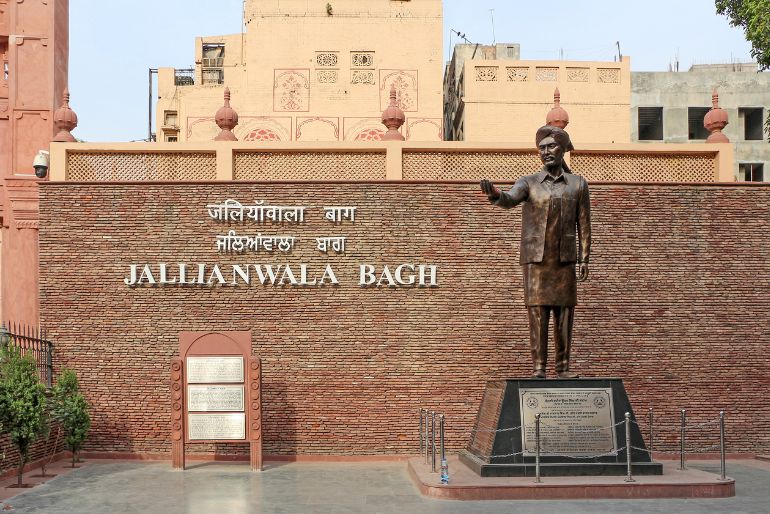
Jallianwala Bagh is a historic garden and a memorial of national importance located in Punjab’s Amritsar. It is the very site where the massacre, known as the Jallianwala Bagh massacre, took place in the year 1919. A large peaceful gathering of unarmed civilians fell prey to an open fire by the British colonial troops. It led to the death of hundreds of men, women, and children. This catastrophic event is said to be one of the darkest chapters in British colonial history. It is now a public memorial and a major tourist venue with Amarnath Jyori, an eternal flame, lit inside to honor the ones who lost their lives.
3. Wagah Border
Wagah Border is the only active road border crossing between Pakistan and India. It is well-known for its synchronized soldier drills, theatrical high-kicks, sharp turns, intense stares, high-energy patriotic crowds, and the daily military Beating Retreat ceremony. Since 1959, it has been conducted jointly by the Pakistan Rangers and the Indian Border Security Force (BSF). It ends at sunset with a quick handshake between the rival guards, lowering of both the national flags, and slamming of the gates.
Also Read: Places To Visit In Mumbai On Independence Day
Delhi And Uttar Pradesh
Now let’s move towards India’s central heartland.
1. Red Fort
The Red Fort in Delhi is a historic Mughal Palace- Fortress that was built in the 17th Century. Built by Mughal Emperor Shah Jahan, this fortress features key sites like Diwan-i-Aam, Lahori Gate, and Diwani-i-Khas. It is known as the national symbol of Indian national sovereignty and is also a UNESCO World Heritage Site. This fortress became the political center of the Mughal Empire after Shah Jahan decided to move his capital from Agra to Delhi. Visit and witness the prime location where the Prime Minister of India hoists the national flag every year.
2. India Gate
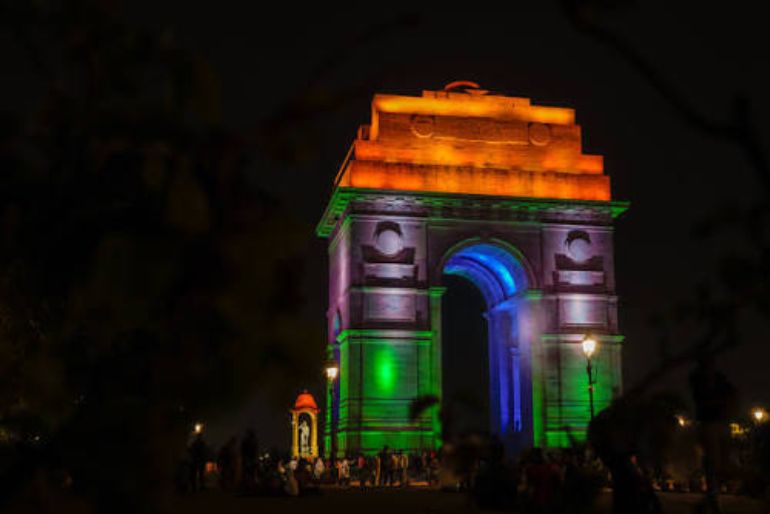
The famous India Gate in Delhi is not just a tourist attraction; it holds historic importance. It is a powerful national war memorial with a striking triumphal arch. It was designed by Sir Edwin Lutyens and is the central symbol of modern Indian pride. This memorial honors over 80,000 soldiers who lost their lives during the Third Anglo-Afghan War and World War I. The walls are etched with the names of these individual Indian Army soldiers. It represents the sacrifice of the troops who fought in the early 20th century in global conflicts.
3. Raj Ghat Memorial
Raj Ghat is a serene memorial dedicated to the Father of the Nation, Mahatma Gandhi. It is located on the banks of the Yamuna River and is the exact place where Gandhi was cremated in 1948. It is known for its spiritual, calm ambience right in the middle of the bustle of the metropolis. The memorial is a black marble platform that is unroofed and is adorned with fresh flowers. This platform has Gandhi’s final words, “He Ram,” inscribed on it, and a perpetual flame is enclosed in a glass frame near it.
4. Jhansi Fort
Jhansi Ka Qila, also known as Jhansi Fort, is a well-known iconic 17th-century fortress. It stands tall atop the Bangira Hill in Uttar Pradesh’s Jhansi. It serves as a monumental symbol of bravery and resistance, which was defended by Rani Lakshmibai, the Queen of Jhansi. The fort is spread across 15 acres and offers panoramic views of the surrounding city. It houses the historic massive cannons that were used in the 1857 war. The fort offers a peek into India’s freedom struggle journey and the bravery of Rani Lakshmibai.
Also Read: Independence Day 2026: 79 Years Of Independence Or The 80th Celebration?
Gujarat And Maharashtra
Western India served as the launchpad of many iconic freedom movements.
1. Dandi Beach
Dandi Beach is an historically important coastline which is located in Gujarat’s Navsari. It is known as the defining endpoint of Mahatma Gandhi’s Salt March or Salt Satyagraha in 1930. It is known as a turning point in the Indian Independence movement. This pristine beach is known to blend the depth of historical significance with a scenic atmosphere, making it perfect for evening leisure. It has a 15-acre National Salt Satyagraha Memorial situated close to the coast. It features 24 narrative murals, 81 life-sized bronze statues of fellow marchers, and a 5-metre-tall statue of Mahatma Gandhi.
2. Sabarmati Ashram
Also known as Gandhi Ashram, the Sabarmati Ashram is a historic political and spiritual sanctuary. It is located on the banks of the Sabarmati River in Ahmedabad and, between 1917 and 1930, it served as the home of Mahatma Gandhi and his wife Kasturba Gandhi. This place served as the launching pad for the monumental Dandi Salt Satyagraha and was the nerve centre of the Indian Independence movement. It houses Hriday Kunj, Gandhi Smarak Sangrahalaya, Magan Niwas, Nandini, and Upasana Mandir.
3. Gateway Of India
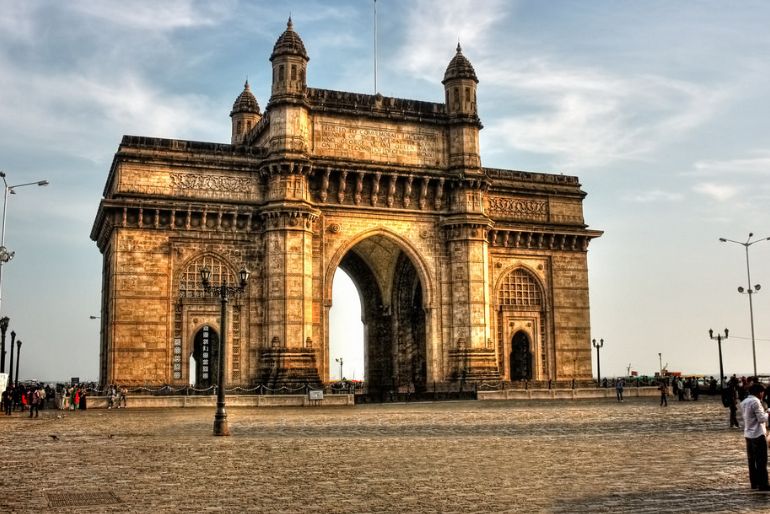
Gateway of India is an iconic arch-monument located in South Mumbai in Maharashtra. It is a 26-metre tall structure that is known as a symbol of Mumbai’s rich historical legacy. This monument is said to mark the end of British rule when the last British troops walked out through these gates in 1948. It is masterfully crafted from concrete and yellow basalt rock, blending elements of Roman triumphal arches with Islamic architecture of Gujarat.
4. Mani Bhavan And August Kranti Maidan
Mani Bhavan Gandhi Sanghralaya is a well-known historic building in South Mumbai. Its erved as Mahatma Gandhi’s headquarters for about 17 years. It is the nerve center of India’s freedom struggle between the years 1917 and 1934. This was the very building where the historic movements like Swadeshi, Non-Cooperation and Satyagraha were initiated. August Kranti Maidan is a ground in South Mumbai where the Quit India Movement was launched by Mahatma Gandhi. The ground was renamed as August Kranti Maidan to honor the revolutionary moment that triggered India’s final phase of independence struggle in August.
Also Read: Independence Day Food Guide: Signature Dishes Of Each Indian State
West Bengal And Andaman And Nicobar Islands
Eastern India too had its vibrant stand in the history of India’s Independence.
1. Netaji Bhavan And Victoria Memorial
Netaji Bhawan is a heritage historic building and museum in Kolkata, West Bengal. It has served as revolutionary leader Subhas Chandra Bose’s ancestral home. This building was the central hub of Netaji’s political activities. It was also the site where he was arrested under British surveillance. This residence is now preserved as a national biographical museum. The Victoria Memorial is a white marble monument and museum in Kolkata. It was built to commemorate Queen Victoria and is one of the finest examples of British-era architecture in India. This monument is an art museum today and is under the Ministry of Culture as a tourist attraction.
2. Cellular Jail
The Cellular Jail, also known as Kala Pani, is a historic colonial prison complex in Andaman and Nicobar Islands’ Port Blair. It was constructed by the British and used to exile and isolate India’s political prisoners and freedom fighters. This prison comprises 693 individual solitary cells. Today it stands as a prominent national Memorial that speaks about the sacrifices and struggles of India’s Independence.
Tamil Nadu And Kanya Kumari
Let’s take a look at the last leg of this freedom-themed travel bucket list.
1. Vellore Fort
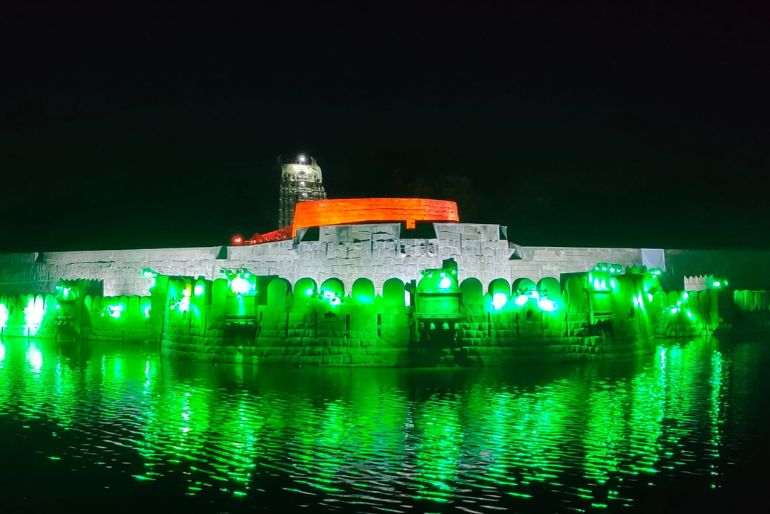
The Vellore Fort is a magnificent 16th-century granite fortress located in Tamil Nadu’s Vellore city. It was built in 1566 AD by the Vijayanagara chieftains and hosted the Vellore Mutiny 1\of 1806. It is historically unique for hosting this event, which is a very large-scale uprising by Indian sepoys against the British East India Company. This predates the 1857 Revolt. It houses Jalakandeshwar temple, Tipu Mahal, Hyder Mahal, Archaeological Museum and St. John’s Church.
2. Gandhi Memorial Mandapam
The Gandhi Memorial Mandapam is a coastal Indian monument located in Tamil Nadu’s Kanyakumari. It was built near the confluence of the Arabian Sea, Bay of Bengal, and the Indian Ocean. This was the exact spot where Mahatma Gandhi’s ashes were kept for public viewing before being sent for immersion. It stands as an architectural tribute to his ideals and life. The central spire stands 79 feet tall, representing Gandhi’s age at the time of his death. The monument features a photographic gallery, an upper deck terrace, and a historical reference library.
Summing Up
Travelling from Kashmir to Kanyakumari along India’s freedom trail offers you an opportunity to connect with the history that defines this nation. You can pay homage to all the sacrificed souls in the path of India’s freedom by visiting the places mentioned above.
If you want to know which memorials you can visit on Independence Day or lesser known-sites of the Independence movement, do check out our website.