
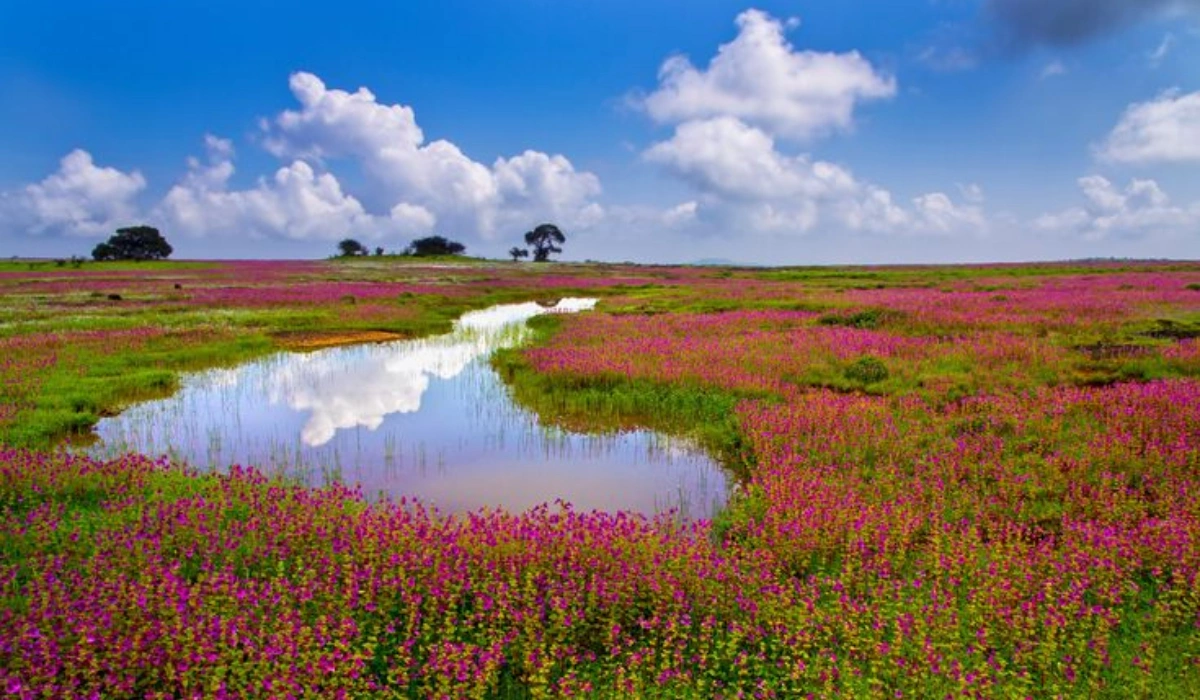
The Kaas Plateau Flower Season 2026 is approaching sooner than expected, with flowers expected to bloom between mid-September to mid-October 2026. The UNESCO-recognized natural phenomenon attracts thousands of nature enthusiasts from around the world for an approximately month-long blooming season of some of the most beautiful flowers. If you’re visiting during the Kaas Plateau blooming season and curious to know about the different Kaas Plateau flowers that bloom here, this is a helpful guide for you!
The Unique Topography Of Kaas Plateau
Popularly known as Maharashtra’s ‘Valley of Flowers’, the Kaas Plateau is a UNESCO Natural World Heritage Site.
Kaas Plateau is mainly made of basalt rock, covered with a thin layer of acidic soil, not more than an inch thick. In some parts, water runs off the uneven terrain while in some parts, one can find water-logged areas. This unevenness constitutes a unique habitat with nutrient-deficient soil. The thin soil does not allow large shrubs and trees to grow, creating a habitat where only seasonal Kaas Plateau flowers grow during the monsoon.
You Must Spot These Popular Kaas Plateau Flowers!
Topli Karvi
Scientifically called Pleocaulus ritchiei, these flowers bloom once every 7 years and are next expected to bloom in 2026-2027. The plant is a dwarf shrub with pale-pink flowers that covers entire hillsides during their blooming season. Locals near Kaas Village can help you confirm Karvi cycles.
Mickey Mouse Flower
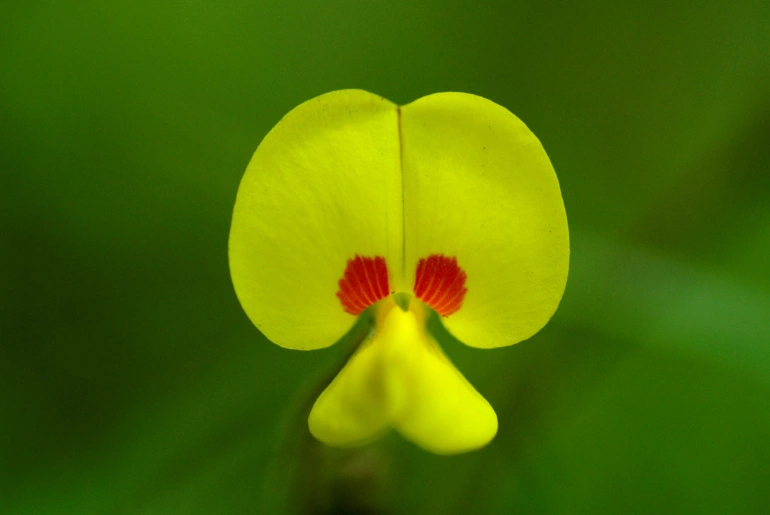
Smithia hirsuta stands out for its bright yellow flowers with a bright red center. These flowers, with their yellow petals and red center, resemble a cartoon face and bloom mid-September to early October. This is one of the most common Kaas Plateau flowers and gives the plateau its distinctive yellow appearance.
Balsam
Scientifically called Impatiens balsamina, this flower species blooms between September to early October. It can be easily spotted thanks to its pink and white clusters and is also commonly found near the Kaas Plateau parking area.
Sonki
Sonki flowers are also quite spread out on the Kaas Plateau. The blooming window of Sonki, Senecio bombayensis, is between early to mid-October. With bright yellow flowers that resemble daisy flowers, it dominates the roster of Kaas Plateau flowers during mid-October.
Murdannia Lanuginosa
Murdannia lanuginosa is commonly found along the main trail but can be easily missed if you’re not paying close attention. The plant has pale blue three-petalled flowers while some species are yellow in color.
Kaas Plateau hosts over 850 flowering plant species, of which 39 are endemic. Notable Kaas Plateau flowers include the seven-yearly Karvi, insectivorous Drosera indica, and endemic Ceropegia media, all of which are protected under the UNESCO Natural Heritage status granted in 2012.
Droseras & Bladderworts: The Carnivores Of Kaas Plateau
The plateau is home to a wide variety of harmless, colorful Kaas Plateau flowers but it is also home to carnivorous plants, particularly the droseras and the bladderworts.
Droseras Or Sundews
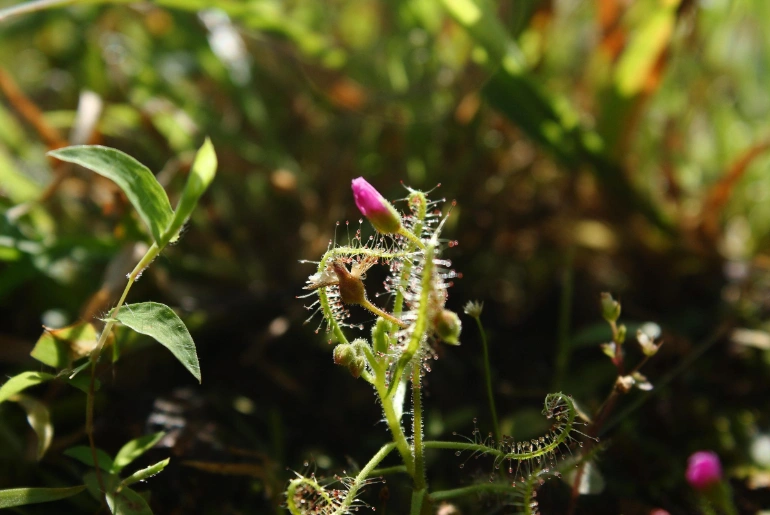
Droseras, commonly called sundews, are usually found in nutrient-poor soils. They produce glistening, sticky droplets on their tentacle-like structures that lure unsuspecting insects. Kaas Plateau has two notable species of sundews, the Indian sundew (Drosera indica) and Burmese sundew (Drosera burmannii).
Bladderworts
Another group of carnivorous plants found here are the bladderworts. Scientifically called Utricularia, they have unique vacuum-like bladder traps that quickly suck in unsuspecting prey.
Also Read: No-Trek Waterfalls In Maharashtra: Stunning Monsoon Escapes Without The Hike
Ganpati Flower’s Unique Pollination
Zombi pea or elephant trunk flower (Vigna vexillata), called ‘Ganpati flower’, exhibits a unique pollination method. The flower has two horizontal and two vertical petals and one half-moon-shaped petal in the center, with a bright yellow spot.
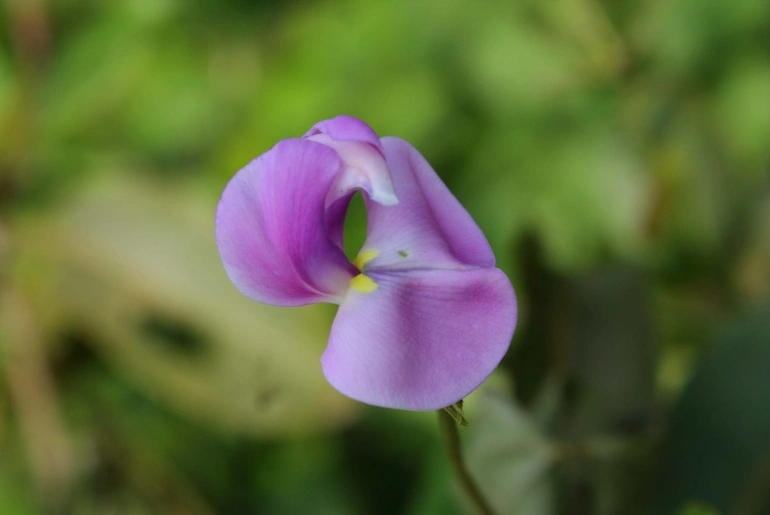
As soon as an insect lands on the central petal, an elephant trunk-like projection bathes the insect with pollen. However, this mechanism is triggered only by a certain weight, so chances of lighter insects getting showered with pollen are less than heavier insects.
Interested in exploring nature trails? Why not start with Kanheri to Gaimukh Nature Trail?
Unique Aquatic Plants On The Kaas Plateau
Satara Lace Plant: An IUCN Red List Vulnerable Species
The pantura or y-tura (Aponogeton satarensis), also called the Satara lace plant, is one of the rare Kaas Plateau flowers native to the Western Ghats. It has slender, translucent leaves, delicate white flowers, and a y-shaped structure and grows in aquatic habitats. Habitat loss and water pollution has led to the plant being classified as ‘vulnerable’ on the IUCN Red List. The plant plays a significant role in maintaining an ecological balance in freshwater ecosystems and efforts are underway to safeguard this aquatic gem.
Water Snowflakes
Water snowflakes (Nymphoides indica) are a species of fast-growing aquatic plants. They can mainly be found on the surface of the Kaas Lake. When colonies of these flowers grow on water surfaces, it appears as freshly fallen snow, hence the name. They are also called floating hearts as the shape of the leaves is heart-like.
Also Read: India’s 10 Best National Parks To Visit In September 2026
Kaas Plateau Flowers With Unique Shapes
Deccan Pogostemon
Deccan pogostemon (Pogostemon deccanensis) is a fascinating plant native to the Deccan Plateau. The herb emits a pleasant fragrance when crushed, making it a valuable herb in perfumery and traditional medicine. It is also ecologically important, providing habitat and sustenance for various insect species.
Rock Dipcadi
The Rock dipcadi (Dipcadi saxorum) is a flower known for its unique bell shape. It thrives in the harsh rocky habitats of the Western Ghats. With slender stems and bell-shaped flowers, it poses a threat of habitat loss and over-collection. Today it is classified as ‘vulnerable’ on the IUCN Red List.
Long-Tailed Habenaria
Long-tailed habenaria (Habenaria longicorniculata) is a rare and captivating orchid species found in the Western Ghats. It has a long, thread-like spur and intricate white flowers. is a Currently, habitat degradation and deforestation pose serious threats to its survival, rendering it locally ‘vulnerable’.
Things To Keep In Mind When Visiting Kaas Plateau
View this post on Instagram
- Kaas Plateau flowers are some of the most ecologically sensitive flora in India and are protected by the UNESCO Natural World Heritage status. Plucking or damaging them in any way is strictly prohibited and highly discouraged. In fact, the local law enforcement can take strict action against those violating this essential rule.
- Do not carry single-use plastics with you. Carry a refillable bottle and avoid carrying plastic bags.
- Do not play loud music or cause noise disturbance. It not only disturbs other visitors but also disturbs insects and pollinators.
- Stay on marked paths and do not trample flowers or go off-trail.
- Do not use drones without prior permission from the Forest Department.
- Smoking or open fire is strictly prohibited as it may be a fire risk to the dry grass on the plateau.
- The plateau does not allow pets, not even leashed animals.
- Do not litter your surroundings!
Author’s Note
The Kaas Plateau is one of the most beautiful yet vulnerable ecosystems in the world. Each year, close to 850 species of diverse flora bloom on this plateau. While I haven’t visited the plateau, it is my humble request to visitors to not litter or damage the place in any shape or form. Taking care of our environment, whether it is UNESCO-recognized or not, is our collective responsibility.
Also Read: Pench National Park: How To Reach, Best Safaris, Zones & Complete Travel Guide
Summing Up
In this article, we’ve given you information about some of the Kaas Plateau flowers you must try spotting. With the Kaas Plateau flower season inching closer with each passing day, many photographers, nature enthusiasts, and tourists are bracing themselves to see the flowers blooming in Kaas Plateau.