
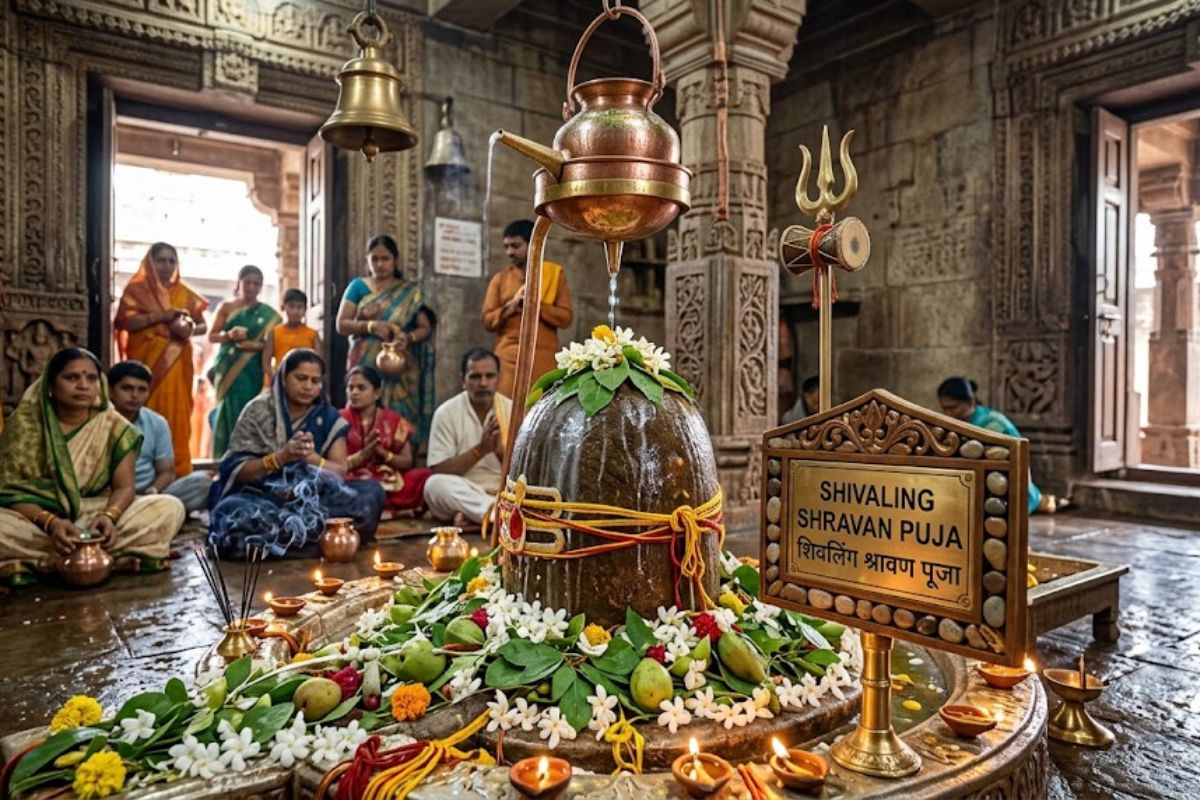
As the monsoon clouds bring relief to the people after scorching summers, you can hear the loud chants of Har Har Mahadev across streets, temples, and riverbanks. This is because the sacred fifth month of the Hindu calendar, Sawan or Shravan, is dedicated to Lord Shiva. There are Shiva palkhis across the town, Bhasma aartis being performed, the chant of Om Namah Shivay is heard, and shivlingas are adorned with bel patras and flowers across India. But here’s the catch. If you talk to someone from Uttar Pradesh and someone from Maharashtra, you might notice something weird.
One is waiting for the auspicious month to begin, while the other is already two weeks into the sacred fasting. This clearly and rightly raises many questions like: Why is Shravan different in North and South India? What is the fundamental difference between Shravan and Sawan month, and why does Shravan start on different dates across regions? Well, let’s find out!
What Is The Significance Of Shravan Month?
Before knowing about the regional variations, it is essential to understand the importance of the Shravan month in Hinduism.
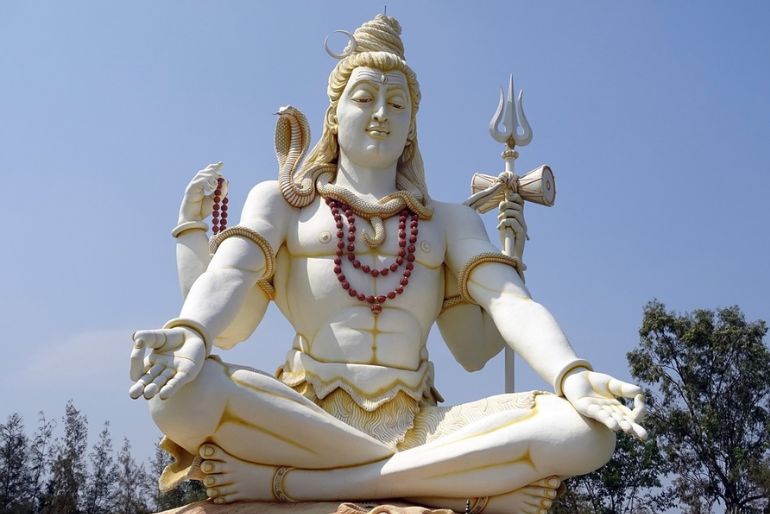
Mythologically, during the cosmic churning of the ocean known as Samudra Manthan, about fourteen divine gems emerged with a deadly poison called Halahal. To save the entire universe from this poison, Lord Shiva drank the poison and held it in his throat. Hence, his throat turned blue, and he earned the name Neelkanth.
To cool down the burning heat of this poison, all the deities showered Ganga water upon him. Hence, the Shiva worship traditions during the Shravan month are centered around offering Abhishekam and belpatra to the Shiva Linga.
Apart from this, if you are wondering why Shravan is known as Sawan? The answer is that it is simply the Hindi or Prakrit derivative of the Sanskrit word Shravan or Shravana. This month was named after the Shravana nakshatra or star constellation. It is believed that this star constellation rules the sky during the full moon of this month.
Also Read: The Ultimate Guide To India’s Twelve Jyotirlingas: Location And Legends
Purnimata and Amanta: Why Do States Follow Different Hindu Calendars?
The primary reason behind the North India vs South India Shravan calendar difference comes from the regional preference in calendar keeping as well as lunar astronomy. To understand this, let’s first understand how a lunar month or masa is measured in Hindu calendars.
A lunar month consists of two fortnights known as Shukla Paksha and Krishna Paksha. Shukla Paksha is the waxing phase leading to the full moon, while Krishna Paksha is the waning phase leading to the new moon.
The Purnimata System
The calendar which is followed in North India for Shravan is the Purnimata system. In this tradition, the lunar month actually begins on the very next day of Full Moon or Purnima and ends on teh next full moon. Hence the month begins with the Krishna Paksha. The states that follow Purnimata include Bihar, Rajasthan, Madhya Pradesh, Punjab, Himachal Pradesh, Uttar Pradesh, Uttarakhand and Jharkhand.
The Amanta System
The calendar which is followed by West India and South India is the Amanta system. Here, the lunar month begins on the day after the New Moon or Amavasya and ends on the next new moon. Hence, the month begins with the Krishna Paksha. The states that follow Amanta are Maharashtra, Goa, Andhra Pradesh, Gujarat, Telangana, and Tamil Nadu.
Because Purnimanta month begins a fortnight earlier with Krishna Paksha. Hence, North India’s Shravan begins 15 days before the Shravan of West and South Indians.
Regional Variations In Fasting And Shiva Worship
The Shravan month fasting traditions across India are a little different than one another, with unique local expressions. Mondays during Shravan are considered to be exceptionally holy for observing fasts. However, Shravan Somwar differences are reflected by the total number of Mondays that are observed.
North India: North Indians typically observe about 4 to 5 Sawan or Shravan Somwars or Mondays because of their early start. The very first Monday occurs in Krishna Paksha for North Indians. Devotees often observe Nirjala upwas (fast without water) or Phalahar fasts (fruit-based fast).
West and South India: In Maharashtra, South India, and Gujarat, devotees generally observe 4 Sawan or Shravan Somwars or Mondays. In many Southern traditions, Shravan Shanivar or Shravan Saturdays are as important as Shravan Mondays. It is dedicated to Lord Venkateshwara or Vishnu, and hence they worship both Lord Shiva and Lord Vishnu.
Also Read: Sawan Somwar 2026: Best Shiva Temples Near Mumbai To Visit
Summing Up
Even though the calendars are different, the core spirit remains the same across all the regions. Be it July or August, no matter which month you observe Sawan or Shravan, the month represents a time of gratitude for rain, for inner cleansing and total surrender to Lord Shiva.