Serving Santhosham: Bhagyalakshmi & Chittaranjan Gohokar On Reviving Authentic South Indian Cuisine In Mumbai
Meet Bhagyalakshmi and Chittaranjan Gohokar, the mother-son duo behind Santosham bringing heirloom South Indian recipes and traditional cooking to Mumbai.
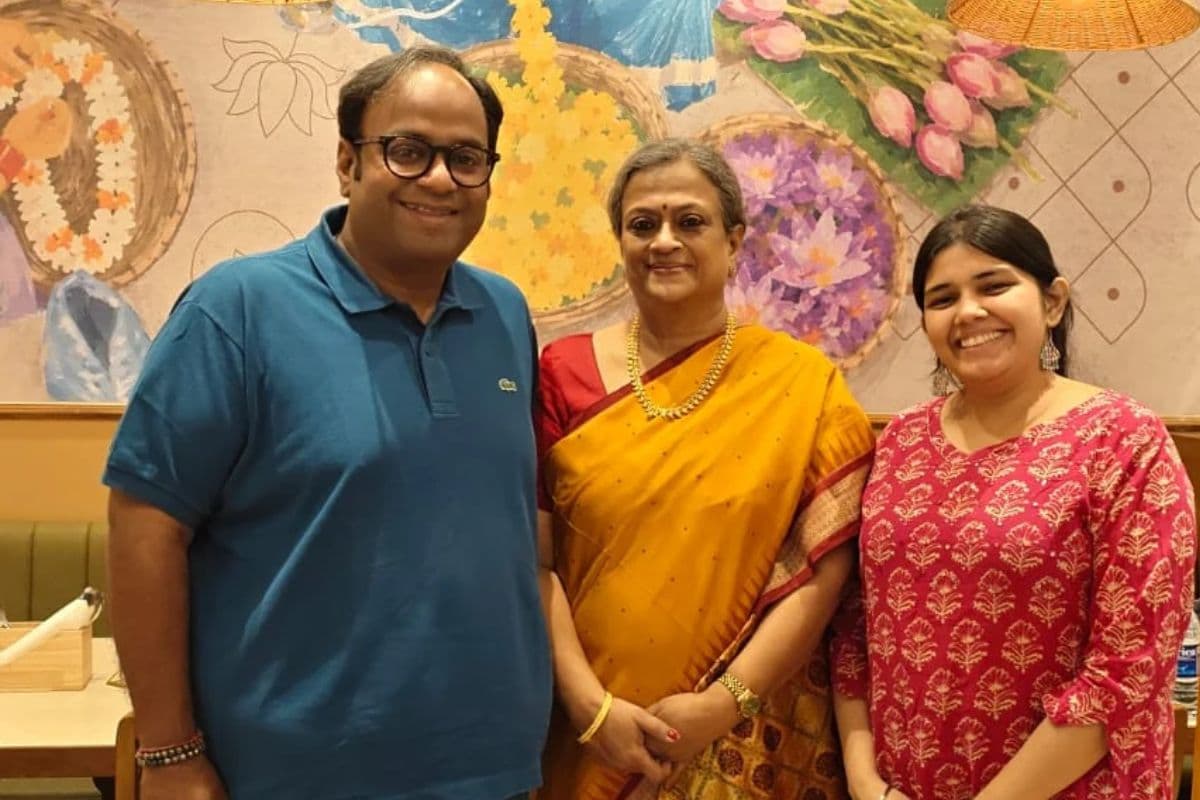
Bhagyalakshmi and Chittaranjan Gohokar | Photo Credits: Self
In a city where South Indian food has somehow been reduced to a menu of fusion dosas and idlis, Santhosham is here to take us back to the roots. This pure-vegetarian restaurant in Mumbai, with outlets in multiple locations, serves saatvik, temple-style cuisine on traditional banana leaf. What began as a home kitchen has today blossomed into a beloved restaurant brand, and behind this success is the mother-son duo: Bhagyalakshmi and Chittaranjan Gohokar. We, unstumbled, stepped into Santosham, felt the warmth of a South Indian household, relished some delicious dishes, and also met the mother-son duo for a brief chat. Here’s how it all went!
Excerpts From A Hearty Chat With Bhagyalakshmi & Chittaranjan Gohokar
unstumbled: How did you come up with the name Santhosham, given how satisfying the word itself feels?
Chittaranjan: We wanted a name that felt familiar, colloquial, and easy to pronounce, with strong recall value. I have eaten my mom’s food for 45 years and have felt deeply satisfied afterward; the idea was to translate that exact emotion into food. In Tamil and Malayalam, people naturally express satisfaction after a good meal by saying "romba santhosham" or "valare santhosham," while non-South Indians immediately connect with the root word santosh, which means contentment. Hence, Santhosham perfectly captured our philosophy, and we went ahead with it.
unstumbled: How did your family's culinary journey begin, and what led to the creation of Santhosham?
Bhagyalakshmi: My roots are in Kottayam, Kerala, and around the time of Independence, my father moved to Nagpur. There he opened Shanti Bhavan in 1953, the city's first South Indian restaurant. Growing up, I witnessed the functioning of running a kitchen without gas stoves or mixers, where everything was cooked over firewood and ground by hand. Although I studied B.Sc. Home Science and spent decades focused on family, I returned to my passion at age 60 by operating as a home chef in Powai. I used to single-handedly prepare 40-to-45-item Onam Sadhyas in 30-to-50-litre batches from a tiny kitchen. After surviving a critical battle with COVID-19, my son and I decided to scale that home kitchen into a restaurant chain.
Also Read: Delhi's Yamuna Cruise: Where To Board & How Much Are Tickets?
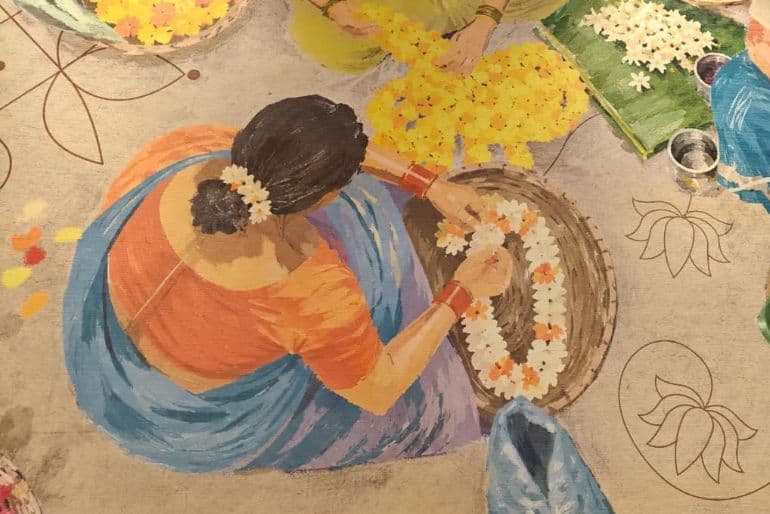
Santosham | Photo Credits: Self
unstumbled: What sets Santhosham’s menu and philosophy apart from standard South Indian restaurants?
Bhagyalakshmi: Authentic vegetarian food is best found in its temple, and that is exactly what we serve on a plantain leaf. Just like temple bhog and prasad, our food is cooked completely without onion and garlic, and we even make two distinct varieties of Kerala sambar. Beyond the usual tiffin staples, our core focus is on full meals featuring 10 to 15 seasonal vegetables, alongside traditional rice varieties like tamarind rice, curd rice, and ven pongal. We want to take diners back to their roots with wholesome, protein-rich, home-style nourishment.
unstumbled: What are the pros and cons of working together as a mother-son duo in this business?
Chittaranjan: The biggest con is navigating disagreements, because I naturally have to yield out of respect for my mother's age, experience, and deep culinary knowledge. I simply cannot sit and argue with her. On the flip side, the biggest pro is her unmatched culinary craft and the authenticity of the food she brings to the table, which is the true winner of the brand.
unstumbled: Why did you choose Malad as one of your expansion locations?
Chittaranjan: We looked closely at customer demand and noticed that a massive number of loyal guests are traveling all the way from Borivali, Kandivali, and Malad to our Marine Drive or Powai outlets. They were constantly asking us to open in the western suburbs. The stretch between Andheri and Borivali is also predominantly vegetarian, so that made Malad a natural fit.
unstumbled: What has been the biggest operational challenge in scaling from a small home kitchen to multiple restaurants?
Chittaranjan: Running a single restaurant is a 24/7 job, and scaling into a restaurant company brings much larger operational hurdles, which we tackle by building strict systems and SOPs to minimize human error.
Bhagyalakshmi: However, our most acute crisis was the recent nationwide LPG shortage. Within 48 hours, we leveraged our vendor relationships to overnight-source induction stoves, coal, and bagasse setups, completely converting our cooking methods without shutting down for a single day or cutting a single item from the menu.
Also Read: Is Kartik Purnima The Same As Dev Deepawali? The Difference Explained
unstumbled: What key takeaways from other brands shaped Santhosham’s business model when you started?
Chittaranjan: During the COVID lockdown, I realized that if you want to build a scalable brand, instead of reinventing the wheel, you should give people what they genuinely want, packaged well. When we launched our first outlet in Powai in 2022, the market was full of multi-cuisine "South Indian" restaurants serving everything from Chinese to Mexican alongside dosas, or non-vegetarian regional spots. We saw a clear gap for an authentic, casual-dine, pure-vegetarian South Indian restaurant, and we tapped into it.
Santosham | Photo Credits: Self
unstumbled: Is there a special story behind the filter coffee served at Santhosham?
Bhagyalakshmi: When my grandfather first moved from Kerala to Matunga, a local lodge called Mysore Concerns had just started a small coffee roastery that has since become an iconic 90-year-old Mumbai institution. Before opening our very first outlet, I met the owners of Mysore Concerns, and they created a custom blend exclusively for Santhosham that we have never changed.
unstumbled: What is the one non-negotiable core principle you refuse to compromise on?
Chittaranjan: Our strict rule from day one has been using top-notch ingredients and eliminating baking soda, Dalda, artificial colors, or preservatives.
Bhagyalakshmi: Even our restaurant atmosphere follows this ethos: we only play South Indian cinema or devotional music to maintain a calm, authentic vibe.
unstumbled: With fusion dishes like Schezwan and chocolate dosas trending everywhere, is it tough to stand your ground on pure tradition?
Chittaranjan: Not at all, because we genuinely believe diners gravitate toward fusion only for temporary novelty, whereas authentic comfort food builds lasting loyalty. In five years of running Santhosham, not a single customer has ever asked us why we don't serve a Schezwan dosa.
Bhagyalakshmi: Our goal is to break the stereotype that South Indian households only eat idli and dosa, and to bring back real, unprocessed, home-style cooking, especially for a younger generation raised on fast food and delivery apps.
unstumbled: Is there a specific piece of customer feedback that has stayed with you and kept you motivated?
During Onam in 2025 at our Marine Drive outlet, a Keralite woman who had lost her mother six months earlier came up to the counter in tears after finishing her meal, saying our food tasted just like her late mother's cooking. When I called my mother on the phone so the guest could speak to her, she broke down crying right in the middle of a packed restaurant. Moments like that remind us that we aren't just serving food; we're helping people relive cherished memories.
unstumbled: What is the one feeling or takeaway you want every diner to leave Santosham with?
More than anything, we want that when guests step out after a meal, they carry that genuine, warm feeling of having just eaten at home.
Also Read: Ooty Vs Kodaikanal In November: Which Is Better For A 3-Day Trip?
Food Review
Walking into Santosham genuinely felt like walking into a South Indian household. Being a South Indian myself, I can say the vibe was just right. Slow and soft South Indian music was playing in the background, with an orange color palette and ambient lighting.
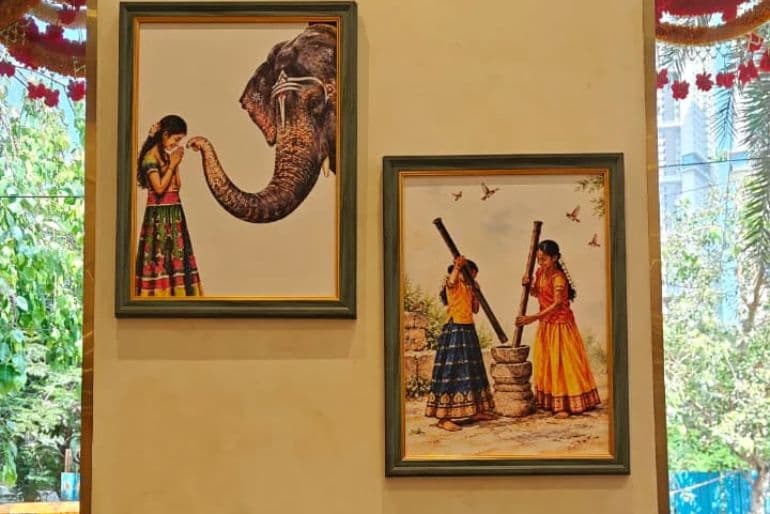
The orange color palette highlights the culture, warmth, and South Indian hospitality. The interiors of the restaurant balance modern comfort with traditional roots. Its walls feature decorative patterns, traditional artwork, and some murals that show South Indian culture and everyday rituals. There are large glass walls that bring in abundant natural light during the day, making the place more homely and refreshing.
We Tried:
Ragi Ghee Dosa (Sada)
Mini Benne Platter
Bisi Bele Bhaath
Pineapple Kesari
Filter Coffee
Ragi Ghee Dosa (Sada)
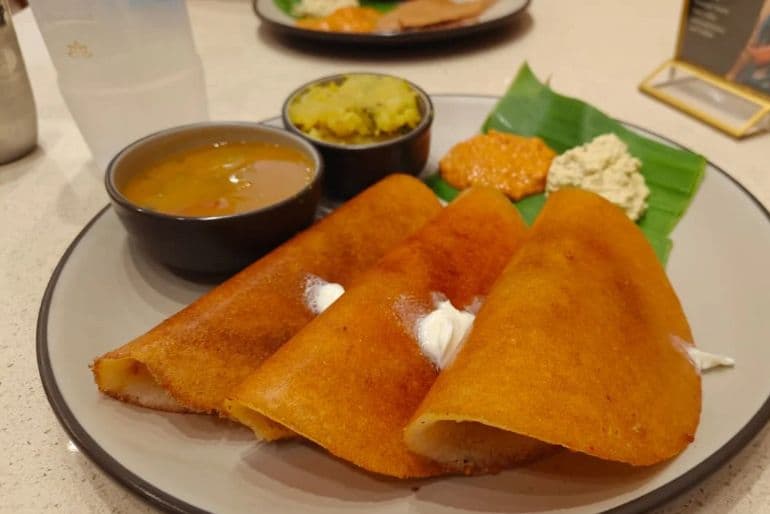
Making ragi dosa at home is not easy, but team Santoshan has nailed it. The dosas were perfectly balancing crispiness with softness offering so much of nutrition in the most tasty manner. The accompaniments like sambhar, chutney, and red chutney with the dosa felt like a match made in heaven.
Santosham | Photo Credits: Self
Mini Benne Platter
If you read the menu and get confused about which Benne dosa to order, just order the Benne platter. It has 3 varieties of benne dosas in it, namely Bangalore Benne Dosa, Benne Chettinad Dosa, and Garlic Raast Benne Dosa. It comes with dollops of white butter on the dosa and is made with Nandini cow ghee. This platter was simply magical and loaded.
Bisi Bele Bhaath
One cannot leave a South Indian restaurant without trying their rice. The Karnataka-style Bisi Bele Bhath was simple, flavorful, and super aromatic. With papadam and pickle on the side, this dish was simply irresistible.
Also Read: Tiles, Digital Detox, Community: Inside Mumbai’s First Dedicated Mahjong Club - 1 BAM
Filter Coffee
How could I miss out on trying the famous South Indian filter kaapi? With the very first sip, I knew that Santosham surely knows its filter kaapi well. The balance felt perfect, from the frothy milk and strong coffee decoction to the amount of sugar added.
Pineapple Kesari
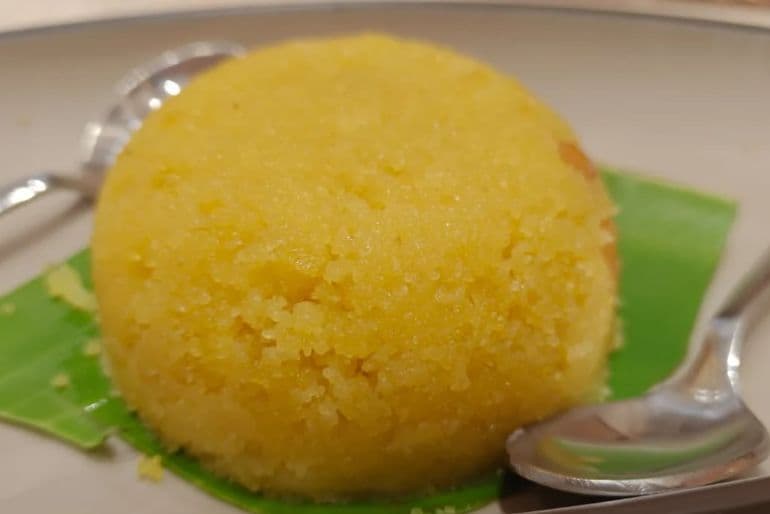
Pineapple Kesari is a South Indian sweet pudding which is made using roasted semolina, pineapple, ghee, and sugar. It tasted simply divine, with a soft, spoonable texture and simply melted inside the mouth so quickly that my teeth felt useless. The yellowish tint, with a balance of tangy and sweet flavor, made everything about this dessert simply feel right and perfect. I also tasted very fine pieces of pineapple in every spoonful, and it added to the texture and taste.
Santosham | Photo Credits: Self
Coffee Ice Cream
Well, as if Pineapple Kesari had not swept me off my feet enough, the waiter walked in with Coffee Ice Cream. The combination is top-notch by its name itself, so my expectations were high, and I can say that the restaurant delivered well. The ice cream tasted super good with the right mix of coffee, which made sure that the dessert did not feel bitter or overwhelming.
Final Verdict
“Santosham” is exactly what we felt while leaving the restaurant. The dosas were delicious and authentic, making you want ot eat more than one. What adds to the delicious food experience is the well-thought-out interiors. A must-visit vegetarian South Indian restaurant in Mumbai.
About Santosham
Address: Multiple Outlets
Cost For Two: INR 600
- Published:
- Updated:
About the author
Vaishalee Kalvankar
Vaishalee Kalvankar writes about travel and food for unstumbled. With five years of content and event management experience, she has worked at Curly Tales India, Curly Tales Middle East, Tit Bit Foods, Minority, and Seventy Seven Entertainment. She holds a postgraduate degree in media, entertainment, and marketing from KES Shroff College in Mumbai. Apart from writing, she is a traveller at heart who also loves dancing, drawing, and reading. Her expertise in festive travel recommendations and...
Related stories