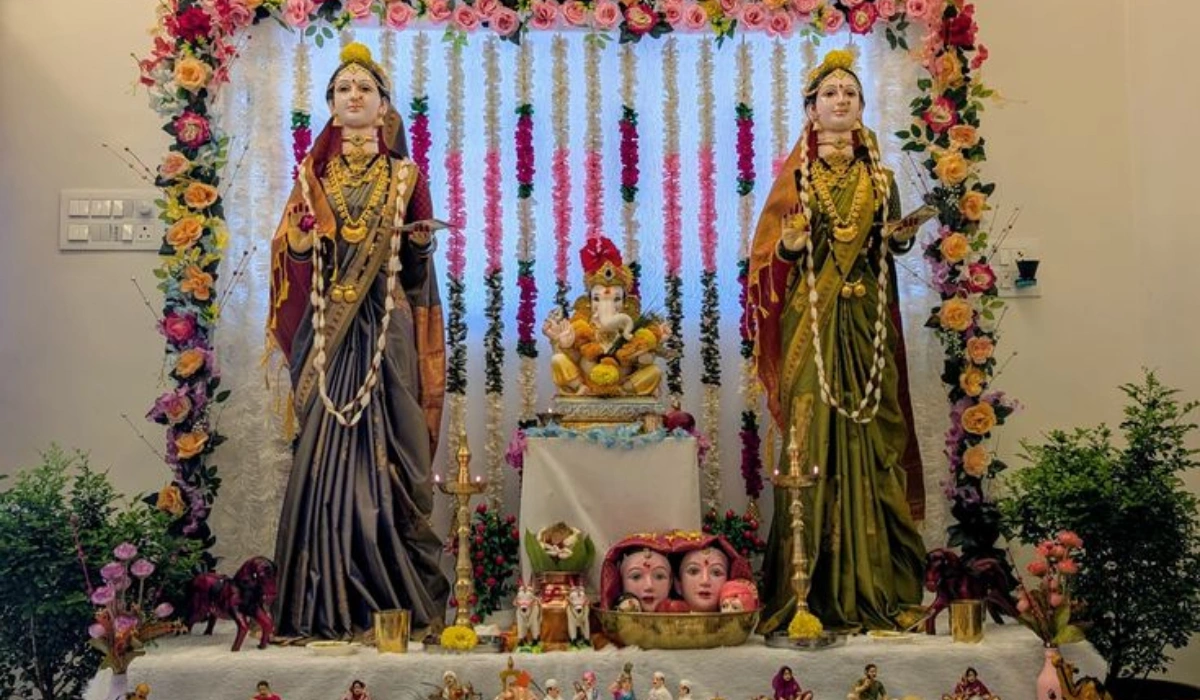

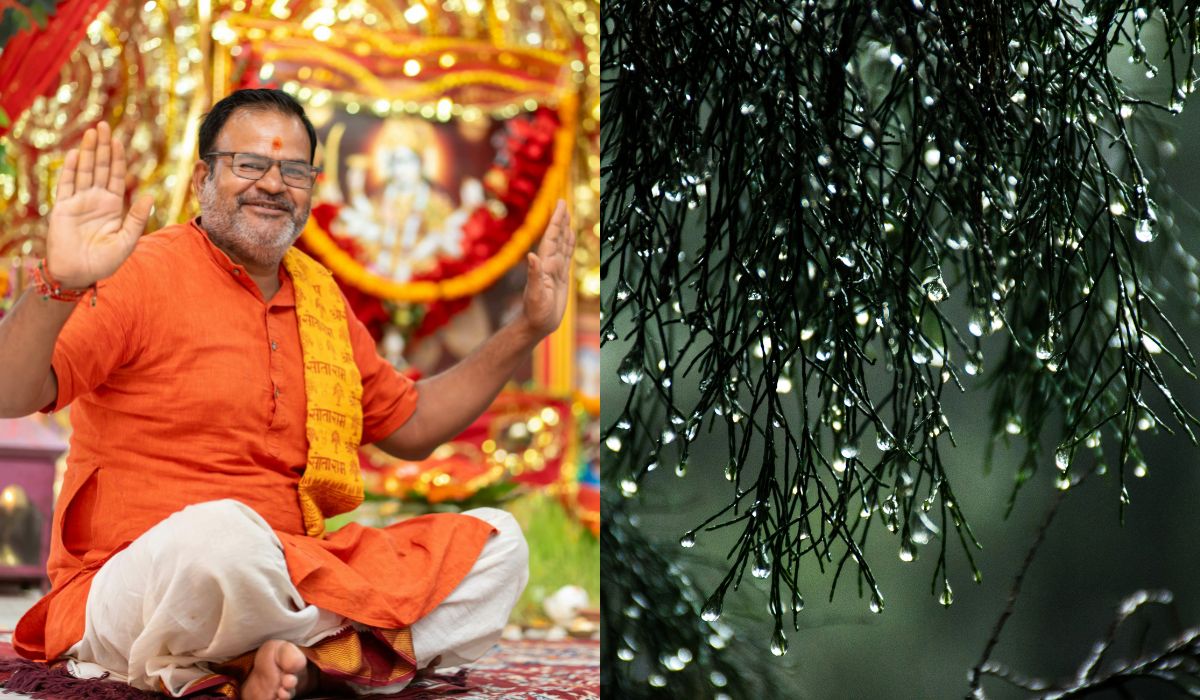
Every year in the Hindu month of Ashadha (July/August), India welcomes both torrential monsoon rains and the sacred festival of Guru Purnima. But have you ever wondered why India’s quintessential day of spiritual mentorship falls precisely at the onset of the heavy monsoon season? Is the timing of Guru Purnima during the peak rainy season a mere astronomical coincidence, or does it hold deep historical, practical, and spiritual significance? The alignment of Guru Purnima with the monsoon represents a perfect intersection of ancient practical necessity (the commencement of Chaturmas) and rich ecological metaphor.
Why Guru Purnima Falls In Monsoon? Historical Perspective
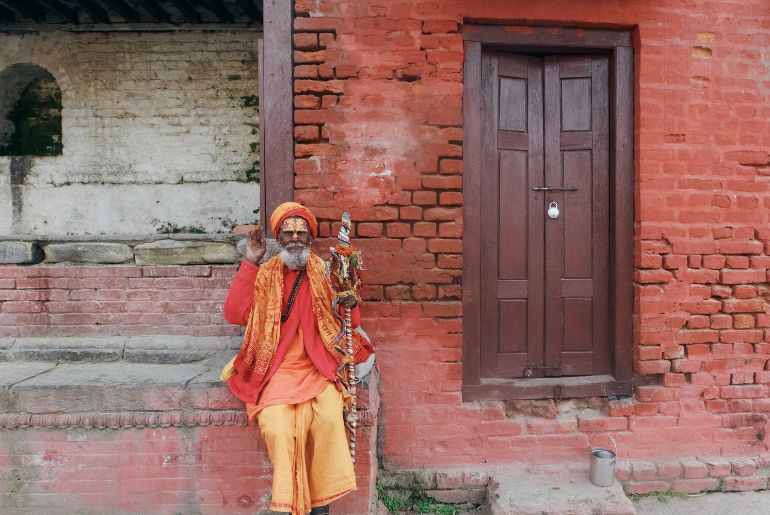
The four rainy months starting on Devshayani Ekadashi/Ashadha Purnima and ending on Prabodhini Ekadashi are the months of Chaturmas.
Parivrajaka And Chaturmasya
Ancient Indian mendicants, spiritual seekers, and sanyasis led nomadic lives, moving from village to village to impart wisdom. Swollen rivers, washed-out dirt tracks, and dense rainfall made long-distance foot travel hazardous across ancient India. Indian monks adhered to Ahimsa (non-violence), and walking through mud risked crushing emerging insects, plant shoots, and micro-organisms.
On Ashadha Purnima (Guru Purnima), monks paused their travels and settled in one location for four months. Ascetics took a vow of Chaturmasya Vrata, staying in one location (Ashram or village) for four months to teach locals and study scriptures. The physical reality of the Indian monsoon historically forced nomadic teachers (sannyasis and bhikkhus) to pause their wandering and gather in retreats, creating a fertile seasonal window for intensive study, reflection, and gratitude.
Buddhist and Jain monks also settled in caves or monasteries for Vassa, laying down the foundation of institutional learning centers. Legend has it that Gautama Buddha delivered his first sermon at Sarnath on Ashadha Purnima and spent his first rainy season (Vassa) retreating with his disciples. Jain monks similarly begin their stationary period of intensive study and teaching during this time.
Birth Of Guru-Shishya Tradition
Because gurus could not travel during the rainy season, students and disciples gathered at the guru’s ashram for an uninterrupted four-month period of intensive study (Sadhana).
Veda Vyasa And Vyasa Purnima
Maharishi Veda Vyasa, credited with classifying the four Vedas, authoring the Mahabharata, and writing the 18 Puranas, is traditionally believed to have completed his major compilations on this day. The monsoon retreat provided the structured downtime required for scholars to study complex texts like the Brahma Sutras and Upanishads alongside their masters.
Ecological And Spiritual Metaphors: Rain And Wisdom
Rain turns parched earth fertile; similarly, the Guru’s wisdom revitalizes a mind scorched by ignorance. Clouds obscure external sight, shifting human focus inward toward introspection and spiritual learning. Just as dry, cracked soil awaits monsoon rains to restore life to the vegetation, the mind of a seeker (shishya) awaits the life-giving wisdom of the Guru.
In Vedic literature, knowledge (Jnana) flows like water, washing away ignorance (Gu = darkness, Ru = dispeller). The full moon reflects the complete, unblocked light of the sun, symbolizing how a disciple’s purified mind reflects the absolute wisdom of the Guru.
Dakshinayana Journey
Guru Purnima coincides with the onset of Dakshinayana (the sun’s southward journey). In yogic philosophy, Uttarayana (northern run) represents outward action and sowing seeds, whereas Dakshinayana represents inward reflection, assimilation, and spiritual cultivation, mirroring the sedentary nature of the monsoon.
Connections With Agriculture
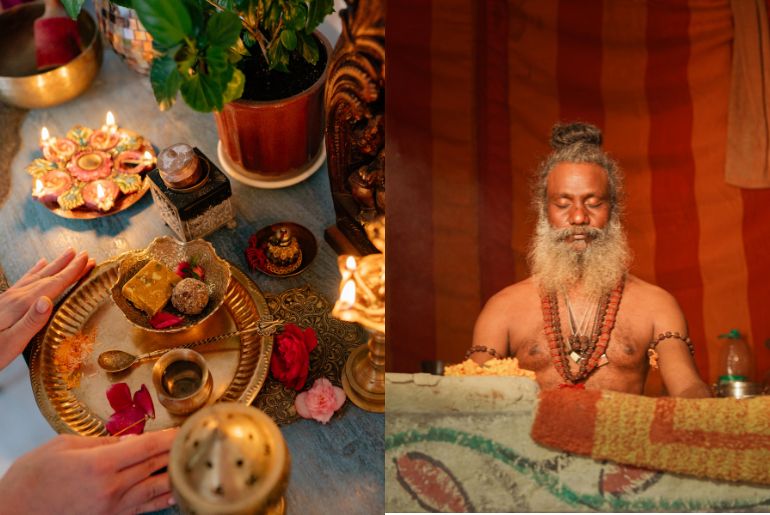
For agrarian communities in India, the arrival of Ashadha rain signifies fertility, planting, and survival. Farmers offer gratitude on Guru Purnima not only to human preceptors, but to Mother Nature (Prakriti) and the monsoon rains as the primary sustainers of life.
Here’s a summation of the practical and spiritual connections of Guru Purnima with the monsoon season:
| Aspect | Practical Reason | Spiritual Symbolism |
| Monsoon Rain | Floods roads; halts nomadic travel. | Symbolizes the shower of divine grace and knowledge (Jnana). |
| Four-Month Pause | Chaturmas/Vassa: physical retreat. | Time for deep meditation, text study, and introspection (Nididhyasana). |
| Gurus And Disciples | Keeps teacher and student under one roof. | Strengthening of the unbroken Guru-Shishya Parampara. |
Also Read: When Is Guru Purnima 2026? Significance, Date, And Why It’s Celebrated
Summing Up
Guru Purnima’s placement during the monsoon is a timeless example of how Indian traditions integrated environmental cycles with spiritual practices. Even today, as rain falls outside, Guru Purnima serves as an annual invitation to slow down, go within, and honor those who bring clarity and wisdom into our lives.