

Fashion has a funny habit of “discovering” things that have existed for centuries. For centuries, something that is a heritage craft rooted in Indian culture suddenly becomes the next new trend on the global runway – all without a credit and a new glossy name. Indians are traveling far and wide, carrying their culture and fashion with them. However, Indian fashion largely remains uncredited – like an open-source encyclopedia fashion houses can just ‘borrow’ ideas from and sell it to a foreign audience.
So in the end, the question remains: Does uncredited fashion ever really sit right, especially when the roots run this deep?
Here are seven times Indian fashion showed up on global runways and didn’t get its due.
Ralph Lauren Bandhani Skirt And 6 More Times Brands Appropriated Indian Fashion
1. Ralph Lauren Bandhani Skirt
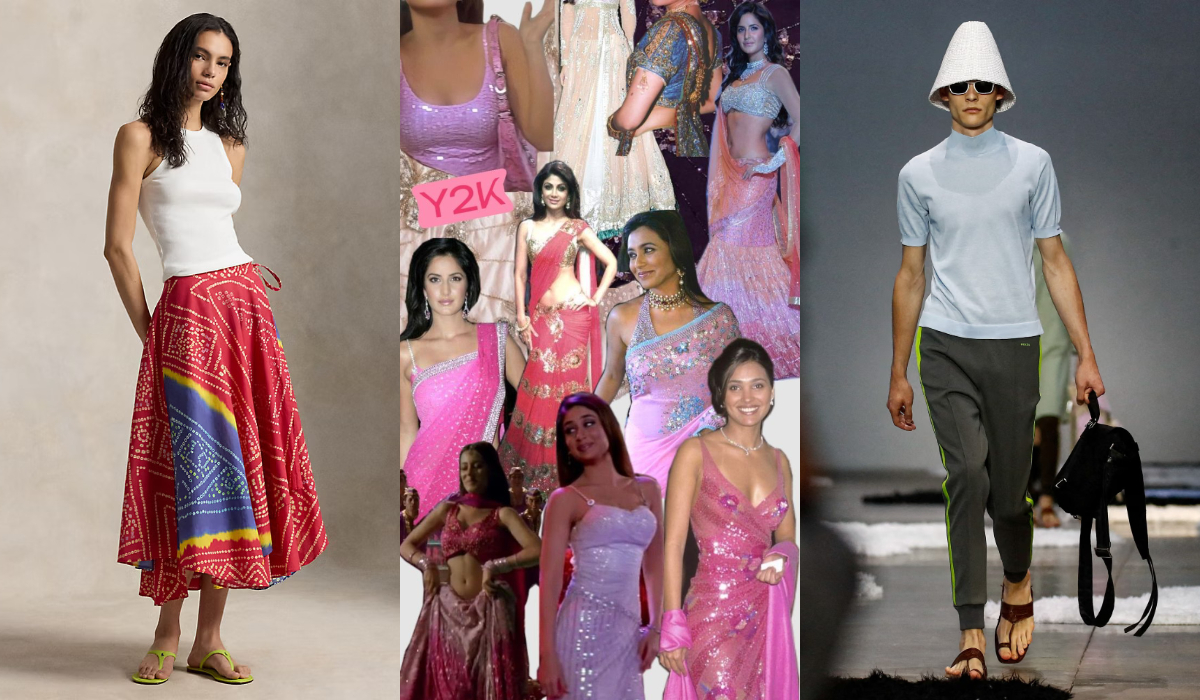
The latest brand to come under the radar for appropriating Indian fashion is Ralph Lauren. The brand recently showcased that its selling a wrap skirt “printed with a vibrant design inspired by traditional Bandhini tie-dye techniques and motifs.”
While the brand has credited the skirt’s bandhani tie-dye technique, Indians on the internet are collectively dissecting the brand’s move to sell this Indian-inspired design at a whopping price tag of INR 44,800! Many Indian internet users are questioning the authenticity of the skirt, with many also speculating that it is a mere print instead of the actual bandhani fabric. Many internet users are also questioning the price of the fabric, as such skirts are easily available in most Indian markets for as low as INR 1000!
2. Ralph Lauren Jhumkas
Ralph Lauren didn’t just get criticized for its bandhani skirts but also drew global attention in March 2026 for its ‘jhumkas’. Jhumkas are essentially ornate earrings usually made of silver, gold, and similar metals and contain detailed carvings. These ear accessories are some of the oldest forms of accessories in India and are closely associated with the dance form of Bharatnatyam and temple jewelry.
View this post on Instagram
Ralph Lauren, in its Fall 2026 women’s collection at the Paris Fashion Week, presented jhumkas without properly attributing their Indian origins. Many Indians were quick to call out this moment on the global runway when the brand labelled these jhumkas as “authentic vintage accessories”.
3. Prada Kolhapuris
The global internet went into a frenzy when reputed fashion house Prada unveiled ‘leather sandals’ at the Milan Fashion Week in June 2025. Global audiences were quick to notice that these leather sandals are nothing but an uncredited rip-off of Indian kolhapuris.
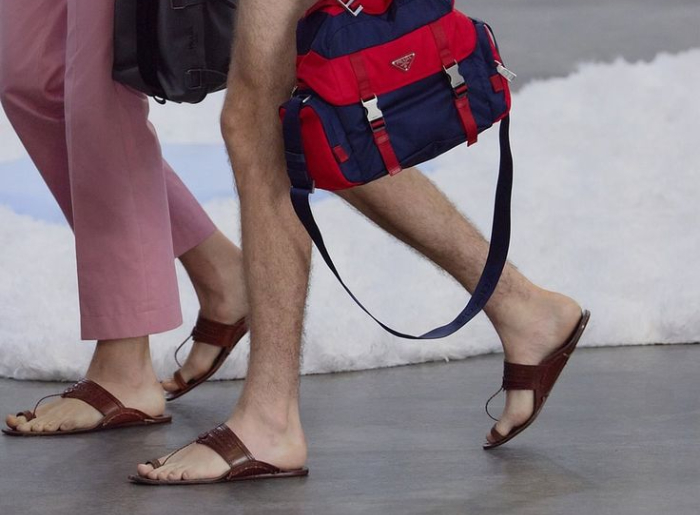
Kolhapuris, as the name suggests, are a form of footwear originating in Maharashtra’s Kolhapur region since the 12th century. The artform of making Kolhapuri chappals has received a Geographical Indication (GI) tag, meaning no other region can produce such footwear and sell it under the name of ‘Kolhapuris’. After Prada received global backlash, the brand acknowledged that it took inspiration from the craftsmanship of Kolhapuris.
4. Bipty Scandinavian Scarf
It was in May 2024 when fashion rental brand Bipty posted a TikTok video labeling South Asian dupattas (traditional scarves) as “very European” and “Scandinavian” while showcasing white women wearing them. The video went viral for masquerading Indian fashion as Scandinavian, stripping off the garment off its cultural context. A number of Indian and global fashion content creators spoke out against this controversy, with Bipty’s founder eventually issuing an apology.
The backlash was swift and sharp, especially from South Asian women who immediately recognized that their culture had been glossed over without a thought. Dupattas have been an integral part of Indian fashion, at least after the 80s. Thanks to Bollywood, dresses featuring ornate dupattas of all kinds made a mainstay in contemporary Indian fashion.
5. Dior Mukaish Coat
Days after Prada had unveiled ‘Prada Kolhapuris’ to a global audience, Dior faced backlash for showcasing a $200,000 or INR 1.67 crore Mukaish work coat at the Paris Fashion Week. What caught everyone’s attention wasn’t the fact that the embroidery was Indian, it was the fact that the brand had given zero credit to the artisans who had worked on the coat or even the form of embroidery.
Mukaish is a type of metal embroidery that goes back centuries and is rooted in Lucknow. It involves twisting, flattening, and inserting fine metallic wires (gold, silver, or alloys) into fabric to create delicate, shimmering, star-like patterns.
Also Read: The 5 Outfit Formula That Saves You From Overpacking Every Single Trip
6. Ibiza Aesthetic
TikTok is a place notoriously known for giving rise to new trends and fashion aesthetics. And one such aesthetic that has become super popular in recent years is the ‘Ibiza aesthetic’. A deep dive into the TikTok rabbithole will let you know that this aesthetic is nothing but a poor rip-off of Indian 2000s fashion repackaged for white women. Think of Scandinavian scarfs (dupattas), shimmery backless sharara gowns packaged as Ibiza co-ord sets, beaded bags, jhumkas, oiled slick-back hair, and other Indian fashion elements from the 2000s making a comeback in Western closets.
The movement received attention from South Asian creators and the Indian internet for culturally appropriate Indian, and largely South Asian fashion. High fashion brands like Reformation and Dior were called out by South Asians for exploiting Indian fashion and selling it to western audiences under the name of “Ibiza aesthetic” or “Bohemian aesthetic”.
7. Alia Bhatt Gucci Gown At Cannes
Bollywood star Alia Bhatt, after being announced as Gucci’s Global Ambassador, turned heads at the 78th Cannes Film Festival in 2025. What stood out most was her striking presence in a lehenga-like three-piece set custom-made by Gucci.
View this post on Instagram
Gucci had posted a caption mentioning that the actress stunned in a “custom Gucci gown with embroidered crystals in a GG Monogram pattern. The actress was also pictured in a custom three-piece set”. Many users on the internet were perplexed with the choice of words, calling out Gucci for refusing to acknowledge the gown’s similarity to an Indian lehenga. Nonetheless, the Alia-Gucci moment at Cannes 2025 was a landmark moment for South Asian representation on the global stage.
Also Read: 7 Accessories Every Guy Must Add To His Summer Fashion Closet
Summing Up
Indian fashion is not just a fleeting trend. Neither can it be defined into a singular, uni-dimensional ‘aesthetic’. It is centuries worth of heritage and craftsmanship, incredibly diverse, and has a rich cultural context. Indian fashion as a whole has made immeasurable contributions to global fashion. And while that contribution is often credited, many times it goes unnoticed and gets exploited. From the Ralph Lauren Bandhani Skirt debate to the Prada Kolhapuris controversy, Indian fashion continues to be a source of endless inspiration for fashion houses across the world.



One Response