
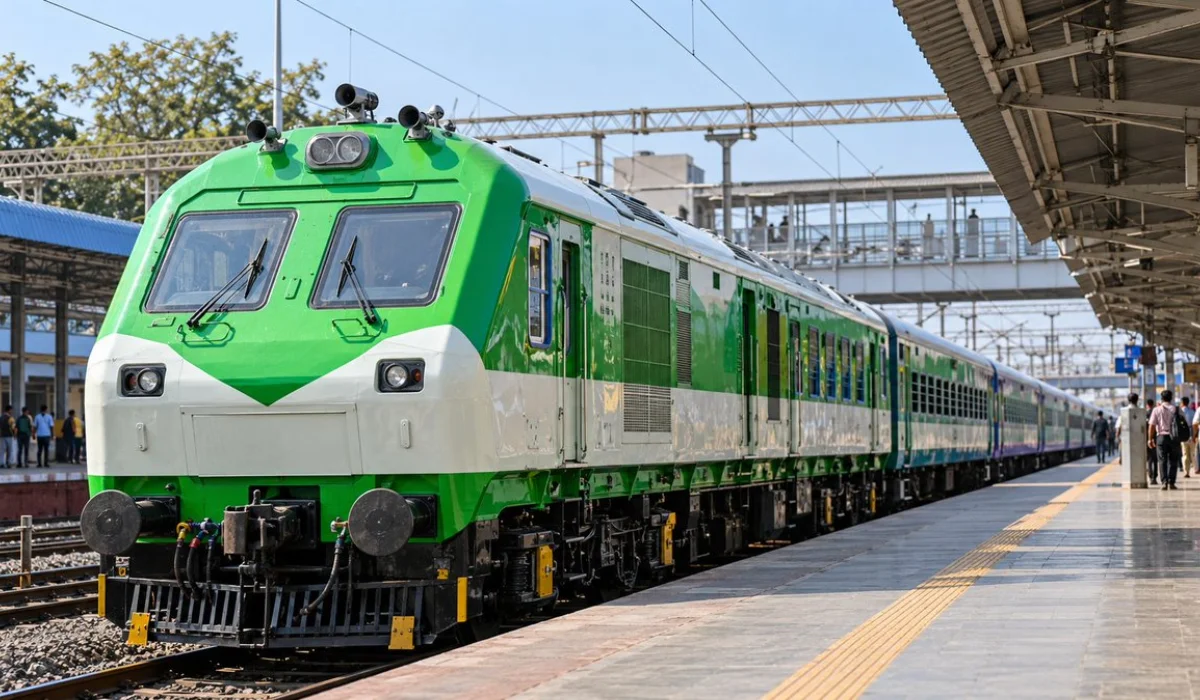
Indian Railways has added another feather to its cap when it comes to working with alternative fuels. After introducing what was its first hydrogen-powered train in July 2026, it has now rolled out India’s first LNG-diesel train. The train was flagged off from Sabarmati Railway Station in Ahmedabad on September 27.
India’s First LNG-Diesel Train Is Here; Flagged Off By Amit Shah
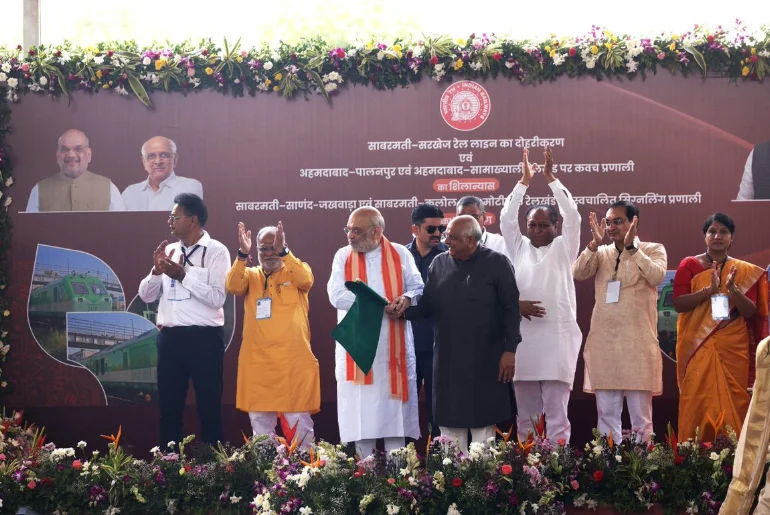
The first-ever LNG train in India was flagged off by Union Home and Cooperation Minister Amit Shah on September 27. The much anticipated event took place at the Sabarmati Railway Station as part of a wider set of railway projects launched in the Ahmedabad division.
Before being introduced, the converted power cars finished a total of more than 2,000-km of field trials. This was to analyze the performance and reliability of the LNG-powered technology. The inaugural service ran between Sabarmati and Mahesana Junction. With eight coaches and non-air-conditioned chair-car seating, its regular route and operational schedule are yet to be finalized.
Also Read: Indian Railways Next-Gen PRS: How Railway Ticket Booking Is Set to Get Faster
How Does India’s First LNG Train Work?
The train uses a dual-fuel system fitted to two Driving Power Cars (DPC) at the Sabarmati Integrated Coaching Depot. Each DPC packs a capacity of 1,400 horsepower and has been modified to accommodate LNG alongside conventional diesel.
The technology makes LNG a good alternative, helping replace around 40% of diesel consumption, according to a railway trial data, as per News18.com. The system is said to be able to continue operating on diesel depending on fuel availability, giving the train greater operational flexibility.
Will India’s First-Diesel LNG Train Provide A Cleaner Fuel Alternative?
The launch of India’s first LNG train comes only months after Prime Minister Narendra Modi inaugurated India’s first-ever hydrogen train. India’s first LNG-diesel train’s primary objective is to provide an alternative fuel source and reduce dependence on diesel.
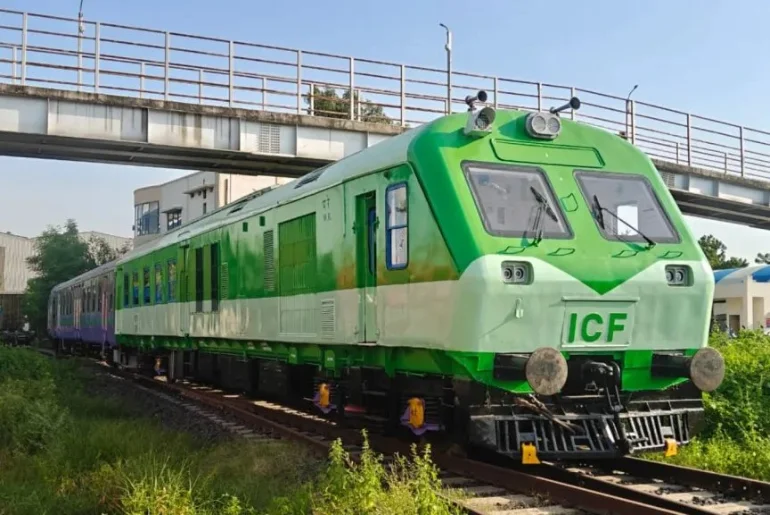
Indian Railways expects the dual-fuel technology to reduce diesel consumption and emissions, including carbon dioxide, nitrogen oxides, and particulate matter. It is therefore being positioned as a transition option for railway services where diesel is still being used. The technology has been designed in a way that allows the existing engine architecture to be adapted rather than requiring an entirely new propulsion system.
However, it is worth noting that the train is not being positioned as a zero-emission service. LNG is still a fossil fuel. So while a portion of diesel is being replaced with LNG to reduce certain emissions, it does not become a zero-emission service.
Also Read: How Much Is The Fare For India’s First Hydrogen Train? Check Ticket Prices
Summing Up
Indian Railways is eyeing large-scale electrification of its trains across different routes. For travelers, it might not be a different onboard experience. However, in the bigger picture, it can be a significantly positive step towards using clean energy in Indian Railways.