
India’s waterfalls are at their peak, thundering in glory during the monsoon season. But beyond the blinding spray and staggering drop heights lies an entirely different dimension: centuries-old folklore, tribal myths, and haunting historical legends. In Indian heritage, water is rarely just a physical feature. It is often animated by spirits, gods, and mortal tragedies. Exploring these natural wonders through the lens of local storytelling transforms a standard sightseeing trip into a deep cultural pilgrimage. unstumbled decided to take a journey across India’s most famous cascades to uncover the captivating, tragic, and divine legends that gave them their names. So, if you want to join us on the journey, read on!
Local Legends Around India’s Most Famous Waterfalls
1. Nohkalikai Falls, Meghalaya
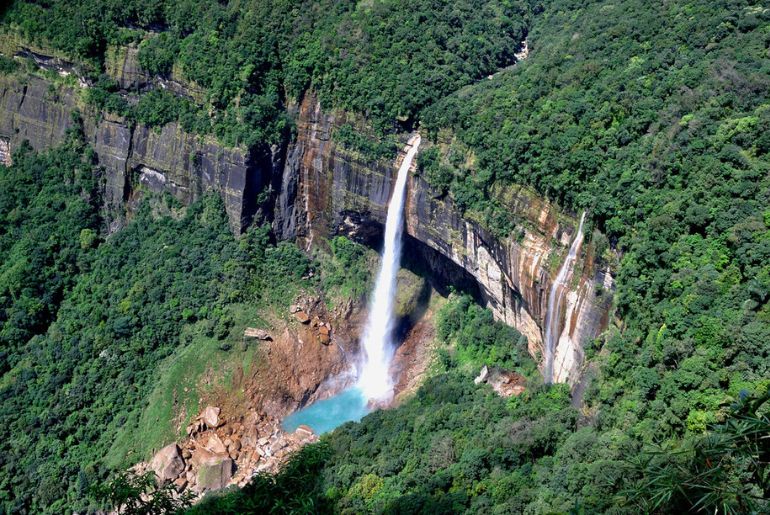
Plummeting 340 meters off a stark cliff in Sohra (Cherrapunji) into a deep, changing turquoise plunge pool, it stands as India’s tallest plunge waterfall.
Local Legend: Nohkalikai literally translates to “Jump of Ka Likai” in the Khasi language, serving as an eternal memorial to her sorrow. It refers to the heart-wrenching Khasi folklore of a young widow named Ka Likai (“Ka” being the female prefix). To support her infant daughter, she worked long hours as a porter. She remarried to give her child a father, but the new husband grew violently jealous of her devotion to the baby. One day, while Likai was out working, he murdered the child, cooked her flesh, and fed it to the starving mother upon her return. It was only when Likai found severed fingers in her betel nut basket that the horrific reality dawned on her. Consumed by mad grief, she ran frantically to the edge of the plateau and leaped to her death.
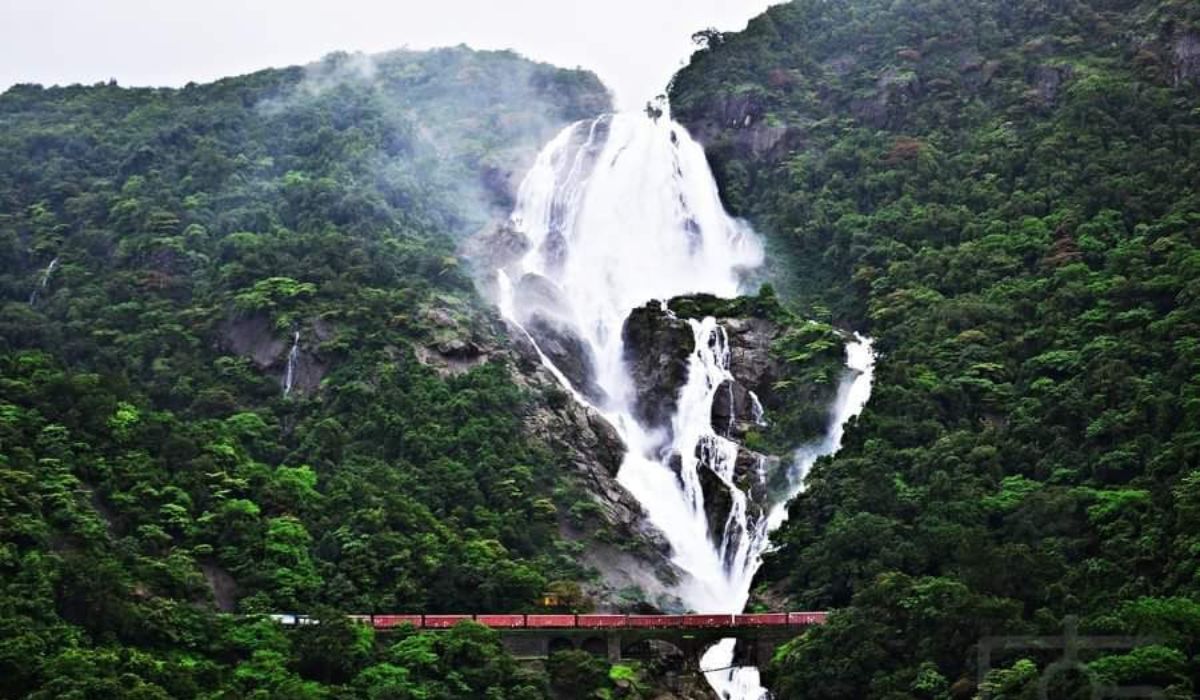
2. Dudhsagar Falls, Goa
A breathtaking, four-tiered cascade slicing through the dense jungles of the Western Ghats, Dudhsagar Falls is famously intersected by an active railway bridge.
Local Legend: This is a sweet ancient folklore of a beautiful princess who lived in a palace near the hills. She loved bathing in a crystal-clear lake at the foot of the falls and always finished her bath by drinking a jug of sweetened milk from a golden jug. One afternoon, a young prince arrived mid-bath. To protect her modesty from the stranger’s gaze, the quick-thinking princess poured the jug of milk into the water. The surging torrent instantly turned a frothy, opaque white, creating a heavy curtain of milk to screen her from view. This also explains why the waterfall is named ‘Dudhsagar’, meaning milky sea.
3. Chitrakote Falls, Chhattisgarh
Widely regarded as the “Niagara of India” due to its sweeping horseshoe shape on the Indravati River, turning a fiery, silt-heavy orange during the rains.
Local Legend: This legend surrounding this waterfall is connected to the Ramayana. Local tribal lore holds that the dense forests surrounding Chitrakote were part of the ancient Dandakaranya, where Lord Rama, Goddess Sita, and Lakshmana spent a significant portion of their 14-year exile. Indigenous communities still revere specific rocky outcroppings near the crest of the falls, believing them to bear the physical imprints of divine footsteps. And even though it isn’t verified, this deep mythic tie draws thousands of local pilgrims during major festival seasons to pay homage to the holy waters.
4. Jog Falls, Karnataka
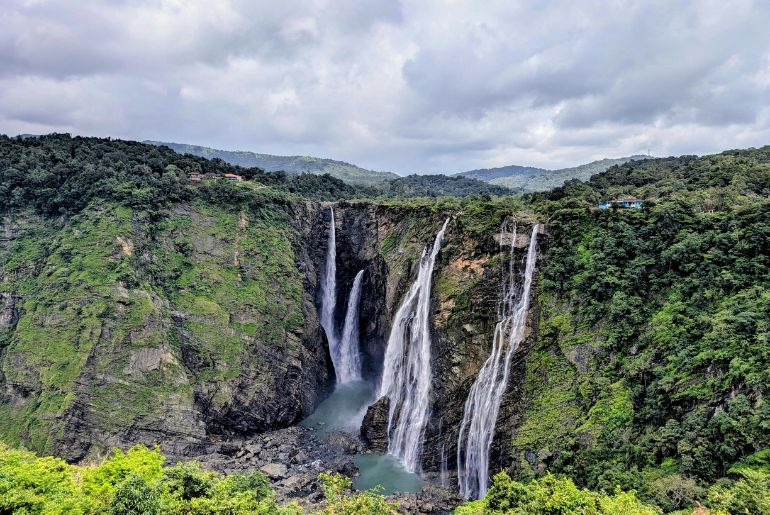
A magnificent segmented waterfall on the Sharavathi River that drops 253 meters in a sheer vertical plunge.
Local Legend: There is a poetic naming convention of the four distinct channels that merge during heavy monsoons: Raja (The King, who drops in a dignified, unbroken column), Rani (The Queen, a winding, graceful stream resembling a dancer), Roarer (A violent torrent that crashes into a rocky cavern at a ferocious angle), and Rocket (A high-velocity jet that shoots downward through a narrow opening). There is an ancient, unverified oral tradition about the local farmers’ ancient belief that the intensity of the “Roarer” stream directly mirrors the mood of the rain gods, signaling the health of the upcoming harvest.
Also Read: Monsoon Waterfalls You Can Reach By Train In India
Summing Up
India’s waterfalls are far more than dramatic natural attractions. They are living repositories of folklore, faith, and collective memory. From the heartbreaking tale of Ka Likai at Nohkalikai Falls to the graceful legend behind Dudhsagar’s milky waters, each cascade carries stories that have been passed down through generations. Meanwhile, the sacred associations of Chitrakote Falls and the poetic traditions surrounding Jog Falls reveal how deeply nature and mythology are woven into India’s cultural landscape. Visiting these waterfalls during the monsoon offers more than spectacular views. It provides an opportunity to connect with the legends, beliefs, and traditions that have shaped local communities for centuries. Whether you’re a history enthusiast, a mythology lover, or simply someone seeking unforgettable travel experiences, these iconic waterfalls promise a journey that is as enriching as it is breathtaking.