

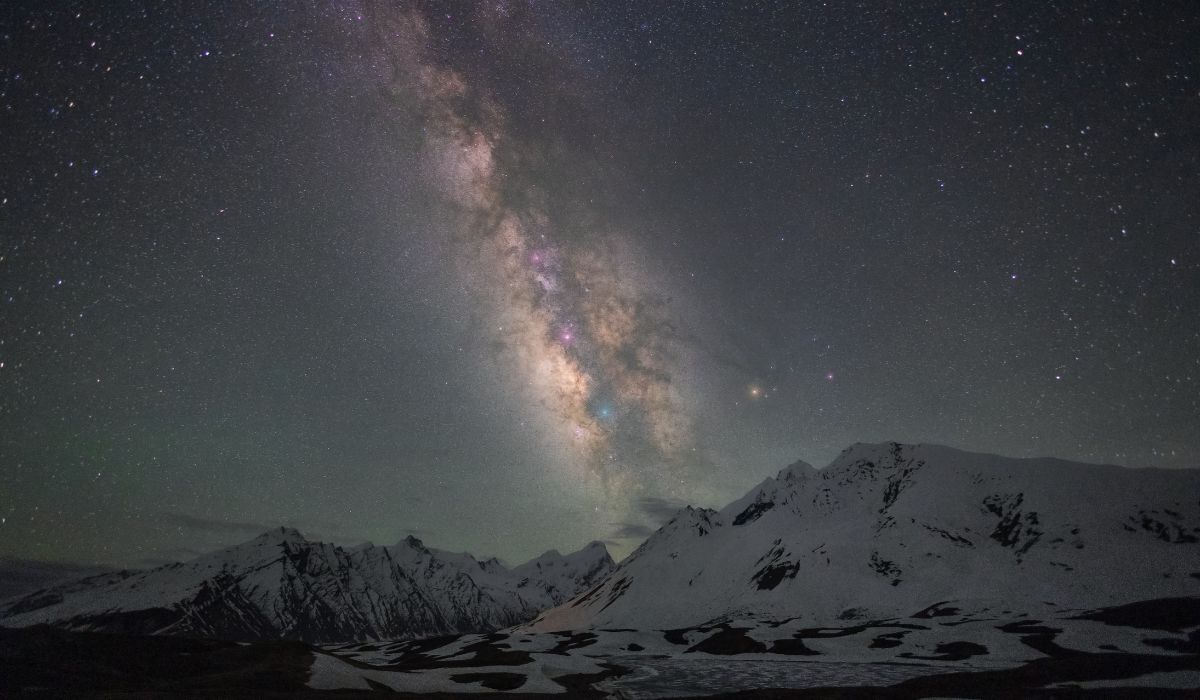
If you’re an astrophile, you must know that Ladakh is one of the best places in the world for stargazing. In order to showcase this unique geographical benefit to the public, Ladakh has organized the Ladakh Astro Week 2026. It started on May 20. Since then, the trans-Himalayan desert has turned into a celestial haven of astronomical knowledge and starry skyscapes. This is a significant event for astronomers, astrophotographers, and stargazing enthusiasts. If you, too, want to witness the unobstructed view of the heavenly bodies, here’s an unstumbled guide to the festival. Rest assured that Van Gogh’s spirit will surely be at the festival.
Ladakh Astro Week 2026: What Is It?
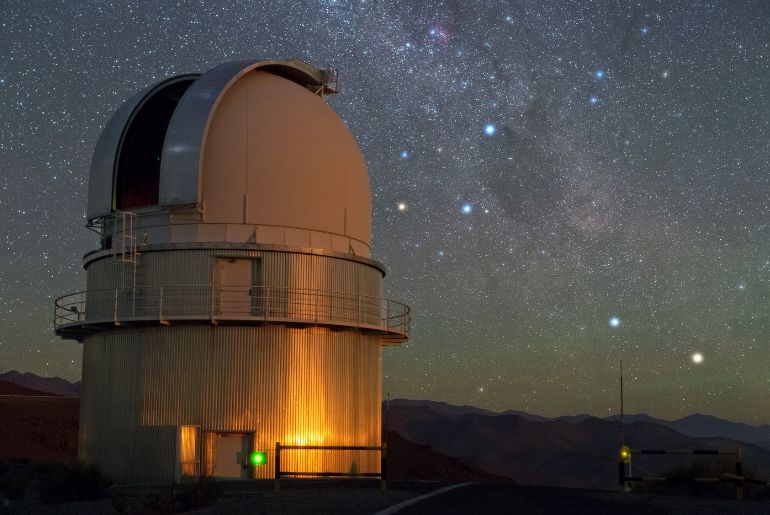
Ladakh Astro Week is a week-long initiative designed to cement Ladakh as one of the most premier global scientific tourist destinations. It is organized by the Department of Tourism, Ladakh, and has prestigious partners like the Indian Institute of Astrophysics (IIA), the Bhabha Atomic Research Centre (BARC), and the Tata Institute of Fundamental Research (TIFR).
The festival kicked off at the Tourism Department Compound in Leh and drew a massive student crowd, along with scientists as well as global travelers. The inauguration ceremony was led by the Chief Guest, Shri Mukesh Singh (IPS), and the Director General of Police for UT Ladakh. They emphasized the growing importance of astro-tourism for Ladakh.
Also Read: Astro-Tourism Emerging As A New Trend In India
What Are The Dates And Venues For The Astro Festival?
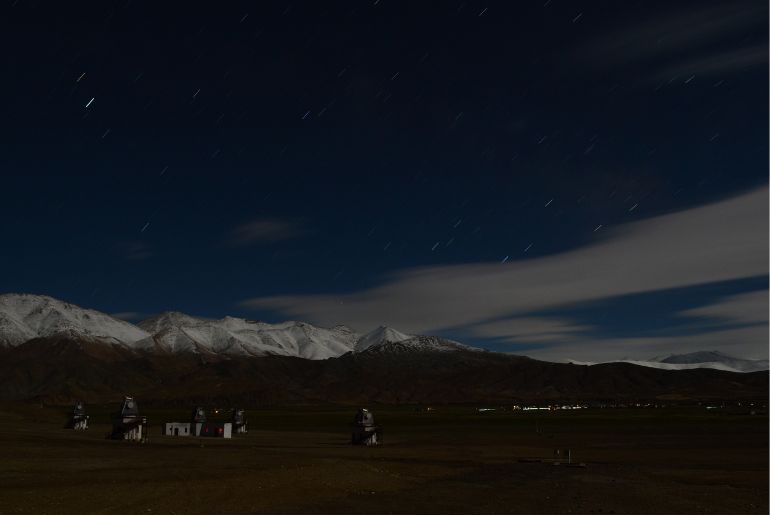
The Ladakh Astro Week started on Wednesday, May 20, 2026, and will go on for a week, with the last day being Tuesday, May 26, 2027. The primary venue for the festival is the Office of the Assistant Director of Tourism, Leh. Here is the list of secondary venues based on the day:
Day 2: Thursday, May 21, 2026: Lamayuru Monastery, Sham
Day 3: Friday, May 22, 2026: Sand Dunes Hunder, Nubra
Day 4: Saturday, May 23, 2026: Tourist Bungalow, Padum, Zanskar
Day 5: Sunday, May 24, 2026: Purig Gues House, TV Station Kurbathang, Kargil
Day 6: Monday, May 25, 2026: Tourist Bungalow, Drass
Day 7: Tuesday, May 26, 2026: Punguk Community Hall, Hanle, Changthang
The major celestial targets during the stargazing sessions will be celestial bodies like the Moon, Jupiter, the Milky Way Core, and the Deep Sky Nebulae.
Also Read: Ladakh Inner Line Permit 2026: How To Apply Online (Step-by-Step)
What Happened On The First Two Days?
Day 1
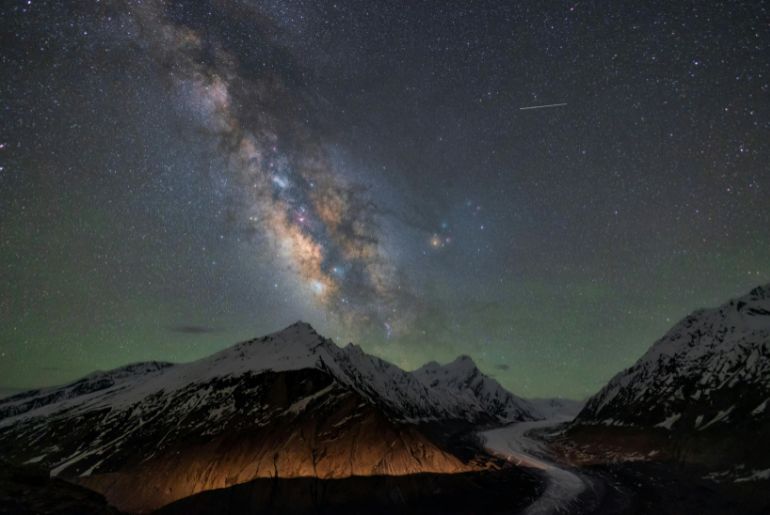
The opening day saw Prof. Annapurni Subramanium, who is the Director of IIA, mapping out the incredible history of the Indian Astronomical Observatory. She also explained why the Hanle Dark Sky Reserve (HSDR) is one of the best places on Earth for planetary observation.
Following this illuminating talk, cosmologist Prof. Biman Nath talked about avian and animal astronomers. He explained how birds and animals, just like ancient animals, use celestial navigation and stellar luminosity in order to travel around the globe.
Then, public solar viewing sessions, as well as a curated astrophotography gallery that displayed some mesmerizing pictures of deep-sky objects that were captured from the Himalayan range. The day wrapped up with the public viewing sessions at the Assistant Director of Tourism’s office.
Day 2
The second day saw the festival moving to the moon-like terrain of Lamayuru Monastery. The venue perfectly mirrored the purpose of the festival. It brought together local monks, school children, and tourists.
The technical officer, Stanzin Norlha, from BARC, delivered a riveting lecture on the solar system. And he did this entirely in the Ladakhi language. This shows the commitment to linguistic inclusivity that the festival has. It is also a reminder of the importance of one’s regional language when learning about new concepts, especially those related to outer space, as they can be more challenging and tricky to understand.
The night concluded with a brilliant session of stargazing through high-powered telescopes. Monks and students alike were enthralled by the visions of the frontier beyond the sky.
The third day, as well as the rest of the days of the festival, are expected to be similarly illuminating and enthralling.
In addition to these amazing and informative events, the Director of Tourism, Shri Tsering Palden, announced that the dates for the Astro Festival have been fixed for the following three years! This schedule will allow national as well as international tourists to plan their visits accordingly. It is hoped that Ladakh will receive more recognition as a premier stargazing destination, not just in India but also in the rest of the world.
Also Read: What To Pack For A Ladakh Trip (Complete Checklist for First-Timers)
Travel Tips For Attending Ladakh Astro Week
- Make sure you acclimate your body to the high altitude.
- Rest for at least two days in order to get used to the altitude, especially if you’re going to Hanle.
- Pack clothes suitable for extreme cold.
- If you’re traveling with food and drink, make sure you don’t litter anywhere outside.
- Altitude sickness is no joke; make sure you take enough rest and learn about its early symptoms to prevent it.
Also Read: Where To Go In Ladakh: 10 Must-Visit Places For First-Time Travelers
Summing Up
Perched at an altitude of 14,000 ft., Hanle offers unforgettable views of the beautiful constellations that adorn the inky black canvas that we call sky. The Ladakh Astro Week cleverly capitalizes on the unique weather and atmospheric conditions of the region – thin air, next to zero light pollution, and dry climate. Lovers of celestial bodies can, hence, watch the desert come alive under a blanket of cosmic wonder. So, whether you want to learn more about outer space or simply want to contemplate the finitude of your existence, Ladakh Astro Week is the perfect place for all those who love gazing into the void of the night.