

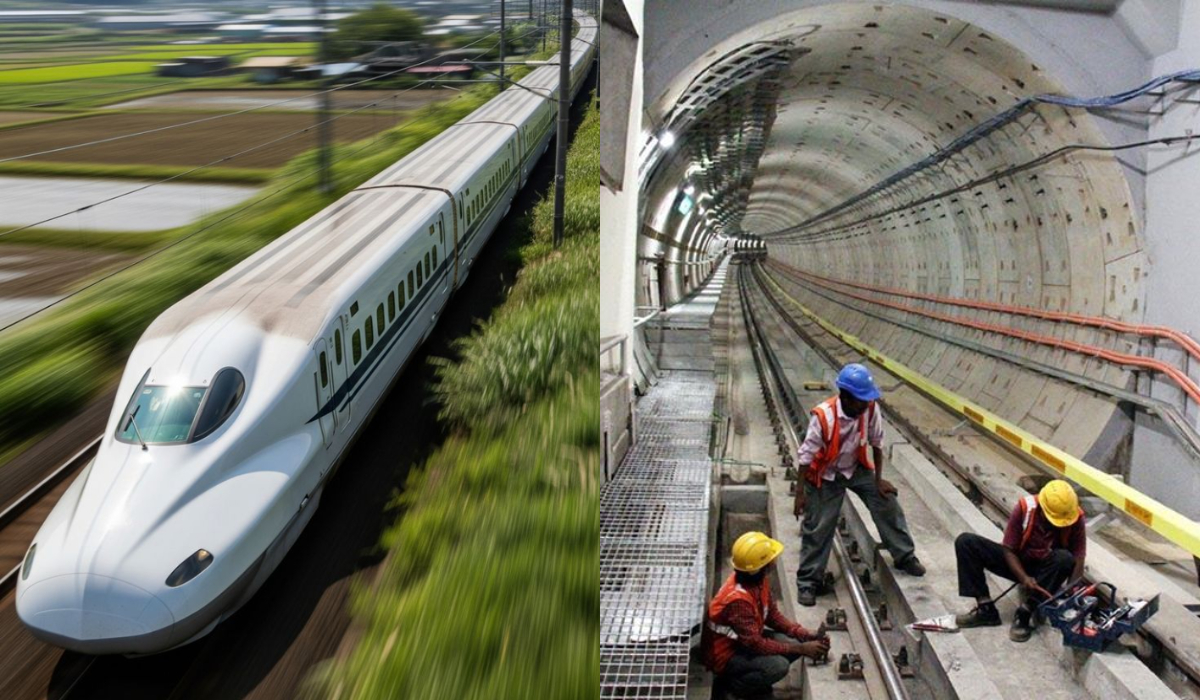
India’s first bullet train project is adding another major layer of safety before it welcomes passengers. The Mumbai-Ahmedabad High Speed Rail (MAHSR) corridor will be equipped with an advanced earthquake detection system capable of identifying seismic activity within seconds and automatically triggering protective measures to safeguard trains and passengers.
The 508-kilometer corridor is also being fitted with India’s first high-speed railway electrification system, designed to support trains traveling at speeds of up to 320 kmph. Together, these technologies are expected to make the country’s first bullet train one of the safest and most technologically advanced rail networks in India.
How Will The Earthquake Detection System Work?
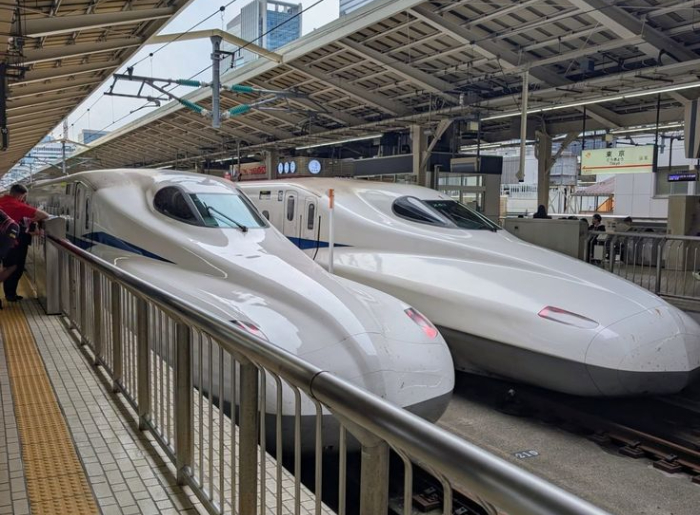
The National High Speed Rail Corporation Limited (NHSRCL) will install 28 seismometers across the corridor to monitor seismic activity in real time. Of these, 22 sensors will be placed at traction substations and switching posts along the railway line, while six additional inland seismometers will be installed in earthquake-prone regions across Gujarat and Maharashtra.
If an earthquake is detected, the system will automatically initiate protective measures within seconds, allowing bullet trains to stop immediately before strong tremors can affect operations. This rapid response is expected to significantly improve passenger safety during seismic events.
Out of the 28 seismometers, 16 will be installed in Gujarat and 12 in Maharashtra, creating a comprehensive monitoring network across the route.
Also Read: India’s First Symbolic Bullet Train Look Unveiled At Rail Bhavan
India’s First High-Speed Electrification System
The Mumbai-Ahmedabad Bullet Train corridor is also introducing an advanced 2×25 kV Overhead Traction System, an electrification technology widely used on high-speed rail networks around the world. This marks the first time the system is being deployed in India and is designed to support trains operating at speeds of up to 320 kmph.
- Provides a stable and uninterrupted power supply throughout the journey.
- Electricity will flow from the national power grid to specially designed grid substations before reaching 14 traction substations along the corridor.
- The traction substations will ensure seamless power transitions as trains move between different sections of the route.
- The system will also supply electricity to stations, signaling systems, maintenance facilities, and other operational infrastructure.
- The corridor will feature 31 switching posts that can quickly isolate faults whenever required, helping maintain uninterrupted train operations.
Also Read: Mumbai-Ahmedabad Bullet Train Might Use Vending Machine For Food & Beverages
How Will It Protect Passengers?
The earthquake detection system is designed to reduce the risk of accidents by responding to seismic activity before strong ground shaking reaches the railway corridor. Instead of relying on manual intervention, the technology continuously monitors the ground and automatically triggers safety protocols the moment an earthquake is detected.
- Seismometers continuously monitor seismic activity along and around the corridor.
- If an earthquake is detected, the system immediately sends an alert to the railway’s control network.
- The overhead power supply is automatically cut off, prompting bullet trains to begin emergency braking.
- Trains can come to a controlled stop before experiencing the strongest tremors, reducing the risk of derailment or collisions.
- The automated response minimizes human error and ensures faster reaction times during emergencies.
- Once authorities confirm that tracks and infrastructure are safe, train services can resume.
This multilayered safety mechanism is already used on high-speed rail networks in countries like Japan and is expected to significantly improve passenger safety on India’s first bullet train corridor.
Massive Infrastructure Behind The Project
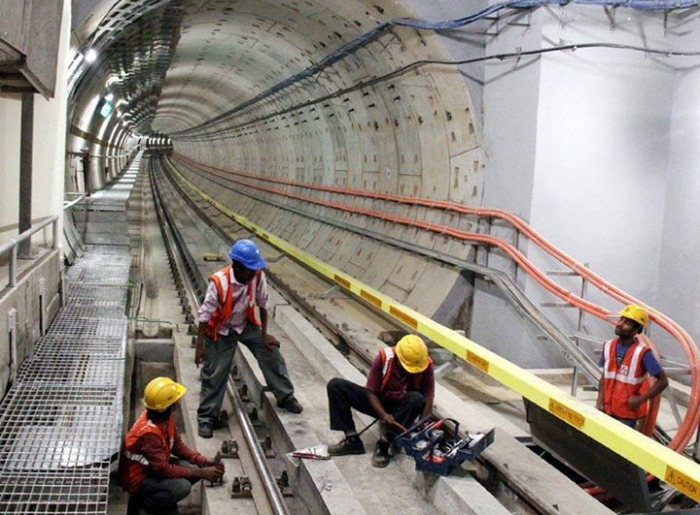
The high-speed electrification network will span approximately 1,125 track kilometers, including depots. Supporting this system will be nearly 22,000 steel masts and more than 25,700 cantilever assemblies.
Standing between 10.5 and 14.5 meters tall, the steel masts will support a specially designed overhead catenary system. Every wire will be installed under carefully calculated mechanical tension, allowing the train’s pantograph to collect electricity smoothly without sparks, interruptions, or power fluctuations, even at very high speeds.
When Will The Mumbai-Ahmedabad Bullet Train Start?
The Mumbai-Ahmedabad Bullet Train is expected to begin phased passenger operations from August 15, 2027. Once operational, it will become India’s first high-speed rail service, dramatically reducing travel time between Mumbai and Ahmedabad while introducing internationally proven railway technologies. Beyond speed, the project is focused on building a railway system that prioritizes passenger safety through advanced engineering, automated monitoring, and resilient infrastructure.
Also Read: Mumbai-Ahmedabad Bullet Train Project Expected To Be Completed By 2028
Summing Up
The Mumbai-Ahmedabad Bullet Train is not just about cutting travel time between two major cities. It is also bringing globally proven railway technologies to India, with passenger safety at the center of the project. From an advanced earthquake detection system that can halt trains within seconds to a high-speed electrification network capable of supporting operations at 320 kmph, the corridor is being built to meet international standards.
As the nation prepares for its first high-speed rail service, these safety and infrastructure upgrades represent a major milestone in the country’s railway modernization, making future bullet train journeys not only faster but significantly more secure.