


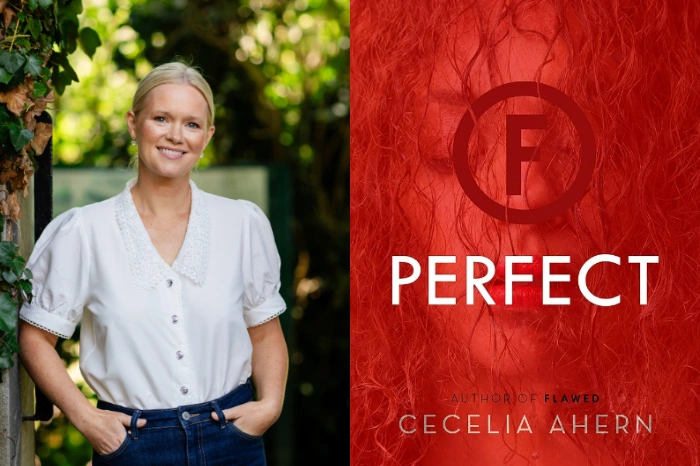
In the landscape of young adult dystopian fiction, few concepts are as chillingly relatable as the demand for moral and physical perfection. Cecelia Ahern, widely known for her contemporary romances, pivoted sharply into this genre with her Flawed duology. The concluding chapter, Perfect, picks up the shattered pieces of a society obsessed with optics and explores the messy, beautiful reality of being human.
The Premise: The Cost of Being Flawed
In the world Ahern has constructed, society is governed not just by legal courts, but by The Guild – an organization that punishes “moral” mistakes. If you lie, you are branded with an ‘F’ on your tongue. If you are disloyal to the Guild, it goes on your right hand.
Perfect follows Celestine North, the “most Flawed person in the world,” who carries five brands. Having become a reluctant symbol of rebellion, Celestine is on the run, hunted by the vengeful Judge Crevan. The sequel shifts from the internal awakening of the first book to a high-stakes race for justice and systemic change.
Character Evolution: Celestine’s Metamorphosis
The strength of Perfect lies in Celestine’s psychological journey. She begins as a girl who defines herself by the rules and ends as a woman who defines herself by her scars.
- The Fugitive Life: Celestine’s time in hiding with her grandfather allows for moments of introspection that balance the book’s faster pace.
- The Weight of Leadership: Unlike many YA protagonists who embrace the “Chosen One” trope instantly, Celestine feels the crushing weight of the people’s expectations. Her vulnerability makes her an empathetic lead.
Themes: The Tyranny of the Ideal
Ahern uses the dystopian setting to hold a mirror to our modern obsession with “cancel culture” and social media curation. The book tackles several heavy themes:
- The Fallibility of Authority: The Guild represents how easily “morality” can be weaponized by those in power to maintain control.
- Beauty in Imperfection: The core message is a rejection of the “black and white” view of humanity. Ahern argues that our mistakes are often our greatest teachers.
- Compassion vs. Judgment: The contrast between the cold, sterile perfection of the “unbranded” and the warmth of the Flawed underground is a recurring motif.
Pacing and Narrative Style
Ahern’s prose is accessible and emotive, characteristic of her background in commercial fiction. While the first half of the book focuses on the tension of being a fugitive, the second half accelerates into a political thriller. Some readers might find the romantic subplot – a hallmark of Ahern’s writing – a bit secondary to the political upheaval, but it provides a necessary emotional anchor for Celestine amidst the chaos.
Summing Up: A Compelling Conclusion
Perfect is a satisfying conclusion to a duology that feels increasingly relevant. While it hits many familiar dystopian beats – the corrupt leader, the underground resistance, the forbidden romance – it distinguishes itself through its specific focus on moral integrity rather than just physical survival.
The Verdict: If you enjoy stories like The Hunger Games or Divergent but want something that leans more into the philosophy of ethics and the social consequences of judgment, Perfect is a must-read. It’s a poignant reminder that our flaws don’t make us less; they make us whole.
Final Thought: In a world that demands we be perfect, Ahern reminds us that there is a quiet, rebellious power in simply being ourselves.