

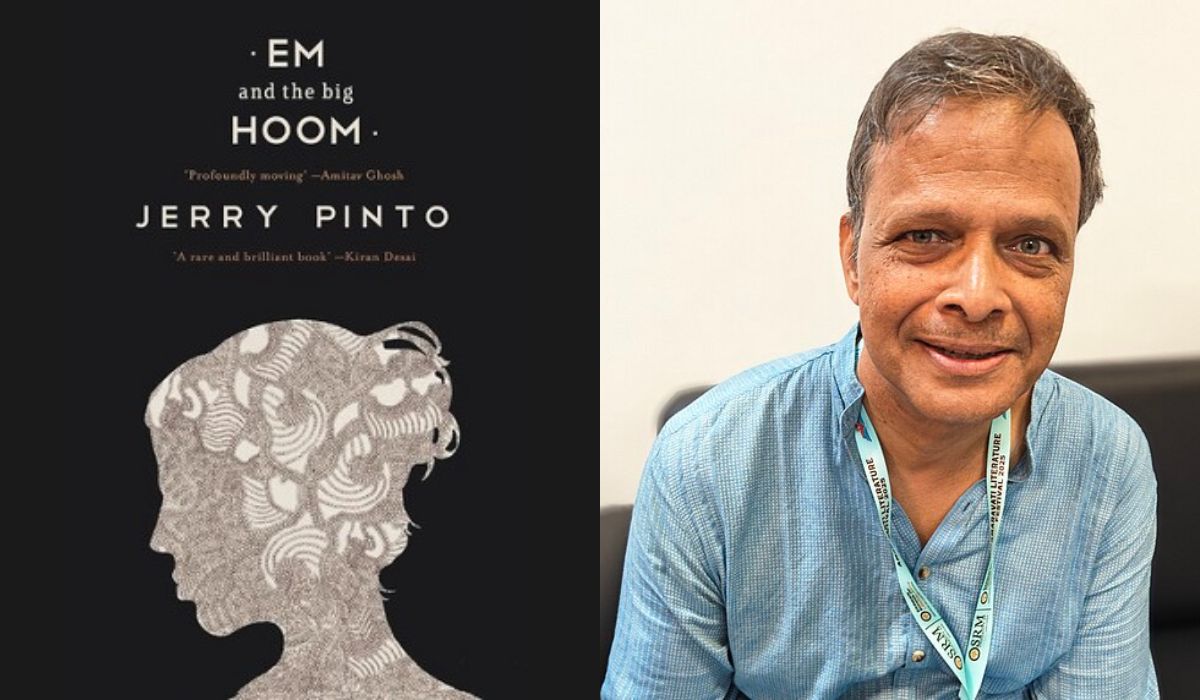
Just a few days ago, the nation celebrated Mother’s Day. Your social media must have been flooded with appreciation posts waxing lyrical about the selflessness of mothers, about their angelic qualities, and how they always love and support you unconditionally. However, if you shared any of these posts with the protagonist of Em And The Big Hoom, chances are, he would have busted out laughing so loud, it would’ve then devolved into a roaring sob.
Em And The Big Hoom: Mourning A Mother With Mental Illness In Mumbai
The book, which feels an awful lot like a movie, revolves around Em or Imelda, a woman who is plagued by Bipolar Disorder. The book is narrated from the point of view of an unnamed protagonist, the son of Imelda, and focuses on the Goan Catholic Mendes family living in Mumbai. Mirroring the mental health and life of Imelda, the narrative of the book is fractured.
The book jumps back and forth in time, juxtaposing Imelda’s “sane” days with her current state of disarray. This fractured narrative is also what gives the book its distinctive movie-like feel. Jerry Pinto, a Goan catholic himself, had a mother who was similarly plagued by mental illness. It is no surprise, then, that the characters feel so real. He draws on his own experience and, like a true artist, paints the canvas with his most vibrant shade of pain.
What follows is a heartbreaking, frustrating, heartwarming, honest, and infuriating story of what it means to be a caregiver. It’s the ugly, frustrating truth that is glossed over in hyper-idealistic movies. Em And The Big Hoom dares to not only show its readers the drama, but also to pull back the curtain and show the ugliness of the aftermath of the show being made.
Also Read: The Brand of Humanity: Why Cecelia Ahern’s Perfect is a Flawlessly Executed Sequel
Title Of The Book: Imelda And Augustine Mendes
The title of the book are the household names of the parents of the unnamed protagonist. Akin to terms of endearment, Em is short of Imelda and The Big Hoom is Augustine. Augustine is described as a calm cerebral person who frequently sigh a big “hmm” before making any significant decision. This earns him the nickname “The Big Hoom”.
So, instead of referring to the parents as Mom/Mummy/Mommy and Dad/Papa/Father, the unnamed protagonist and his sister use these nicknames to refer to them. This further cements the unconventional family dynamics of the Mendeses.
What We Didn’t Like About The Book
While the book manages to depict the raw reality of mental health and how it affects those who are in the immediate vicinity, there was one minor detail that we weren’t that big a fan of. One of the major things that we struggled with was the way that some of the characters spoke.
For instance, the character of Imelda’s mother is perpetually unable to call things by their proper names and almost always ends her sentences with “thissing.” It’s supposed to be the way the words “this thing” sound when said rapidly.
It was humorous at first, but the frequency with which this idiosyncrasy appears quickly became grating. We felt like it broke the flow of the book and, on occasion, could even disrupt the suspension of disbelief.
Also Read: Dear Stranger, I Know How You Feel: Warm Hugs Wrapped In 30 Letters In A Book
What We Loved About The Book
Humor And Tragedy
Throughout the book, characters use humor to cope with the bleak reality of life. It’s refreshing to see Em’s razor-sharp wit in action. She cracks nasty jokes at her own expense, and there are moments when it breaks the tension in the book. These moments not only serve as a reminder to the reader that Em, the human, not the mental patient, is still in there somewhere. It is also a reminder of how powerful a tool humor could be. It can make the dreadful seem measly and tragedy a comedy.
Caregiving Is No Joke
Throughout the book, the unnamed protagonist goes through a variety of different emotions as the caregiver of an unwell parent. He’s not the perfect son who’s ever ready at the beck and call of her mother. He’s a human who has flaws and desires that don’t revolve around his mother.
He wants to be a writer and move out of his home eventually, he gets angry at his mother for not being like other mothers, he feels suffocated in his own home, he even fleetingly wishes for her to die, and then feels guilty for wishing it. All of this is a realistic example of what it means to take care of someone who’s so perpetually dependent on you.
Stigma About Mental Health
The book also masterfully deals with the stigma surrounding the more serious mental illnesses and grapples with how people who suffer from them are treated in our society. A major chunk of the book takes place in hospitals, and, as such, gives the astute reader a lot to think about.
Mumbai As A Backdrop
It is our firm and humble belief that the story wouldn’t have been half as impactful if it were set in any other city except this one. Mumbai’s chaotic apathy serves as the perfect backdrop for the events of the book to play out. The city’s rush, its traffic, its administrative mismanagement, the non-plussed yet somehow nosy neighbors, all serve to heighten the experience of the story. Its spirit is as palpable in the book as Em’s wit.
Ever-Brewing Chai In The Kitchen
Along with gut-punching plotlines, a pot of eternally brewing chai on the stove of the Mendes household is another constant in the book. For tea lovers, this becomes a particularly endearing trait. When all else seems fractured, tea comes as a unifier. It comforts the family members and gives them a break from their eventful lives.
Also Read: Wear Your F: Why You Need To Read Cecelia Ahern’s Flawed
Some Noteworthy Excerpts From The Book
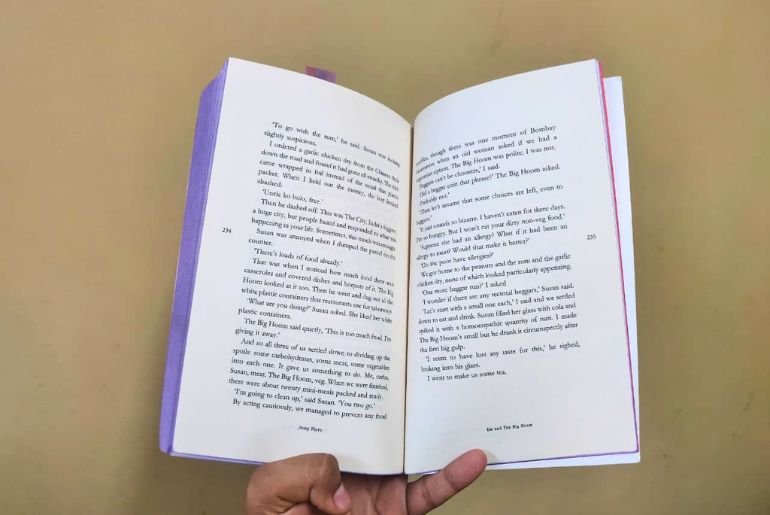
Following are a couple of quotes that we loved from the book:
On God And Faith
“This is the standard equipment of the neo-atheist: eager to allow other people to believe, unwilling to proselytise to his own world which seems bleaker without God but easier to accept.
No one could offer any explanation for the suffering I watched my mother go through. Nothing I read or heard fitted with the notion of a compassionate God, and God’s compassion, one uncomplicated, unequivocal miracle of kindness, was the only thing that could have helped. The sophisticated arguments of all the wise men of faith–their talk about the sins of a past life, the attachment to desire, the lack of perfect submission–only convinced me that there was something capricious about God. How could one demand perfect submission from those who are imperfect? How could one create desire and then expect everyone to pull the plug on it? And if God were capricious, then God was imperfect. If God was imperfect, God was not God.
But being an atheist offers a terrible problem. There is nothing you can do with the feeling that the world has done you wrong or that you, in turn, have hurt someone.”
– Jerry Pinto, Em And The Big Hoom
On Mental Illness And Its Experience
“I sympathized with Granny but I also felt a deep vexation. She loved Em and she thought that should be enough. It wasn’t. Love is never enough. Madness is enough. It is complete, sufficient unto itself. You can only stand outside it as a woman might stand outside a prison in which her lover is locked up. From time to time, a well-loved face will peer out and love floods back. A scrap of cloth flutters and it becomes a sign and a code and a message and all that you want it to be. Then it vanishes and you are outside the dark tower again. At times, when I was young, I wanted to be inside the tower so I could understand what it was like. But I knew, even then, that I did not want to be a permanent resident of the tower. I wanted to visit and even visiting meant nothing because you could always leave. You’re a tourist; she’s a resident.
And as all analogies must, this one breaks down too. You would never be able to visit her tower. You would only be able to visit another tower, a quite similar yet independent one. There were no shared towers, no room for more than one person.”
– Jerry Pinto, Em And The Big Hoom
Also Read: Energize Your Mind: A Practical Path To Emotional Clarity And Control
Content And Trigger Warnings For The Book
The book contains some graphic scenes of self-harm and mentions of attempting suicide. Besides that, the way that certain scenes of when Em is in the throes of her Bipolar Disorder are described may be triggering to some people.
Summing Up
Em And The Big Hoom is a striking, devastating, and haunting tale of the complexities of living with people who are chronically ill or chronically in pain. It is also honest about the toll that constant caregiving can have on a group of people. All in all, it’s a heartwrenching read and must be read by everyone at least once.