
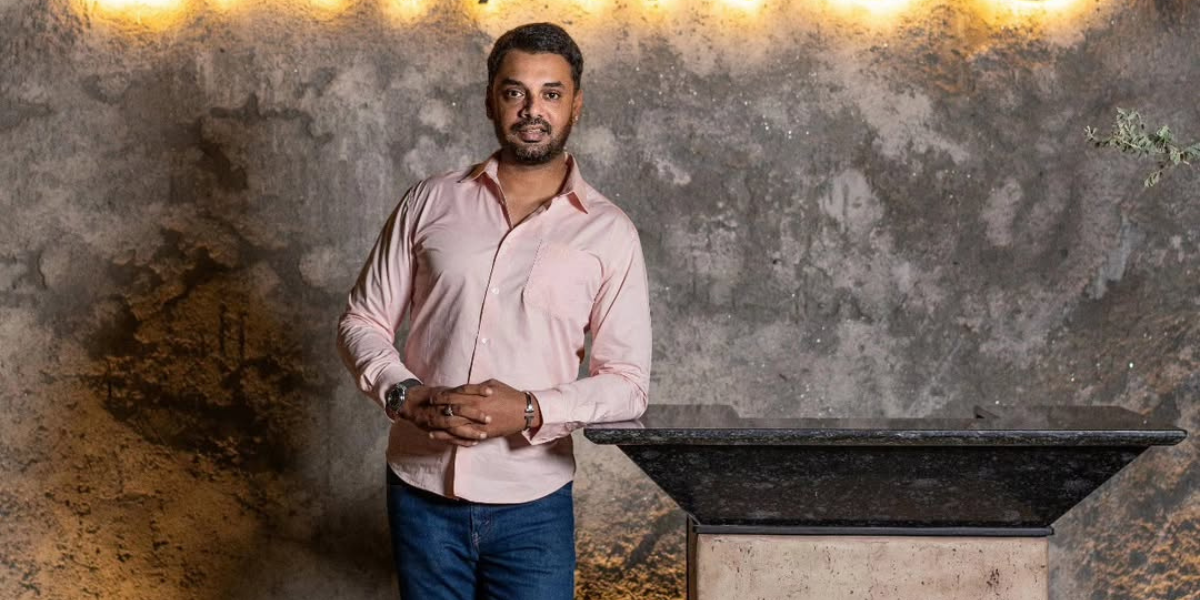
India’s dining scene has transformed into more than just food on a plate, it’s now about identity, aesthetics, and the kind of experience that lives long after the meal ends. At the centre of this shift are restaurateurs who understand that a restaurant today is as much about culture and storytelling as it is about cuisine. Sahil Sambhi, co-founder behind some of the Delhi NCR’s dining destinations including Latango, Bawri, Japonico and more, is one such name shaping this evolution. His work sits at the intersection of hospitality, design thinking, and a deep understanding of what today’s diners truly seek.
In conversation with unstumbled, Sahil Sambhi opens up about building restaurants in an era driven by Instagram and instant visibility, where shelf life is short and attention is even shorter. He speaks about the pressure of staying relevant, the reality behind creating “viral” spaces, and how the definition of a successful restaurant has changed in a city that never stops discovering the next big thing.
In Conversation With Sahil Sambhi
Q1. Your restaurant concepts such as Japonico, Latango, and Nadu all feel very distinct from one another. What is your process for creating a restaurant identity from scratch?
I started my journey in 2016 with a lounge bar concept that catered to the mass market. We expanded into multiple cities and opened several outlets. Over time, I realized that the future lies in speciality restaurants and curated concepts.
When creating a restaurant, I don’t believe it is necessary to appeal to every type of customer. Instead, the concept should be designed for a specific audience. Every aspect of the brand, from the food and interiors to the service and overall experience, should align with the expectations of that audience.
When I conceptualized Japonico, I recognized that Indians have always loved Asian food. However, Japanese cuisine in India had largely been reduced to sushi, tempura, and sashimi. The reality is that Japanese cuisine is much broader than these categories.
During my travels, I visited restaurants such as Zuma and Nobu and noticed that many Indian diners were enjoying these experiences abroad. That made me realize there was an audience in India ready for a premium Japanese dining experience. Today’s travelers have far greater exposure to international cuisines, and countries like Japan and Korea are now common travel destinations for Indians.
The vision behind Japonico was to create a premium, high-end Japanese restaurant that could offer an experience comparable to what diners might find in cities like Dubai, London, or New York.
The same philosophy applies to Latango. The goal was to create an aspirational product for well-travelled and discerning diners who are willing to pay for a world-class experience. I spent time speaking with customers and asking them what they felt was missing in India’s hospitality industry. Most people agreed that while India already offers exceptional food, the hospitality experience available abroad was not always replicated here.
To bridge that gap, we built a team with extensive international experience. Our front-of-house staff, managers, and chefs have worked in leading hospitality destinations around the world. Their expertise helps us recreate global hospitality standards in India.
Nadu, on the other hand, is deeply personal. My mother was a Tamil Brahmin, and I spent a significant part of my childhood in Bengaluru. I also travelled frequently through Chennai, Hyderabad, and Bengaluru during those years.
After returning to Delhi, I realised I could never find the authentic South Indian food I grew up eating. South Indian cuisine was often reduced to just dosa and idli, despite having an enormous culinary heritage.
Nadu is therefore both a tribute to my mother and to the years I spent in South India. The idea was to showcase authentic regional dishes and present a more complete representation of South Indian cuisine.
Also Read: Pinky Chandan Dixit On Varsoo: Mumbai’s New Heritage Food Hub
Q2. India’s dining scene is becoming increasingly focused on luxury experiences. Do consumers genuinely care about food today, or are they chasing status and social currency?
There is a mix of audiences. Some customers have already experienced genuine luxury dining around the world, while others aspire to experience it. When I observe guests dining at Japonico, I can often understand their familiarity with the cuisine simply by looking at their orders.
For example, diners who order oysters with truffle, dim sum with caviar, scallops, or black cod are often people who have travelled extensively and have experienced restaurants such as Zuma or Nobu.
At the same time, there are guests who prefer to stay within their comfort zone while experimenting with one unfamiliar dish. They may order familiar items alongside something more adventurous such as caviar or truffle.
These dining choices offer valuable insights into the customer. Our service teams are trained to identify a guest’s comfort level and curate the dining experience accordingly.
Q3. What is one harsh reality about the restaurant business that nobody really talks about on social media?
There are several realities, but two stand out. The first is that restaurants have an increasingly short shelf life. In cities like Delhi and Mumbai, even an excellent restaurant can start feeling old after just a year.
One reason for this is the lack of significant inbound tourism. Restaurants largely depend on the same customer base repeatedly. We have guests who have visited Japonico more than 40 times within 15 months. While that loyalty is incredible, it also becomes difficult to continually offer something new to the same audience.
Dining has become highly neighborhood-driven. Consumers now have access to quality restaurants close to home, so they are less willing to travel specifically for food. This creates constant pressure on restaurateurs to introduce new menus, experiences, and innovations simply to remain relevant. The second challenge is the influence of online reviews.
Today, anyone can leave a review, even if they have never dined at the restaurant. We’ve encountered situations where guests threatened to leave negative reviews simply because they were denied entry.
Reviews are incredibly powerful and can impact a business significantly. While review platforms provide valuable feedback, they also create situations where restaurants sometimes feel pressured to compromise on standard operating procedures in order to avoid negative publicity. These are challenges that restaurateurs deal with on a daily basis.
Q4. What is more difficult today: creating a great restaurant or creating one that people keep returning to after the Instagram buzz fades?
I always tell my team that launching a restaurant is not the difficult part. In cities like Delhi and Mumbai, any experienced restaurateur with a strong track record is likely to attract customers during the first six months.
People are naturally curious about new restaurants. They are willing to give a new concept a chance, especially if the founder already has a reputation in the industry.
I call the first six months the “honeymoon period.” When I launch a restaurant, I am not planning for the first six months. I am planning for year three.
The real challenge is staying relevant after the initial excitement fades. That requires continuous work on menu engineering, customer experience, service standards, and innovation. The goal is to ensure that customers continue to love the restaurant three years later, not just three months later. In a city where new restaurants are opening almost every day, long-term relevance is the true measure of success.
Q5. What has changed positively in dining because of Instagram, and what has it ruined?
Let’s start with the negative. Instagram has created situations where average products can become extremely successful simply because they are marketed well. There are restaurants that go viral because of one visually appealing dish, even if the overall dining experience isn’t exceptional.
Food should ideally become famous because people have experienced and loved it, not simply because it looks attractive on a screen.
Today, a restaurant with average food and excellent marketing can often outperform a restaurant with outstanding food but poor marketing. That, in my opinion, is one of the drawbacks of social media.
On the positive side, Instagram has made it much easier for restaurants to reach their target audience.
In the past, growth relied heavily on word of mouth. Today, a restaurant with a great chef, a strong concept, and good execution can build awareness much faster.
Social media also helps customers discover dishes before they visit. For example, when we launched Nadu, several leading food critics and influencers wrote about our Idli with Caviar and Egg Puff. These dishes quickly became our bestsellers because customers specifically came in wanting to try them. That demonstrates the incredible reach and influence of social media.
Q6. Has Instagram changed the way chefs think about plating and presentation?
Absolutely. The younger generation of chefs are highly conscious of how a dish will look in photographs and videos. They think carefully about presentation, styling, naming, and how the dish will appear on social media.
Chefs with decades of experience have also adapted. They now recognize that social media is just as important as traditional media. Today, customers want to understand every aspect of what they are eating. They want to know where ingredients come from, how dishes are prepared, and whether the food is grilled, steamed, or fried.
As a result, chefs are placing much greater emphasis on storytelling, ingredient sourcing, presentation, and transparency.
Q7. When you walk into a restaurant for the first time, what are the first things that tell you whether the founders truly understand hospitality?
The first thing I notice is the overall mood of the room. How are guests greeted? Are the staff smiling? Is there warmth in the welcome?
Hospitality begins long before the food arrives. The way a guest is welcomed, escorted to their table, and introduced to the restaurant says a lot about the culture of the business. I also pay attention to lighting, music, and energy levels.
Another important detail is whether the staff makes an effort to engage with guests. One of the first things I teach my teams is to ask guests how their day is going. It helps break the ice and immediately makes people feel comfortable.
I also observe operational details such as table maintenance, plate clearance, cleanliness, and service flow. The first five minutes reveal a great deal about a restaurant.
Q8. Do you think India has finally developed its own restaurant culture, or are we still borrowing heavily from global trends?
I believe India has absolutely developed its own restaurant culture. Years ago, most dining experiences revolved around multi-cuisine restaurants. Families would visit places where one person could order Indian food, another could order Chinese food, and someone else could have pasta.
Today, we are seeing the rise of highly specialised regional cuisine restaurants. There are restaurants dedicated entirely to Bengali cuisine, Parsi cuisine, Bihari cuisine, and countless other regional food traditions.
Travel has played a major role in this transformation. When people travel across India, they become familiar with regional dishes and develop an appreciation for local culinary traditions.
At Nadu, for example, we serve dishes inspired by Chennai’s Marina Beach. Guests who have visited Chennai immediately recognize these dishes and connect with them emotionally. There is an instant sense of nostalgia.
The modern Indian diner is increasingly interested in discovering authentic regional experiences rather than sticking to familiar comfort food.
The diversity of Indian cuisine is extraordinary. If I were to create menus based solely on different regions of India, I would have far more options than I would with many international cuisines. Every state, every city, and sometimes every neighborhood has its own culinary identity.
Also Read: Good Food & Grounded Vibes: In Conversation With Actor Jibraan Khan
Q9. Many founders talk about concept-first dining. Can strong storytelling compensate for average food?
I firmly believe that the product must always win. Storytelling is valuable, but it cannot save an average dish. At the end of the day, customers remember what they ate. If the food does not deliver, no amount of storytelling can change that.
In fact, customers often leave saying that the story was better than the food, which is never what you want. Personally, I prefer simple, honest cooking. I encourage my chefs to make dishes the way they are supposed to be made rather than constantly trying to reinvent them.
For example, if you’re making a risotto, make it the way it would be served in Rome. Don’t try to transform it into something entirely different. The same philosophy applies at Nadu. Our Egg Puff is inspired by the simple bakery-style version found across Chennai, Bengaluru, and Kerala.
We haven’t tried to overcomplicate it. It’s a humble dish made the way people remember it. Authenticity, comfort, and flavour matter more than unnecessary experimentation.