
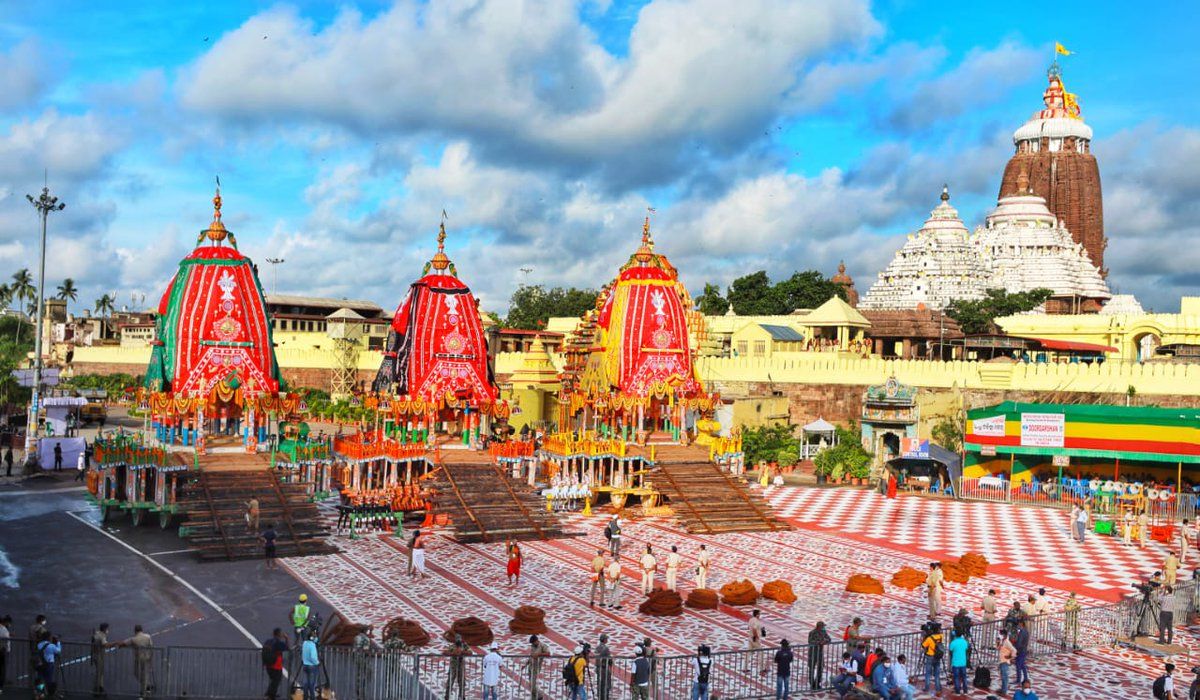
Jagannath Puri Rath Yatra is easily one of the grandest and oldest religious events in India. Every year, millions of devotees from not just the country but also the world flock to the Jagannath temple in Puri, Odisha, to celebrate the ceremonial journey of the Lords Jagannath and Balabhadra and Goddess Subhadra to the Gundicha Temple. It is a significant event as it is thought that the deities step out of the sanctum sanctorum of the grand temple to meet their devotees, regardless of caste, creed, or religion. The festival is celebrated for a total of nine days, and this year, the festivities are slated to commence on July 16, 2026.
History Of Jagannath Puri Rath Yatra: When Did It Begin?
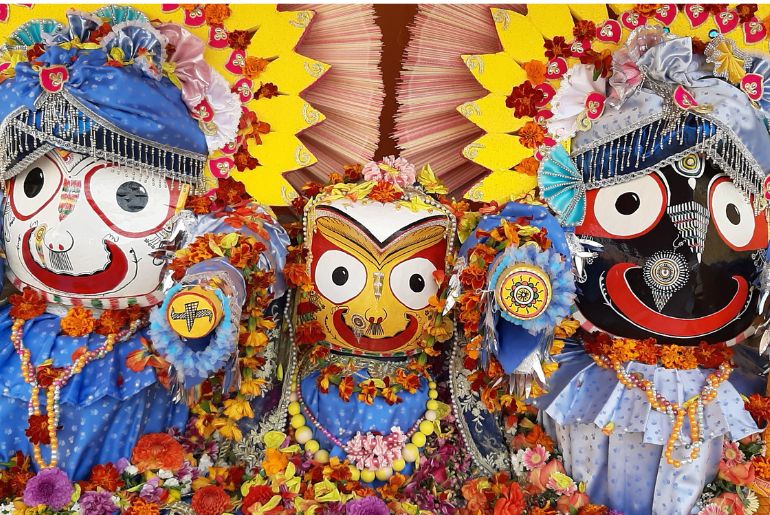
The Puri Rath Yatra in Odisha is an ancient festival that historians date back to the 12th century. While its exact foundational year is uncertain, the structured festival and the current Jagannath Temple were built during the Eastern Ganga dynasty, with some historical accounts tracing its solidified triad and traditions to the 1230s.
Ancient texts like the Skanda Purana mention the yatra, linking it to the legend of King Indradyumna of Bhadra, who was instructed by a divine vision to construct the original forms. The festival commemorates the annual journey of Lord Jagannath, Lord Balabhadra, and Devi Subhadra from the main temple to the Gundicha Temple (their aunt’s home).
While rooted in much older mythological and tribal traditions, the festival gained immense structured prominence during the 15th century under the reign of King Purushottama Deva. Since then, the festival has stood the test of time and has survived even colonialism.
Also Read: How To Reach Puri For Jagannath Rath Yatra: Train, Flight & Road Guide
Sacred Rituals Chronologically Arranged
The festival is replete with rituals. Here’s an exhaustive list arranged chronologically:
Akshaya Tritiya
While not directly linked to the festival, artisan craftsmen officially begin building the three massive wooden chariots using traditional, specific timber on this day, on account of how auspicious it is.
Snana Purnima Yatra (The Bathing Festival)
The deities are brought out and bathed with 108 pots of aromatic water, followed by a seclusion period of 15 days (Anasara) when they are traditionally believed to “fall sick”.
Chhera Pahanra (The Royal Sweeping)
A highly symbolic ritual where the Gajapati King of Puri arrives to sweep the chariots with a golden broom. This acts as a powerful symbol of spiritual egalitarianism — showing that even the king is a humble servant of the Lord.
Pahandi Bije (The Royal Procession)
This is the ritual of rhythmic, ecstatic movement of the massive idols as they are carried out of the temple by temple priests (Daityapatis) to their respective chariots using grand swinging motions.
The Pulling of the Chariots
Millions of devotees gather to pull the colossal chariots using thick ropes, believing this act cleanses one’s sins and brings spiritual merit.
Hera Panchami
A playful ritual on the fifth day where Goddess Lakshmi, who was left behind at the main temple, arrives at the Gundicha Temple in anger to demand Lord Jagannath’s return.
Bahudha Yatra
After a 9-day stay, the deities begin their return journey and are re-entered into the main temple during the final Niladri Bije ritual.
Niladri Bije
Niladri Bije is the concluding ritual of the Rath Yatra festival, marking the return of Lord Jagannath, Lord Balabhadra, and Devi Subhadra to the sanctum sanctorum of the Puri Jagannath Temple. It features a playful, endearing tradition where Lord Jagannath offers Rasgulla to appease an upset Goddess Lakshmi.
Also Read: Rath Yatra 2026 Puri: Complete Guide & Date, Significance, Travel & Where to Stay
How Are The Chariots For Jagannath Puri Rath Yatra Made?
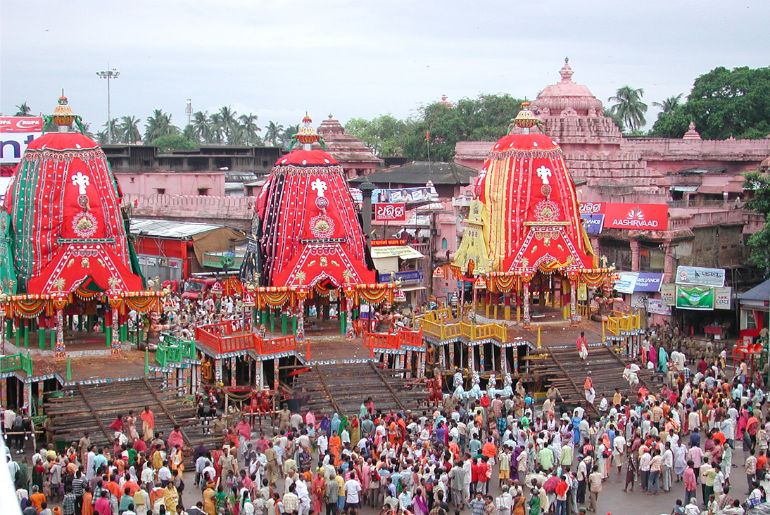
To understand the sheer scale of this festival, one must look at the structural uniqueness of the three colossal wooden chariots, which are newly constructed from scratch every single year using specific timber types without a single metal nail. As mentioned earlier, the construction of the chariots begins from Akshaya Tritiya itself. Here are the other details about the chariots:
Lord Jagannath
Chariot Name: Nandighosha
Chariot Canopy Color: Red and Yellow
Height Of Chariot: 45 Feet
Number Of Wheels: 16 Wheels
Chariot Guardian: Garuda
Lord Balabhadra
Chariot Name: Taladhwaja
Chariot Canopy Color: Red and Bluish-Green
Height Of Chariot: 44 Feet
Number Of Wheels: 14 Wheels
Chariot Guardian: Vasudev
Goddess Subhadra
Chariot Name: Darpadaliana
Chariot Canopy Color: Red and Black
Height Of Chariot: 43 Feet
Number Of Wheels: 12 Wheels
Chariot Guardian: Jayadurga
Also Read: Rath Yatra In Digha Jagannath Temple – All You Need To Know
Fascinating Facts About The Rath Yatra
- The construction of the chariots relies entirely on centuries-old carpentry techniques using wooden pegs, joints, and ropes.
- The sacred flag (the Patitapabana Bana) atop the Puri Jagannath Temple famously flutters in the opposite direction of the wind. This phenomenon, paired with a centuries-old ritual, captivates millions of devotees and visitors during the annual Rath Yatra.
- Traditionally, devotees believe that no birds or planes fly directly over the Jagannath Temple dome. This has more to do with belief than actual facts.
- It is a historical pattern that it almost always rains on the day the Rath Yatra begins in Puri, cooling the streets for millions of barefoot pilgrims.
- The Mahaprasad (or Chhapan Bhog) is prepared in the world’s largest temple kitchen using seven stacked clay pots over a wood fire. It includes rice, curries, and sweets like khaja. The food is notably egalitarian, shared by all devotees without caste or creed.
- As you step inside the temple’s Simhadwara (Lion’s Gate), the thunderous sound of the ocean waves completely vanishes.
- The Nabakalebara is an ancient and sacred ritual at the Jagannath Temple in Puri, Odisha, which translates to “New Body”. It occurs every 12 to 19 years when the Hindu calendar features two lunar months of Ashadha, during which the wooden idols of Lord Jagannath, Balabhadra, Subhadra, and Sudarshana are buried, and new ones are carved from sacred Neem trees in complete darkness.
- The word juggernaut (an unstoppable, overwhelming force) is directly derived from Jagannath Rath Yatra. The sheer size, weight, and unstoppable momentum of these gigantic chariots captivated the British. It led them to adapt the name “Jagannath” into the English word “juggernaut.” It means an unstoppable, overwhelming, or merciless force that crushes everything in its path.
Also Read: Rath Yatra In Puri Vs Rath Yatra In Digha – See The Difference
Summing Up
The Jagannath Rath Yatra is far more than a grand religious procession. It is a timeless celebration of devotion, community spirit, and architectural marvel. For centuries, it has stood as a symbol of universal brotherhood where the divine steps out to meet humanity on common ground. Whether viewed through the lens of deep faith or historical curiosity, the Yatra remains one of humanity’s most awe-inspiring spiritual spectacles.