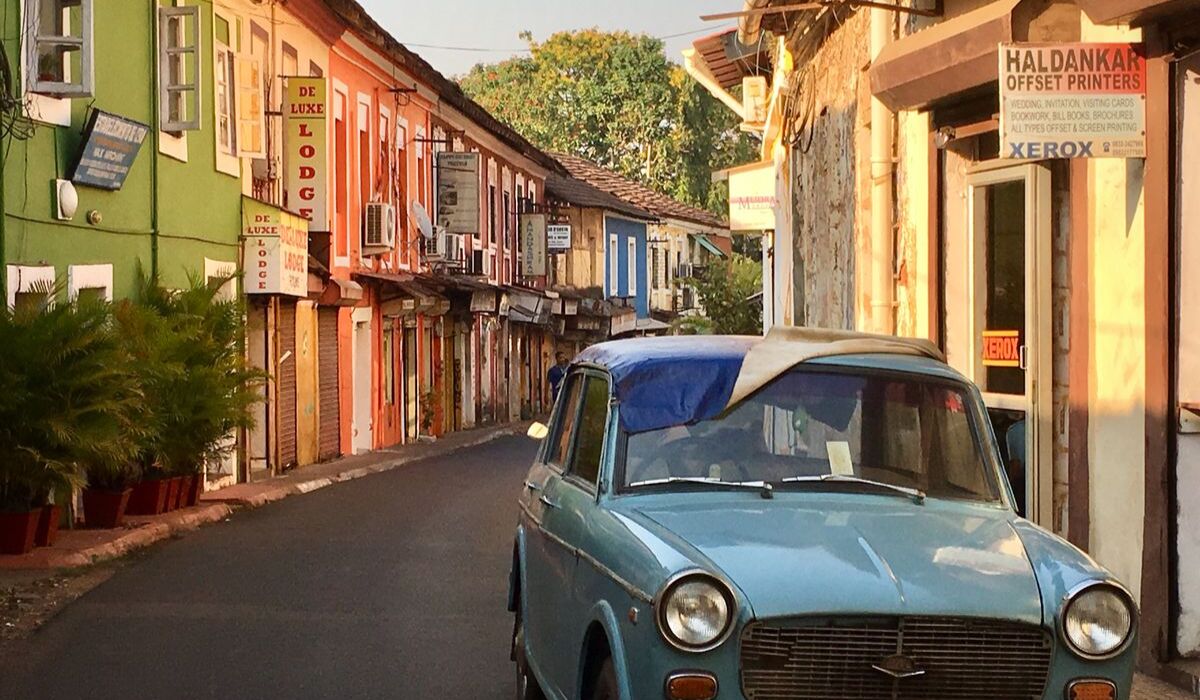
Goa is usually associated with beaches, seafood, nightlife, and seaside resorts, but some of the state’s most interesting experiences are found away from the coast. In the heart of Panjim, Fontainhas offers a glimpse into a very different side of Goa. Narrow streets wind between colorful houses, red-tiled roofs, old bakeries, neighborhood bars, art galleries, and buildings shaped by centuries of history.
Often called Goa’s Latin Quarter, Fontainhas is the kind of place best explored without a strict itinerary. Walk through its lanes, stop for coffee or traditional Goan sweets, visit a gallery, and pay attention to the architectural details around you. A few hours here can feel completely different from the beach-focused Goa most travelers know.
What Is Fontainhas And Why Is It Famous?
Fontainhas is a historic neighborhood in Panjim, situated between the Altinho hills and Ourem Creek. Its story can be traced to the late 18th century, when Antonio Joao de Sequeira, a wealthy Portuguese, used land in the area for coconut plantations. As Panjim developed during the 19th century, the neighborhood became a residential area for Portuguese administrators and other residents.
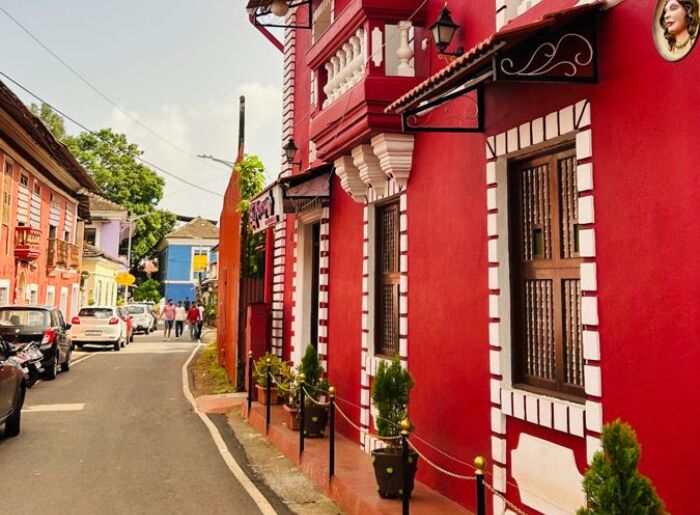
Much of that influence remains visible today. Houses painted in shades of yellow, blue, green, and red line narrow streets, with tiled roofs, decorative doors, balconies, and Portuguese-influenced architecture. Even some of the street names reflect the area’s history, including Rua 31 de Janeiro. Together, these details make Fontainhas feel less like a standalone tourist attraction and more like a living heritage neighborhood.
Heading to Goa? Know the 19 new tourist rules and the violations that could attract fines of up to INR 1 lakh.
What Are the Best Things to Do in Fontainhas?
1. Walk Through The Colorful Streets
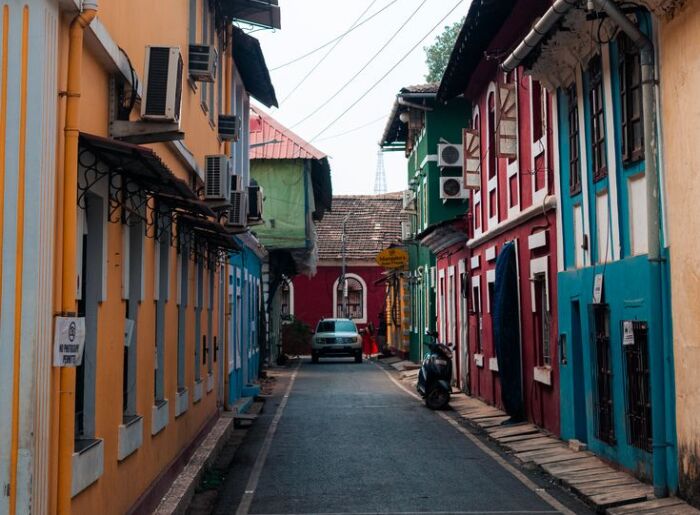
Walking is the best way to experience Fontainhas. The neighborhood is known for its colorful homes, traditional facades, projecting balconies, artistic doors, red-tiled roofs, and narrow lanes. There is no need to rush from one landmark to another. Part of the experience is simply wandering and noticing small architectural details along the way. However, remember that many of the most photographed buildings are private homes. Avoid entering properties, blocking doorways, or disturbing residents while taking photographs.
2. Visit The Chapel Of St. Sebastian
The whitewashed Chapel of St. Sebastian provides a striking contrast to the brightly colored buildings surrounding it. Dating to the 19th century, the chapel is one of the most recognizable historic landmarks in Fontainhas. Inside, visitors can see altarpieces, a statue of the Virgin Mary, and a distinctive crucifix depicting Christ with his eyes open. Its location also makes the chapel an easy stop on a walk through the Latin Quarter.
3. Find The Fonte Phoenix
Fonte Phoenix, also known as the Fountain of Phoenix, is a natural spring associated with the Portuguese era. The name Fontainhas is said to have been derived from this spring. It is a relatively understated attraction compared with the neighborhood’s colorful architecture, but it provides another connection to the origins and history of Fontainhas. A guided heritage walk can provide more context about the spring and the surrounding area.
Planning a beach day in Goa? Discover eight of the best beaches worth adding to your itinerary.
4. Explore Gitanjali Gallery
There is more to Fontainhas than historic architecture. Gitanjali Gallery brings contemporary art to the neighborhood and has become an important cultural space. The gallery showcases works by Indian and international artists and has also hosted workshops, poetry and book readings, and other cultural events. It is a worthwhile stop for art lovers or anyone looking for a break from walking.
5. Visit Fundação Oriente
Another stop for art enthusiasts is Fundação Oriente, which houses a permanent exhibition featuring works by Goan artist Antonio Xavier Trindade and his daughter Angela Trindade. The collection adds another dimension to a Fontainhas visit, particularly for travelers interested in Goa’s artistic and cultural heritage rather than simply its architecture.
6. Look For Traditional Azulejos
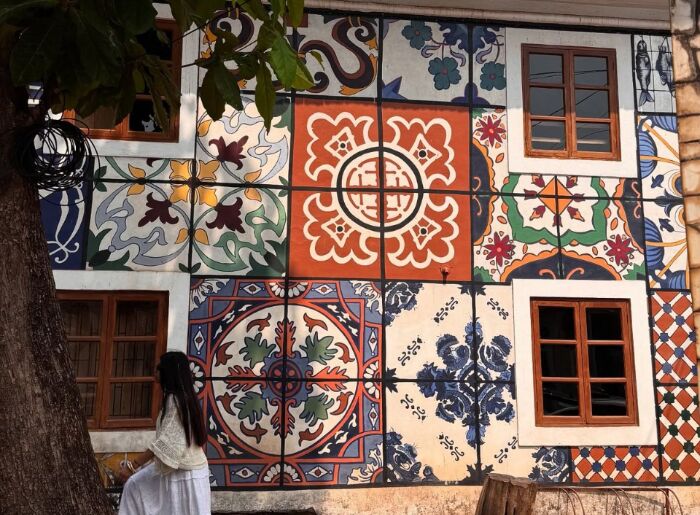
While walking through Fontainhas, keep an eye out for azulejos, the decorative ceramic tiles closely associated with Portuguese design. They can be spotted on nameplates, signs, facades, and other parts of the neighborhood. Travelers interested in seeing more can visit Velha Goa Galeria, which is known for traditional hand-painted azulejos. It is also a good place to understand how this distinctive art form continues to remain part of Goa’s visual identity.
7. Take A Fontainhas Heritage Walk
Exploring independently is easy, but a guided heritage walk can reveal stories that are difficult to discover from the buildings alone. The Fontainhas Heritage Walk by Make It Happen is one option mentioned for visitors interested in learning about the neighborhood’s history, architecture, food, and local culture. A guided walk can be particularly useful for first-time visitors who want more context behind the streets and structures they are seeing.
Traveling between Panaji and Betim? Goa’s new modern ferries aim to cut travel time in half.
Where Should You Eat And Drink In Fontainhas?
Food is an important part of exploring Fontainhas, and its historic bakeries, restaurants, cafes, and neighborhood bars make it easy to build a meal or snack into your visit.
Confeitaria 31 de Janeiro: One of the neighborhood’s best-known traditional bakeries. Stop for Goan sweets, breads, cakes, pastries, and bebinca.
Viva Panjim: A popular restaurant for travelers looking to try Goan and Portuguese-influenced dishes.
Hospedaria Venite: A long-standing restaurant serving Goan food and seafood in a setting filled with old-world character.
Joseph Bar: A small and atmospheric neighborhood bar where visitors can try feni and feni-based drinks.
Caravela: A convenient cafe stop for coffee and a break between exploring the surrounding streets.
Rather than rushing through several places, pick a bakery or cafe during your walk and save one of the restaurants or bars for a longer stop.
Looking for dinner with live music? Discover some of Goa’s best restaurants and cafés for food, drinks and performances.
What Should You Know Before Visiting Fontainhas?
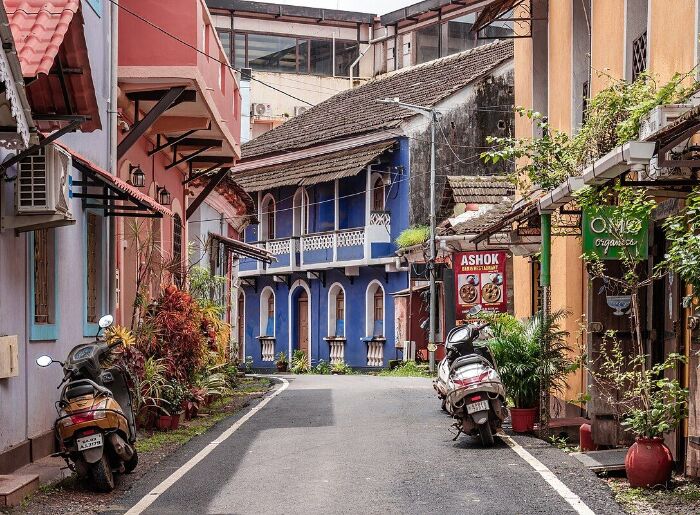
Explore on foot: Walking makes it easier to notice the neighborhood’s architecture and smaller details.
Respect private homes: Do not enter properties, block entrances, or disturb residents for the purpose of taking photographs.
Visit at the right time: Morning and late afternoon are generally more comfortable for walking.
Wear comfortable shoes: Expect to spend most of your visit on foot.
Allow two to three hours: This gives you time for a relaxed walk and a stop at a cafe, bakery, or gallery.
Consider a guided walk: It can provide useful context about the buildings, street names, food, and history.
Look beyond the photographs: Make time for Fontainhas’ art, bakeries, restaurants, bars, and cultural spaces.
Have just 48 hours in Goa? Follow this itinerary to make the most of a quick getaway.
Author’s Note
I have been to Goa several times, and one thing I enjoy about returning is finding places that feel completely removed from the usual beach-and-nightlife experience. Fontainhas is exactly that kind of place. Walking through its colorful lanes, stopping for something to eat, and simply taking in the old buildings makes for a very different few hours in Goa. It is also a good reminder that some of the state’s most interesting experiences are nowhere near a beach.
Summing Up
Fontainhas offers a side of Goa that can easily be missed on an itinerary centered entirely around beaches. The colorful houses may initially draw visitors in, but the real appeal lies in exploring the neighborhood slowly and discovering its chapels, galleries, bakeries, tiled signs, historic streets, and local establishments.
Set aside a few hours, leave the car behind, and explore on foot. Fontainhas is less about checking off individual landmarks and more about experiencing one of Panjim’s most distinctive neighborhoods at an unhurried pace. The best takeaway is to slow down and let the neighborhood’s architecture, culture, and atmosphere shape your visit. Let the neighborhood’s character linger with you long after your visit.