
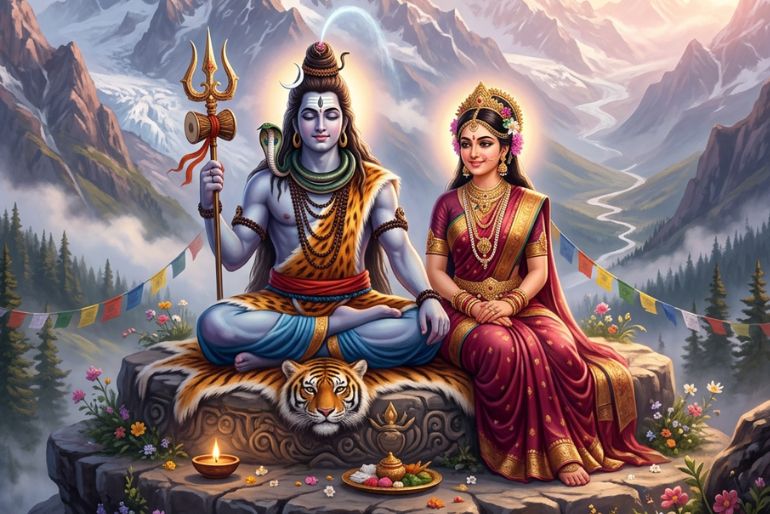
As the monsoon showers transform the land into a lush green carpet, the festival of nature’s renewal and devotion walks in. We are talking about Hariyali Teej, which is celebrated across Northern and some parts of Western India. This festival celebrates the cosmic union of Lord Shiva and Goddess Parvati and also the arrival of the rains. It is one of the most spiritually significant and culturally rich festivals for Hindu women. This year it will be celebrated on August 15. From its significance to vrat, here’s everything you must know about Hariyali Teej.
Why Is Hariyali Teej Celebrated?
Hariyali Teej is a joyful monsoon festival celebrated by women in Northern and some Western parts of India. The word Hariyali means greenery, and the festival celebrates the fresh green landscape that is brought by the Sawan rains.
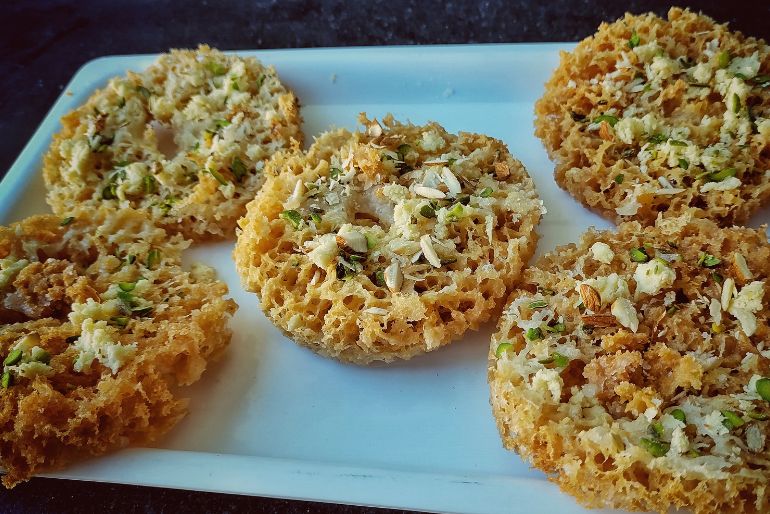
The word Teej means third, signifying the third day of Shukla Paksha. It marks the day when Lord Shiva accepted Lord Parvati as his wife. Hence, the day is spiritually significant as well. This festival is all about prayers, fasts, dancing, songs, solah shringaar, and happiness. Special seasonal sweets like Malua and Ghewar are also prepared on this day in many households.
Why Do Women Observe Hariyali Teej Vrat?
Married Women
Hariyali Teej Vrat or fast is observed by married women to seek marital bliss, husband’s long life, prosperity, and the well-being of the family. The vrat honors Goddess Parvati’s devotion to win Lord Shiva as her husband. Her determination brought stability and love into her married life. Hence, married women observe this fast to get her blessings for a long-lasting marriage.
Unmarried Women
Unmarried young women too observe this vrat or fast with great enthusiasm. They pray to Goddess Parvati to bless them with an ideal husband like Lord Shiva who is deeply caring, compatible, understanding, protective, and loving.
Also Read: What’s On Your Shravan Upwas Plate? A State-by-State Guide
What Is The Story Behind Hariyali Teej?
Goddess Parvati was the daughter of King Himalaya and had a desire to marry Lord Shiva, but Lord Shiva was shocked by the death of his wife Sati and abandoned everything. He plunged into meditation and led a life in the mountains.
Parvati believed that she could awaken Shiva with her devotion. Hence, she left her life of royal luxuries as a princess and meditated near the banks of the river Ganga and the Himalayas. She lived on dried leaves and water, and eventually gave up food altogether. She spent years focusing on Lord Shiva by meditating day and night irrespective of the weather.
Looking at Parvati’s dedication and penance, Lord Shiva was very impressed. But he wanted to take a test. He disguised himself as a sage and pretended to scold her for wanting to get married to Lord Shiva. He called Shiva ugly, homeless, and recluse.
But Parvati remained firm and kept defending Shiva’s religious greatness. Looking at her unshakable faith, respect, and love for him, Shiva was completely surprised. He appeared in his real form and accepted Goddess Parvati as his wife on the third day of Shukla Paksha in the month of Shravan.
According to a legend, it is believed that Goddess Parvati underwent 108 lifetimes of rebirth and penance before Lord Shiva accepted her as his wife.
Also Read: What Is Sattvic Food? Why Do People Eat It During Shravan?
What Is The Significance Of Hariyali Teej Vrat?
Talking about the religious significance, Hariyali Teej represents spiritual power. It teaches us that love, when combined with spiritual strength, has the ability to transcend any sort of challenges. The day states that devotion is a way more powerful source than desire. The symbols of the union of Shiva and Shakti (Purush and Prakriti) are balance, action, a nd stillness.
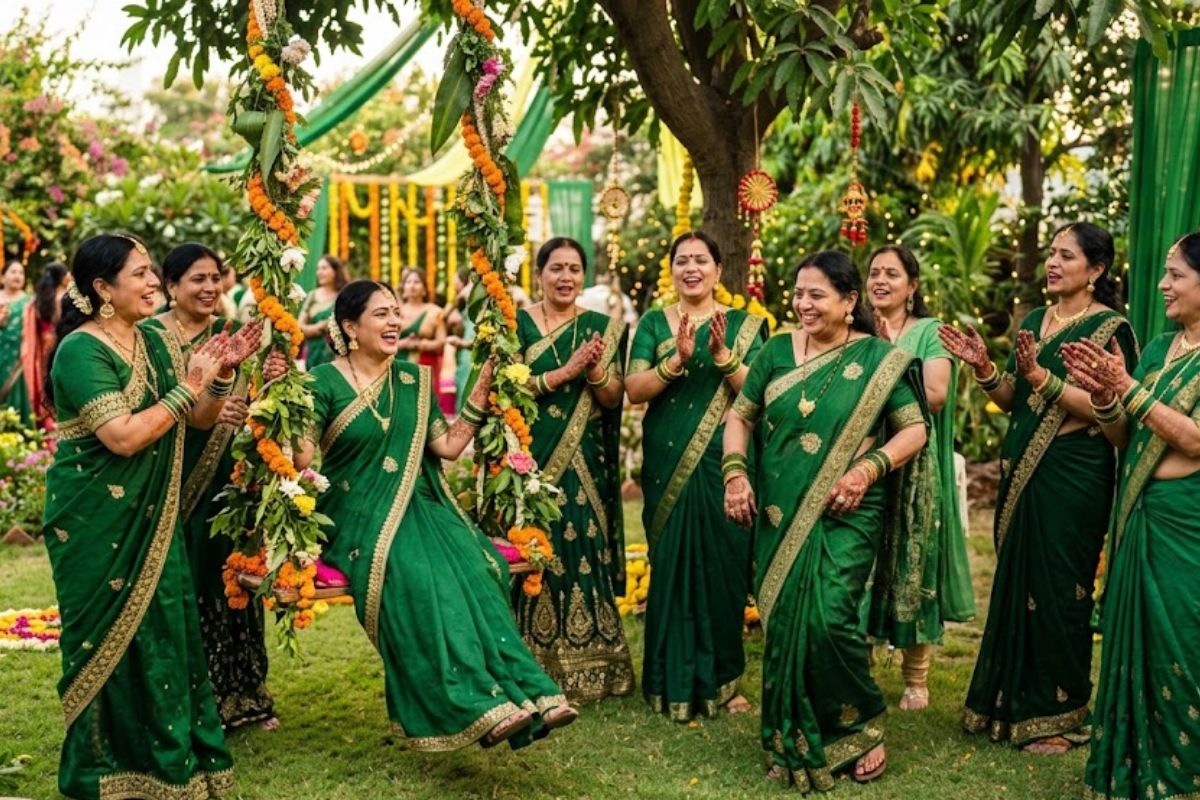
Beyond the religious roots, this festival serves as an occasion for female solidarity and social expression. Monsoon season brings relief from the intense field labor, which allows women to meet, sing, dance on swings, share stories,s and celebrate. It brings generations of women together to celebrate monsoon and the spirit of love.
What Are The Rituals Of Hariyali Teej?
One of the biggest rituals or highlights of this festival is Sindhara. Sindhara is a lovingly packed gift that is sent to a married woman from her natal family to her in-law’s home. It is either sent a day prior or on the very day. It includes green sarees, suit sets, or lehangas with solah shringaar, henna cones,s and traditional sweets.
- The rituals begin early morning.
- Women wake up, take a holy bath, and dress up. Married women dress up using all the things that are sent to them by their natal family for the festival.
- They handcraft small idols of Lord Shiva, Goddess Parvati, and Lord Ganesh using clay.
- They set up a wooden stool or platform, cover it with red or yellow cloth, and place these idols on it.
- They offer belpatra, datura, and flowers to Lord Shiva, while Goddess Parvati is offered solah shringar and flowers.
- Fasting women read or listen to the holy Hariyali Teej Vrat Katha.
- They perform aarti and offer kheer or seasonal sweets to the god.
- Women observe either Nirjala or Phalhari fast based on their beliefs and health conditions.
Summing Up
Hariyali Teej is one of the most beautiful festivals in Hinduism. It teaches us the power of patience and love and at the same time asks us to appreciate the beauty of nature. Both married and unmarried women observe the Hariyali Teej vrat, which is ended either in the evening or the next day, as per the region.