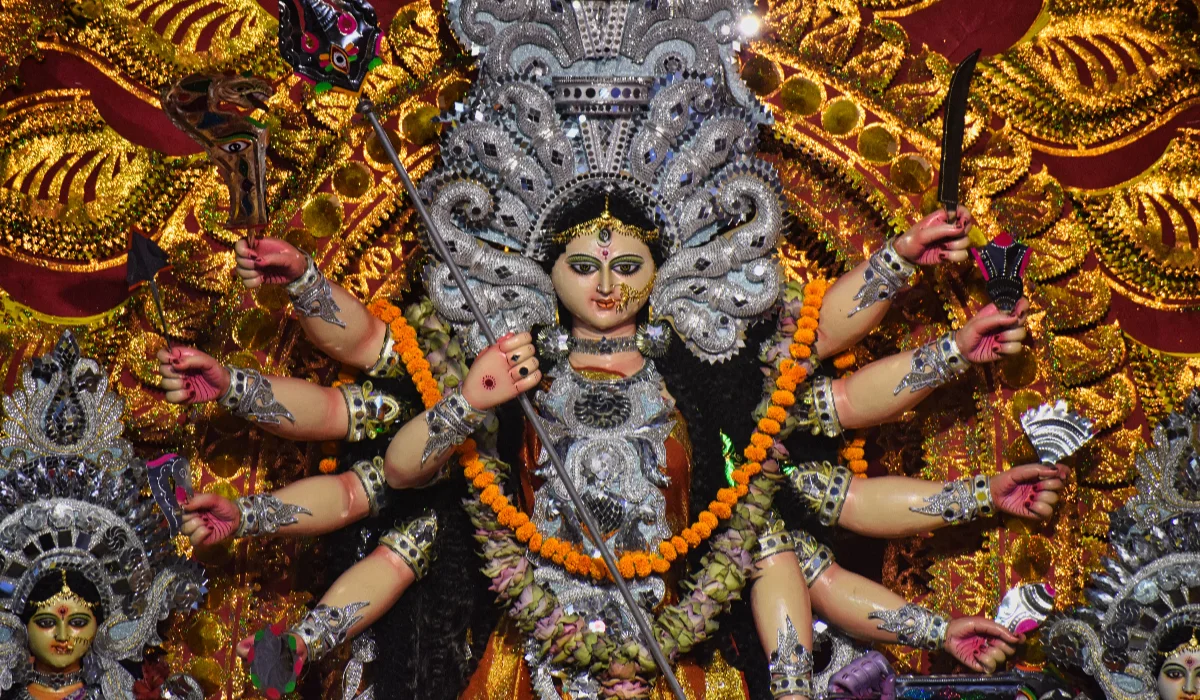

Mangala Gauri or Mangala Gaur Vrat is a sacred Hindu observance which is dedicated to Goddess Gauri. She is known as an avatar of Goddess Parvati. During the month of Shravan, this vrat is observed on every Tuesday or Mangalwar. The vrat is celebrated across India with deep cultural resonance in North India, Gujarat, and Maharashtra. This vrat is said to honor marital longevity, domestic bliss, and conjugal harmony. Since the month of Shravan for West and South Indians will begin soon, from rituals to significance, here is everything you need to know about Mangala Gauri Vrat.
What Is Mangala Gauri Vrat?
Mangala Gauri Vrat is a day-long fast and worship that is performed on Shravan Tuesdays. The word Mangala signifies auspiciousness and refers to Tuesday, which is ruled by the planet Mars or Mangal, and Gauri represents the gentle, nurturing manifestation of Goddess Parvati. Observing this fast is believed to bring marital bliss by removing any Mangal Dosha or obstacles from your life. It also offers Akhanda Saubhagya, which is the longevity of the spouse.
Who Observes Mangala Gauri Vrat & Why?
Newly Married Women
Newly married women observe this fast for the first five consecutive years after their marriage. It is believed to be an essential rite of passage that brings in divine blessings, resulting in a happy, enduring marriage. It also ensures strong ties with the in-laws.
Married Women
Established homemakers also observe this fast to maintain marital longevity. This vrat is believed to safeguard the health of their husband, ensure the prosperity of the lineage, and clear any negative planetary influences such as Mangal Dosha.
Can Unmarried Women Observe Mangala Gauri Vrat?
Yes, unmarried women can also observe this fast. It can help them overcome delays in marriage, seek a loving and compatible partner like Lord Shiva, and also neutralize any astrology-related planetary afflictions.
How Many Tuesdays Are There In Mangala Gauri Vrat 2026?
Depending on the regional Hindu calendar that follows Purnimanta or Amavasyant, the month of Shravan contains about 4 or 5 Tuesdays.
Purnimanta Calendar (North and Central India): Mangala Gauri Vrat features 4 Tuesdays as Shravan 2026 begins in late July and ends in late August.
Amavasyant Calendar (Maharashtra, Gujarat, South India): Mangala Gauri Vrat features 4 to 5 Tuesdays as Shravan 2026 begins from mid-August to mid-September 2026.
Shravan Mangala Gauri Vrat 2026 Dates
North and Central India:
- August 4, 2026
- August 11, 2026
- August 18, 2026
- August 25, 2026
Maharashtra, Gujarat, South India
- August 18, 2026
- August 25, 2026
- September 1, 2026
- September 8, 2026
Mangala Gauri Vrat Story
In ancient times, a virtuous and wealthy merchant named Dharampal lived with his wife. Despite their immense wealth, they were deeply grieved as they had no children. Through rigorous prayers, Dharampal and his wife pleased Goddess Parvati and Lord Shiva. Goddess Parvati granted them a son but warned them that he would die at the age of sixteen because of a snakebite.
Dharampal married his son to a young girl whose mother regularly observed Mangala Gauri Vrat. Due to this, Goddess Gauri had blessed her daughter with Akhand Saubhagya, which means longevity of the spouse. This ensured that her future husband would never suffer premature death.
When his son turned sixteen, a venomous snake approached him while he was asleep. However, due to divine protection granted to his wife, he survived. This shows how the power of Mangala Gauri Vrat can help you overcome your destiny.
Also Read: What’s On Your Shravan Upwas Plate? A State-by-State Guide
Mangala Gauri Vrat Traditions And Celebrations In Maharashtra
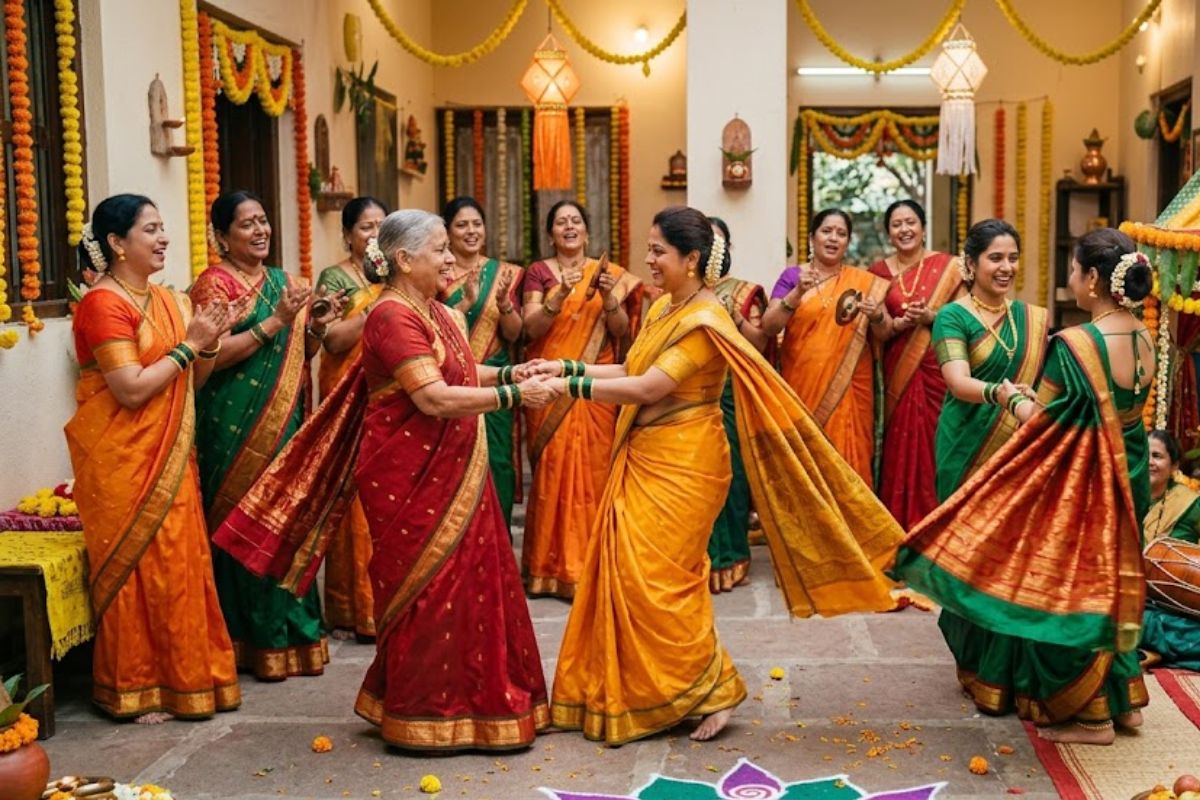
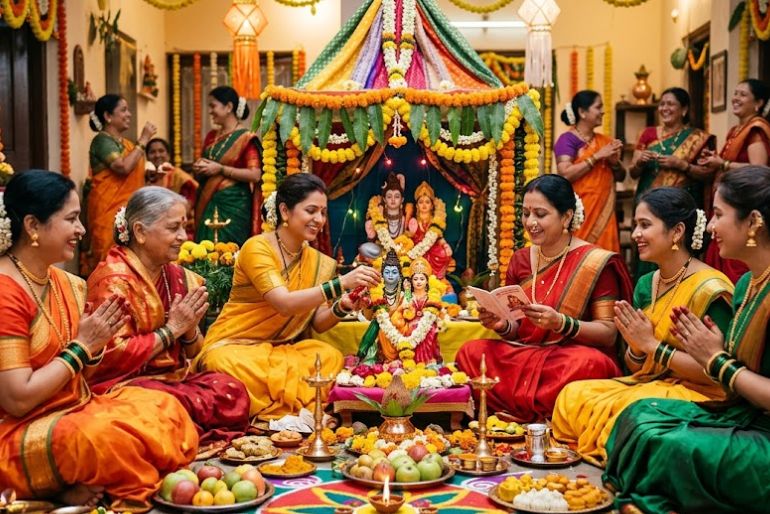
In Maharashtra, Mangalagaur or Mangala Gauri Vrat is a grand social and cultural festival. It is especially celebrated for a woman’s first year of marriage, which is known as Pahili Mangalagaur.
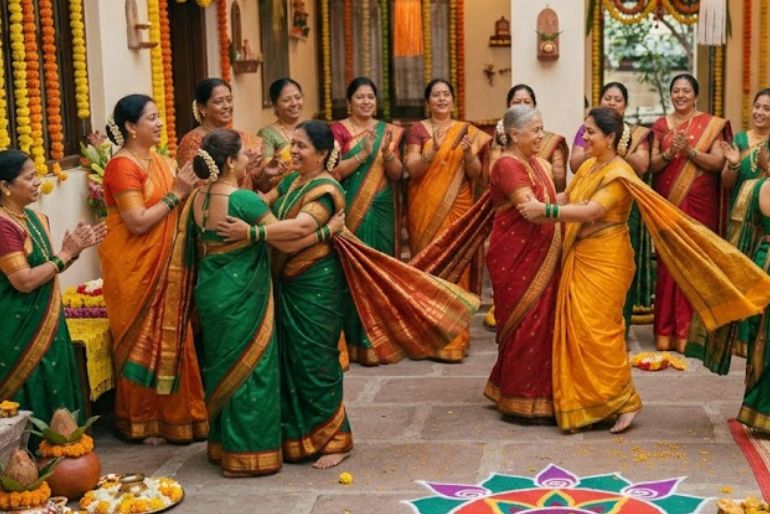
Women gather at night at the home of a newly married bride and stay awake all night. They play traditional folk games, dance, and sing devotional songs.
There are over 110 types of traditional folk games played, namely:
Fugdi: Women pair in twos, lock hands and swirl rapidly in circles. They make rhythmic breathing sounds while swirling.
Gathyan, Latya bai Latya and Nach Go Ghuma: Folk storytelling dances depict everyday sisterhood, household life and devotion.
Pinga: It is an energetic traditional Marathi folk dance.
Zimma: This is a rhythmic clapping dance which is performed in circles.
Special Maharashtrian dishes like Karanji, Puranpoli, Alu Vadi and Modak are prepared. The guests receive Oti Bharne gifts which consist of coconut, rice, haldi-kumkum and green bangles.
Step-By-Step Mangala Gauri Puja Procedure
Altar Setup
Clean the puja area thoroughly and place a wooden platform facing East and North. Now drape it with an unstitched red cloth and draw a rangoli around it using turmeric and rice flour.
Placing Kalash
Place a mound of raw rice on the wooden platform. Keep a Kalash filled with water, betel nut, coin, and mango leaves topped with a coconut. You may or may not wrap the coconut with red cloth. Place the clay idol of Goddess Mangala Gauri with Ganesha beside it.
Ganesh Puja
Start by worshiping Lord Ganesha first with akshata, chandan, and flowers. Make sure you do not forget durva grass to avoid all obstacles.
Goddess Gauri Puja
Bathe the Goddess with water and Panchamrit before placing it. Apply haldi, kumkum and chandan. Offer the Solar Shringar items, red chunri and flowers.
Offering the Solah Samagri
Present the 16 wheat-flour dough lamps (diye) filled with pure ghee. Some people also offer 16 sets of betel nuts, fruits, cloves, flowers and cardamom.
Katha Path & Aarti
Light all the lamps. Read and listen attentively to the Mangala Gauri Vrat Katha. Conclude with the Mangala Gauri Aarti.
Fast Completion
Offer Naivedya to the goddess. Share prasadam with family members and elders to seek their blessings. Break the fast with sattvik food in the evening.
Summing Up
Mangala Gauri Vrat is a sacred Hindu fast dedicated to Goddess Gauri observed by every married woman. It is one of the important rituals, especially in Maharashtra. It is observed during the holy month of Shravan for marital bliss.