
Agra is often introduced through the Taj Mahal, but reducing the city to a single monument barely scratches the surface of what it has to offer. Once an important center of the Mughal Empire, Agra is filled with magnificent forts, centuries-old tombs, bustling markets, traditional food, and neighborhoods shaped by generations of history. This Agra Travel Guide brings together everything you need to plan a visit, from the city’s most important monuments and local food to accommodation, transportation, the best time to visit, and practical travel tips. Whether you are visiting for a quick weekend or including Agra in a longer North India itinerary, there is plenty to explore beyond the Taj Mahal.
Why Visit Agra?
Few cities in India combine Mughal history and monumental architecture quite like Agra. While the Taj Mahal remains its biggest attraction, the city is also home to imposing forts, elaborate tombs, historic markets, riverside landmarks, and a food culture that has developed over generations. Several major attractions are located relatively close to one another. Agra is also well connected to Delhi and other North Indian cities by rail and road, making it suitable for both short trips and longer itineraries covering destinations such as Mathura, Jaipur, and Fatehpur Sikri.
Best Places To Visit In And Around Agra
1. Taj Mahal
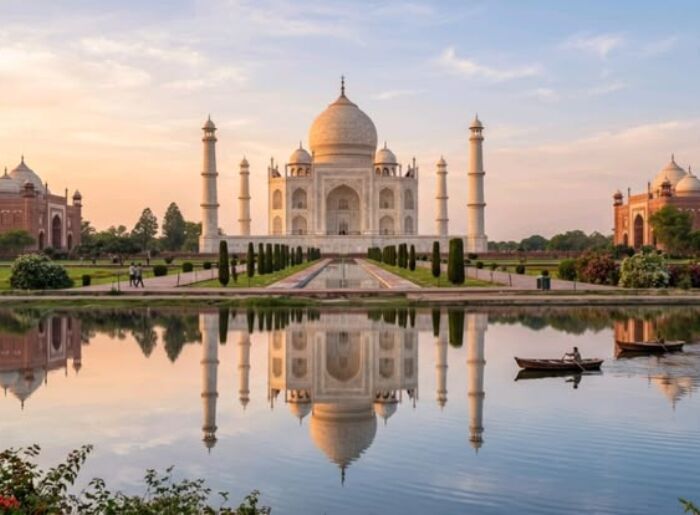
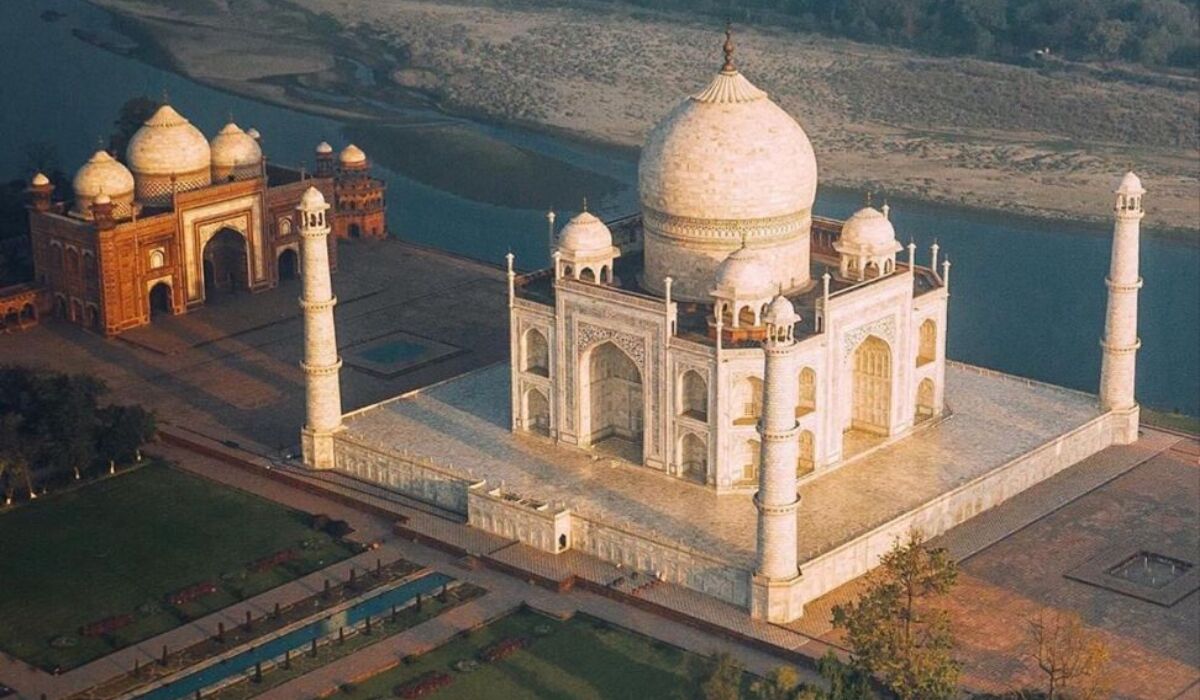
The Taj Mahal is Agra’s most famous landmark and one of the best-known monuments in India. Mughal emperor Shah Jahan commissioned the mausoleum in memory of his wife Mumtaz Mahal. Today, the complex is a UNESCO World Heritage Site and one of the finest surviving examples of Mughal architecture. Its white marble exterior, pietra dura inlay work, symmetrical gardens, reflecting pools, calligraphy, and intricate decorative details make the monument worth exploring slowly rather than treating it as a quick photo stop. Visiting around opening time can offer a different experience than the busier hours later in the day.
- Address: Dharmapuri, Tajganj, Agra, Uttar Pradesh 282001
- Timings: Opens 30 minutes before sunrise and closes 30 minutes before sunset. Closed to regular visitors on Fridays. Book your visit in advance if needed, and check for any entry limits before you go.
- Ticket Price:Indian Citizens: INR 50, Foreign Tourists: INR 1,100, Main Mausoleum: Additional INR 200
2. Agra Fort
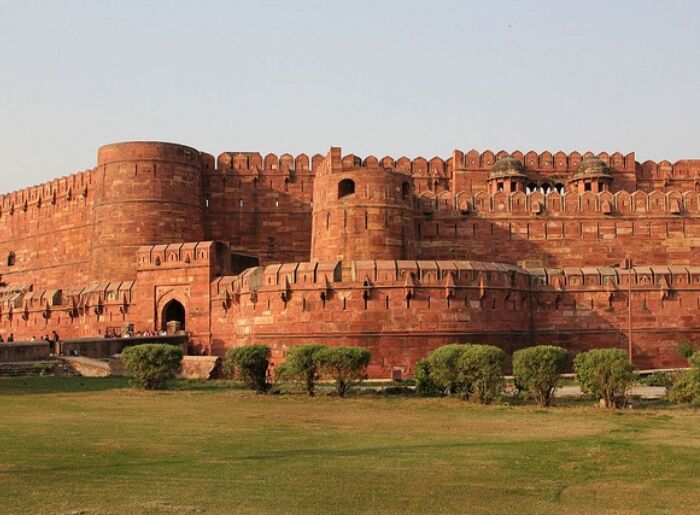
Located a short distance from the Taj Mahal, Agra Fort provides a fascinating look at the political and architectural history of the Mughal Empire. The UNESCO World Heritage Site served as an important imperial residence and stronghold under successive Mughal rulers. Behind its massive red sandstone walls are palaces, audience halls, courtyards, mosques, and other royal structures. One of its best-known sections is Musamman Burj, associated with Shah Jahan’s final years and offering views toward the Taj Mahal across the Yamuna.
- Address: Rakabganj, Agra, Uttar Pradesh 282003
- Timings: Sunrise to sunset
- Ticket Price: Indian Citizens: INR 50, Foreign Tourists: INR 650
3. Fatehpur Sikri
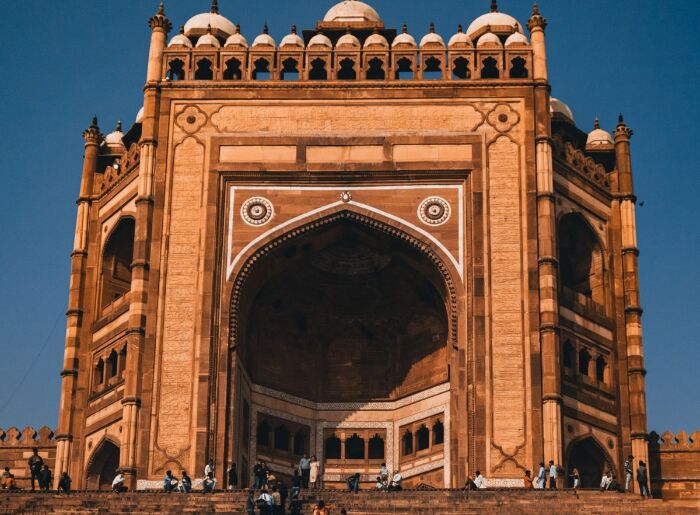
Located roughly 36 to 40 kilometers from Agra, Fatehpur Sikri was established by Emperor Akbar and served as the Mughal capital for a relatively short period. Today, the remarkably preserved complex is a UNESCO World Heritage Site and one of the most important historical excursions from Agra. Visitors can explore structures such as Buland Darwaza, Jama Masjid, Panch Mahal, the Tomb of Salim Chishti, and the palace complexes within the historic city. Because of its distance from central Agra and the size of the complex, Fatehpur Sikri is better planned as a dedicated stop than squeezed between several attractions in the city.
- Address: Fatehpur Sikri, Agra District, Uttar Pradesh 283110
- Timings: Sunrise to sunset
- Ticket Price: Indian Citizens: INR 50, Foreign Tourists: INR 610
4. Itimad-ud-Daulah
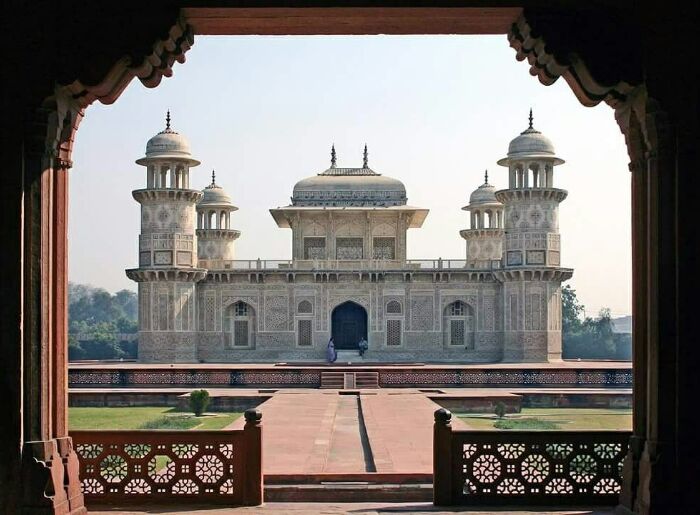
Often nicknamed the Baby Taj, the Tomb of Itimad-ud-Daulah is one of Agra’s most intricate Mughal monuments. Nur Jahan commissioned the tomb for her father, Mirza Ghiyas Beg, and it was constructed in the early 17th century. Its extensive use of white marble, delicate lattice screens, floral decoration, and colorful pietra dura work represented an important development in Mughal architecture before the construction of the Taj Mahal. Its smaller scale and riverside setting also create a different experience from Agra’s larger monuments.
- Address: Moti Bagh, Agra, Uttar Pradesh 282006
- Timings: Sunrise to sunset
- Ticket Price: Indian Citizens: INR 30, Foreign Tourists: INR 310
5. Akbar’s Tomb
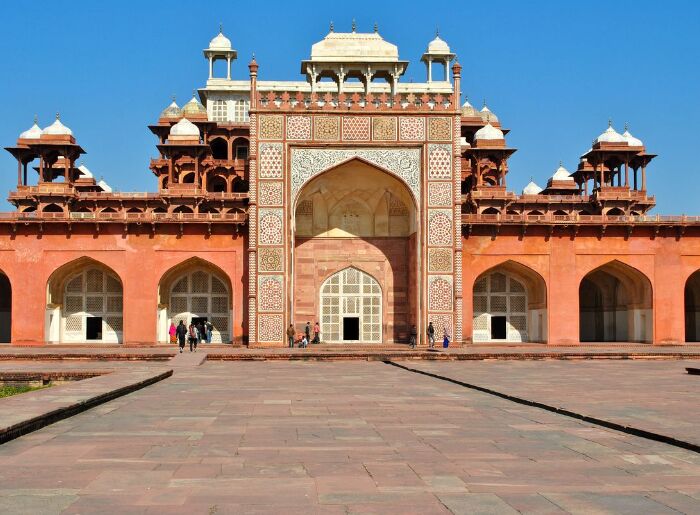
Akbar’s Tomb is located at Sikandra, around 10 kilometers from central Agra. Akbar initiated the construction of his own mausoleum, which was later completed during the reign of his son Jahangir. The complex combines red sandstone, marble detailing, geometric decoration, monumental gateways, and landscaped gardens. The surrounding grounds are also known for blackbuck. Compared with the Taj Mahal and Agra Fort, Sikandra can provide a quieter stop for travelers on a brief visit while still offering an important look at Mughal architecture.
- Address: Sikandra, Agra, Uttar Pradesh 282007
- Timings: Sunrise to sunset
- Ticket Price: Indian Citizens: INR 30, Foreign Tourists: INR 310
Agra’s Street Food Culture

Agra’s food is another reason to spend time beyond its monuments. The city is particularly known for sweets, snacks, hearty breakfasts, and Mughlai dishes, with markets and older neighborhoods providing plenty of opportunities to sample local specialties.
- Bedai and Aloo Sabzi: A popular breakfast of crisp, fried bread served with a flavorful potato curry.
- Petha: Agra’s signature sweet made primarily from ash gourd and sold in several varieties.
- Dalmoth: A crunchy savory mixture typically made with lentils, nuts, spices, and other ingredients.
- Chaat and Dahi Bhalla: Popular street snacks available across the city’s markets and food streets.
- Mughlai Cuisine: Kebabs, biryani, korma, and other rich preparations reflect the city’s long association with Mughal culinary traditions.
- Popular Food Areas: Sadar Bazaar, Kinari Bazaar, and areas around Jama Masjid are popular places to explore local food alongside shopping and sightseeing.
Wondering what to eat beyond Agra’s famous petha? This Agra street food guide covers the local dishes and flavors worth trying during your trip.
Where To Stay In Agra
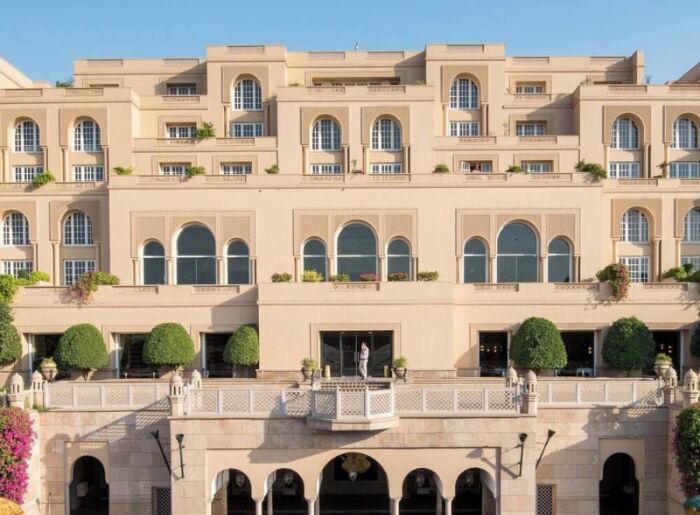
Where you stay in Agra can have a noticeable impact on a short stopover. Travelers prioritizing the Taj Mahal may prefer the eastern side of the monument, while Fatehabad Road and Taj Nagri provide a larger concentration of hotels, restaurants, and tourist facilities. Other neighborhoods work better for railway access or longer stays.
Taj East Gate And Shilpgram
This is one of the most convenient areas for travelers who want quick access to the Taj Mahal, particularly those hoping to visit around opening time. The neighborhood also has restaurants, cafés, guesthouses, and hotels catering heavily to visitors.
- Recommended Hotels: The Oberoi Amarvilas, Taj Hotel & Convention Center, Joey’s Hostel Agra
Tajganj, Fatehabad Road And Taj Nagri
This broader tourist corridor contains one of Agra’s largest concentrations of hotels. Travelers can choose from luxury properties, international hotel chains, mid-range hotels, restaurants, shops, and other tourist services. The area works particularly well for families, couples, business travelers, and visitors who want modern accommodation while remaining relatively close to the Taj Mahal.
- Recommended Hotels: ITC Mughal, Courtyard by Marriott Agra, DoubleTree by Hilton Agra, Radisson Hotel Agra, Crystal Sarovar Premiere
Agra Cantt And Sadar Area
Staying around Agra Cantonment can be practical for travelers arriving or departing by train. Agra Cantt is the city’s principal railway station, while the wider area provides access to taxis, auto-rickshaws, restaurants, shops, and Sadar Bazaar. This part of the city can be particularly useful for short stays or travelers prioritizing railway connectivity over walking access to the Taj Mahal.
Central Agra And Rakabganj
Central Agra provides easier access to attractions such as Agra Fort as well as older markets and commercial areas. Travelers interested in combining heritage sightseeing with markets and everyday city life may find this part of Agra more convenient than the hotel-heavy Taj tourist corridor. The Grand Imperial is one of the established heritage properties in central Agra and is a good choice for travelers seeking a stay with a more historic character.
Dayalbagh And Kamla Nagar
Dayalbagh and Kamla Nagar provide a more residential experience away from the busiest tourist areas around the Taj Mahal. These neighborhoods can work for families, longer stays, and travelers who do not mind traveling farther for the city’s major monuments. They also provide access to everyday restaurants, shops, and local neighborhoods rather than being entirely centered around tourism.
Looking for an indulgent stay near the Taj Mahal? Discover 10 of the best luxury hotels in Agra for a regal stay in the city.
Best Time To Visit Agra
The best time to visit Agra depends on your tolerance for heat and crowds. For most travelers, the cooler months offer the best conditions for spending extended periods outdoors at monuments such as the Taj Mahal, Agra Fort, and Fatehpur Sikri.
- October to March: This is generally the most comfortable time to visit Agra. October and March can still be fairly warm during the daytime, while December and January bring much cooler mornings and evenings. This is also the busiest period for tourism, so accommodation can be more expensive.
- April to June: Summers are extremely hot, particularly during May and June, when daytime temperatures can cross 40°C. Outdoor sightseeing is best restricted to mornings and later afternoons whenever possible.
- July to September: The monsoon brings rainfall, humidity, and greener surroundings. Visitor numbers can be lower than during the peak winter season, although rain may occasionally affect outdoor sightseeing plans.
How To Reach Agra
Agra is well connected by rail and road and also has limited air connectivity. Travelers arriving from Delhi have particularly convenient options, making Agra possible as either a standalone trip or part of a larger North India itinerary.
By Air
Agra Airport operates a limited number of domestic services, with routes and schedules subject to change. Travelers should check current flight availability before planning their trip around a direct flight to Agra. Indira Gandhi International Airport in Delhi is another major option, roughly 220 to 230 kilometers from Agra, depending on the route. Delhi offers significantly wider domestic and international connectivity, after which travelers can continue to Agra by train, taxi, bus, or private vehicle.
By Train
Agra Cantonment, commonly known as Agra Cantt, is the city’s principal railway station and provides connections with Delhi, Jaipur, Mumbai, Kolkata, Lucknow, Varanasi, and numerous other Indian cities. Several fast trains operate along the Delhi-Agra corridor, with some services completing the journey in roughly 1.5 to 2 hours. Train schedules and stopping patterns can change, so travelers should check current railway information before booking.
By Road
The Yamuna Expressway provides one of the fastest road connections between Delhi NCR and Agra. Depending on the starting point and traffic conditions, the drive from Delhi generally takes about 3 to 4 hours. Agra also has road connections toward Mathura, Jaipur, Gwalior, Lucknow, and other destinations. Government and private buses, taxis, and private vehicles provide several options for travelers arriving by road.
Getting Around Agra
Auto-rickshaws, e-rickshaws, taxis, and app-based cabs are commonly used for getting around Agra. Travelers staying near the Taj Mahal may be able to walk to nearby restaurants, hotels, and tourist facilities, though other major attractions are best reached by road. With the monuments spread across different parts of the city, grouping nearby attractions can reduce unnecessary travel. Fatehpur Sikri requires a separate road trip outside central Agra, while Sikandra is on the other side of the city. Traffic can increase significantly during weekends, holidays, and peak tourism periods, so leave extra time when traveling between attractions or heading to the railway station.
How Many Days Do You Need In Agra?
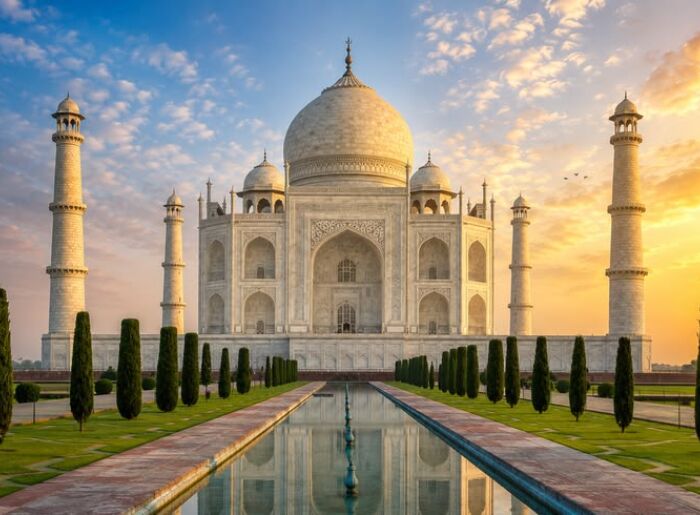
One full day can cover the essential Agra experience if you focus primarily on the Taj Mahal and Agra Fort, with one additional monument depending on your schedule. However, this makes for a fairly packed day. Two days provide a much more comfortable trip and allow time for the Taj Mahal, Agra Fort, Itimad-ud-Daulah, Sikandra, local markets, and Agra’s food scene. If you also want to explore Fatehpur Sikri without rushing, two to three days provide greater flexibility.
Travel Tips For Visiting Agra
Visiting the Taj Mahal around opening time can mean cooler temperatures and potentially smaller crowds, but remember that the monument is closed to regular visitors on Fridays. During the busy October-to-March season, book your accommodation in advance and purchase monument tickets through official channels whenever possible. It is also worth checking the latest opening hours and ticket prices before heading out, as these can change.
Comfortable footwear is essential since attractions such as Agra Fort and Fatehpur Sikri involve plenty of walking. During warmer months, carry water, sunscreen, sunglasses, and a hat, and keep some cash handy for smaller shops, street food stalls, markets, and local transportation. Make time to try Agra specialties such as petha, dalmoth, bedai, and Mughlai food, and leave some extra travel time during weekends, holidays, and peak tourist periods when traffic and crowds can be heavier.
Summing Up
Agra is much more than a quick stop for seeing the Taj Mahal. The city brings together some of India’s most important Mughal monuments, including Agra Fort, Itimad-ud-Daulah, and Akbar’s Tomb. At the same time, nearby Fatehpur Sikri adds another major historical site to the itinerary. Markets, traditional food, and neighborhoods beyond the main tourist corridor provide additional reasons to spend more time in the city.
A one-day trip can cover Agra’s biggest highlights, but two days provide a much more comfortable introduction to the city. Travelers adding Fatehpur Sikri or exploring Agra’s markets and food at a slower pace can consider two to three days. Choosing accommodation based on your itinerary, checking current monument information, and planning sightseeing around the weather can make exploring Agra considerably easier.