
As a culturally diverse country, India has never had a dearth of vibrant festivals. However, there are very few that celebrate women and womanhood. Raja Parba is one such festival. Celebrated widely in the Indian state of Odisha, Raja Parba is a four-day festival that celebrates fertility, earth, menstruation, and womanhood. It is also known as Mithuna Sankranti, and this year, it will be celebrated from June 14 to June 17, 2026. It typically takes place in mid-June as the monsoon season is on the cusp of arrival. As the land prepares to rejuvenate in the fresh rain and demonstrate the marvels of Earth’s fertility, Odisha gears up to celebrate womanhood as a metaphor for this fertility.
What Is Raja Parba And Why Is It Celebrated?
Raja Parba is a four-day fertility festival of Odisha. The name ‘Raja’ is derived from the Sanskrit word Rajaswala, which means ‘menstruating woman’. In an age where biological cycles like menstruation are stigmatized, Odisha, as a culture, has not only embraced it but also celebrated it and found a way to build a community around it. At its core, that’s what the festival is about – community and womanhood.
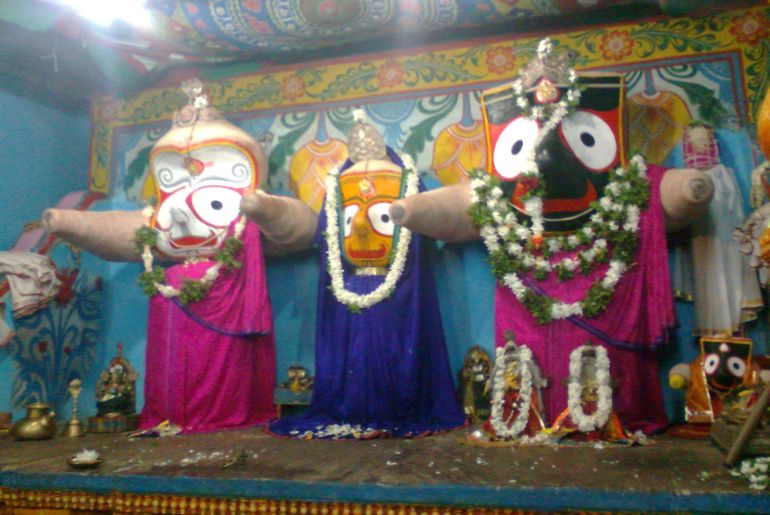
As per the folklore and local mythology of Odisha, Bhudevi, an incarnation of Mother Earth, is believed to menstruate each year during this period. Bhudevi is also considered the divine consort of Jagannath, who is an avatar of Lord Shiva. As such, a silver idol of Bhudevi alongside Lord Jagannath is worshipped for the duration of this festival in Puri.
Also Read: Puri-Konark Rail Line Project Gains Momentum; Set To Boost Tourism In Odisha
Four-Day Timeline And Rituals
Starting on Sunday, June 14, 2026, it will go on till Wednesday, June 17, 2026. Each day has its own unique significance. The four-day period marks a time of rest and rejuvenation for the soil before the heavy farming season begins. It honors the natural rest cycle of the soil. Following is the significance of each of the four days:
Day 0: Sajabaja, The Day Before, Or The Preparation Night
Families clean their homes and kitchens along with their grinding stones. All spices are ground in advance, as the stone is not to disturb the home or the land for the next 72 hours.
Day 1: Pahili Raja, The Awakening
Unmarried women and girls wake up prior to the break of dawn and anoint themselves with fragrant turmeric paste and oil, before taking a bath. They are not supposed to bathe or touch water sources for the next two days.
Day 2: Mithuna Sankranti, The Peak Celebration
This day marks the arrival of the monsoon, and all farming activities like plowing, planting, or anything else that hurts or scratches the soil remain suspended. It is a period of rest for the soil.
Day 3: Baasi Raja or Bhumi Dahana, The Final Rest
Also known as Bhudaaha, this is the final day of rest and relaxation for the women as well as the earth. Men play kabaddi outside in the village while the women rest.
Day 4: Vasumati Snana, The Purificatory Bath
On this final day, all restrictions are broken, and Bhudevi is given a bath. A grinding stone that represents the Earth is bathed in turmeric water and adorned with vermillion or Sindoor. Fruits and flowers are also offered to it as a marker of the arrival of the new fertility and agricultural season.
Also Read: Inside Odisha’s 2,300-Year-Old Elephant Statue Find
What Are The Rules For Rest During Raja Parba?
This period is for rest and relaxation of the Bhudevi. It is then extended to the Earth and women. For the Earth, all activities like digging, plowing, planting, cutting of trees, or any activity that hurts or scratches the soil grind to a standstill.
The remarkable custom uniquely parallels the modern concept of crop rotation, a prominent practice in sustainable agriculture. The soil in this practice is also allowed to rest in order to let it regenerate its nutrients.
Also Read: Top 9 Things To Do In Odisha
What Do Women Do During Raja Parba?
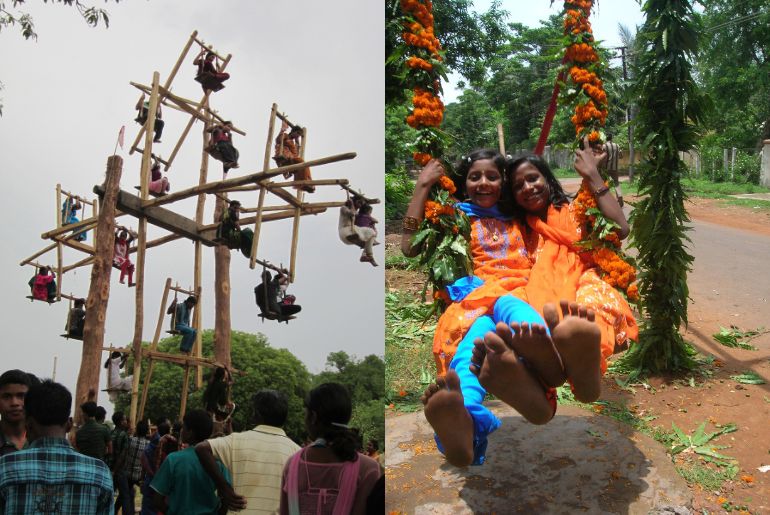
Women and children also avoid walking barefoot on the ground. They wear simple footwear in order to avoid disturbing the ‘menstruating’ earth. During these days, they are completely relieved of housework, kitchen chores, cooking, and any physical exertion.
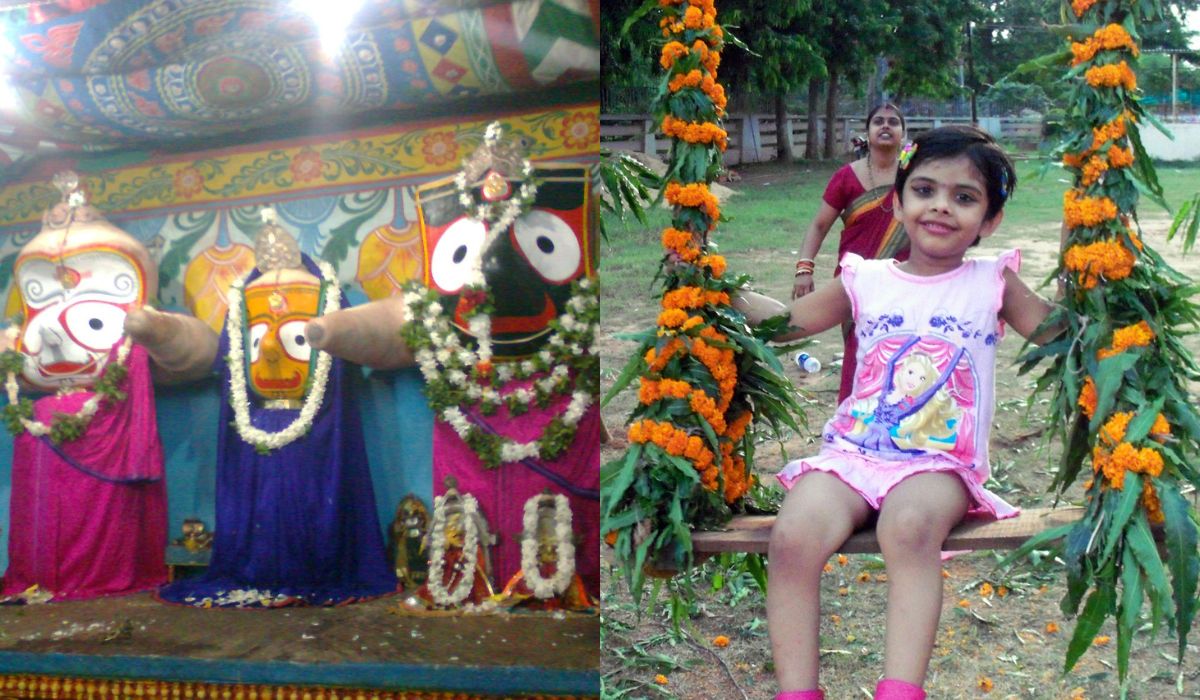
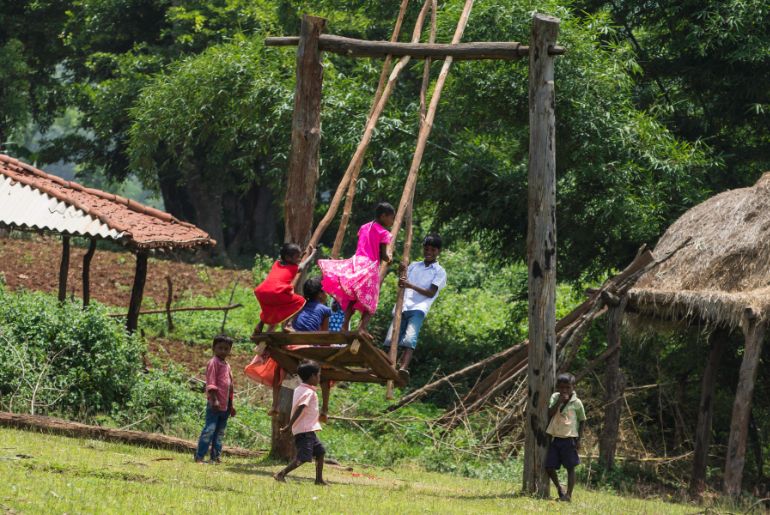
A variety of Doli are also set up. These are swings made from different materials and adorned with marigolds. There are three types of Dolis or swings: Ram Doli, Charki Doli, and Pati Doli. Ram doli is a swing where multiple people can sit, akin to the modern family swing. Charki Doli is a rudimentary Ferris wheel made from bamboo, and Pati Doli features a wooden ‘pati’ seat.
All of these are tied to sturdy trees like Banyan, Mango, or Peepal. Typically, young girls sing improvised songs known as ‘Raja Gita’ while swinging on the doli.
Also Read: 5 Interesting Temples In Odisha
What Traditional Food Items Are Made During Raja Parba?
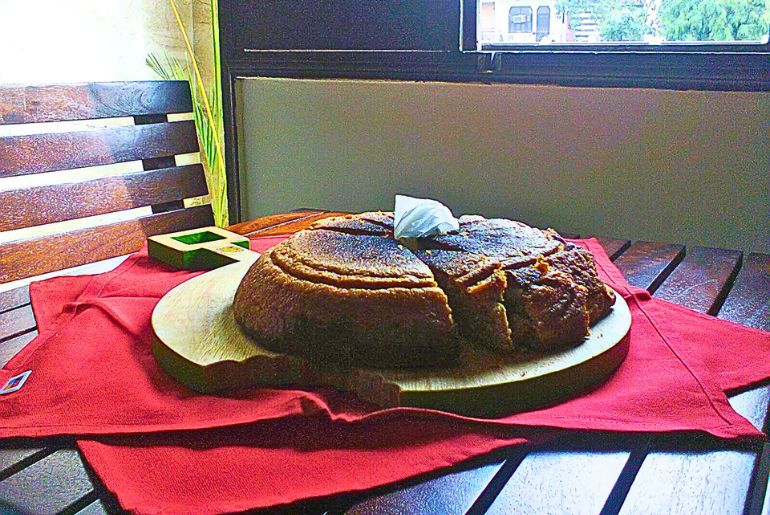
A number of culinary masterpieces are whipped up during this festival. The star of the show, however, is the Podapitha. It is a rich, slow-cooked baked rice cake that is sweetened with jaggery, cardamom, coconut, and ginger.
It is traditionally baked overnight over a dying charcoal flame, giving it a distinctively sweet and smoky flavor profile and a charred crust that is to die for. Other sweets like the Chakuli Pitha and Manda Pitha, as well as seasonal fruits like litchees and mangos, also abound.
The Raja Paan is also another important culinary aspect of the festival. A betel leaf stuffed with a sweet, aromatic filling consisting of dry fruits and mint.
Summing Up
Raja Parba is not just a festival; it is an eco-conscious and progressive celebration of womanhood from before progressivism was made cool and trendy by social media. This incredible cultural statement destigmatizes purely natural biological cycles and seamlessly integrates them into their life. As the skies of Odisha echo with the laughter of young girls on the Raja doli, and as the petrichor from the fresh rain on dry earth emanates, Odisha’s cultural legacy continues to boast one of the most eco-conscious and progressive festivals in the country. The festival is proof that even in ancient times, India had cultures that harboured very progressive attitudes toward menstruation.