
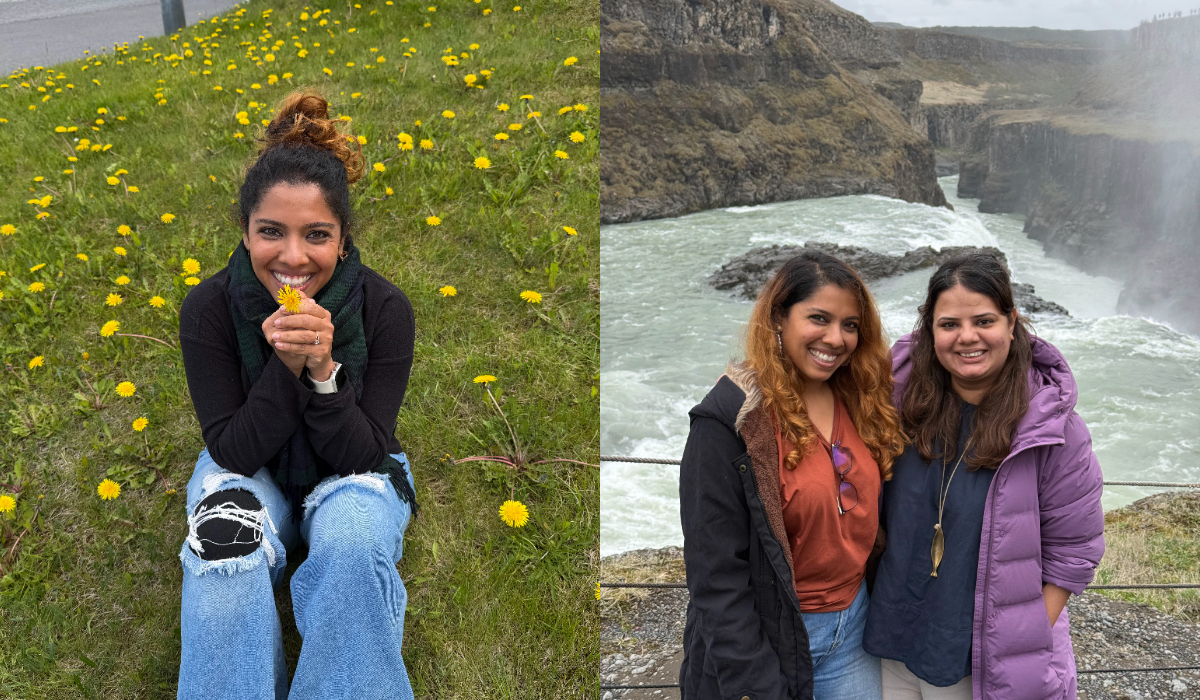
When most people think of Iceland, they think of the Northern Lights. I, Natasha Monteiro, did too.
But when I eventually booked my trip to Iceland, I chose to visit in early June – a time when Iceland is in its summer season. Summer in Iceland spans June, July, and August and brings near-24-hour daylight. This phenomenon, known as the ‘Midnight Sun’, is a globally known phenomenon and thousands of tourists visit the country to specifically witness this phenomenon. During this time, temperatures average at about 10°C to 15°C, and the opening of the rugged Highland roads making it the perfect weather to explore the country.
Here’s the only Iceland summer itinerary you need to explore this beautiful country.
A Few Things To Know Before Visiting Iceland In Summer
- Summer in Iceland means incredibly long daylight hours. In early June, the sun barely sets, creating the phenomenon known as the ‘Midnight Sun’. The golden light seems to stretch endlessly, making even a late-evening walk feel like it’s happening mid-noon.
- Iceland’s weather has a reputation for being unpredictable. You can witness a mix of sunshine, wind, clouds, and rain even if you go in June.
- If you’re traveling in summer, don’t expect to see the Northern Lights. The extended daylight hours make aurora viewing virtually impossible during this season. If seeing the Northern Lights is your main objective, you’ll need to plan a winter trip instead.
- Most travelers prefer exploring Iceland using a rental self-drive car. This makes exploring the country at one’s own pace quite easy.
Note that during my trip, I did not make use of self-drive rental cars and the itinerary instead depends on the pre-booked trips and group excursions that can be booked on travel platforms online.
Day 1: Settling Into Reykjavik
After arriving in Iceland, I deliberately kept the first day light.
Reykjavik, Iceland’s charming capital, is compact enough to explore on foot and makes for a wonderful introduction to the country. In fact, your flight lands in Reykjavik, making it the first city you practically visit when you enter Iceland.
Iceland’s time is exactly 5 hours and 30 minutes behind India Standard Time (IST). Also note that, since Iceland does not observe Daylight Saving Time, this time difference remains the same year-round. For example, if the time in Iceland is 12:00 PM, then it would be 5:30 PM in India.
Reykjavik is incredibly pretty, with colorful houses, quirky cafés, public art installations, and views of the sea. There’s a calmness to Reykjavik that immediately puts you at ease. The city is compact enough to be explored on foot, so you can easily explore the city at your own pace without missing out on much.
Instead of rushing into sightseeing the very moment I landed into Iceland, I spent the day wandering through the city, adjusting to the time zone, and getting a feel for Icelandic life.
Day 2: Exploring The Golden Circle
This classic route showcases some of the country’s most famous natural attractions and serves as an excellent introduction to Iceland’s geological wonders. No first-time Iceland itinerary feels complete without the Golden Circle! As a first-timer in Iceland, this is probably the first trip you should take in Iceland.
The day included dramatic waterfalls, geothermal activity, bubbling hot springs, and landscapes that seemed almost otherworldly. For about 7 to 8.5 hours, this day trip takes you across the Geysir area, Gullfoss Waterfall, and Thingvellir National Park. What struck me most was how quickly the scenery changed. One moment you’re standing beside a powerful waterfall, and the next you’re surrounded by steaming geothermal fields.
Day 3: Whale & Puffin Watching – My Favorite Experience
If I had to pick one highlight from the entire trip, this experience from Day 3 would be it!
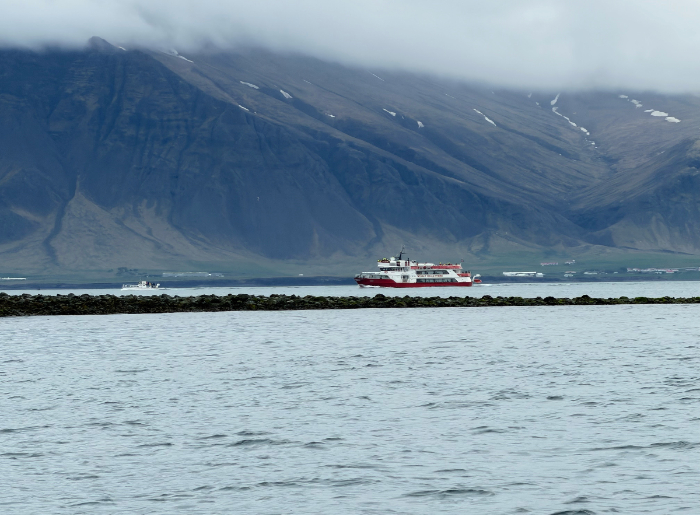
Our whale and puffin watching excursion departed from Reykjavik harbor and quickly became one of the most magical wildlife experiences I’ve ever had. There are two ways in which you enjoy this experience. One is by opting for a larger boat with features like an inner cabin, refreshments, etc, and the other is by going for a smaller, dingy-like boat. The former is more comfortable as it protects you from the chilly, windy weather while the latter does not do so. While the larger boat is slightly expensive, the dingy-like boat is comparatively affordable.
There’s something deeply humbling about seeing whales in their natural habitat. Watching these gentle giants emerge from the water, glide effortlessly through the ocean, and disappear beneath the surface left me completely mesmerized.
Neither photographs nor videos capture that feeling of joy, but it is one of those travel moments where you simply stop and stare in awe.
Day 4: Snorkeling Between Continents
How often can you say that you’ve snorkeled between two tectonic plates? Well, this Iceland summer itinerary made me tick that experience off my bucket list, and needless to say, it was so worth it!
At Silfra, located within the UNESCO-recognized Thingvellir National Park, visitors can float through crystal-clear glacial water in a fissure that separates the North American and Eurasian tectonic plates. Here, the water is exceptionally clear – and exceptionally chilly! In fact, it is one of the only places in the world with a water clarity of about 100 meters!
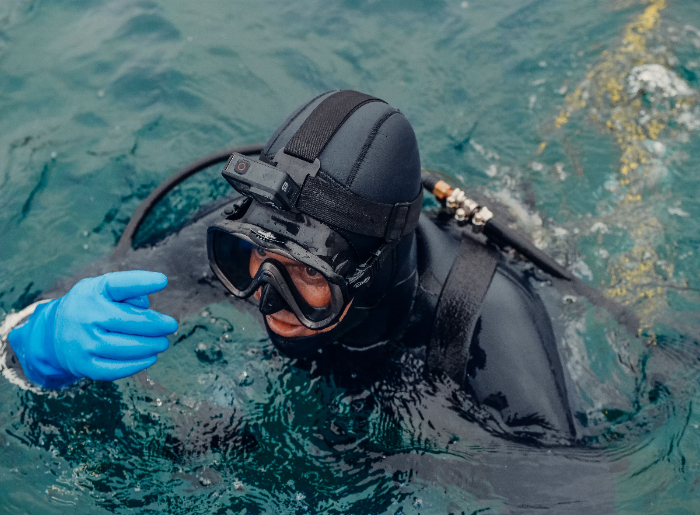
Still, drifting through this underwater canyon felt surreal and unlike anything I’d done before.
It’s one of those uniquely Icelandic adventures that justifies traveling halfway around the world. However, here are a few things that you must take note of:
The activity is not suitable for:
- Children under 12 years
- Pregnant women
- People over 120 kg
- People under 4 ft 9 in or 150 cm
- People over 6 ft 6 in or 200 cm
- People under 45 kg
Along with snorkeling between continents, you can also choose to scuba dive. However, to do so, you’ll be required to have a PADI (Professional Association of Diving Instructors) certification. It is the world’s most recognized scuba credential, allowing you to independently rent gear and dive anywhere in the world.
Day 5: Into The Lava Cave
By the fifth day, I felt like I had explored Iceland from above ground and under the sea, so now it was time to head beneath the land surface – isn’t it the only logical next step?
With a landscape suitable for a Stranger Things set, the Raufarhólshellir Lava Tunnel remains one of the most accessible natural wonders of Iceland. This tour easily takes up three to four hours, but it is definitely worth it. And with transfers from Reykjavik covered, it becomes even more convenient.
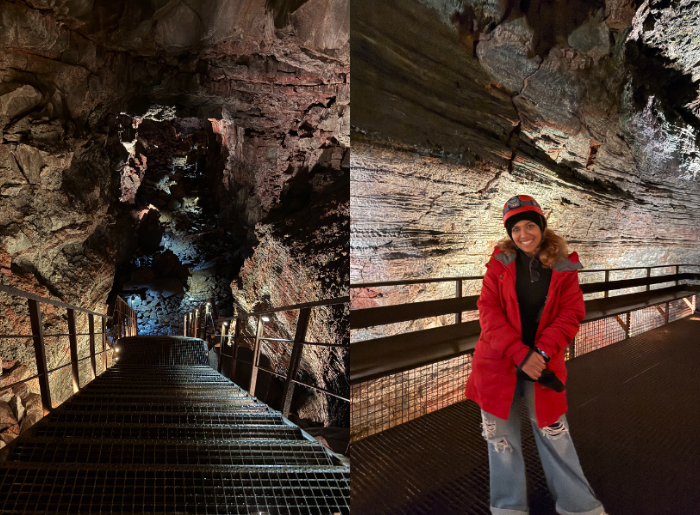
The cave walls display striking colors and textures, courtesy of the volcanic activity. And the result is a visually stunning place that felt more like another planet than Earth. For anyone interested in geology, it’s a must-do experience.
Day 6: The Spectacular South Coast
Iceland, for us, felt like a gift that kept giving. And when Day 6 arrived, we were fully convinced.
I prepped for a long day – but an exciting one – as we stepped out to explore Iceland’s South Coast. This was one of the longest days of my Iceland summer itinerary, but definitely one of the most rewarding.
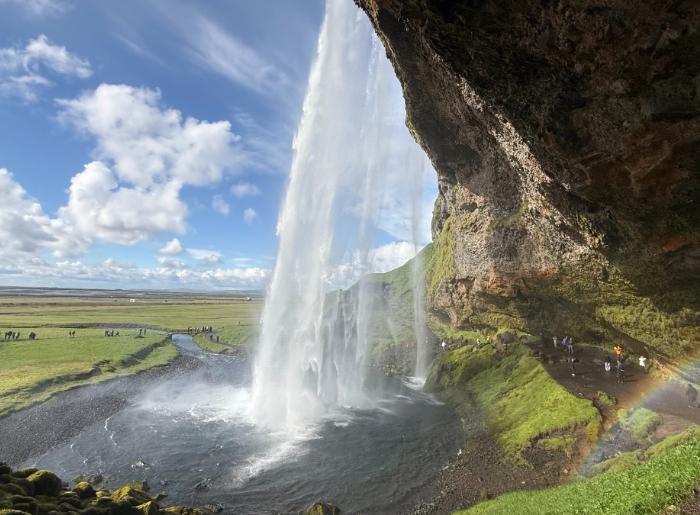
The South Coast single-day tour took us from Reykjavik in a luxury minibus across volcanic landscapes, stopping at attractions like the Seljalandsfoss and Skogafoss waterfalls, the black-sand beach of Reynisfjara, and the Solheimajökull glacier. The Skogafoss waterfall stood out for me for its sheer beauty – it is one of the few waterfalls that lets you fully walk behind it!
Just when I thought I’d seen the most impressive landscape of the day, another one would appear around the corner; every stop felt postcard-worthy!
Day 7: Discovering The Snæfellsnes Peninsula
The Snæfellsnes Peninsula is often referred to as “Iceland in Miniature” because it perfectly condenses the country’s wildly diverse landscapes into a compact, easily explorable stretch. On this day trip, mountains, lava fields, fishing villages, dramatic coastlines, volcanic formations, and glacier views all coexist. This makes a Snæfellsnes Peninsula day trip perfect for travelers with limited time.
Day 8: Relaxing At The Sky Lagoon
After an eventful day (and an eventful week), it was time to let loose in nature’s bounty. And what better way to do so than relax at the Sky Lagoon?
The Sky Lagoon is a world-famous geothermal spa in southwestern Iceland. The waters here are milky-blue and rich with silica. Soaking in the warm mineral-rich waters while surrounded by volcanic landscapes honestly felt like the perfect way to end my Iceland trip.
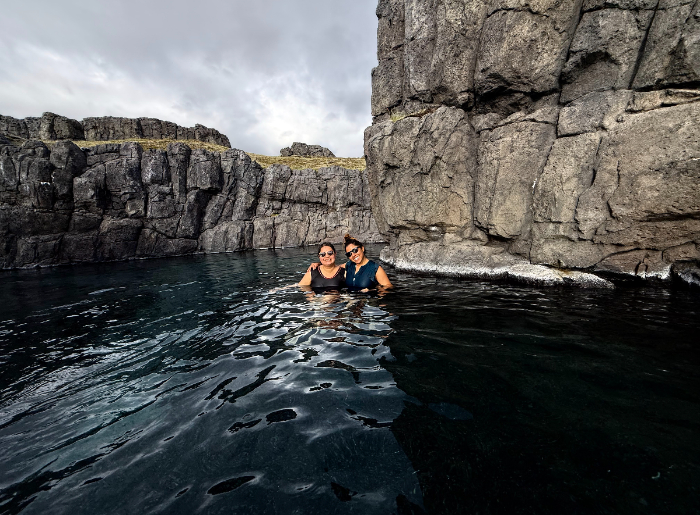
The Sky Lagoon 7-Step Ritual (also known as the Skjól Ritual) is a particularly famous experience that I think you must definitely try here. It is a traditional Icelandic spa journey designed to alternate between hot and cold temperatures to detoxify, exfoliate, and rejuvenate the body. It typically takes 30 to 45 minutes to complete .
The seven steps include:
1. Laug (The Lagoon): Your journey begins by stepping into the warm, mineral-rich, geothermal waters of the main lagoon. The water is maintained at 38 to 40°C (100–104°F) and provides stunning, panoramic views of the North Atlantic Ocean.
2. Kuldi (The Cold Plunge): To invigorate your senses and boost circulation, you leave the tranquil warmth of the lagoon and step into the cold plunge pool (about 5°C or 41°F). This quick, intense contrast shocks the system awake.
3. Ylur (Ocean-View Sauna): You then warm up in the traditional, turf-style sauna. There are large floor-to-ceiling windows to give you the most gorgeous, sprawling views of the sea as you sweat out toxins.
4. Súld (Cold Mist): Cool down with a crisp, refreshing mist that rebalances your body temperature.
5. Mýkt (Sky Body Scrub): Exfoliate your skin in a dedicated room using the signature Sky Body Scrub. This mixture is typically formulated with nourishing ingredients like almond oil and sesame seed oil.
6. Gufa (The Steam Room): Head into the steam bath to open your pores. The heat allows the oils from the scrub to fully penetrate your skin, leaving it feeling remarkably soft.
7. Saft (The Elixir): The ritual concludes with a wholesome, refreshing wellness elixir. This is typically a small shot of juice made from local Icelandic crowberries (krækiber), which stimulates the palate.
Some travelers dismiss the Sky Lagoon as overly touristy, but I thoroughly enjoyed it and I know you’d enjoy it!
Also Read: Monkeys, Temples & 4 Years of Waiting: What My Epic 4-Day Hampi Adventure Looked Like
Food & Drinks In Iceland
One thing that genuinely surprised me about Iceland is how expensive food and drinks are. Even by European standards, Iceland is quite expensive!
That said, the quality more than justifies the price. Across restaurants, cafés, and even casual eateries, the food was consistently exceptional. The ingredients are incredibly fresh, portions are generous, and there’s a strong emphasis on quality produce. I was particularly impressed by the organic, grass-fed meat, which was among the best I’ve ever tasted.

But even if you don’t consume meat, Iceland has got you covered. Vegetarian and vegan travelers are also well catered to, with most restaurants offering thoughtful and varied plant-based options.
And the coffee? Genuinely impressive! Whether it was a neighborhood café in Reykjavik or a stop during a day tour, I rarely had a bad cup of coffee.
The downside, of course, is the bill. Even a simple breakfast of eggs and two coffees can set you back thousands of rupees – even at a relatively casual restaurant. Dinner costs can climb even higher, especially if drinks are involved.
Nightlife In Iceland
Speaking of drinks, alcohol is where Iceland can really shock most first-time visitors. Cocktails and spirits come with eye-watering price tags. For this reason, many travelers make use of the duty-free stores upon arrival. Despite the prices, Iceland has a surprisingly vibrant nightlife scene.
Reykjavik in particular stands out with lively cocktail bars, craft beer spots, music venues, and clubs packed with both locals and tourists. The city’s nightlife has a fun, energetic atmosphere, and if your budget allows for a few expensive drinks, it’s well worth experiencing at least once.
Also Read: Rapids, Revelations & River Songs: A Day of Rafting in Rishikesh
A Tip That Saved Our Trip
One mistake many travelers make is underestimating Iceland’s weather. Luckily, I have a tip for you that might just prove super useful to you.
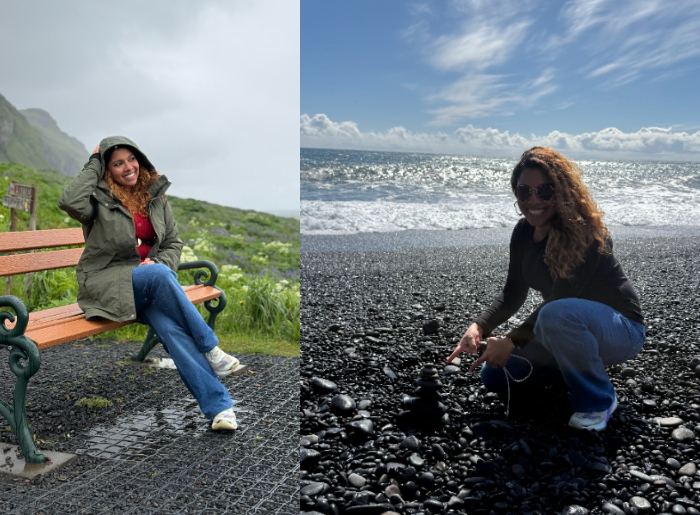
For visitors arriving from warmer countries, conditions can be surprisingly cold, wet, and windy, even during Icelandic summers. Which is why having good quality winter gear can be life-saving! In Reykjavik, we came across ‘Iceland Covers’, a rental store offering insulated jackets, snow pants, hiking shoes, and other winter gear.
Instead of purchasing expensive equipment and gear you’ll likely use only once, you can simply rent what you need.
For travelers trying to pack light, or those who realize too late that their wardrobe isn’t Iceland-ready, this is an absolute lifesaver.
Also Read: From Sushi to Sakura: How A 2019 Trip To Japan Stole My Heart and Changed My Soul
Final Thoughts
Iceland exceeded every expectation I had.
View this post on Instagram
In just one trip, I could snorkel between tectonic plates, explore lava caves, spot whales and puffins, and witness the Midnight Sun, all while belting some of the most delicious food I’ve ever had!
If you’re considering visiting Iceland in summer, don’t spend too much time worrying about what you might miss – like the Northern Lights. Instead, embrace what summer does offer: endless daylight, accessible roads, vibrant landscapes, incredible wildlife, and a sense of freedom that’s difficult to find elsewhere!