

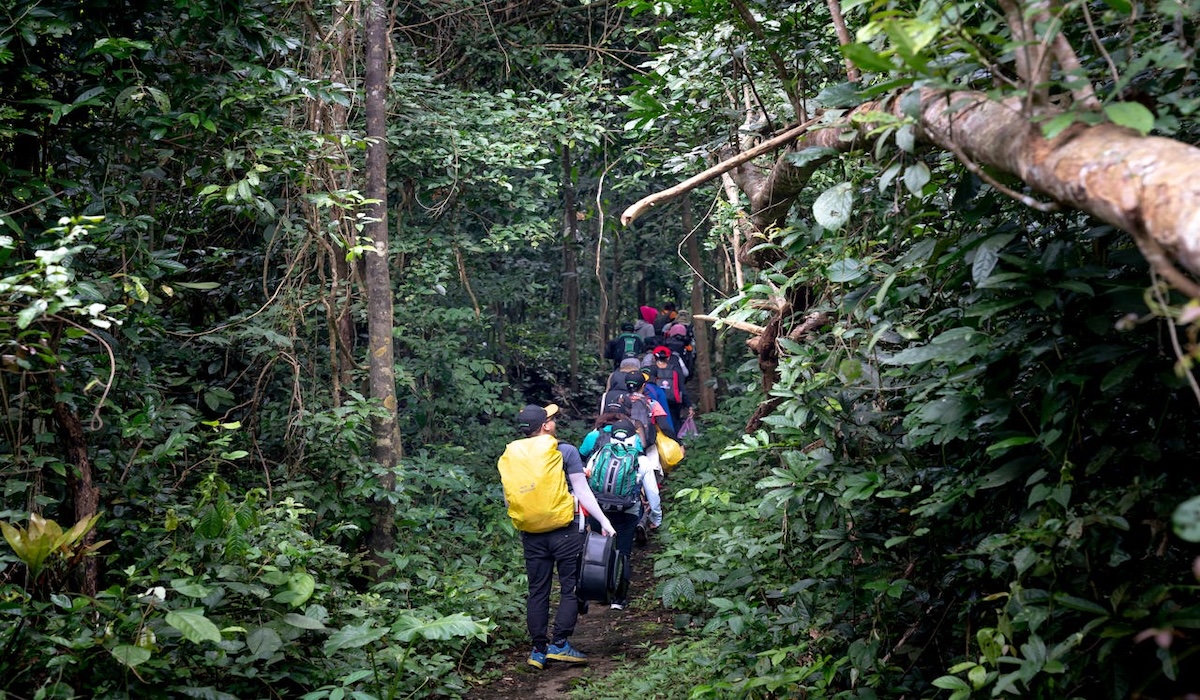
When we talk about Karnataka, places like Mysuru, Bengaluru, and Coorg always top the list. However, the state is also home to stunning natural beauty and impressive hiking trails. There are many trails to discover, including the Kudremukh Trek and the Netravati Peak Trek. If you are planning to hike in Karnataka, we have an update for you! The Forest Department now mandates that all trekkers on designated trekking paths be accompanied by certified nature guides equipped with GPS-enabled walkie-talkies. This new regulation is intended to improve safety for adventurers exploring these routes.
Karnataka’s Forest Minister Eshwar Khandre announced a new set of regulations to ensure the safety of trekkers. According to the new guidelines, trekking on certain routes will require the presence of certified local guides. There will be one guide for every ten trekkers, and groups will be limited to a maximum of 150 trekkers at a time.
Karnataka Bans Solo Trekking, Online Registration Is Now Mandatory
Online registration is now mandatory for all trekking activities. Even if only one person signs up, a guide will be assigned to the group, banning any trekking without supervision. This decision comes in response to recent incidents, including the case of a woman from Kerala who was lost in the Tadiandamol hills and a girl who went missing near Manikyadhara.

To improve safety, guides will be provided with GPS-enabled walkie-talkies, and trekkers will be encouraged to install a mobile app featuring trekking route maps. This app will help locate them if they veer off the path. Additionally, trekkers will receive a briefing before heading out, covering important information like the trek’s duration, distance, and safety protocols related to wildlife encounters.
The guidelines also restrict certain items, including sharp objects, weapons, and campfires, on trekking routes. Facilities like separate restrooms and drinking water will be available at base camps, and directional markers will be placed along the trails.
Mandatory headcounts will be taken at rest stops, and guides must maintain communication with the base camp every 30 minutes. In case of emergencies, such as injuries or if someone goes missing, the trekking group will halt while the guide informs the base camp to initiate rescue operations. Improved trail safety initiatives will also provide clearer markings and highlight any hazardous areas.