

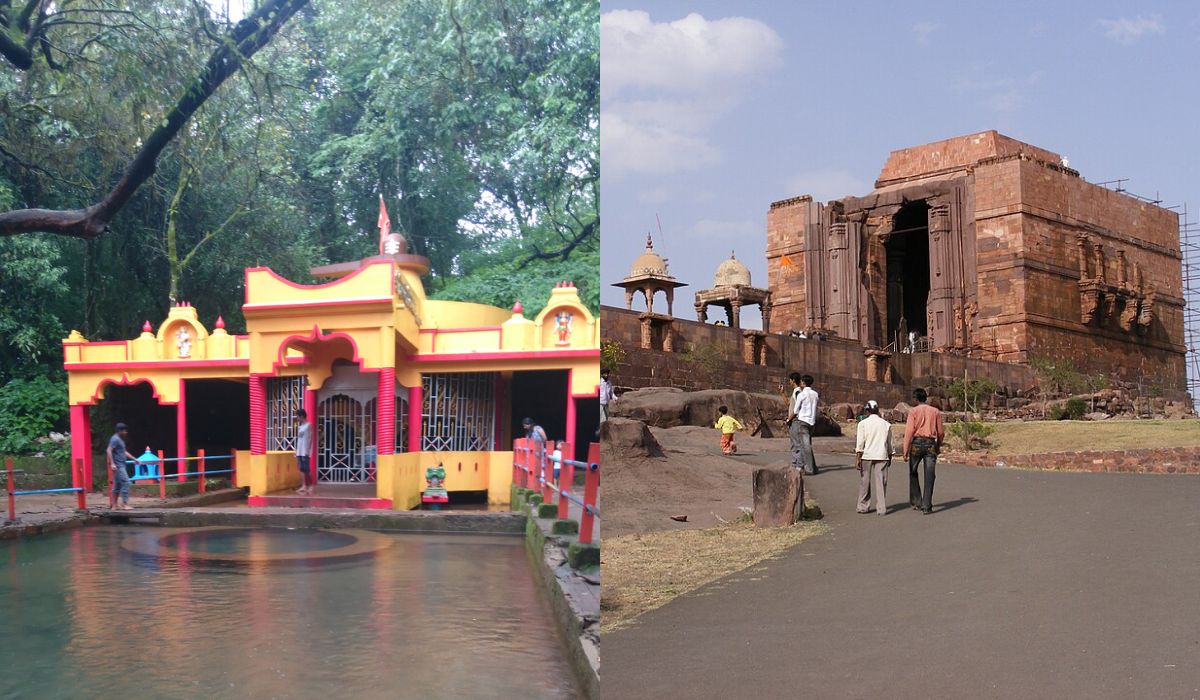
Monsoon can be one of the best seasons to go traveling. Several places and hill stations come alive with lush greenery. However, you may run into one issue — crowds! But what if we told you that you could visit some places that aren’t as crowded, that are lush green in the monsoon season, and offer you spiritual as well as physical rejuvenation? unstumbled has compiled a list of hidden temples in India, cradled in nature that come alive with the rains. In many ways, monsoon is the rebirth for landscapes where flora blooms in its full glory. As such, there is no better way to experience this rebirth than around ancient temples. These secret, structurally breathtaking temples across Central India, Western Ghats, and the Northeast make for the perfect monsoon destinations.
10 Hidden Monsoon Temples In India
1. Marleshwar Temple, Maharashtra
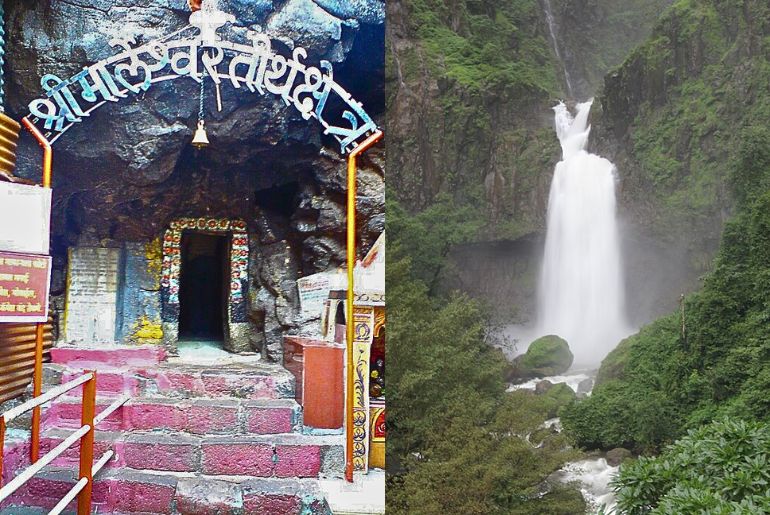
Tucked away in a remote Sahyadri gorge, this cave bypasses major tourist maps. Monsoons transform the quiet ravine into a roaring amphitheater as a massive waterfall drops directly beside the shrine.
Why Visit In Monsoon: The majestic Dhareshwar Waterfall cascades directly down the cliffside right next to the cave entry.
How To Reach: Take a local state transport (MSRTC) bus or taxi from Sangli or Ratnagiri railway station directly to Marleshwar.
2. Unakoti Stone Carvings, Tripura
Lost deep within Tripura’s dense, isolated forests, these colossal rock reliefs see very few travelers. Heavy rains wash over the ancient stone faces, making the intricate carvings pop against vibrant, wet green moss.
Why Visit In Monsoon: Rainwater trickles over the ancient stone faces while thick green moss and ferns wrap the ruins in emerald armor.
How To Reach: Hire a private vehicle from Agartala to the Kumarghat railway station, located just 20 km away from the rock carvings.
3. Bhimashankar Jyotirlinga, Maharashtra
While spiritually famous, its location deep inside a dense wildlife sanctuary keeps it naturally isolated. The rainy season wraps the entire old-growth forest in a thick, eerie fog and mystical cloud cover.
Why Visit In Monsoon: The entire forest trail fills with dense fog, glowing green bioluminescent fungus (if trekking at night), and mystical mist clouds.
How To Reach: Drive up the scenic ghat roads via Pune or catch a direct state transport bus from Shivaji Nagar Bus Stand.
Also Read: 7 Mysterious Temples In India That Defy Logic and Science
4. Bateshwar Group Of Temples, Madhya Pradesh
These 200 mini-shrines sat in ruined, dacoit-infested valleys for centuries, leaving them beautifully off the beaten path. Rains contrast the glowing, wet sandstone beautifully against newly sprouted valley pastures.
Why Visit In Monsoon: Wet, glowing sandstone contrasting with newly sprouted green pastures alongside a swollen Chambal river ecosystem.
How To Reach: Hire a local taxi from Gwalior (35 km away) via the Morena link road to easily access the archaeological site.
5. Bhojpur Temple, Madhya Pradesh
This massive, unfinished monolithic structure sits quietly outside major city hubs. Visiting during storms is incredible, as low-hanging monsoon clouds roll right over the roofless stone pillars and vast open plains.
Why Visit In Monsoon: Storm clouds rolling over the vast Betwa river plains frame the giant, roofless stone structures.
How To Reach: Take a local city bus or private cab heading south from Bhopal city center for an easy 28 km drive.
6. Hiranyakeshi Temple, Maharashtra
Concealed at the exact, dead-end source of a mountain river, this cave shrine feels entirely secret. The monsoon brings intense, heavy fog and forces rushing river water right through the sacred cavern openings.
Why Visit In Monsoon: Gushing, crystal-clear water pressure and a surrounding valley shrouded in constant, heavy mountain fog.
How To Reach: Drive up the Amboli Ghat from Sawantwadi railway station, taking the dedicated interior road toward the river source.
Also Read: Lesser-Known Temples To Visit In India
7. Yana Caves And Shikhara Temples, Karnataka
These towering, black crystalline monoliths are deeply buried within the untamed rainforests of Uttara Kannada. Rain turns the jungle canopy into a roaring backdrop, making the wet, steaming rocks look dark and otherworldly.
Why Visit In Monsoon: Steaming, dark monoliths dripping with heavy rain, surrounded by a roaring jungle canopy.
How To Reach: Travel by road from Kumta railway station (approx. 30 km) and complete the short 1.5 km forest walk to the caves.
8. Chausath Yogini Temple, Madhya Pradesh
Perched on a hilltop overlooking a river gorge, tourists often miss this 10th-century circular shrine. The monsoon vantage point is unmatched, offering dramatic views of the swollen, misty waterfalls crashing below.
Why Visit In Monsoon: Breathtaking aerial views of the swelling, dramatic Dhuandhar Waterfalls below.
How To Reach: Board a local auto-rickshaw or taxi directly from Jabalpur city, which sits just 22 km away from Bhedaghat.
9. Lepakshi Veerbhadra Temple, Andhra Pradesh
Located in a quiet heritage village away from the bustling cities, this architectural marvel feels wonderfully peaceful. Cool monsoon showers wash the old granite carvings, creating a moody, glare-free environment perfect for exploring.
Why Visit In Monsoon: Monsoonal rain washing over old granite carvings and frescoed ceilings, offering a cooler, moody exploration environment.
How To Reach: Take a smooth 2-hour drive (120 km) down the NH44 highway directly from Bengaluru International Airport.
Also Read: Famous Temples To Visit In Trichy
10. Tungnath Temple, Uttarakhand
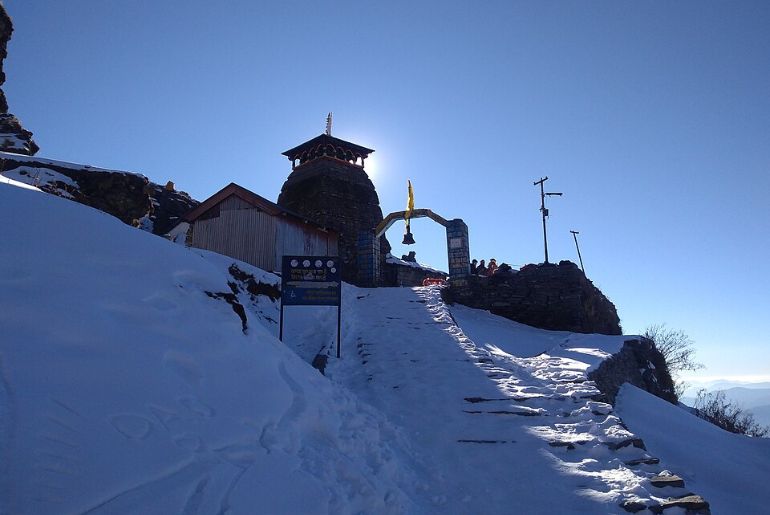
Sitting at over 11,000 feet, the sheer altitude keeps casual tourists at bay. The rainy season creates a stunning showcase where shifting mist constantly hides and reveals the brilliant, lush green alpine meadows.
Why Visit In Monsoon: Dramatic shifts where low-hanging rain clouds part to reveal brilliant, crisp green Himalayan bugyals (meadows).
How To Reach: Drive from Rishikesh to Chopta village, then embark on the beautifully paved 3.5 km mountain trek to the temple.
Travel Tips For Visiting These Shrines
- Make sure you wear high-quality, high-grip, anti-slip shoes, as the rain can make the stone stairs slick.
- Make sure you remain respectful of the shrine you are visiting. Since shoes are prohibited inside, make sure you wear ones that are easy to get in and out of without compromising safety.
- For the temples located in the heart of the Northeastern and Western Ghats jungle, make sure you carry insect repellent or wear leech socks.
- Make sure you carry high-quality gear like wind-cheaters and raincoats.
- Make sure you dress appropriately for the temples you’ll be visiting.
Also Read: Rare Lord Brahma Temples You Must Visit In India
Summing Up
So, this monsoon, skip the traditional hill stations and resorts and experience the raw, ancient energy of these rain-washed sanctuaries instead. You’ll get to discover the ancient heritage of India away from the commercial and conventional tourist destinations.