

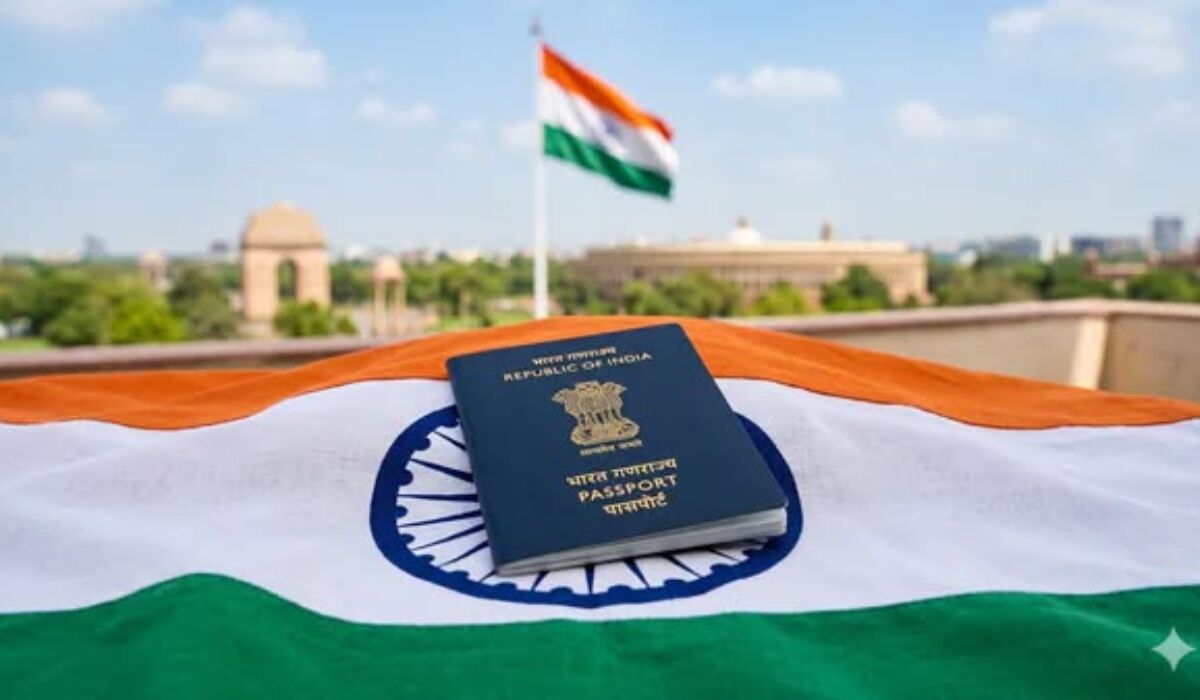
India’s passport has slipped in the latest Global Passport Power Rank published by Passport Index, moving from 66th place in 2025 to 73rd in 2026. The change also comes with a lower Mobility Score and fewer destinations offering visa-on-arrival access to Indian passport holders. The Indian passport’s 2026 rank in this index should not be confused with rankings published by other organizations. Different passport indexes use different methodologies, so India can appear in different positions depending on the ranking used.
What Is India’s Passport Rank In 2026?
According to the latest Passport Index ranking, India stands at 73rd with a Mobility Score of 69. It shares this position with Zimbabwe, Uganda, Uzbekistan, São Tomé and Príncipe, and Vietnam. The Passport Index evaluates 199 countries based on the international travel access available to their passport holders. In comparison, the Indian passport was ranked 66th in 2025 with a Mobility Score of 73, so India’s passport rank has fallen by 7 places, and its Mobility Score has declined by 4 points.
How Has Travel Access Changed For Indian Passport Holders?
Indian passport holders currently have visa-free access to 25 countries and visa-on-arrival access to 39 countries. A visa is required for travel to 129 countries. Compared with 2025, visa-free access remained at 25 countries, visa-on-arrival access fell from 44 to 39, and the number of countries requiring a visa rose from 125 to 129. For anyone following the Indian passport ranking 2026, these changes in actual travel access matter more than the seven-place fall alone.
Planning an international trip without the visa hassle? Explore the top visa-free countries for Indian passport holders worth visiting.
How Does The Passport Index Calculate The Ranking?
Passport Index, developed by Arton Capital, uses a Mobility Score to compare passports. The score considers the number of destinations passport holders can access without arranging a traditional visa before departure, including visa-free and visa-on-arrival privileges. A higher Mobility Score indicates broader access to international travel under the index’s methodology.
In the latest ranking, the UAE has the world’s strongest passport with a Mobility Score of 181. UAE passport holders have visa-free access to 138 countries and visa-on-arrival access to 43 more. Afghanistan sits at the opposite end of the ranking with a Mobility Score of 35.
Passport rankings can also change as countries introduce, remove, or modify visa arrangements. Passport Index describes itself as a real-time ranking system that is updated as these changes are implemented.
Why Should Indian Travelers Look Beyond The Ranking?
A passport ranking provides a quick comparison of international mobility, but it does not tell travelers everything they need to know before a trip. Entry requirements can include eVisas, electronic travel authorizations, visas on arrival, or traditional visas, depending on the destination.
The Indian government has also questioned the use of private passport rankings as a universal measure. In a written Lok Sabha response in July 2026, the government said there is no universally accepted global system for ranking passports. It noted that private institutions use parameters they determine.
Confused about what an Indian passport legally establishes? Here’s what to know about why an Indian passport is not proof of citizenship, the MEA rules and e-passports.
Summing Up
The latest Indian passport rank 2026 places India at 73rd on the Passport Index, compared with 66th in 2025. Its Mobility Score has also fallen from 73 to 69. Visa-free access remains unchanged at 25 countries, while visa-on-arrival access has decreased from 44 to 39 destinations. For Indian travelers, the practical impact is better understood through individual entry rules rather than the ranking alone. Visa policies can change throughout the year, so checking the latest requirements for the destination before booking an international trip remains important.