

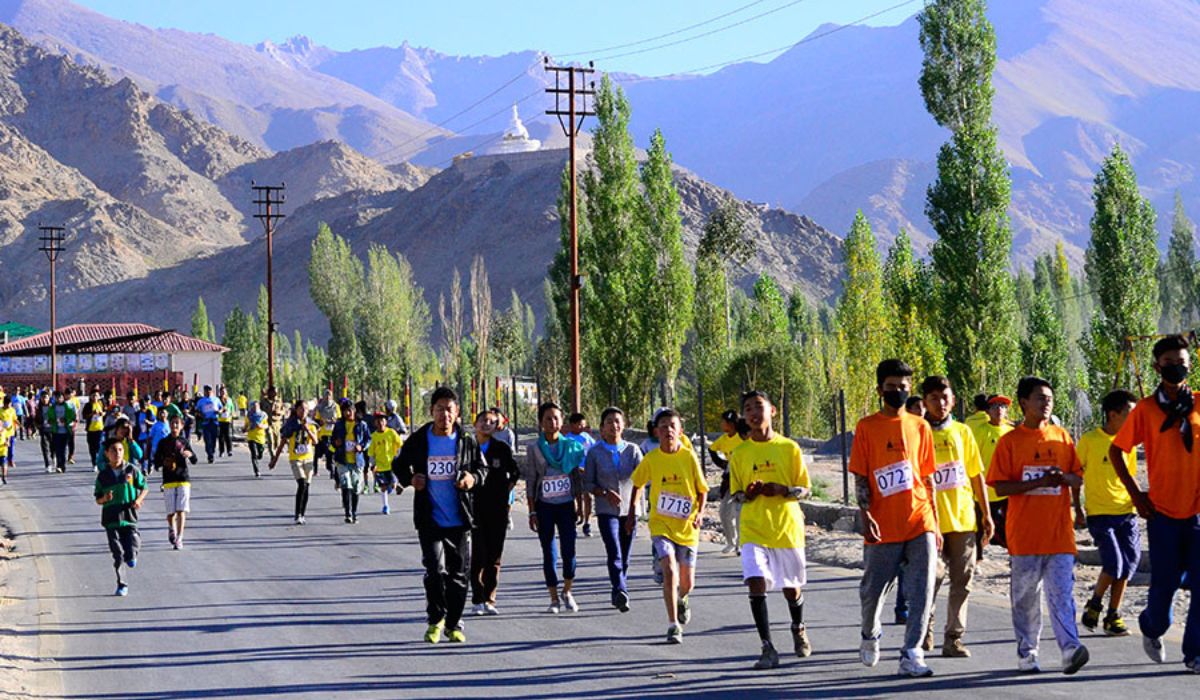
The Ladakh Marathon is one of the world’s highest, toughest, and most breathtaking ultra-marathons in the world. It is held in Leh at altitudes starting from 11,500 feet (3,500 meters) above sea level! What is more, running at such a high altitude demands a vastly different preparation strategy, even more so for those who are used to running marathons at sea level. This is because higher altitudes have reduced oxygen levels, low humidity, and extreme terrain. For those planning to participate in this year’s marathon, here is a complete plan on how to prepare your body for this physical challenge without endangering yourself and/or your health.
About Ladakh Marathon
This year, Ladakh Marathon will witness its 13th edition between September 10, 2026 and September 13, 2026. The marathon will take place in Leh and will feature a prize pool of around INR 1 crore.
What is more, each year, it hosts around 10,000 participants. The events range from a five km run for fun to extreme high-altitude runs that stretch across 122 km, known as the Silk Route Ultra.
Altitude Acclimatization And How To Prepare For Ladakh Marathon
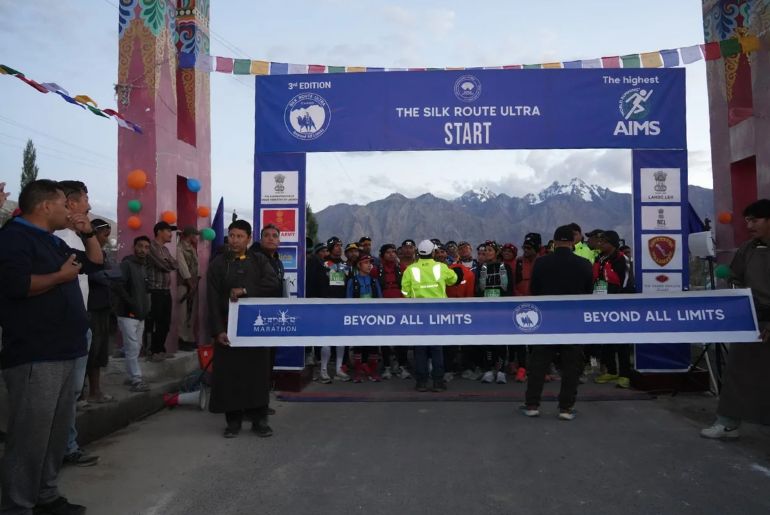
One of the most important things you need to do is acclimate yourself to the altitude of Ladakh. For this, you need to arrive at least four to seven days before race day. If you’re participating in the ultra events that are 72 km or 122 km or longer, you should arrive even before that. This is crucial in avoiding Acute Mountain Sickness (AMS).
Since the climate at the top is quite dry, even breathing here contributes to fluid loss for those not used to it. In order to stimulate red blood cell production, you should try going on short and gradual warm-up runs and hikes around Leh. Places like Shanti Stupa and Tsemo Castle are perfect for it.
Also Read: From Kaas To Ladakh, 7 Best Places To Visit In India In September 2026
16-Week Physical Training Plan
Phase 1: Base Building And Aerobic Capacity (Weeks 1 To 6)
Start by focusing on Zone 2 heart-rate endurance runs to maximize oxygen efficiency. You should try to incorporate core stability, quad strengthening (eccentric squats, lunges), and glute activation exercises to handle steep descents.
Phase 2: Hill Repeat And Strength Endurance (Weeks 7 To 12)
Start introducing incline treadmill runs, outdoor stair climbs, and hill repeats to simulate high-altitude slope resistance. You should also add long, slow distance (LSD) runs on weekends. In these, you should emphasize effort levels over pace per kilometer.
Phase 3: High-Altitude Adaptation And Peak Volume (Weeks 13 To 14)
This is when you do a peak long run, especially for full marathoners (30 to 32 km) on undulating terrain. If possible, it is recommended that you conduct a high-altitude training stint (e.g., Himachal Pradesh, Uttarakhand, or early arrival in Ladakh).
Phase 4: Taper And Rest (Weeks 15 To 16)
Make sure you significantly decrease mileage by 40 percent to 50 percent while maintaining high-intensity short efforts to stay sharp without getting fatigued.
Race Day Tips And Pacing Guidance
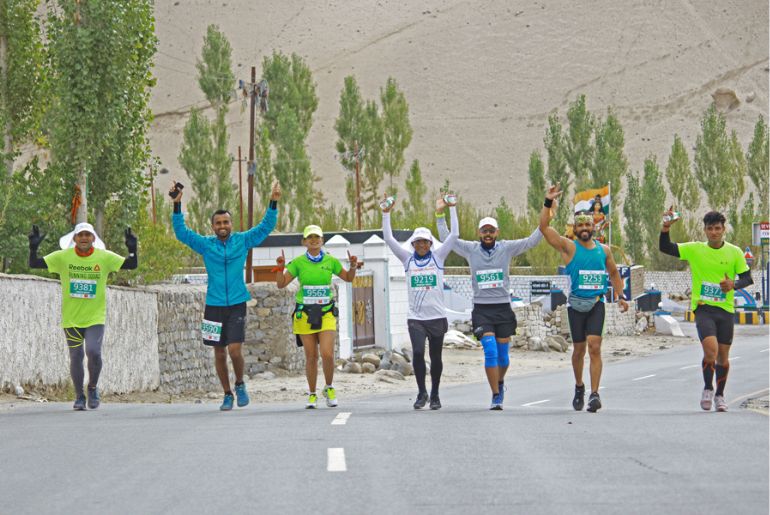
Since the marathon is taking place at a high altitude, there are a few things you need to keep in mind, even if you’re used to running marathons at sea level:
- Abandon the sea-level personal record expectations. It will necessarily differ from that of your high-altitude numbers. To make up for the altitude difference, make sure you adjust your target pace by 15 percent to 30 percent slower than normal.
- Instead of using a GPS watch speed to track your performance, monitor your effort and heart rate.
- Most importantly, remember to practice rhythmic, deep belly breathing to maximize your lung volume on steep ascents.
Also Read: Best Time For A Bike Trip To Ladakh: Weather And Route Guide
Author’s Note
Running this marathon is a unique challenge. As such, you should keep these few tips in mind:
- Remember to layer effectively. Ladakh has a unique climate. The mornings are freezing, but the midday sun is scorching. You need to wear thermal layering that will protect you from the cold as well as UV protection. Thermal base layers, windbreakers, and gloves are non-negotiable.
- Staying hydrated and adequately and timely replenishing your electrolytes is another crucial aspect to cracking this marathon. While there are water stations set up, the distance between two stations, especially in the more remote areas of the race route, can feel exhausting. As such, it is better to wear a water vest or carry handheld bottles.
- To ensure that your electrolytes aren’t depleted, it is crucial that you carry either high-carb energy gels, chews, or salt tablets with you while running, especially in low-humidity environments.
Summing Up
Preparing for the Ladakh Marathon is not just about conquering the mountains but also about recognizing and respecting their challenging environment. It takes more than just above-average physical fitness. It requires smartness in preparation as well as mental grit. It is also extremely important to respect and listen to the limits of your own body. Pushing yourself beyond could be detrimental and damaging in the long run. The work to prepare for the marathon may be extremely hard, but the feeling you get when you cross the finish line is equally, if not more, rewarding. It deserves your full focus and dedication.