
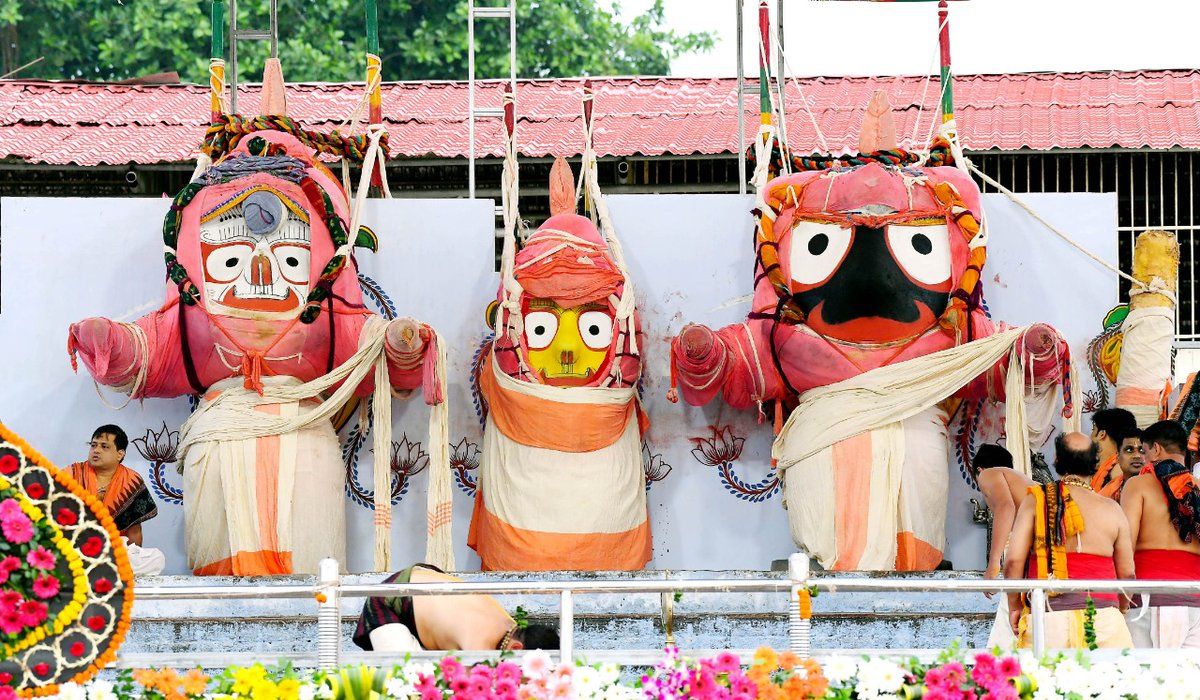
Every year, the coastal town of Puri in Odisha prepares for the thundering spectacle of the Rath Yatra. But long before the towering wooden chariots are pulled down the Grand Road (Bada Danda), a deeply mystical and highly intimate ritual takes place behind closed temple doors. This is Snana Yatra (the grand bathing festival), which occurred on June 29, 2026 (the full moon day of the Hindu month of Jyeshtha). It serves as the official prologue to the Rath Yatra on July 16, 2026. To understand the Rath Yatra, you must first understand this sacred bathing ceremony, the subsequent “illness” of the deities, and the secret healing phase that follows.
What Is Snana Yatra And How Important Is It For Rath Yatra?
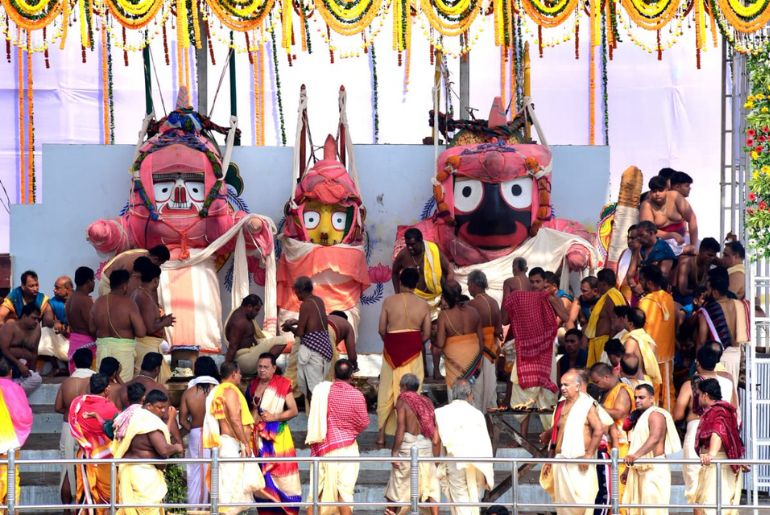
According to ancient scriptures, Snana Yatra marks the birthday of Lord Jagannath (an avatar of Lord Vishnu/Krishna). Legend has it that King Indradyumna, who originally installed the wooden deities, first organized this grand bathing ceremony to consecrate them. On this day, the three sibling deities, Lord Jagannath, Lord Balabhadra, and Goddess Subhadra, are escorted out of the dark, inner sanctum (Garbhagriha) of the temple in a majestic, rhythmic procession called the Pahandi. They are brought to the Snana Bedi (bathing platform), an elevated stone terrace positioned so that devotees standing on the streets outside the temple walls can catch a clear glimpse. What follows is a spectacle that enthralls devotees from far and wide.
108 Golden Pitchers Of Fragrant Water
The core bathing ritual is an elaborate, sensory-rich process managed exclusively by the temple’s traditional Suara and Daita priests.
- The Suna Kua (Golden Well): The water used for the bath is drawn from a single, sacred well located inside the northern gate of the temple. This well is opened only once a year for this specific ritual.
- The 108 Pitchers: Priests draw exactly 108 copper and golden pitchers of water.
- The Herbal Infusions: Before the water touches the deities, it is purified and scented with a rich blend of natural forest ingredients, including sandalwood paste (Chandan), camphor (Karpur), saffron (Kesar), and aromatic herbs like Chua.
- The Distribution: The water is poured over the deities in a strict ratio:
- Lord Jagannath: Bathed with 35 pitchers.
- Lord Balabhadra: Bathed with 33 pitchers.
- Goddess Subhadra: Bathed with 22 pitchers.
- Lord Sudarshana: Bathed with 18 pitchers.
What Is The Hathi Vesha Transformation? (Elephant Attire)
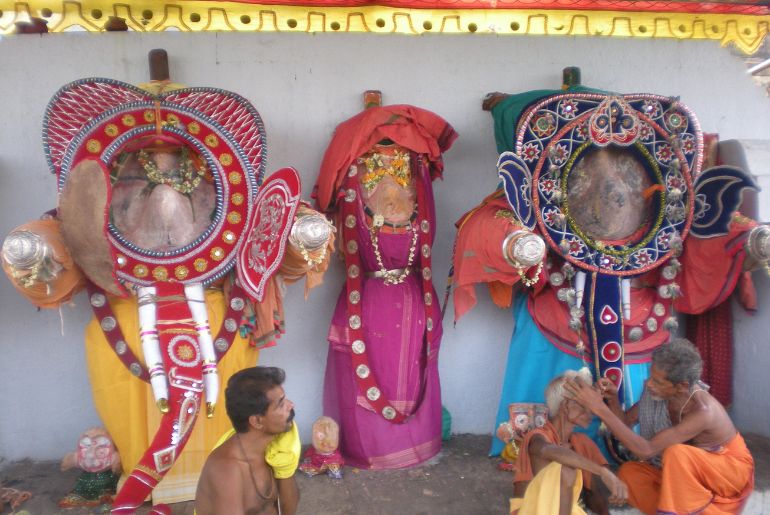
Following the intense public bath, the most visually striking event of the day occurs: the Hati Vesha (Ganesha Vesha). In the afternoon, the deities are dressed in elaborate, colorful masks and headpieces made of bamboo, thermocol, and flowers, transforming their appearance to mimic the elephant-headed deity, Lord Ganesha. This tradition dates back centuries to satisfy a visiting scholar and devotee of Ganesha who refused to worship any deity that did not bear an elephant form. To appease him, Lord Jagannath spiritually manifested as Ganesha. The ritual harkens back to this incident.
Why Is There A Secret 15-Day Isolation Period?
Immediately after the public bathing ceremony, the festival takes a dramatic, quiet turn. The cold well-water bath causes the wooden deities to “fall sick” with a high fever. This transitions into the Anavasara (or Anasara), a mandatory 15-day period of absolute isolation and recovery. Here is a detailed look at the progression of healing of the deities.
The Healing Progression Of The Deities
Days 1 To 5: The Temple Gates Close
The deities are removed from public view and placed in a special sick room (Anasara Pindi). The main temple doors are locked, and all regular public worship is suspended. In their physical absence, devotees pray to three painted canvases (Anasara Patti) representing the siblings.
Days 6 To 10: The Herbal Diet And Treatment
The standard cooked offerings (Chappan Bhog) are replaced with a strictly liquid, medicinal diet. The temple physician (Raj Vaidya) administers a healing herbal paste called Phuluri Tela (made from pure sesame oil and roots) to soothe the natural wood grain.
Days 11 To 14: Restoration And Repainting
As the “fever” subsides, specialized temple artisans (Chitrakaras) step in to restore the colors of the wooden idols. The intense water bath washes away some of the natural organic paints, requiring a complete, delicate face and body touch-up.
Day 15: Nava Yauvana Darshana
Fully healed and radiant, the deities officially reappear before the public in a ceremony called Nava Yauvana Darshana (Youthful Appearance). Their eyes are formally painted open in the Netrotsava ritual, signaling they are ready to step out.
Heading To The Chariots
The very next day after their complete recovery, the grand Rath Yatra begins. Having spent two weeks cooped up in isolation, the deities are enthusiastically carried out to their massive, custom-built wooden chariots to begin their annual journey to their aunt’s home, the Gundicha Temple, located three kilometers away.
It is important to note that, unlike the main sanctum of the Puri temple, which strictly bars entry to non-Hindus, both the Snana Yatra (on the open stone terrace) and the Rath Yatra (on the open road) are completely inclusive. Anyone, regardless of faith or nationality, is welcome to stand on the streets to witness the deities.
Also Read: Jagannath Puri Rath Yatra Itinerary: Complete 2-Day And 3-Day Plans
Summing Up
The Snana Yatra is a beautiful, deeply humanizing ritual. By depicting the supreme deities as mortal entities who bathe, wear festive costumes, fall ill from cold water, and require rest and medicine to heal, the festival strips away the cold distance between the human and the divine. It transforms a powerful religious event into an intimate, familial relationship between the devotees of Odisha and their beloved Lord Jagannath.