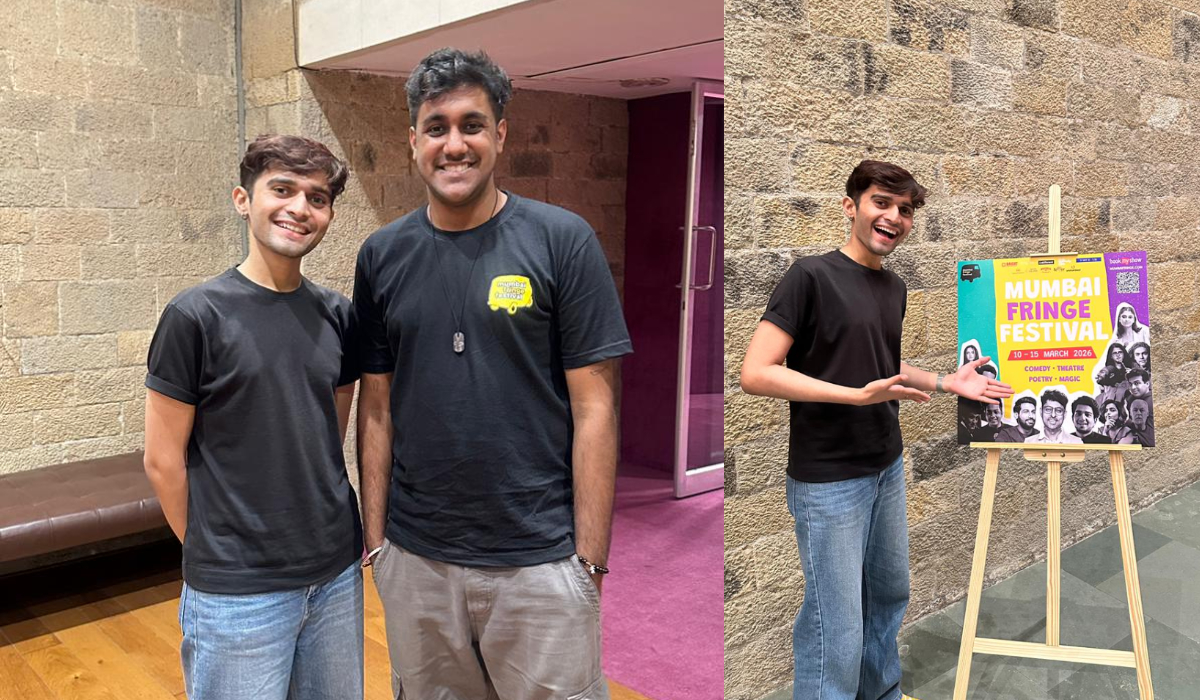
A global festival celebrating independent arts, beginning on the literal ‘fringes’ of Edinburgh, finally made it to Mumbai in March 2026. Yes, we’re talking about the Mumbai Fringe Festival. Over five days, the festival took place at a few of the most well-known art spaces in the city and was headlined by both global and Indian artists, poets, and stand-up comedians.
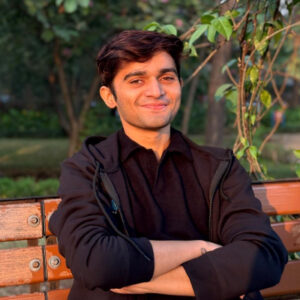
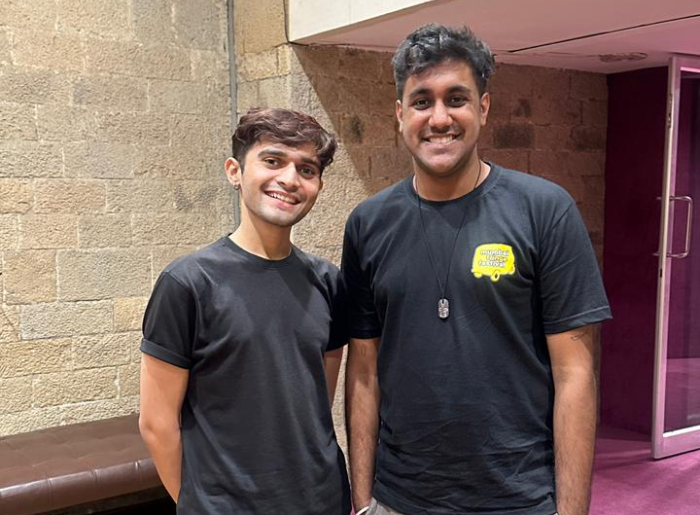
Amid the whirlwind of rehearsals, coffee refills, and last-minute coordination, one person was constantly on the move behind the scenes, making sure every detail fell into place and that was Simar Singh, co-founder of the Mumbai Fringe Festival 2026. Between coffee breaks and briefing sessions, unstumbled was lucky to get hold of Simar Singh during the festival and know how Mumbai Fringe Festival took place, what were some challenges they faced, and what holds for the future of the independent arts in the country.
In Conversation With Simar Singh, Co-Founder Of The Mumbai Fringe Festival 2026
Simar Singh, for those unversed, began his journey on YouTube by opening a YouTube channel titled UnErase Poetry. Launched in 2017, the channel was, and continues to be a platform for spoken word artists to showcase their art. Today, the channel has 1.62 million subscribers on YouTube and 1.3 million followers on Instagram. In 2026, after years of being a reputed name in the independent arts community in India, Simar co-founded the very first edition of the Mumbai Fringe Festival 2026 along with Steve Gove. Here’s unstumbled’s full conversation with Simar Singh!
unstumbled: How Would You Put Your Journey So Far – From UnErase Poetry To The Mumbai Fringe Festival – In A Few Sentences?
Simar Singh: I would say it was unpredictable, unexpected, yet quite memorable.
unstumbled: What Made You Start UnErase Poetry In The First Place?
Simar Singh: I started UnErase Poetry on YouTube in high school when I was 16-17. I used to perform at open mics, do stand-up comedy, and perform poetry. At that time, there were not enough platforms for people to discover spoken word poets or for spoken word artists to present their art. So I channeled my passion for this art into building one myself in the form of UnErase Poetry.
unstumbled: What Were The Initial Challenges That You Faced At A Time When Spoken Word Poetry Was Not As Famous Or As Known As It Is Today?
Simar Singh: Age was the biggest challenge, I’d say. People didn’t take me seriously because of my age, especially when I had to convince people to do something different. Beyond that, there were the usual struggles that come with starting anything new.
But despite the challenges, there was a lot of validation that kept me going. We were fortunate to gain traction among younger audiences, some of our videos went viral, and we received immense support. I think spoken word has come a long way in these 9 years and I’m glad that I was able to contribute in whatever way possible!
unstumbled: In Today’s Age Of Fast-Paced Social Media, Do You Think People Have Lost That Joy Of Creation?
Simar Singh: I think that’s true, and I’ve experienced it myself. When I started writing and performing, I was doing it for enjoyment. However, after a point it became more about consistency and pleasing the algorithm. Somewhere along the way, I felt disconnected from the authenticity that drove me in the beginning. So I feel it’s an extremely hard balance to maintain – to be able to stay authentic and genuine to your thoughts and yet be consistent as a creator.
unstumbled: The History Of The Fringe Festival Is Rooted In Unconventionality. How Would You Describe Mumbai’s Independent Arts Community? Are They More Experimental? Are They More Unconventional? What Do You Think About It?
Simar Singh: I feel that Mumbai’s art community is quite spread out so I can’t really generalize it. I’ve interacted with many different circles, and what stands out is how experimental and inclusive they are. However, I feel that more artists need to muster up the courage to fail.
Mumbai’s art scene is closely linked to a highly competitive and unforgiving industry like Bollywood. So there are a lot of artists who are somewhat scared to experiment and fail. By being a part of global editions of the Fringe Festival, if there’s something I’ve learnt, it is that there is so much beauty in failure. I’ve myself had some really bad shows, but those shows have given me courage to be the artist that I might be today.
View this post on Instagram
unstumbled: The First Edition Of The Mumbai Fringe Festival Took Place With Minimal Funding. Do You Think Independent Arts Come At A Cost?
Simar Singh: Yes, but the cost is primarily your time and effort. I didn’t earn anything from the festival. In fact, I invested my own money purely out of love for the arts. Around 25 percent of the festival’s budget came from friends and family. We organized fundraisers and were grateful for the support we received.
If you speak to international artists who’ve performed at Fringe Festivals globally, many of them will tell you they’ve never made money from it. They often pay for their own flights and accommodation. We chose to approach it differently by subsidizing accommodation and other expenses for international artists.
Despite knowing from day one that we are not doing it for the money, we did it for an experience, to build an ecosystem. I think there might be money at the end of the tunnel, maybe 5 years later, but I think by then it won’t matter as much because you would have built something so beautiful that money is just a byproduct!
unstumbled: Why Specifically Mumbai? Like, Is There Any Scope For Many More Cities For The Fringe Festival To Happen In India?
Simar Singh: Definitely. I know that they are building a Fringe Festival in Delhi. They did a small version last year and are looking at making it bigger every year. I do think Fringe will work really well in smaller cities in India. A Fringe can bloom in a city like Bhopal or Jaipur where literature festivals have already found success.
unstumbled: Do You Think Gen Z Is More Appreciative Of The Independent Arts Compared To The Previous Generations? What Are Your Thoughts?
Simar Singh: I can really hope so! But again, there are exceptions. I have friends who prefer other art forms while some others who also really appreciate independent art. I think it ultimately depends on you regardless of which generation you belong to. That said, I believe a large part of our audience will be Gen Z. Many of us are fatigued by social media, and stand-up shows, hearing live poetry, etc definitely sounds a lot more engaging.
unstumbled: In Such A Political Lead Turbulent Times Today, How Does Poetry Give You A Voice?
Simar Singh: Given the current times we’re living in, I consider myself quite lucky to even be able to conduct the Mumbai Fringe Festival in the first place. It takes immense courage to present art in one corner of the world when the other corner of the world is in turmoil. Poetry, and art in general, gives us artists courage to express ourselves. Which is why I feel like these (live) spaces are very important. More than on stage it’s the conversation we have off stage that really matters.
unstumbled: Do You Think Artists Should Be More Politically Vocal Or Should They Be Apolitical About The Views In Today’s Time Especially?
Simar Singh: I think being apolitical is a privilege. I also don’t believe art can be apolitical because just the fact that you are on stage is a rebellion in itself. Society tells you to fit into conventional molds but when you defy those and stand on the stage to share your story, you are already political.
Having said that, I still respect stand-up comedians who are very popular in India, but may choose not to talk about political parties because their livelihood may be at risk. But the fact that they are still doing comedy is giving space to maybe 100 other people to be able to do political comedy. So it’s an ecosystem, it’s all connected, it’s all political. We can never not be political if we are in the arts.
View this post on Instagram
unstumbled: 3 Qualities Every Artist Or Poet Should Have In Them?
Simar Singh: Adaptability, good memory, and being able to be spontaneous.
unstumbled: 3 Qualities That They Should Not Possess?
Simar Singh: Being rigid. being too traditional and not open to ideas, and being a purist or an elitist.
unstumbled: What Would You Prefer? Being The Poet Or Being The Poem?
Simar Singh: I would prefer being the organizer who lets people do what they want to do and just enjoy watching the show. But answering your question, I would love to be a poet!
Also Read: The Architect Of Quiet Moments: A Conversation With Amandeep Khayal