
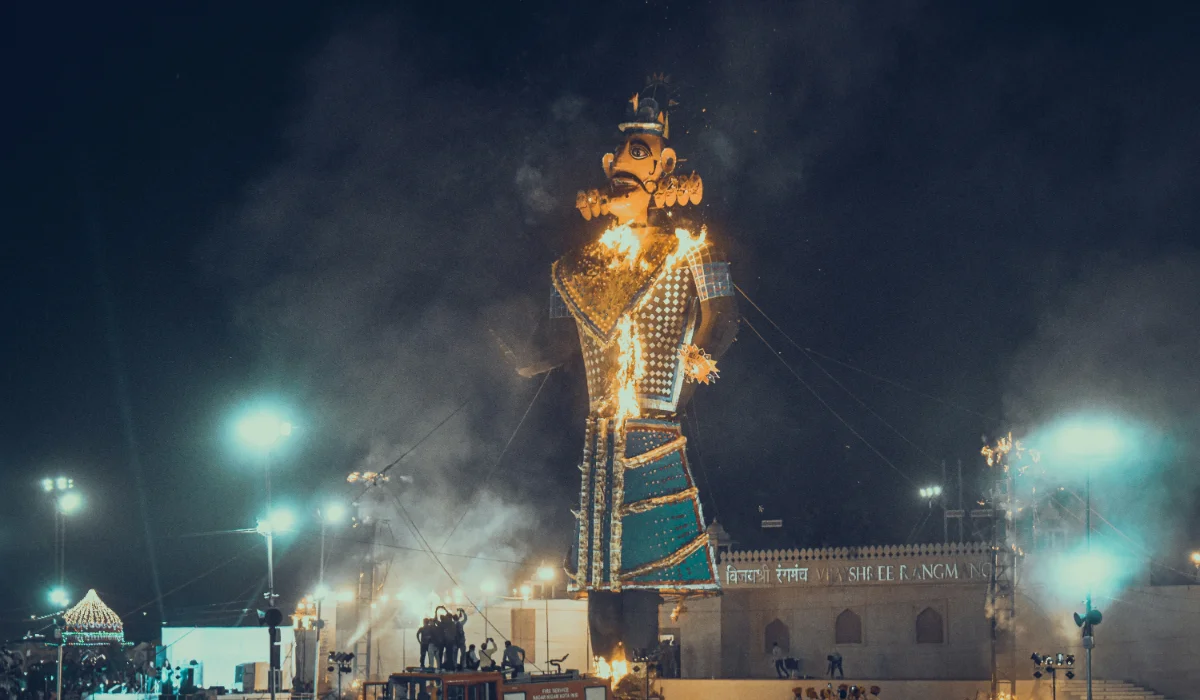
Dussehra, also known as Vijayadashami, is one of the most popular Hindu festivals in India. Best known for its tradition of burning a Ravana effigy, it is the tenth and final day of Navratri celebrations across most of India. In 2026, Dussehra is set to be celebrated on 20th October, 2026. In this blog, let’s take a look at all the information you need to know about Dussehra 2026, including Ravan Dahan timings, Dussehra 2026 date, rituals, and more.
Why Is Dussehra Celebrated?
Dussehra is celebrated on the tenth day, Dashami Tithi of the Shukla Paksha (bright fortnight) in the Hindu month of Ashwin. According to Hindu beliefs, it is on this day that Rama defeated Ravana after a long-standing battle. In some other Hindu beliefs, it is also believed that this day celebrates Goddess Durga’s victory over the shape-shifting buffalo demon Mahishasura. In some regions, the day also honors Arjuna’s victory over the Kauravas in the Hindu epic Mahabharata.
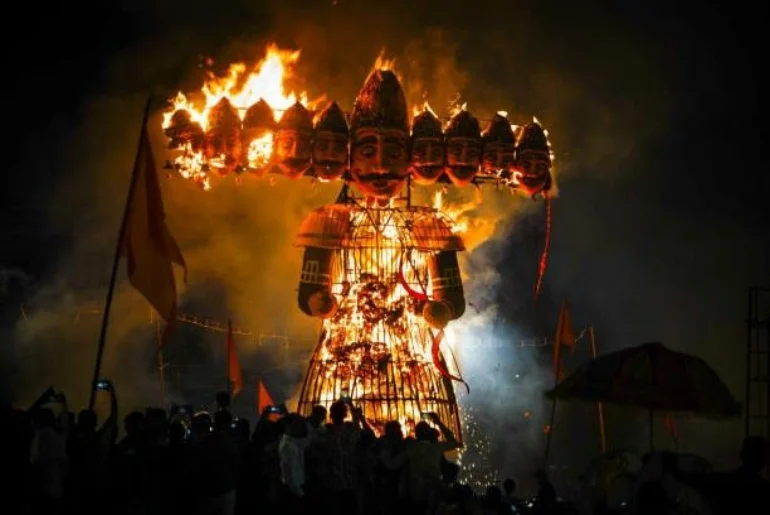
Ultimately, the day is celebrated to mark the victory of good over evil, “dharma” over “adharma” as per Hinduism.
Dussehra 2026 Date
Dussehra 2026 will fall on Tuesday, 20 October. As per Drik Panchang, Bengal Vijayadashami will fall on a separate date, on Wednesday, 21 October. Families celebrating the festival must follow their regional calendar and consult a local priest or learned scholar.
The key dates and Dussehra tithi timings are as follows:
- Dussehra / Vijayadashami: Tuesday, 20 October, 2026
- Dashami Tithi begins: 12:50 PM on 20 October
- Dashami Tithi ends: 2:11 PM on 21 October
- Bengal Vijayadashami: Wednesday, 21 October, 2026
Also Read: Dussehra Special: The 136-Year-Old Kanpur Temple That Opens Only Once A Year To Worship Ravan
Traditions Associated With Dussehra
Shami Puja & Why Apta Leaves Are Exchanged On Dussehra
Shami Puja is often associated with Dussehra. In some Southern regions, it is also called Banni Puja or Jammi Puja. The tradition recalls the Pandavas from the Mahabharata recovering weapons hidden in a Shami tree during their exile.
If you’re conducting a family prayer, prepare a Shami plant or leaves and accompany it with water, haldi, kumkum, flowers, a diya, and a small food offering.
Arrange all the offerings beside the plant or leaves.
Offer water and the customary tilak materials, including akshata (uncooked, unbroken rice) and flowers.
Light the diya and burn an incense stick.
Then present the food offering and recite a prayer. If you’re doing the puja around a small plant outdoors, you can also circumambulate the tree.
On the day of Dussehra, families exchange shami leaves or apta leaves. This is considered to be a symbol of exchanging ‘gold’ – a sign of prosperity. Families visit each other to exchange apta or shami leaves and also exchange good wishes.
Significance Of Ayudha Puja
On the day of Dussehra, Ayudha Puja or Shastra Puja is also one of the most significant traditions. It is a tradition that honors weapons, instruments, vehicles, and tools in everyday use. Families clean, neatly arrange, and worship all tools by offering them flowers and reciting prayers. The tradition signifies expressing gratitude towards tools that help in one’s livelihood.
Also Read: When Does Navratri 2026 Begin? Dates, Ghatasthapana Timings, 9 Days & Dussehra
How Is Dussehra Celebrated Across India?
Across most of North India and Central India, Dussehra is celebrated mainly by burning the effigy of Ravan. The festival is also characterized by Ramlila performances, cultural performances, and grand processions.
Here’s how India celebrates Dussehra
Mysore Dasara
Mysore Dasara is the State Festival of Karnataka. The festival is a grand affair in the city of Mysore, characterized by grand processions and cultural events.
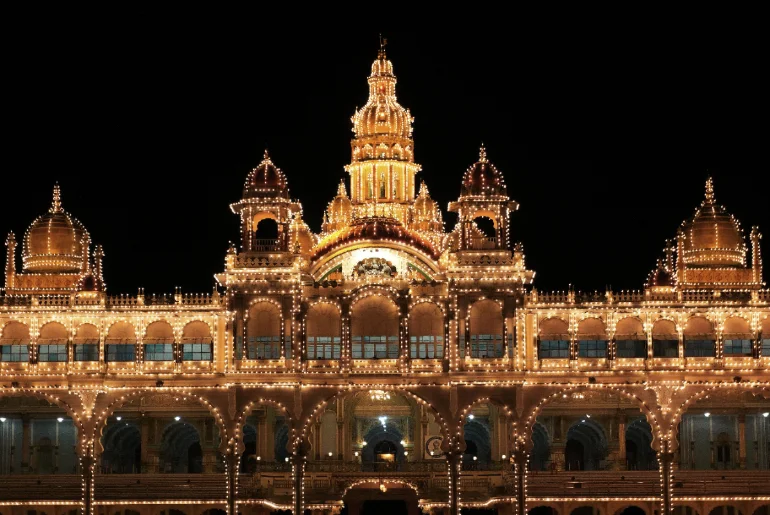
The most notable among them all is the Jamboo Savari, or the grand Dasara procession that involves heavily decorated elephants. Along with it, Mysore Dasara also features ceremonial processions, cultural performances, dance troupes, and performers.
Kullu Dasara
Kullu Dussehra is one of the most unique Dussehra celebrations in India. Kullu Valley is known for this unique celebration, which begins on the day of Vijayadashami and continues for several days. The festival is closely associated with Lord Raghunath, the principal deity of Kullu. During the festival, hundreds of devotees gather at the Raghunath Temple and Dhalpur Maidan. Visitors can expect elaborately decorated palanquins, traditional folk music, and more during the festival.
Bommai Kolu (Golu)
In Southern states, Dasara is celebrated in another unique way. Bommai Kolu (also known as Golu, Gombe Habba, or Bommala Koluvu) is a traditional South Indian doll and figurine display set up during the autumn Navaratri festival.
The dolls are arranged on an odd number of tiers (typically 1, 3, 5, 7, 9, or 11 steps) made of wood or metal. The top steps are where small figurines of gods and goddesses are placed. The middle steps are where saints, revered figures, and historical or royal figures are placed. On the bottom steps, everyday objects, birds, animals, ordinary human figurines, etc are placed.
Also Read: Southern Railway Announces Chennai-Kollam Special Trains For October Festival Rush
Author’s Note
Growing up, I’ve always admired the significance of Dussehra – victory of good over evil and marking a new beginning. Dussehra is considered one of the most auspicious days in the year, where people make big purchases and embark on new beginnings.
Summing Up
Dussehra is a major Hindu festival that is symbolic of the victory of good over evil. The festival, celebrated on the tenth and final day of Navratri and Durga Puja, is celebrated in different ways across India. From Ravan Dahan and Ram-leela traditions to Bommai Kolu and Kullu Dussehra, Dussehra has many ways that each celebrate good fortune, new beginnings, and prosperity in life.