
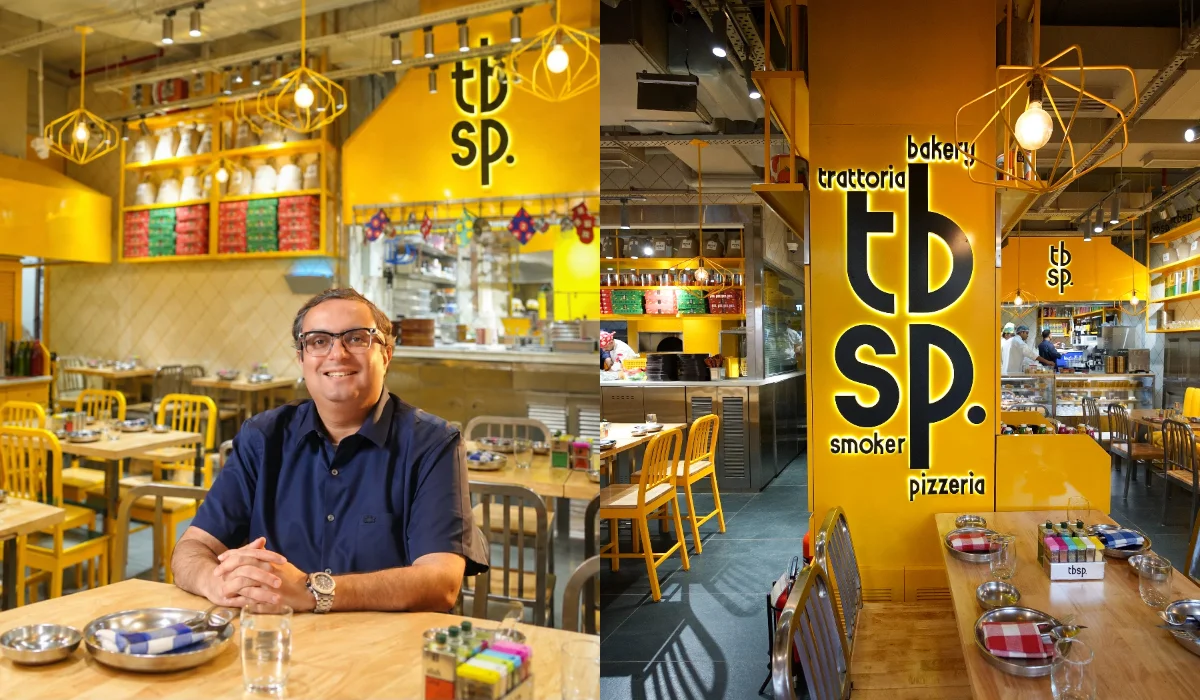
Mumbai’s ever-growing food scene has a new American-Italian space where you’ll find hearty, wholesome food with a ‘tablespoon’ of love. Yes, we’re talking about tbsp., Tablespoon, that has recently made its way to Mumbai from Delhi. Launched in 2021 by restaurateur Varun Tuli, Founder & Managing Director, The Yum Yum Tree Group, the concept brings together comfort food in a playful, approachable environment.
But there’s more to tbsp. than what’s on the plate. We sat down with Varun Tuli to talk about bringing tbsp. to Mumbai, building food brands across formats, and what it takes to keep up with an increasingly adventurous Indian diner.
Initial Journey, Choosing Between Formats, And Other Thoughts As A Restaurateur
For Varun Tuli, building restaurants has always been about more than opening another outlet. He began his journey with Yum Yum Tree in Delhi in 2008, followed by Food Inc. Catering, Yum Yum Cha, Noshi, Wheaty, Pot Pot and tbsp. Tablespoon. Today, the Founder & Managing Director of The Yum Yum Tree Group has managed to build a diverse portfolio of food brands, constantly experimenting with cuisines, formats and the way people experience food.
unstumbled: How has the food & beverage (F&B) industry changed compared to when he started with Yum Yum Tree in 2008?
Varun Tuli: When we started in 2008, the F&B industry was still largely about the food and the restaurant itself. Today, the experience around the food has become equally important. Consumers are more informed, more experimental and exposed to food cultures from around the world through travel and social media.
There is also a much stronger focus on concepts, design, storytelling and experiences. At the same time, consumers have become more value-conscious and discerning about quality. For us, the challenge and opportunity has always been to make good food approachable while creating experiences that people genuinely want to come back to.
Also Read: In Conversation With Mokai Founder, Karreena Bulchandani: On Community, Creativity, & Comfort Food
unstumbled: You’ve worked across formats, from sit-down restaurants to more delivery-focused businesses. Which one do you think is the one with the most potential right now?
Varun Tuli: I don’t think there is one format that works universally. The opportunity lies in understanding what the consumer wants from each occasion. Dine-in continues to have a strong role because people want experiences, social spaces and food that they can discover together. At the same time, delivery has become an important part of how people consume food.
What I find most interesting is creating brands that have a strong identity across formats while understanding that the experience may be different depending on where and how the customer interacts with the brand.
From the origami-themed Yum Yum Cha and delivery-focused Noshi to Wheaty, which began as a lockdown baking hobby, and Pot Pot, Tuli has consistently explored new formats while keeping food and the customer experience at the center.
unstumbled: When you walk into any restaurant as a guest, what are the first things you notice?
Varun Tuli: I naturally notice the food first, but I also look at how the restaurant feels as a complete experience. The energy of the space, the way the kitchen operates, how the team interacts with guests, the menu and even the smaller details tell you a lot about how thoughtfully a restaurant has been built. I also pay attention to whether the concept actually comes through in the experience. A restaurant should have a point of view, but it should still feel welcoming and make you want to stay.
Launching tbsp. And Finding A Second Home In Mumbai
unstumbled: ‘tbsp.’ – what was the idea behind the restaurant and why was this name chosen?
Varun Tuli: The idea behind tbsp. was very simple – to serve every guest a tbsp. of love, a tbsp. of generosity, a tbsp. of flavor, a tbsp. of care and a tbsp. of warmth.
With tbsp. Tablespoon, Tuli turned his attention to the warmth and informality of eating out of a kitchen. Launched in 2021, the concept brings together comfort food, an open kitchen and a playful environment, built around its Trattoria, Bakery, Smoker and Pizzeria & Pastaria formats. The idea reflects his belief that a restaurant should feel approachable and familiar while still offering guests something distinctive to discover.
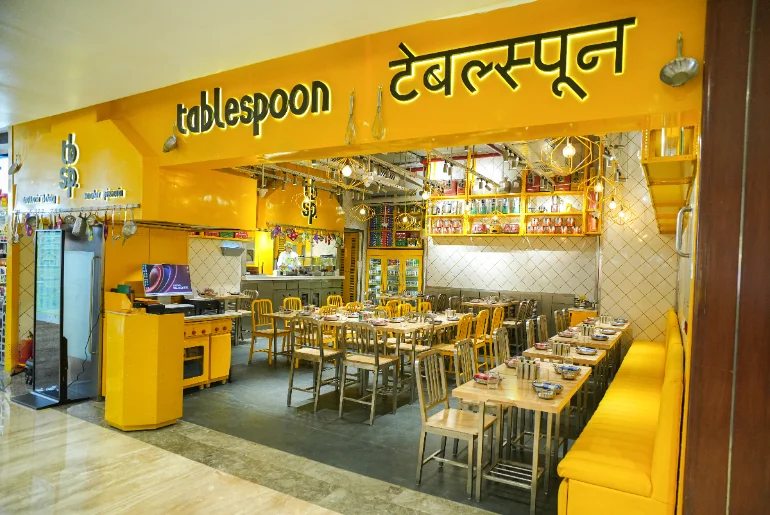
He adds that, “We wanted to create a restaurant that felt generous and welcoming, where the food was only one part of the experience. Every element – from the way we cook and serve to the atmosphere and the little details – is meant to add that extra tablespoon of warmth and care. That thought also led to the name tbsp., short for tablespoon. It is something familiar and everyday, but it represents the idea of adding a little more to everything. For us, that little more is love, generosity, flavour, care and warmth.”
unstumbled: With tbsp., what gap in the casual dining space are you trying to address?
Varun Tuli: We wanted to create a space where high-quality food doesn’t feel intimidating or overly formal. There is a lot of room between everyday casual dining and restaurants that can feel more specialized or inaccessible. With tbsp., we wanted to take familiar formats and give them a distinct point of view through flavor, ingredients, presentation and experience. Someone who knows and loves the cuisine should find something to appreciate, while someone trying it for the first time should feel equally comfortable.
unstumbled: tbsp. has now made its way from Delhi to Mumbai. Why was Mumbai the next city for the brand, and what made Lower Parel the right location?
Varun Tuli: Mumbai has a sophisticated and highly competitive dining audience that is open to new concepts, food experiences and strong points of view. It felt like a natural city for tbsp. to enter. Lower Parel, and specifically Phoenix Palladium, gives us access to a premium, urban audience and a high-visibility destination. It allows us to introduce tbsp. at scale while bringing our pizzeria and pastaria-led proposition to a city with a strong and evolving food culture.
unstumbled: Mumbai has a very competitive casual dining and café scene. What do you think tbsp. brings to the city that will make it stand apart from the existing pizzeria, pastaria and casual dining landscape?
Varun Tuli: For us, it is about bringing together food, process and experience rather than looking at them separately. tbsp. has strong Neapolitan pizza credentials, but it is also a broader American-Italian kitchen with handmade pastas, burgers, salads, BBQ, grills, desserts and drinks.
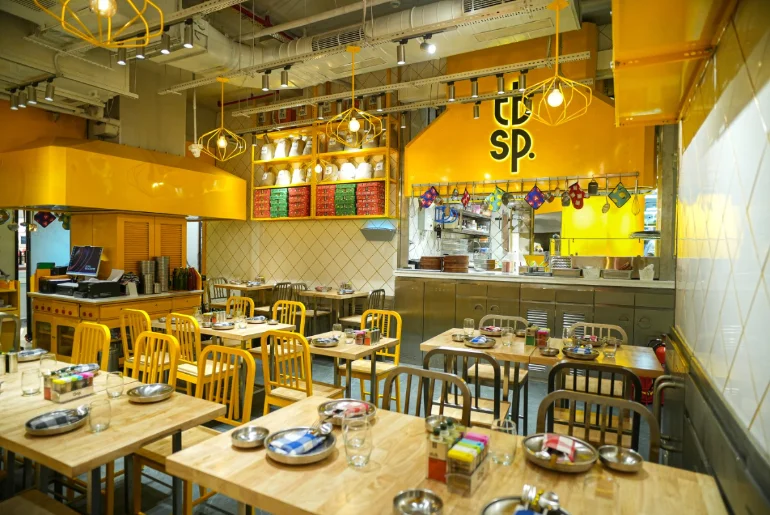
The open kitchen and wood-fired oven make the cooking part of the experience, while the interiors, packaging and smaller details add to the playful personality of the brand. We also want the menu to encourage discovery. The Pastaria, for example, introduces guests to different pasta shapes, textures and sauces rather than limiting the experience to the most familiar formats.
Also Read: Run And Clean – With A Cause: In Conversation With The ‘Plogman’ Vivek Gurav
Thoughts On The Ever-Evolving Indian Diner
unstumbled: How much does travel and exposure to international food cultures influence the concepts and menus you create?
Varun Tuli: Travel and exposure definitely influence the way I think about food. But I don’t believe in simply replicating something that works elsewhere. What interests me is understanding the idea behind a dish, a technique or an experience and then interpreting it in a way that makes sense for our audience. With tbsp., for example, we retain the craft and recognizable character of Neapolitan pizza while giving the menu a distinctly tbsp. point of view through combinations such as Spicy Honey Pepperoni, Tuscan Chicken and Barbecued Chicken.
unstumbled: The Indian diner today is increasingly adventurous but also value-conscious. How do you strike the balance between experimentation, quality and affordability?
Varun Tuli: The starting point is always quality. Experimentation should add something to the experience rather than exist simply for the sake of being different. We try to take familiar formats and introduce new flavours, ingredients or combinations in a way that remains approachable. A guest can order a classic Margherita or Pepperoni, or move towards something more adventurous such as Spicy Honey Pepperoni. The idea is to give people the freedom to discover without making them feel like they have stepped too far outside their comfort zone.
For Tuli, that balance between creativity and operational discipline is key to building brands that can grow without losing their personality. He is deeply involved in everything from concept creation, menu development, to the overall food direction.
unstumbled: With stricter regulations and so many restaurants coming under the radar, what do you think about maintaining consumer trust?
Varun Tuli: Trust ultimately comes from consistency and transparency. Consumers today are much more aware of what they are eating and where it comes from, so restaurants have to take that responsibility seriously. For us, that means maintaining discipline around sourcing, food quality, hygiene and operations, while making sure the experience we promise is actually the experience the guest receives. As we scale, maintaining those standards consistently becomes even more important.
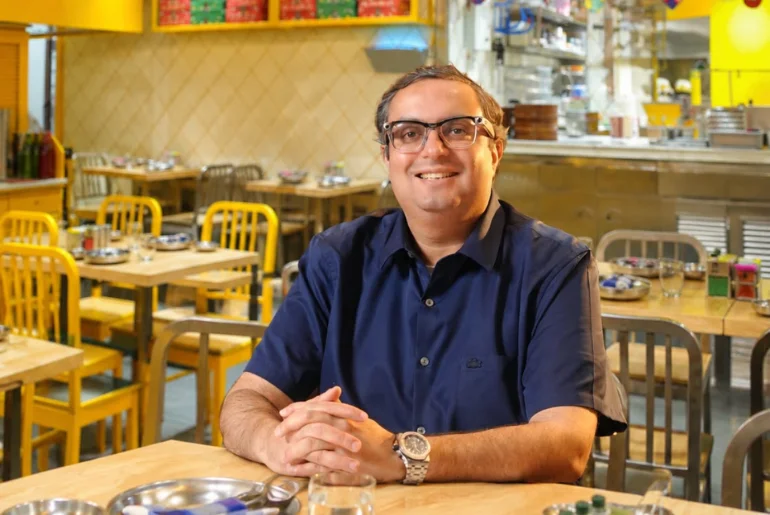
unstumbled: Looking ahead, what does the next chapter of The Yum Yum Tree Group look like? Are you more interested in taking existing brands to new cities, developing new concepts, or exploring entirely new formats in F&B?
Varun Tuli: There is an opportunity across all three. We want to continue taking our existing brands into new cities, while also developing concepts when there is a genuine opportunity to create something new. At the same time, we are interested in exploring how successful parts of our brands can exist beyond the traditional restaurant environment, including areas such as retail, quick commerce and grocery. For tbsp. specifically, the immediate focus is on building the restaurant and its pizzeria and pastaria proposition strongly as we enter new markets. The ambition is to scale without losing the personality, quality and sense of discovery that make the brand what it is.
Also Read: Where Mumbai Meets Japan: In Conversation With Gaijin’s Chef Anand Morwani
A ‘Tablespoon’ Of Rapid Fire
unstumbled: One dish you could eat on repeat?
Varun Tuli: Pizza – specifically a good Spicy Honey Pepperoni.
unstumbled: Street food or fine dining?
Varun Tuli: Street food. There is something about the immediacy, simplicity and flavor of good street food that I really enjoy.
unstumbled: Your favorite city for food in India?
Varun Tuli: Delhi.
unstumbled: Pizza or pasta?
Varun Tuli: Pizza.
unstumbled: An overrated food trend that needs to retire?
Varun Tuli: Food that is designed more for the camera than for the plate. If the food doesn’t taste good, the trend won’t last.
unstumbled: If you weren’t in the F&B industry, what would you be doing?
Varun Tuli: I would probably still be building something. I’ve always been drawn to creating concepts and experiences, so I think entrepreneurship would have found its way into whatever I was doing.
All The Food We Tried At tbsp., Tablespoon, Phoenix Palladium, Mumbai
We started with the appetizer, Fried Goat Cheese Balls, and they were warm, gooey, and quite rich, striking a good balance between crunchy and comforting. The stand out aspect at tbsp. is the variety of dips and condiments you get at your table to enhance your food. From peri-peri to oregano and more, there is a lot to choose from!
You can also sample a few of their classic American-style Grilled and Crispy burgers as well as Tuscan sandwiches. However, we went for what can be considered one of the best highlights of the restaurant, its pizzas. You can customize your pizzas to make them a ‘half-n-half’ pizza, essentially combining two different pizzas into one.
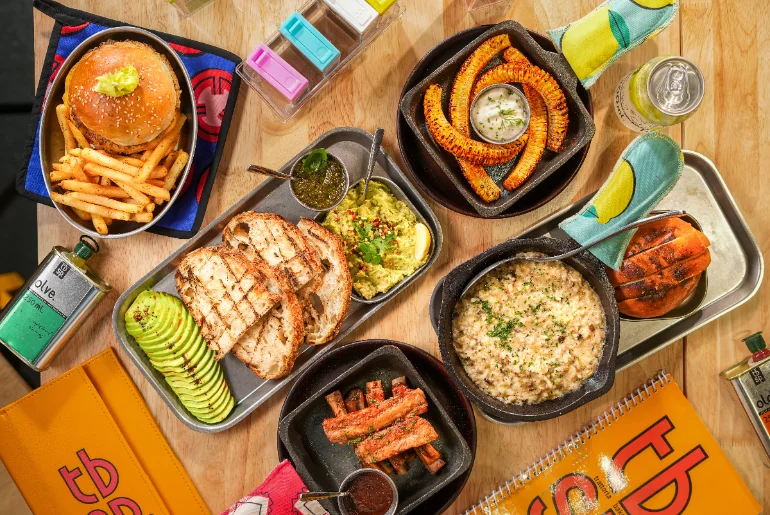
We ordered the Half-n-Half Pesto Pizza & Burrata Pizza and let us tell you that it was a winning combination! The slightly spicy, tangy pesto, with a hint of pistachios and the sun-dried tomatoes complemented the richness of the burrata and mozzarella.
The pasta bowls at tbsp. also didn’t disappoint. The American Mac & Cheese was saucy and quite delicious while the Mushroom Gnocchi was soft, tender, and comforting.
We washed these delicious dishes with the Mocha Cold Coffee – one of the best coffee drinks we’ve tried. The rich coffee pairs well with the creamy milk and chocolate, and the way it is presented only makes the experience more enjoyable. We also tried one of the soda pop cans, the Pink Lemonade. With refreshing lemon and strawberry, we’d definitely reach out for another can!
We ended the meal with a light and experimental dessert – a classic chocolate soft serve garnished with salty potato chips! The soft, rich, velvety texture of the soft serve paired well with the crunch of the chips and the sweet-salty combination proved to be a fun experience.
We’d also recommend trying out their waffles, Chocolate Mud Pudding, and Hot Chocolate Mousse.
tbsp. Tablespoon: Essential Details
Address: T-1A & 1B Third Floor Phoenix Palladium Mall 462, Senapati Bapat Marg, Lower Parel, Mumbai
Timings: 12:00 PM to 11:00 PM
Price for two: INR 2,000 approximately