
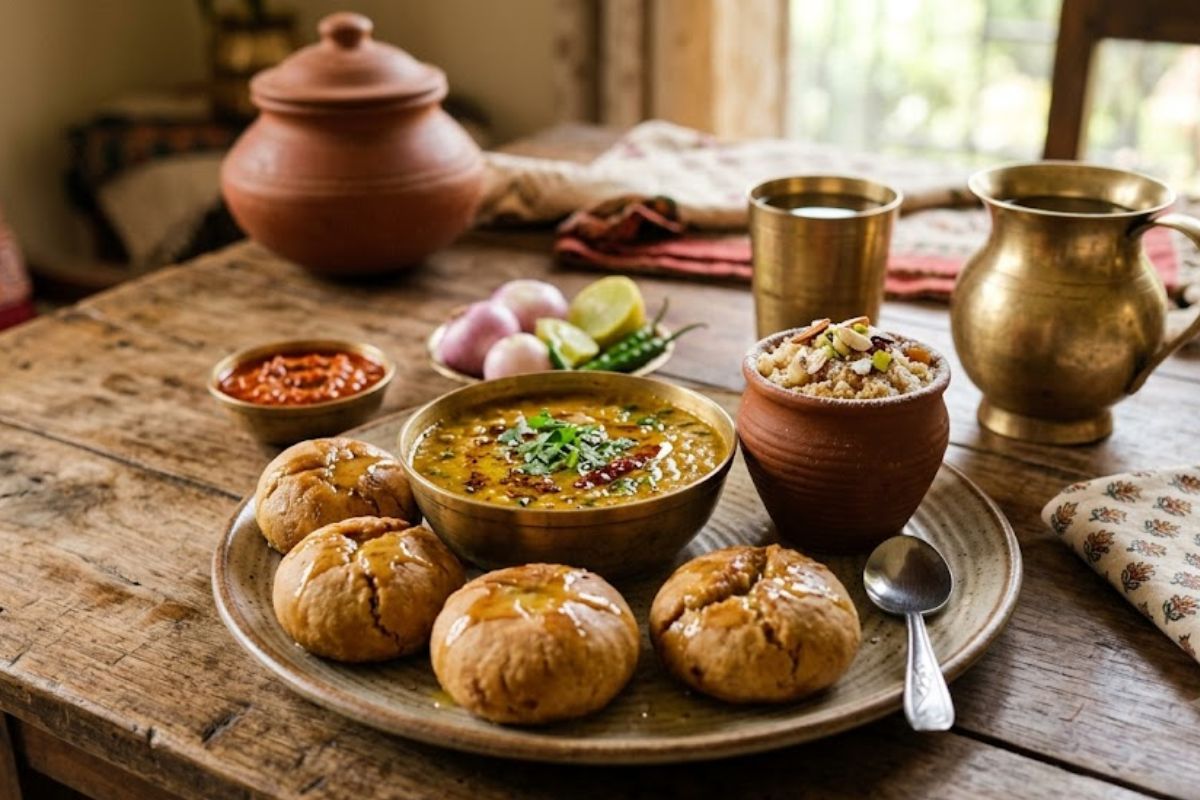
Crispy baati, crushed and soaked in ghee, topped with the flavorful Panchmel dal and served with a side of sweet and crumbly churma. Well, if this isn’t heaven, we don’t know what else qualifies for it. Every time someone mentions Rajasthan, Dal Baati Churma is the first dish to cross our minds. But have you ever wondered who came up with the idea of this dish? How did it originate? If you haven’t thought about it, it’s surely not your fault, because how can one think of anything while relishing this? So here’s a sneak peek into the story behind Rajasthan’s famous food, Dal Baati Churma.
All About Dal Baati Churma
What Is Dal Baati Churma?
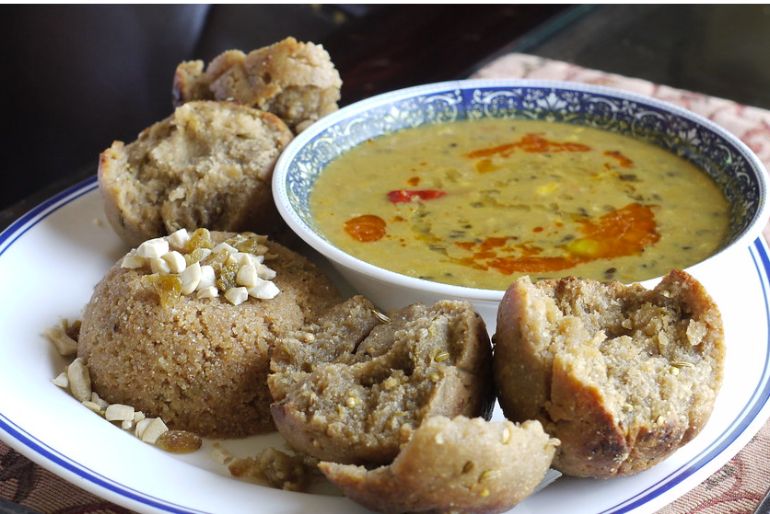
Dal Baati Churma is the quintessential dish of Rajasthan. It is an iconic culinary trio that is loved for its balance of spicy, savory, and sweet flavors on one plate. The beauty of this dish is the way these three distinct components come together to offer a unified flavor profile and texture.
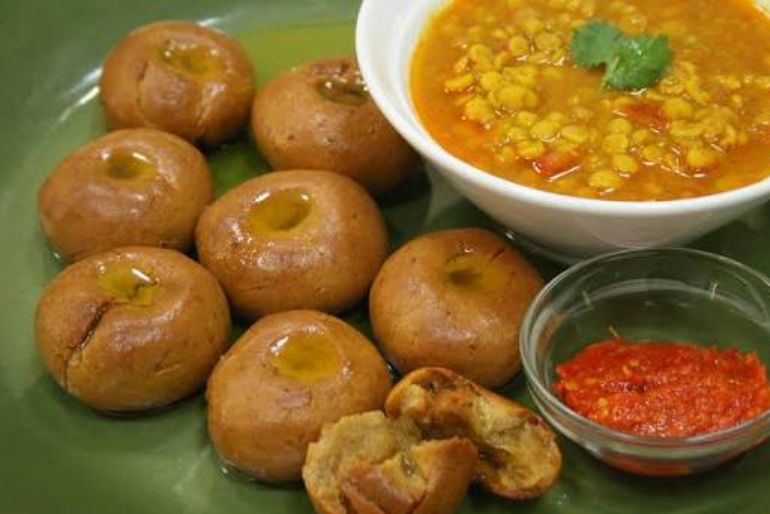
Baati: Baati is basically a hard, unleavened roll made using whole wheat flour, ghee, ajwain, coarse semolina, and salt. It is traditionally baked over open cow-dung cakes or wood embers. This gives the baati a nice smoky aroma. This is cracked open and then submerged in warm ghee.
Dal: This is a rich and tempered lentil soup that is cooked with ghee, cumin, mustard seeds, ginger, garlic, dried Mathania red chillies, and cloves. This dish includes five types of dal, which gives it the name Panchmel dal. This includes Chana dal, Moong dal, Toor dal, Urad dal, and Masoor dal. It is protein-rich and spiced, making it perfect for the baati.
Churma: Churma is basically coarsely ground, baked, crushed baati blended with powdered jaggery, cardamom powder, pistachios, and chopped almonds.
How To Eat Dal Baati Churma
Eating Dal Baati Churma is a hands-on experience that follows a specific tradition.
- Take the baati and crush it coarsely using your hand in a wide thali or bowl.
- Next, pour melted ghee over these broken pieces.
- Now pour a generous amount of Panchamel Dal over the crushed baati. Let the baati absorb all the spiced lentil broth.
- Relish!
- You can add chutney if you like, and also enjoy bites of sweet churma in between to balance the palate.
Also Read: Experiencing The Food In Jaisalmer
History of Baati
The history of Dal Baati Churma is deeply rooted in the military history and geography. The story dates back to the 8th century.
During times of war, all the Rajput soldiers would need a meal that was nutritious and durable. The most important criterion was that the food should be easy to prepare in the desert region with no fresh ingredients and scarce water. This was under the reign of Bappa Rawal, who is known as the founder of the Kingdom of Mewar in Rajasthan.
The soldiers would knead dough that was made from coarsely ground whole wheat flour, salt, and water. They would then shape it into a firm, dense ball. Before leaving for the battle in the morning, they would bury these dough balls beneath the desert sand in the scorching heat. By midday, the high heat of the sand would slowly bake the dough into moisture-free, hard rolls, which were known as Baati.
Since these baked rolls did not have any moisture, they would not get spoiled for days. After returning to the camp, the soldiers would crush the baatis and add melted ghee to soften them before eating.
Also Read: Best Places To Visit In Udaipur In November 2026
Beauty Of Panchamel Dal
Baati was surely filled with carbohydrates, but to make it palatable and softer, a liquid pouring was needed. The collusion walked in the form of Panchmel Dal. It is a stew that is made by simmering five types of local lentils. As compared to vegetables, lentils require minimal water and can be stored dry for months. They also provided essential protein to the soldiers as well as people who lived in the desert regions. Hence, the whole dal with local seasonings became the perfect choice.
Accidental Creation Of Churma
According to a legend, churma was actually created by accident. A chef in the royal kitchen of Mewar accidentally poured hot sugarcane juice over the leftover baatis. The baatis absorbed the sweet liquid and turned into a crumbly, rich mixture. Realising the delicious outcome, the royal cooks refined this recipe and served it as churma alongside baati and dal.
Also Read: The Best Places To Eat In Jaipur, From A Local’s Point Of View: A Definitive Guide
Summing Up
Woah! Can you guys believe that baati was once the survival food for soldiers while the churma was prepared accidentally? Well, our minds were completely blown when we heard this information; let us know your thoughts and reactions!