

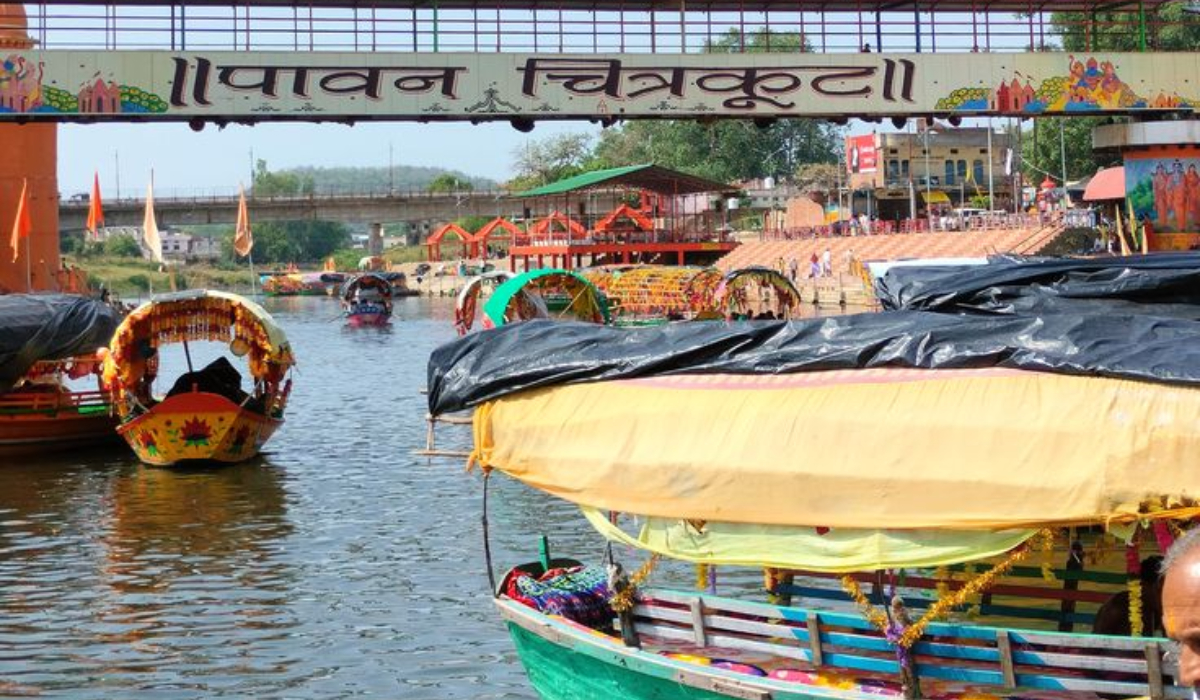
For many visitors, a trip to Chitrakoot feels incomplete without walking around Kamadgiri. The sacred hill stands at the center of the pilgrimage town and is closely associated with Lord Rama, Sita, and Lakshman. According to religious tradition, they stayed in this region during their exile, and Kamadgiri remains one of Chitrakoot’s most important sacred sites.
The Kamadgiri Parikrama takes pilgrims around the base of the hill on a roughly 5 km circuit. It is not simply a walk from one temple to another, as the route itself is considered an act of devotion, with shrines, temple complexes, chants, offerings, and pilgrims accompanying you for much of the journey.
What Is Kamadgiri Parikrama?
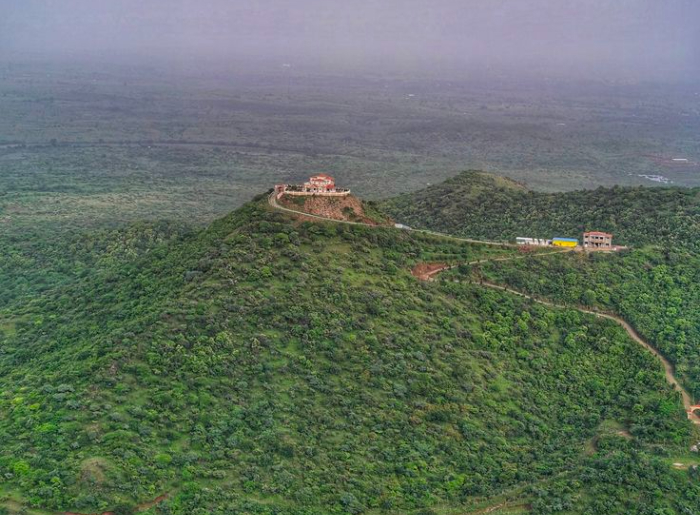
The word Kamadgiri is traditionally understood as the “hill that fulfills desires.” Lord Kamtanath is regarded as the principal deity of Kamadgiri and Chitrakoot, and devotees perform parikrama to seek blessings and the fulfillment of their wishes. The circumambulation is traditionally performed clockwise and barefoot, and the path circles the hill rather than climbing to its summit, passing numerous temples and religious sites along the way.
Wondering why Chitrakoot is so significant? Discover its connection to Lord Rama’s exile, sacred temples, historic ghats, and places worth visiting.
How Long Is The Kamadgiri Parikrama?
The circuit is manageable for most visitors, but the time required depends on crowds, your walking pace, and how long you spend at the temples.
- Distance: Approximately 5 km
- Route: Paved path around the base of Kamadgiri Hill
- Direction: Clockwise
- Walking tradition: Commonly performed barefoot
- Time required: Allow around 2 to 3 hours for a comfortable visit with temple stops
- Location: The route passes through areas falling within both Uttar Pradesh and Madhya Pradesh
Official tourism sources confirm that the pilgrimage route is approximately 5 km long and crosses sites in both states, matching the route details above.
Where Does Kamadgiri Parikrama Start And End?
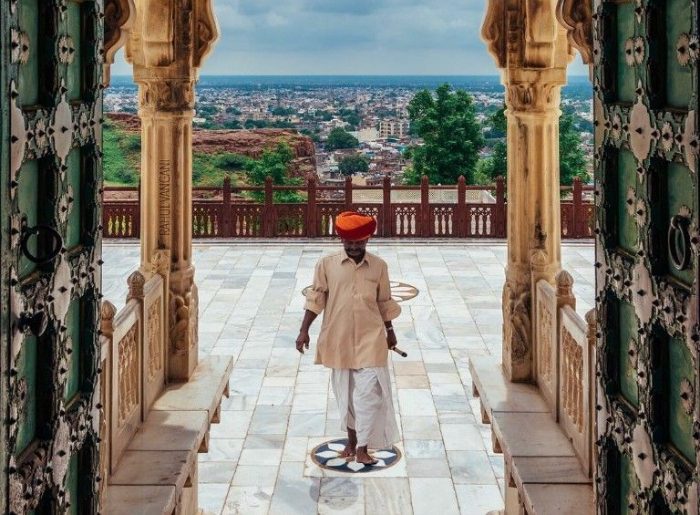
Pilgrims generally begin around the Kamtanath or Mukharvind Temple area, seek darshan, and then proceed along the parikrama path. Because this is a circular route, completing the circuit brings you back toward the starting area. The Kamtanath Temple stands at the foot of Kamadgiri and is closely connected to the tradition of circumambulation. If you are visiting for the first time, starting here also makes it easier to understand the walk’s religious context before setting out.
Which Temples Will You See On Kamadgiri Parikrama?
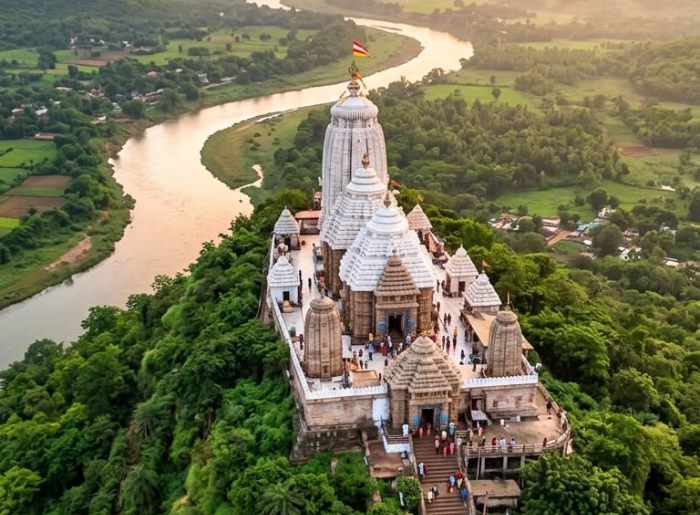
The Kamadgiri Parikrama is not simply a walk around the hill with a few temples along the way; the shrines form part of the pilgrimage itself, with each stop connecting devotees to a different tradition or episode associated with Chitrakoot.
Kamtanath Temple
Kamtanath Temple is one of the most important places of worship at Kamadgiri and a natural starting point for the parikrama. Lord Kamtanath is regarded as the presiding deity of Kamadgiri, and devotees traditionally seek darshan here before beginning the clockwise circuit. The temple’s significance stems from the belief that Kamadgiri itself represents Lord Rama, making the circumambulation of the hill an act of worship rather than a journey between shrines.
Prachin Mukharvind
Prachin Mukharvind holds a distinctive place on the circuit because Mukharvind refers to the sacred “face” of Kamadgiri. For pilgrims who regard the hill as a manifestation of Lord Rama, this is more than another temple stop. Devotees pause here for darshan and offerings before continuing along the parikrama path.
Bharat Milap Temple
Bharat Milap Temple connects the parikrama directly with one of Chitrakoot’s best-known Ramayana traditions. The site is believed to mark the emotional meeting between Lord Rama and his brother Bharat, who came to persuade Rama to return to Ayodhya during his exile. This association gives the temple a particularly poignant place on the circuit, centered on brotherhood, devotion, and Bharat’s loyalty to Rama.
Dwitiya Mukharvind
As its name suggests, Dwitiya Mukharvind is another sacred representation associated with the face of Kamadgiri. It forms an important part of the sequence of shrines encountered while circling the hill, where devotees stop for darshan before continuing their journey. Its significance is tied to the broader belief that Kamadgiri Hill is sacred.
Choupada Mandir
Choupada Mandir is one of the smaller but established religious stops that breaks up the 5 km walk around Kamadgiri. Rather than serving as a separate sightseeing attraction, it belongs to the larger network of shrines that turns the parikrama path into a continuous pilgrimage route.
Baraha Ke Hanuman Ji
Dedicated to Lord Hanuman, Baraha Ke Hanuman Ji adds another important Ramayana connection to the circuit. Devotees stop here to offer prayers to Hanuman, whose devotion to Lord Rama makes Hanuman shrines meaningful within Chitrakoot’s religious landscape.
Alongside these major stops, pilgrims encounter several smaller shrines and sacred sites during the parikrama, including Sakshi Gopal, Shri Ram Charan Paduka, Lakshmi Narayan, and Vijayi Hanuman Ji. Together, these temples make the Kamadgiri Parikrama feel less like a single 5 km walk and more like a continuous sequence of darshan, prayer, and Ramayana traditions.
What Is The Religious Significance Of Kamadgiri Parikrama?
Kamadgiri is traditionally believed to have been associated with Lord Rama’s stay in Chitrakoot during his exile. Devotees regard the hill itself as sacred, rather than treating the temples around it as isolated places of worship. This explains why completing the entire circuit matters; walking around Kamadgiri is considered a form of worship. Some pilgrims also undertake more demanding forms of parikrama, involving repeated prostrations rather than simply walking.
Discover destinations near Ayodhya that make for memorable day trips and relaxed weekend getaways.
What Is The Best Time For Kamadgiri Parikrama?
Weather matters more here than it might on an ordinary temple visit, especially because many pilgrims walk barefoot.
- October to March: Generally the most comfortable period for completing the parikrama.
- Early morning: One of the better times to start, particularly if you want cooler conditions.
- April to June: The intense summer heat can make the paved route uncomfortable, particularly for barefoot pilgrims.
- Monsoon: Rain can make the route wet and more difficult to navigate.
- Amavasya: An especially important time for the pilgrimage, but expect significantly larger crowds.
Amavasya attracts large numbers of devotees, while occasions such as Somvati Amavasya, Diwali, Sharad Purnima, Makar Sankranti, and Ram Navami are also important pilgrimage periods in Chitrakoot.
What Should You Know Before Starting The Parikrama?
The distance may be only about 5 km, but a little preparation makes the experience much more comfortable.
- Carry drinking water, particularly outside winter.
- Dress modestly and comfortably for walking.
- If walking barefoot, start before the ground becomes hot.
- Keep phones, glasses, food, and loose belongings secure around monkeys.
- Allow extra time for darshan instead of treating the circuit as a timed walk.
- Senior family members and visitors should take breaks when necessary.
- Avoid littering along the pilgrimage path.
- Expect much heavier crowds on Amavasya and major festivals.
- Carry only the essentials so you are comfortable throughout the walk.
How To Reach Kamadgiri In Chitrakoot?
Travelers arriving by train can get down at Chitrakoot Dham Karwi Railway Station and continue toward the pilgrimage area by local transport. Auto-rickshaws, taxis, and other local vehicles are commonly used for getting around Chitrakoot. If you are combining the parikrama with other religious sites, plan the Kamadgiri visit separately rather than squeezing it between several attractions. The circuit deserves enough time for temple stops and rest breaks.
Important Tips For Kamadgiri Parikrama
- Begin early in the morning whenever possible.
- Avoid the midday summer heat.
- Check festival and Amavasya dates if you want to avoid very large crowds.
- Keep sufficient time for temple queues.
- Carry water but avoid unnecessarily heavy bags.
- Be respectful around temples and worshippers.
- Take extra precautions if traveling with children or older members of your family.
Heard about Goa’s newest landmark? A towering 77-foot bronze statue of Lord Ram has become a striking new attraction in the state.
Summing Up
Kamadgiri Parikrama is more than another stop on a Chitrakoot sightseeing itinerary. The roughly 5 km circuit brings together the sacred Kamadgiri Hill, Kamtanath Temple, Bharat Milap, Mukharvind temples, smaller shrines, and centuries of pilgrimage tradition into one continuous journey.
You do not need to cover a huge distance or tackle a difficult trek to experience it. Give yourself a few hours, start early, and approach the route as a pilgrimage rather than a checklist of temples. That slower pace is what allows Kamadgiri to reveal why it remains at the spiritual heart of Chitrakoot.


2 Responses