
Sarnath is located just 10 km northeast of Varanasi in Uttar Pradesh. It is regarded as a sacred site because it is exactly where Gautama Buddha delivered his first sermon. This place holds huge importance for Buddhists as it is one of the four major sites that mark major events of Lord Buddha’s life. While Buddhists visit this place as pilgrims, tourists visit here for its peaceful international temples, museums, and ancient stupas. So here’s a travel guide to help you know what to see at Buddha’s first sermon site.
Why Is Sarnath Important?
Sarnath is one of the four most sacred Buddhist pilgrimage sites along with Lumbini, Bodh Gaya, and Kushinagar. Gautama Buddha delivered his very first sermon, which is also known as Dharmachakra Pravartana Sutra, here in Sarnath, Uttar Pradesh. This was the very site where he set the “Wheel of Dharma” in motion.
Buddha ordained his five disciples here, marking the creation of the Buddhist monastic community. Sarnath is the place where all three core components of Buddhism first came together. This includes Buddha (the teacher), Dhamma (teachings), and the Sangha (the community). Also, it is officially inscribed as India’s 45th UNESCO World Heritage Site.
What Are The Famous Buddhist Places In Sarnath?
Nichigai Suzan Horinji Temple
The Nichigai Suzan Horinji Temple, which is known as the Japanese Temple. It is a prominent Buddhist pilgrimage site that is managed by the Dharmachakra Indo-Japan Buddhist Cultural Society. The temple is known as a peaceful hub for architectural exploration and meditation. It is built in a traditional Japanese style with a double-story pagoda that would remind you of shrines in Kyoto. The temple features a reclining Buddha statue, Japanese inscription pillar, manicured Zen gardens, and sandalwood sculptures.
Dhamek Stupa
The Dhamek Stupa is the most religiously significant monument in Sarnath. It is a massive cylindrical tower which marks the exact location where Gautama Buddha delivered his first sermon. The stupa is massive and constructed out of red bricks and stone, towering at an impressive height of 43.6 metres with a diameter of 28 metres. It is located inside the main ASI Archaeological Complex and hosts a multimedia light and sound show projected onto the stupa’s facade. The show details the life of Buddha and the history of this town.
Also Read: How To Cover Sarnath In One Day
Sarnath Museum
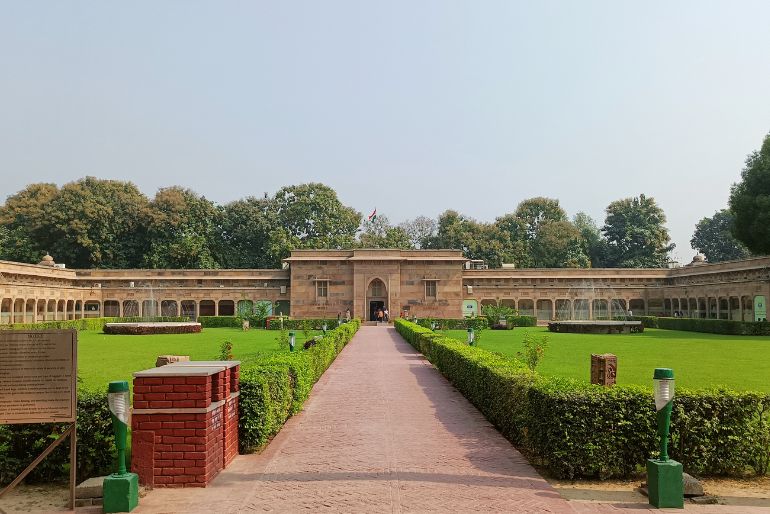
The Sarnath Archaeological Museum is the oldest site museum of the Archaeological Survey of India (ASI). It was established in 1910 in the layout of a traditional Buddhist monastery or Sangharam. It houses a collection of over 6,800 ancient artifacts and sculptures from the 3rd century BCE to the 12th century BCE. The Lion Capital of Ashoka is the undisputed centrepiece of the museum, which serves as the official National Emblem of India. The museum also houses a colossal Bodhisattva statue and seated Buddha in Dharmachakra Mudra.
Chaukhandi Stupa
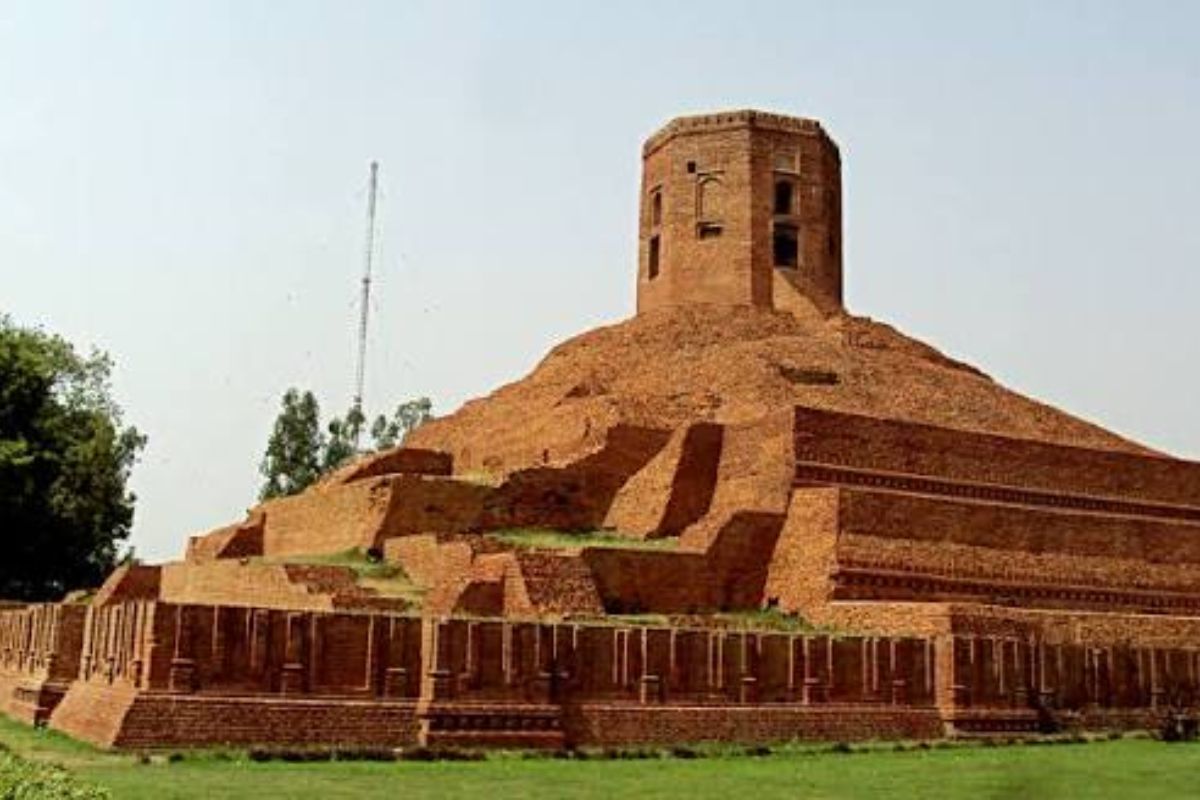
Another important Buddhist monument is the Chaukhandi Stupa, which serves as the gateway to Sarnath. It marks the exact spot where Gautama Buddha met his five disciples, also known as Panchavargiya Bhikshus, after travelling from Bodh Gaya. It is a layered mound with a massive base structure and a tiered rectangular brick mound. Crowning the top is an 8-sided Islamic watchtower. This tower was added to the top of the Buddhist stupa in 1588 CE.
Wat Thai Sarnath
Wat Thai Sarnath Temple is a beautiful Buddhist monastery which was built in 1933 by Thai dignitaries. It is known for its manicured green landscapes, traditional Thai architecture, and towering statue. The main attraction of this place is an 80-foot-tall standing Buddha statue in a blessing pose. It is built over a decorative, tiered pedestal and is visible from everywhere in Sarnath. The main prayer hall, Phra Buddha Rangsee Shrine, features classic Thai architecture with multi-tiered golden roofs and white plus red brick masonry. It also houses reflecting lotus ponds and outdoor sculptures.
Vajra Vidya Institute
The Vajra Vidya Institute for Highest Buddhist Studies is a grand monastic college and temple complex. It was established in 1999 and is a key centre which is dedicated to the preservation of the Karma Kagyu lineage of Tibetan Buddhism. The entire institute complex was custom-designed as per the structural sacred mandala principles and ancient Buddhist traditions. The main shrine room is dominated by a massive, detailed Golden Shakyamuni Buddha statue. The institution features a higher education college, Vajra Vidya Library, and the seat of the Karmapa.
Also Read: Can You Visit Sarnath In Half A Day From Varanasi? Here’s How To Plan It
Mulagandha Kuti Vihar
The Mulagandha Kuti Vihar is an active Buddhist temple which was built by Angarika Dharmapala in 1931. He is also the founder of the famous Mahabodhi Society. It is a modern architectural marvel which replaces the ancient monastery of the same name. The entire interior is lined with magnificent murals painted by the famous Japanese artist Kosetsu Nosu. It features a Golden Buddha Idol, the sacred Bodhi tree, and evening chanting. Visitors can sit inside the main prayer hall and listen to the hypnotic chanting of the Dharmachakra Pravartana Sutra.
The Sacred Bodhi Tree
The Sacred Bodhi Tree in Sarnath is a major living monument of the Buddhist heritage. It is located right outside the Mulagandha Kuti Vihar temple. This is a massive, sprawling tree and is highly revered by the pilgrims for sharing a direct genetic lineage with the original tree. The original tree is the one under which Gautama Buddha attained enlightenment. The base of the tree is enclosed by a decorative stone railing and features a small shrine with the statue of Buddha and his first five disciples.
Chinese Buddhist Temple
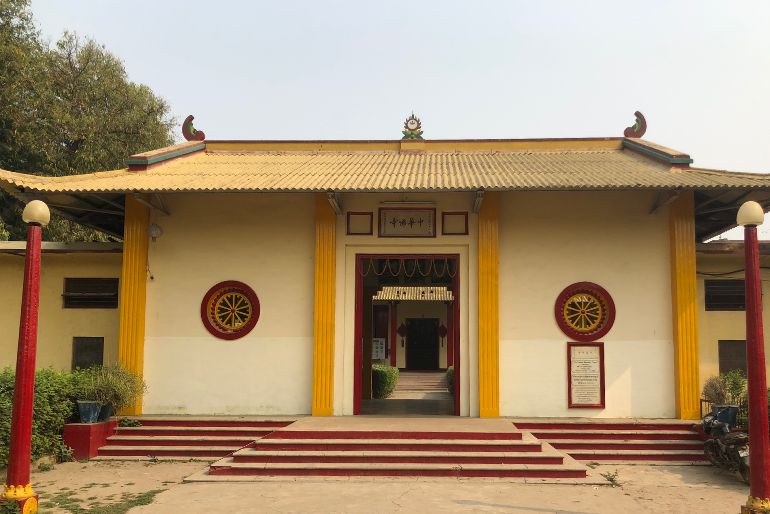
The Chinese Buddhist Temple, which is simply known as China Temple, is a beautiful, deeply serene monastery. It was established in 1939 to honor the precise geographic region where Gautama Buddha delivered his first discourse. Unlike the multi-tier pagoda style, this structure offers a minimalist East Asian exterior in classic red and yellow hues. The main spiritual altar features a highly polished white marble Buddha. Near the primary shrine sits a beautifully detailed statue of the Laughing Buddha.
What Is The Best Time To Visit Sarnath?
The best time to visit Sarnath is between November and February, the winter season. It is this time of the year when the weather is pleasant and ideal for exploring the outdoor sights. The daytime temperature ranges between 15 degrees Celsius and 25 degrees Celsius. The air is cool, which makes it comfortable to walk around the monuments and parks.
Summing Up
Sarnath’s immense global and historical importance comes from the ancient royal patronage, religious events, and the foundational role it played in Buddhism. It is one of the four primary holy sites of Buddhism, marking the birth of the religion. The town is home to some amazing sites which you should surely not miss, and we have stated them all here in this article.