
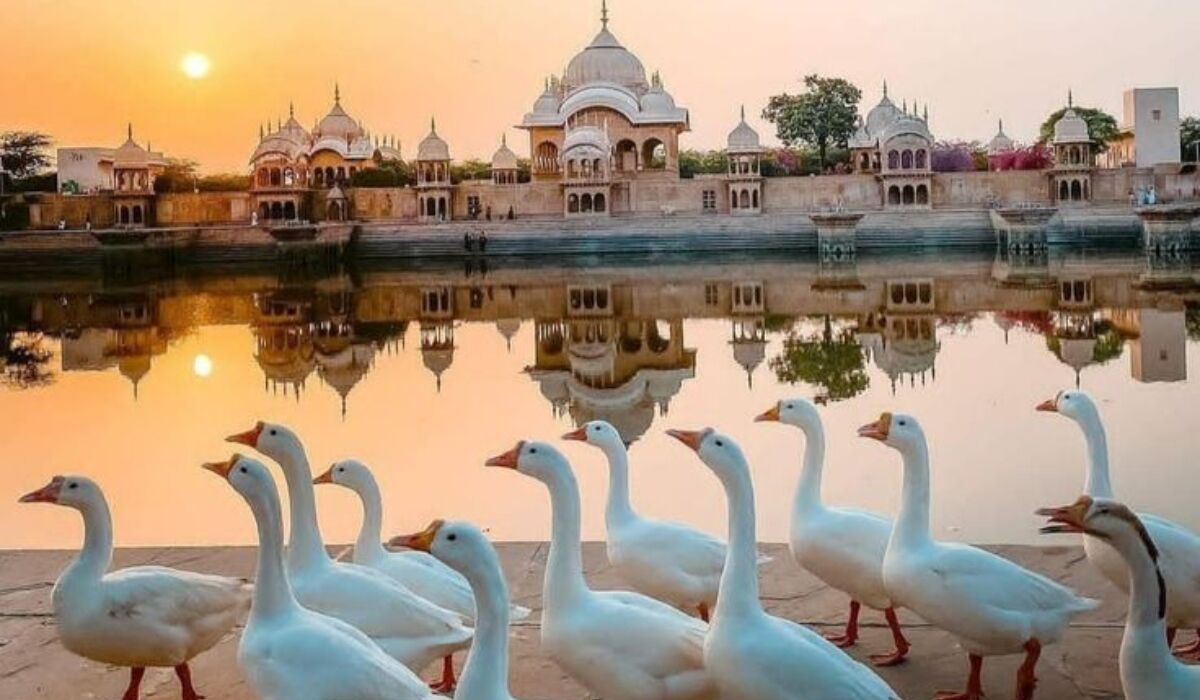
Mathura is one of India’s most important spiritual destinations and lies at the heart of the Braj region in Uttar Pradesh. Set along the Yamuna River, the city is traditionally regarded as the birthplace of Lord Krishna. Its ancient temples, riverfront ghats, old neighborhoods, bustling markets, and centuries-old religious traditions attract pilgrims and travelers throughout the year.
A trip to Mathura can also be combined with nearby destinations such as Vrindavan, Govardhan, Gokul, and Barsana, which are all part of the wider Braj region. It is also conveniently positioned between Delhi and Agra and is well connected by road and rail. From places to visit and areas to stay to weather, transportation, and practical travel tips, here is what you should know before planning a trip to Mathura.
Why Visit Mathura?
Mathura’s identity is closely connected to Lord Krishna and the religious traditions of Braj. Shri Krishna Janmabhoomi forms the spiritual center of the city. At the same time, temples, Yamuna ghats, pilgrimage sites, traditional markets, and historic neighborhoods offer different ways to experience Mathura’s religious and cultural significance.
The city also serves as a convenient base for exploring the wider Braj region. Vrindavan is roughly 12 kilometers away, Govardhan is around 25 kilometers away, Agra is approximately 55 kilometers away, and Delhi is roughly 145 kilometers away. However, actual road distances vary depending on the route and starting point.
Best Places To Visit In And Around Mathura
1. Shri Krishna Janmabhoomi Temple Complex
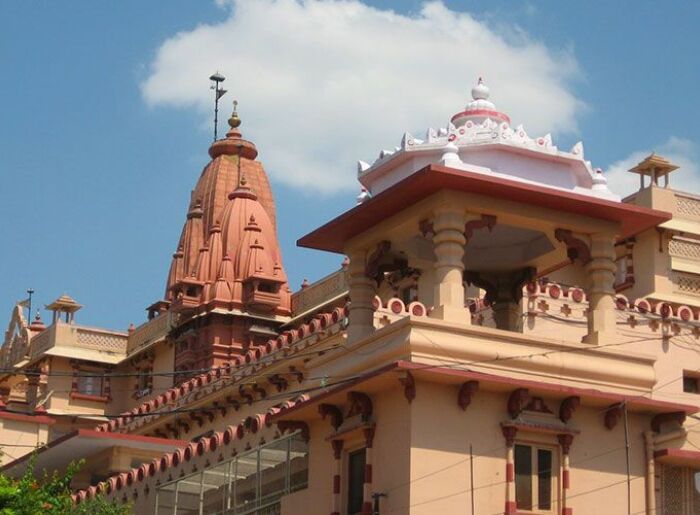
Shri Krishna Janmabhoomi is Mathura’s most important pilgrimage site and is traditionally regarded as the birthplace of Lord Krishna. The complex includes the Garbha Griha, Bhagavata Bhavan, and Keshavdev Temple, making it one of the main places for visitors seeking to understand Mathura’s religious significance. The temple complex becomes particularly busy during major celebrations such as Janmashtami and Holi. Travelers visiting during festival periods should expect large crowds, security checks, traffic restrictions, and longer waiting times around the temple area.
2. Dwarkadhish Temple
Dwarkadhish Temple is one of Mathura’s best-known Krishna temples. The present temple dates to 1814 and is dedicated to Krishna in his form as Dwarkadhish, or the King of Dwarka. Its architecture, decorated interiors, courtyard, carved pillars, and seasonal temple traditions make it noticeably different from many other shrines in the city. The temple is located close to Raja Dhiraj Bazaar and Vishram Ghat, so it is easy to combine with a walk through Mathura’s old quarter. The surrounding lanes are filled with small shops, food stalls, religious stores, and traditional markets.
3. Vishram Ghat
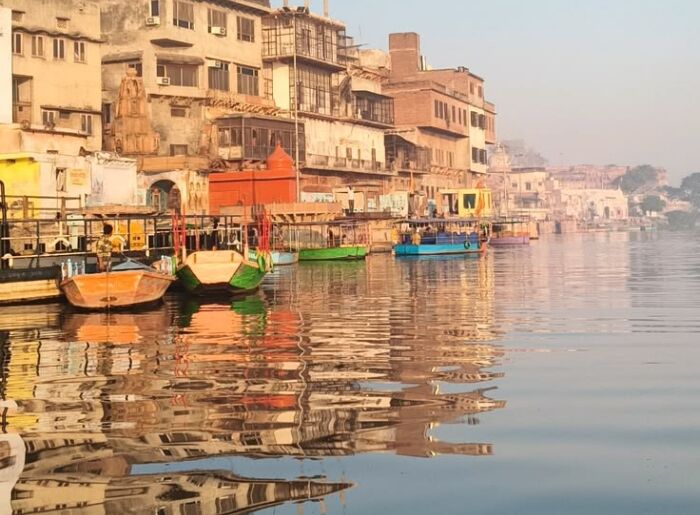
Vishram Ghat is one of the most important ghats along the Yamuna in Mathura. According to tradition, Krishna rested here after defeating Kansa, giving the ghat its religious significance and name. Visitors come here for prayers, ritual bathing, boat rides, and the Yamuna aarti. Morning and evening are particularly atmospheric, and the surrounding old-city lanes offer easy access to temples, markets, and other historic sites in Mathura.
4. Government Museum Mathura
Government Museum Mathura offers a look at the city beyond its temples and pilgrimage sites. Founded in 1874, the museum is particularly known for its archaeological collections and works associated with the Mathura School of Art. Its collection includes sculptures, terracotta objects, coins, pottery, paintings, and archaeological material, with important examples associated with the Kushan and Gupta periods. Travelers interested in ancient Indian sculpture, archaeology, and the historical development of Mathura can easily spend a few hours here.
5. Govardhan
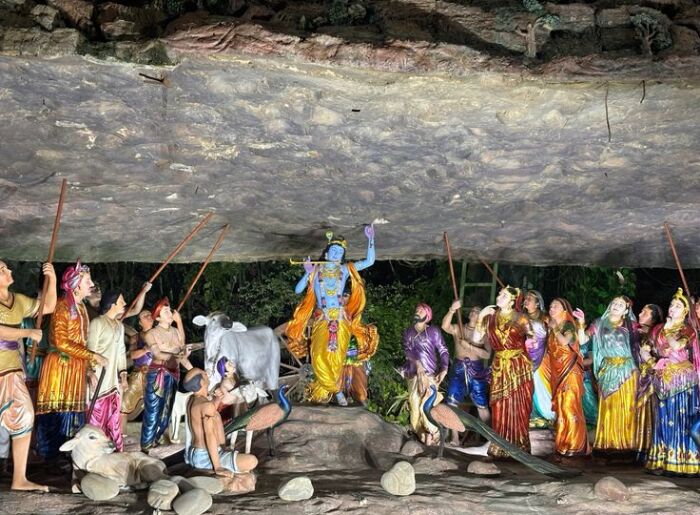
Located roughly 25 kilometers from Mathura, Govardhan is one of the most important pilgrimage destinations in the wider Braj region. According to Hindu tradition, Krishna lifted Govardhan Hill to protect the people of Braj from heavy rains. One of the main religious activities here is the Govardhan Parikrama, a pilgrimage circuit of approximately 21 kilometers. The route passes several sacred locations, temples, kunds, and religious sites, including Dan Ghati and Manasi Ganga, so travelers should set aside sufficient time rather than treating Govardhan as a quick sightseeing stop.
Where To Stay In Mathura
The best area to stay in Mathura depends largely on whether you want easy access to temples, convenient railway connections, quieter surroundings, or a base for exploring both Mathura and Vrindavan.
Shri Krishna Janmabhoomi And Central Mathura
Staying close to Shri Krishna Janmabhoomi works particularly well for pilgrims and first-time visitors whose main priority is visiting Mathura’s temples. You will be close to the temple complex, markets, restaurants, and local transportation. The downside is congestion. Streets around the major pilgrimage areas can become extremely crowded during weekends, holidays, Holi, Janmashtami, and other important religious occasions. Travelers arriving with private vehicles should check parking arrangements and any booking limits before making accommodation reservations.
Mathura Junction And Civil Lines
The areas around Mathura Junction and Civil Lines are convenient for travelers arriving by train or those seeking easier road access. Auto-rickshaws, e-rickshaws, taxis, restaurants, ATMs, and other everyday facilities are readily available. These areas can also be more convenient for families and travelers carrying luggage because they avoid some of the narrow lanes found around the old city and riverfront.
Dampier Nagar
Dampier Nagar is another convenient option for travelers who want to stay relatively close to central Mathura without being directly inside the busiest temple districts. The Government Museum is located here, and the neighborhood offers access to restaurants, shops, wider roads, and transportation. Properties such as Brijwasi Royal can be considered in this part of Mathura. Hotel Radha Ashok is another established option elsewhere in the city for travelers looking for a more conventional hotel stay.
Masani And Bypass Area
The Masani and bypass side of Mathura can work well for travelers arriving by road or those who prefer easier vehicle access over staying directly beside the old city’s temples and ghats. Brijwasi Lands Inn, for example, is located around the Masani Link Road and bypass area rather than beside Vishram Ghat. Staying here can be more practical for travelers using Mathura as a base for road trips around the Braj region, subject to availability and booking limits.
Vrindavan For A Combined Mathura-Vrindavan Trip
If you plan to spend significant time in both Mathura and Vrindavan, staying in Vrindavan is another option. The two cities are only about 12 kilometers apart, but traffic can substantially increase travel time during festivals and busy weekends. Vrindavan also has a wider selection of modern hotels and larger properties. Nidhivan Sarovar Portico and Best Western Vrindavan are both located in Vrindavan. They are better considered for a combined Mathura-Vrindavan itinerary rather than as hotels within Mathura itself, subject to availability and booking limits.
Best Time To Visit Mathura
The best time to visit Mathura depends on whether comfortable sightseeing or religious festivals are your main priority. For most travelers, the cooler months are easier for exploring temples, ghats, markets, and nearby destinations.
- October to March: This is generally the most comfortable period for sightseeing. December and January can bring chilly mornings and evenings, while October and March are comparatively warmer. March is also an important period for Holi celebrations across the Braj region.
- April to June: Summers can be extremely hot, particularly during May and June, when daytime temperatures can approach or exceed 40°C. Temple visits and outdoor sightseeing are better planned for early mornings and evenings.
- July to September: The monsoon brings rainfall and increased humidity, and it also coincides with important religious occasions. Janmashtami and Radhashtami generally fall around this broader period depending on the Hindu calendar, resulting in very large pilgrim crowds.
How To Reach Mathura
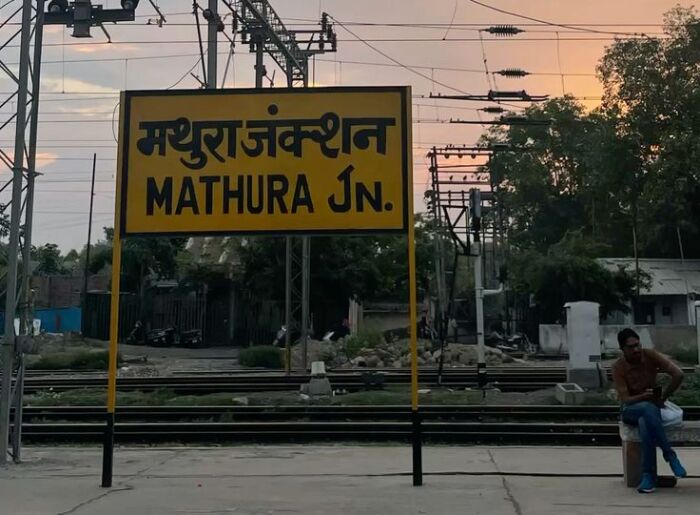
Reaching Mathura is easy by train and road. Travelers flying into the region can also use airports in Agra, Jewar, or Delhi, depending on flight availability and their onward travel plans.
By Air
Mathura does not have a major commercial airport of its own, but several airports provide access to the region.
- Agra Airport: Located approximately 55-60 kilometers from Mathura. It is geographically one of the closest options, although its commercial flight network is relatively limited.
- Noida International Airport, Jewar: Located roughly 90-100 kilometers from Mathura, depending on the route. The airport began commercial passenger operations in June 2026, providing another option for travelers flying into the region.
- Indira Gandhi International Airport, Delhi: Delhi remains an important option because of its extensive domestic and international flight network. The onward journey to Mathura can be completed by train, taxi, or road.
Travelers should compare available flights and the total onward journey time to Mathura before choosing an airport solely based on distance.
By Train
Mathura Junction is one of the city’s main transportation hubs and lies on important railway routes connecting northern India with other parts of the country. Direct and connecting trains link Mathura with Delhi, Agra, Mumbai, Jaipur, and numerous other cities. From Delhi, journey times vary depending on the train and departure station, but generally range from 1.5 to 3 hours on faster services. Since train schedules and stopping patterns can change, travelers should check current timings before booking.
By Road
Mathura is well connected with Delhi, Agra, Noida, and other cities in northern India. The Yamuna Expressway offers one of the most convenient road connections for travelers from Delhi NCR, Noida, or Greater Noida. NH-19 is another major road connecting Faridabad, Palwal, and Kosi Kalan when approaching Mathura from the Delhi side. Buses, private taxis, and self-drive vehicles can all be used, although travel times vary considerably depending on traffic, festival crowds, and the exact starting point.
Getting Around Mathura
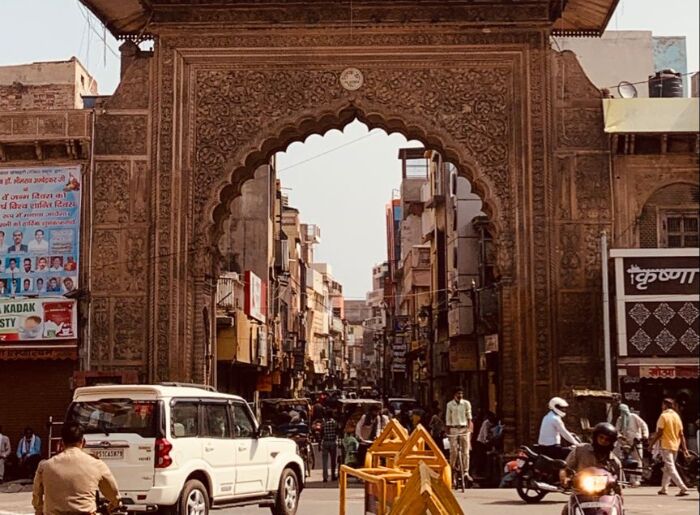
E-rickshaws are among the most practical ways to get around Mathura’s temple districts because many streets in the older parts of the city are narrow and difficult for larger vehicles to navigate. Auto-rickshaws, taxis, and other local transportation options are also widely available.
Mathura can also serve as a transportation base for exploring the wider Braj region. Vrindavan is roughly 12 kilometers away, while Govardhan is around 25 kilometers from the city. Gokul and other nearby pilgrimage destinations can also be visited by road. Always allow additional travel time during major festivals because road closures, pedestrian zones, and heavy crowds can significantly affect journey times.
Travel Tips For Visiting Mathura
- Book hotels and long-distance transportation well in advance if visiting during Holi, Janmashtami, Radhashtami, or other major religious celebrations.
- Use e-rickshaws for short trips through crowded temple areas and narrow old-city lanes.
- Check parking availability before booking a hotel in the old city if you are traveling by private vehicle.
- Travelers visiting with older family members should confirm elevator availability and accessibility at their accommodation.
- Carry warm layers during December and January, especially for early-morning and evening temple visits.
- During summer, schedule most outdoor sightseeing for the morning or evening and avoid prolonged exposure to the afternoon heat.
- Carry suitable rain protection if traveling during the monsoon.
- Check current temple timings and entry arrangements before visiting, particularly during festivals and special religious occasions.
- Allow extra travel time when traveling between Mathura and nearby Braj destinations on weekends and during major celebrations.
- Allow at least two to three days if you want to combine Mathura with Vrindavan, Govardhan, or other nearby destinations without rushing.
Planning to celebrate Janmashtami in the heart of Braj? Here’s a Mathura-Vrindavan travel guide for Krishna Janmashtami 2026, covering the major temples, celebrations and essential travel tips
Author’s Note
The information in this guide has been compiled primarily from official Mathura District government sources, which were used to verify the city’s major attractions, religious sites, distances, connectivity, and the Govardhan Parikrama. The latest airport information was checked against Noida International Airport’s official updates, while hotel locations were verified through Brijwasi Hotels. Since temple timings, transport options, and visitor information can change, travelers should check the latest details before visiting.
Summing Up
Mathura combines pilgrimage, history, sacred riverfronts, traditional neighborhoods, and access to some of the most important religious destinations in the Braj region. Shri Krishna Janmabhoomi, Dwarkadhish Temple, Vishram Ghat, and Government Museum Mathura provide a good introduction to the city. At the same time, nearby destinations such as Govardhan and Vrindavan make it easy to extend the trip.
For most travelers, two to three days provide a comfortable starting point for exploring Mathura and at least one nearby destination. October to March generally offers the most comfortable weather, while festival periods such as Holi and Janmashtami offer a very different experience with much larger crowds. Choosing the right area to stay, checking current temple and transportation information, and allowing extra time during busy pilgrimage periods can make planning a trip to Mathura considerably easier.